Bird reproduction follows a predictable cycle: attract a mate, form a pair bond, build a nest, lay eggs, incubate them, feed the chicks, and watch them fledge. That's the core of it. Whether you're a backyard birder trying to support nesting in your yard, a hobbyist thinking about nest boxes, or just someone who wants to understand what's actually happening out there in the bushes every spring, this guide walks you through every stage, what to watch for, and what to do (and not do) at each step.
Bird Reproduction Method: A Step-by-Step Breeding Guide

Marcus Hendricks
16 Apr 2026
How bird mating actually works
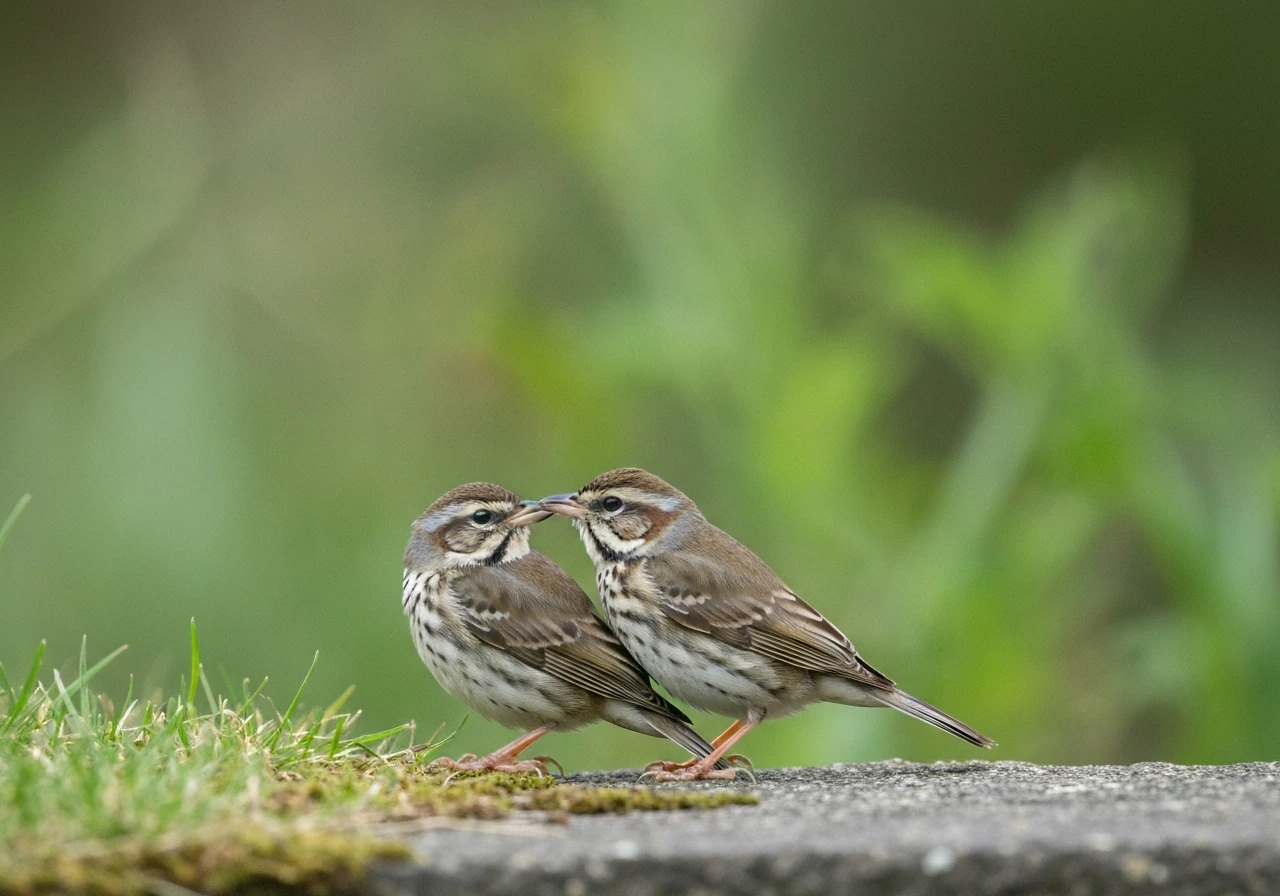
Let's start with the basics. Most bird species reproduce sexually, and mating typically involves what's called a cloacal kiss. Birds generally lack a penis, so fertilization happens when the male and female press their cloacal openings together briefly, transferring sperm. It sounds inelegant, but it works. What's impressive is that sperm can remain viable in the female's sperm storage tubules for anywhere from a few days to several months after a single mating event, so she doesn't need to mate again for every egg she lays in a clutch.
Mating systems vary quite a bit across species. The most common is monogamy, where one male and one female pair up and neither can claim additional mates. Polygyny is also widespread, where a single male mates with two or more females. Then there's polyandry and polygynandry, which involve communal breeding arrangements. Knowing the mating system of the species you're observing helps explain a lot of the behavior you'll see, including who builds the nest and who feeds the chicks.
When breeding season starts, and why
For birds living at mid and high latitudes, the biggest driver of breeding season timing is photoperiod, which just means day length. As spring days get longer, increasing light exposure stimulates the release of gonadotropin-releasing hormone (GnRH), which triggers gonadal development and gets birds reproductively ready. This isn't just academic trivia. It means that the length of daylight is essentially the biological clock birds use to know when to start breeding, even before temperatures fully warm up.
Temperature also plays a role. Research on mountain white-crowned sparrows shows that temperature interacts with photoperiod timing, influencing when birds become refractory (basically, when they stop responding to long days and breeding winds down). Food availability matters too, especially for migratory species whose chick-rearing needs to coincide with peak insect abundance. For backyard observers, the practical takeaway is this: watch for longer days in late winter and early spring as the trigger, not just warm weather.
Courtship displays and how pairs form
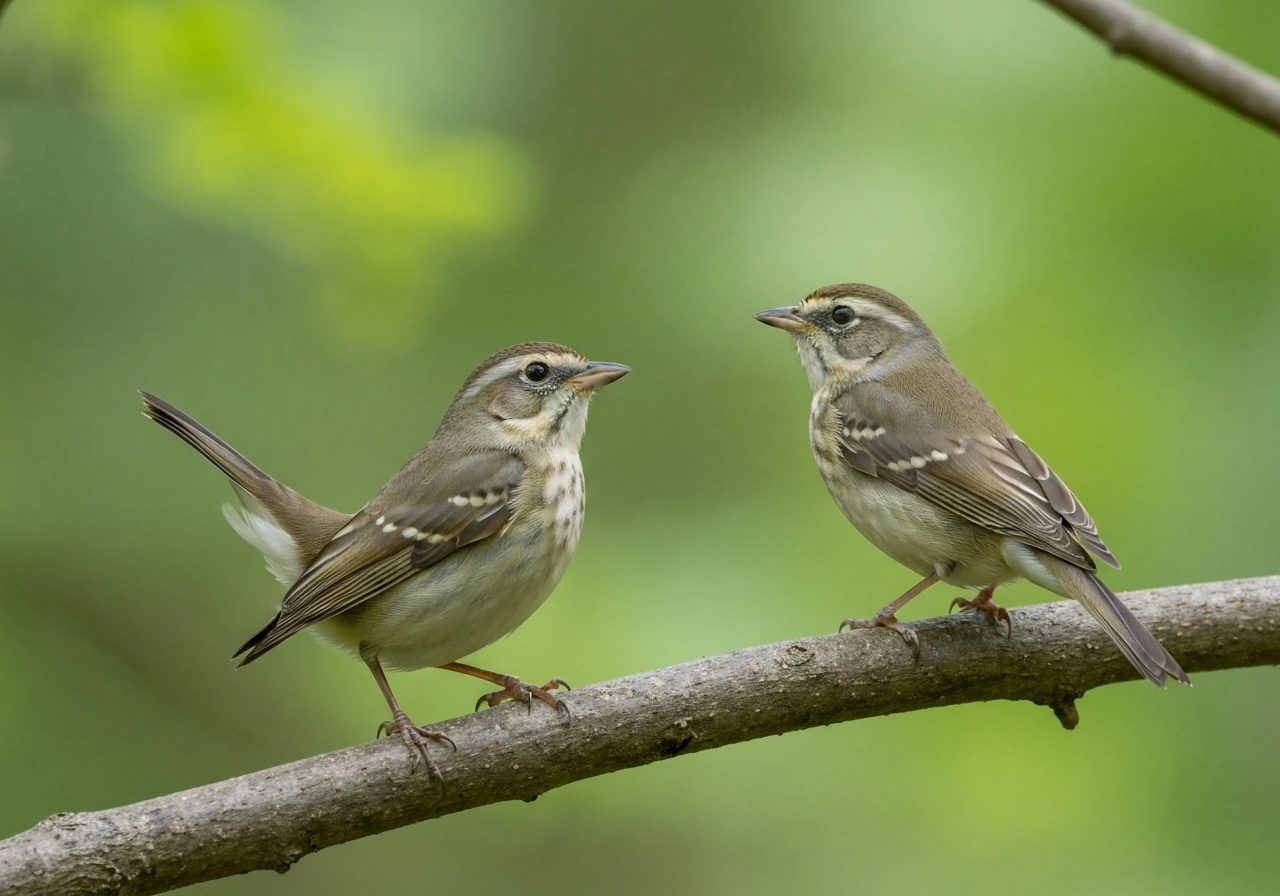
Courtship is where birds really put on a show. Displays are species-specific, meaning each bird has evolved its own combination of visual signals, songs, and physical behaviors to attract and assess a mate. Some species do elaborate aerial dances. Others sing for hours. Crested auklets famously perform mutual displays and cackling together, reinforcing pair bonds through shared behavior. For a backyard birder, just hearing a male singing intensely from a prominent perch is often the first sign that breeding season is underway.
Pair bonds can range from lasting a single season to years-long or even lifetime commitments depending on the species. Long-term pairs have a real advantage: research on house finches shows that established pairs initiate breeding earlier in the season than newly formed ones. Some species like pinyon jays form perennial monogamous bonds with an average duration of about 2.5 years. For hobbyists supporting nesting birds, this means a box or habitat that attracted a pair last year has a real shot at attracting them again the following spring.
Nest building and the egg-laying process
Once a pair bonds, nest construction begins. Who builds varies by species. In many songbirds, the female does most or all of the building, but the male may help gather material or guard the site. Nests range from simple scrapes in the ground (shorebirds) to elaborate woven cups (weaverbirds) to cavity nests in tree holes or nest boxes. For hobbyists, understanding the type of nest your target species prefers is step one before putting anything in your yard.
Egg-laying doesn't happen all at once. Most species lay one egg per day, though some, like killdeer, lay eggs at 24 to 48-hour intervals. Clutch size varies widely by species. American Robins average about 4 eggs per clutch, while House Sparrows typically lay 3 to 5. An important thing to know: most females don't start incubating until the clutch is nearly complete, usually after the last or second-to-last egg is laid. This is why the first egg date is not the first day of incubation. If you check a nest and find two eggs but no warmth, that's completely normal.
Incubation: what's happening inside the nest
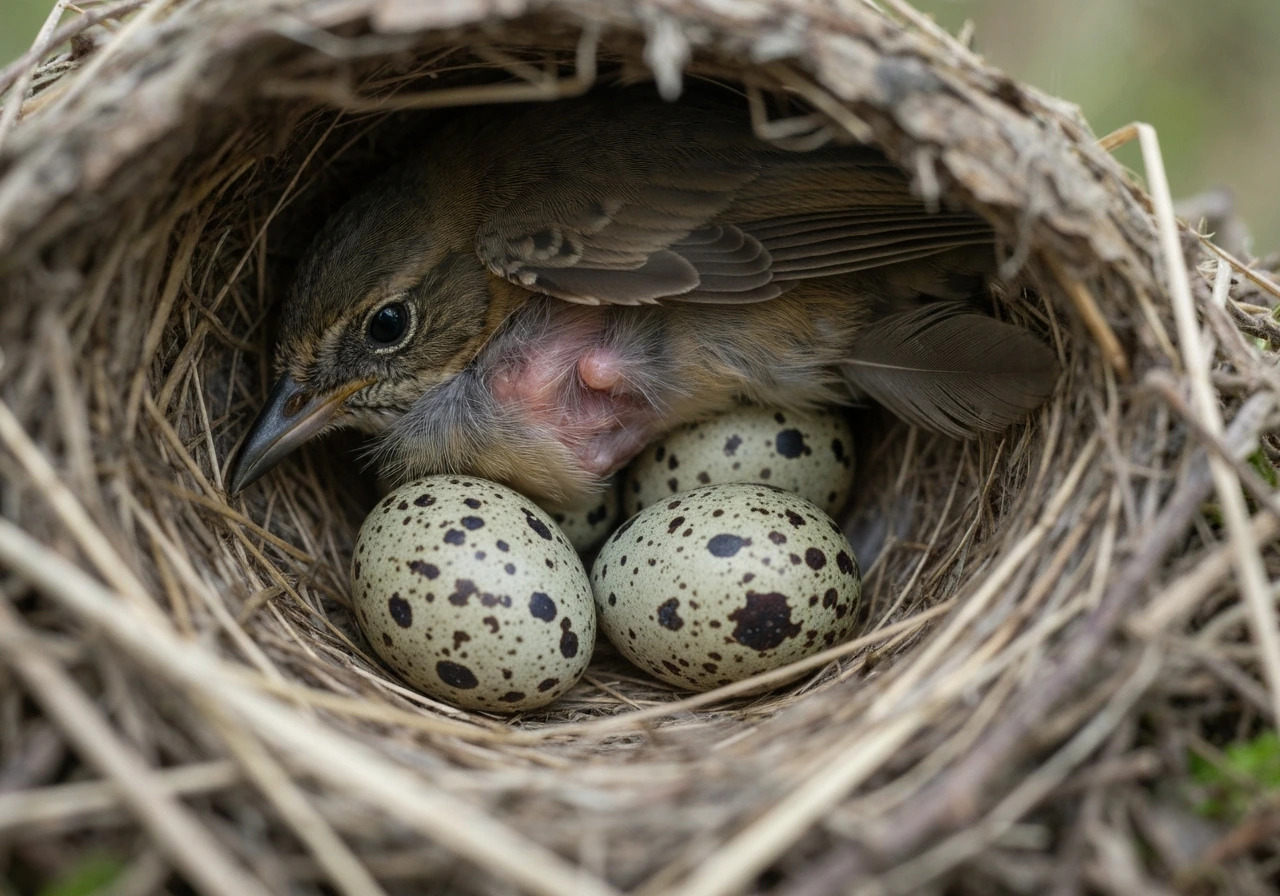
Incubation is the process of keeping eggs warm enough for embryos to develop. The bird uses a brood patch, which is a blank" rel="noopener noreferrer">featherless patch of skin on its underside that allows direct heat transfer from the parent's body to the eggs. Birds shift side to side during incubation to maintain good contact between the patch and all the eggs. One cool thing to look for: if you observe a bird sitting very still on the nest and shifting occasionally, that's the incubation patch at work.
Incubation length depends heavily on the species. Songbirds like American Robins and Black-capped Chickadees incubate for roughly 12 to 14 days. Brewer's Blackbirds can range from 11 to 17 days. Ducks take considerably longer, often more than double the songbird timeline. Tree swallows typically hatch after about 14 to 15 days of incubation, with hatching sometimes asynchronous, averaging about 28 hours between the first and last nestling emerging from a clutch.
| Species | Clutch Size | Incubation Period | Nestling Period |
|---|---|---|---|
| American Robin | ~4 eggs | 12–14 days | ~15 days |
| House Sparrow | 3–5 eggs | ~13 days | ~15 days |
| Black-capped Chickadee | Varies | 12–13 days | Varies |
| Brewer's Blackbird | Varies | 11–17 days | Varies |
| Tree Swallow | Varies | ~14–15 days | Varies |
| Killdeer | 4–6 eggs | ~24–28 days | Precocial (leaves nest quickly) |
Hatching and early chick care
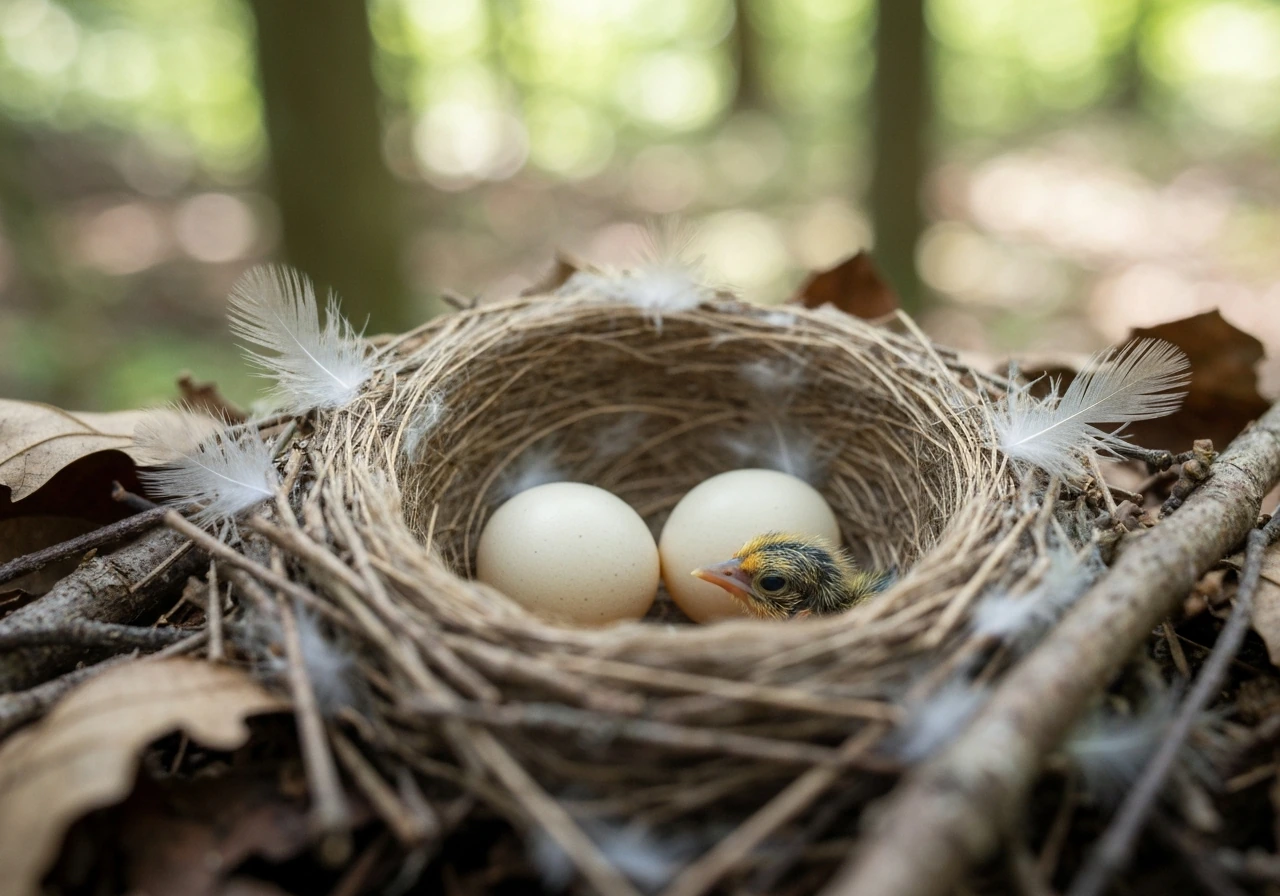
Hatching is one of those moments that's easy to miss if you're not monitoring regularly. The chick uses an egg tooth, a small hard point on its beak, to break through the shell in a process called pipping, followed by zipping around the shell until it opens. Newly hatched chicks of most songbirds are altricial, meaning they're helpless, blind, and featherless, requiring constant warmth and feeding. Precocial species like ducks and killdeer are a different story entirely: their chicks hatch fully feathered and are mobile within hours.
Feeding intensity during the nestling period is remarkable. Research shows songbird parents can make provisioning visits up to once every 2 to 3 minutes per parent during peak feeding periods. The diet is almost entirely insects, especially caterpillars and spiders, which are rich in protein. If you're supporting nesting birds in your yard, maintaining pesticide-free areas and having native plantings that host caterpillars is one of the most practical things you can do for chick survival.
Parental roles aren't always equal
Both male and female parents often share feeding duties, but the split varies by species. In many nests, researchers have recorded both parents actively provisioning chicks, though at different rates. In some species, males take over more of the feeding as females begin a second clutch. In polygynous species, the female may handle most or all of the incubation and chick care on her own. Watching who feeds the chicks and how often is actually one of the most interesting things you can observe once you understand what the roles typically look like for your target species.
Fledging and what happens to juvenile birds
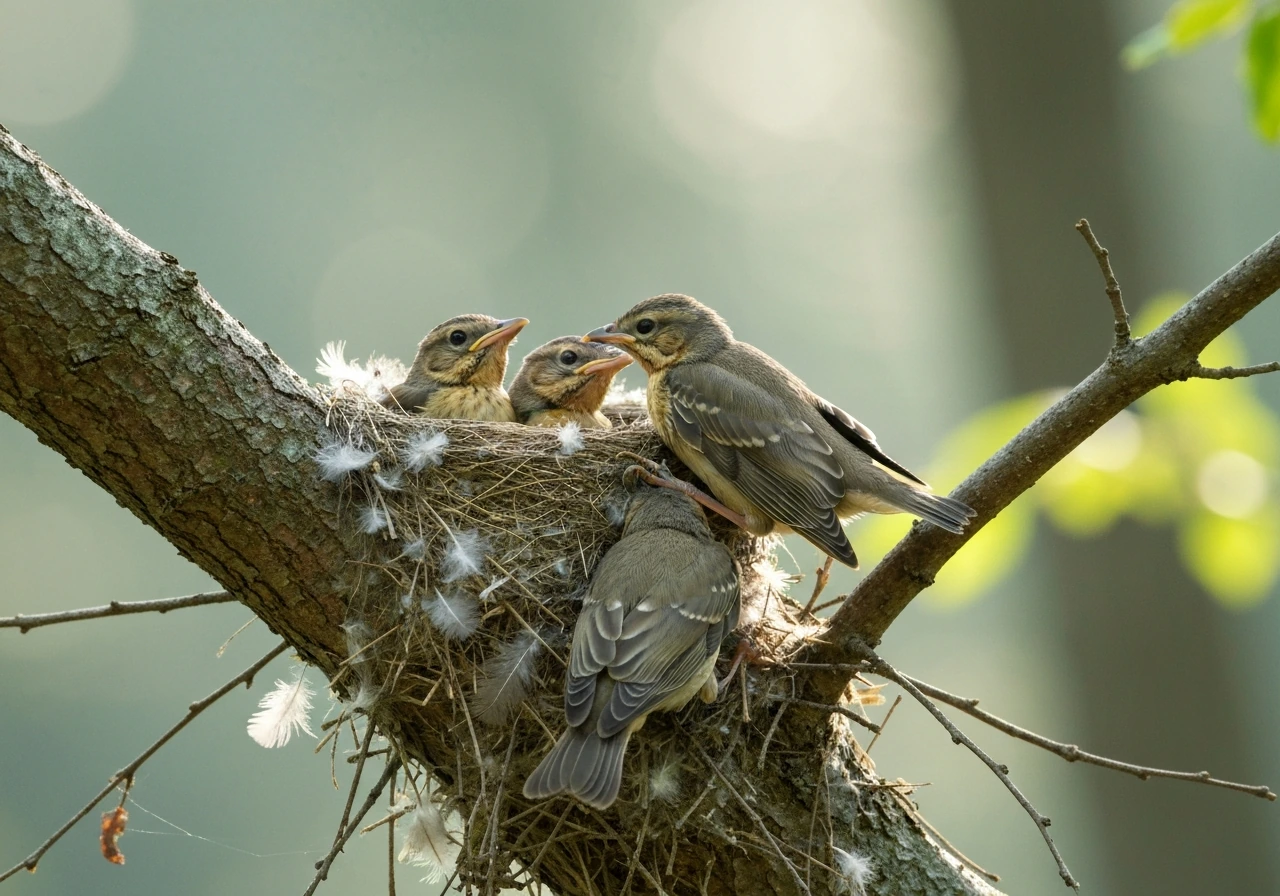
Fledging is when chicks leave the nest. For songbirds, this typically happens 10 to 20 days after hatching, depending on species. Here's the thing that catches a lot of people off guard: fledglings don't look like adults, and they often can't fly well. They sit on the ground or low branches, look a bit scraggly, and call loudly. This is completely normal. If you see a bird that looks like this and an adult is still visiting and feeding it, leave it alone. The parent is doing the job.
Juveniles can spend weeks with their parents after leaving the nest, continuing to receive food and learning survival skills. Eventually the parents stop feeding them, sometimes quite abruptly, and the young birds begin foraging independently. This post-fledging phase is actually one of the highest mortality periods for young birds, mostly from predation and starvation. There's not much you can do to intervene here, and in most cases you shouldn't try.
How hobbyists can support breeding responsibly
If you want to actively support nesting birds, nest boxes are the most practical and proven approach. Cavity-nesting species like bluebirds, chickadees, and tree swallows readily use well-designed boxes where natural cavities are scarce. Getting the specs right matters more than most people realize. For Eastern Bluebirds, the entrance hole diameter should be exactly 1. For bluebirds, the Oklahoma Department of Wildlife Conservation specifies a standard 1.5-inch entrance hole and recommends adding a predator guard to protect the nest the entrance hole diameter should be exactly 1. 5 inches. The roof should extend at least 5 inches beyond the entrance to reduce predator access, and drainage holes in the floor are essential to prevent water buildup. Ventilation holes placed just below the roofline also help prevent overheating, which can kill chicks. A box that's easy to open for cleaning and monitoring is a must, not optional.
Predator protection is often the difference between a successful nest and a raided one. Deep tunnel-style predator guards, smooth metal baffles on poles, and proper mounting height all reduce risk significantly. Don't skip this step. I've seen people put up beautiful boxes, attract a pair, and then lose the whole clutch to a snake or raccoon because there was no baffle on the pole. It's genuinely heartbreaking and avoidable. If you want to go deeper on this, bird breeding tips covers the hands-on setup details that make a real difference.
Habitat support beyond the box matters too. Native plants, pesticide-free insect populations, and a clean shallow water source all improve breeding success. You're not just providing a box, you're providing a territory that can sustain a pair through the full breeding cycle.
Monitoring without causing harm
Once you have active nests, monitor them, but keep it light. One to two visits per week is the recommended limit once monitoring is underway. Open the box, take a quick look, record what you see (number of eggs, chicks, development stage), close it gently, and leave. Frequent handling or disturbance can cause adults to abandon the nest, and that's the last thing you want. Joining a citizen science program like NestWatch is a great way to put your observations to use while getting guidance on best practices. It's also a good way to track whether you're seeing normal timelines or something that needs attention.
Natural vs. assisted breeding: a quick comparison
| Approach | Best For | Key Action | Main Risk |
|---|---|---|---|
| Wild natural breeding | Observing birds in natural habitat | Provide food, water, native plants; minimize disturbance | Habitat loss, predation, pesticides |
| Nest box program | Cavity nesters (bluebirds, chickadees, tree swallows) | Install correctly sized, predator-protected boxes; monitor weekly | Poor box design, predator access, competitor species taking box |
| Habitat enhancement | All species | Plant native vegetation, reduce lawn, eliminate pesticides | Takes time; results not immediate |
| Wildlife rehabilitation support | Injured or orphaned chicks only | Contact a licensed rehabilitator; do not attempt home care | Well-meaning intervention causing harm |
For most hobbyists, the nest box plus habitat approach is the sweet spot. It's hands-on enough to be satisfying, genuinely helpful for birds, and doesn't require any permits or specialized equipment. If you want to think bigger about bird appreciation in your daily life, reading up on how to celebrate national bird day can give you fun, practical ways to deepen that connection throughout the year.
Ethics, legality, and welfare: the stuff you need to know
This section isn't optional reading. In the United States, most wild birds are protected under the Migratory Bird Treaty Act (MBTA). That means it is illegal to destroy a nest that contains eggs or chicks, or that young birds are still dependent on, unless you have a specific permit. Nest removal permits are rarely issued and typically only for immediate human health or safety concerns. If a nest is in an inconvenient spot in your yard and it has eggs or chicks in it, your legal and ethical obligation is to leave it alone until the birds are done.
Disturbance is also regulated. Actions that frighten birds into abandoning their nests can also fall under MBTA protection, even if you don't physically touch the nest. The practical rule of thumb: if birds are actively using a nest, give it a wide berth. Monitor from a distance. Do not repeatedly approach, handle eggs or chicks, or allow pets near active nests.
If you find a baby bird on the ground, your instinct to help is understandable, but most interventions do more harm than good. If it's a nestling (featherless, eyes closed) and you can see the nest nearby, the best thing to do is gently place it back. The parent will not reject it because you touched it. If it's a fledgling (feathered, hopping around, calling), and an adult is nearby, it is not orphaned. Leave it alone. If an animal is genuinely injured or a true orphan with no parents in sight after several hours, contact a licensed wildlife rehabilitator. Don't try to raise it yourself.
What success looks like at each stage
- Pair formation: You're seeing courtship behavior, song, and both birds spending time near a nest site or box. Good sign.
- Nest building: Material being carried into a box or natural cavity. Normal timeline is a few days to two weeks depending on species.
- Egg laying: One egg appearing per day (or every 1–2 days for some species). Don't panic if incubation doesn't start immediately after the first egg.
- Incubation: Adult sitting on nest, showing brood patch contact. Expect 12–28 days depending on species. Eggs that float in water (if you were somehow testing them, which you shouldn't be) are likely not viable.
- Hatching: Chicks present, shell fragments in or near nest. Adult visit frequency spikes dramatically.
- Nestling period: Rapid size increase, feather development visible. Both parents actively feeding. Expect 10–20 days before fledging.
- Fledging: Empty nest or chicks on low branches nearby with adults still present. This is success, not abandonment.
Understanding the full picture of bird biology helps you notice things you might otherwise miss. Knowing how to measure the wingspan of a bird you're observing, for example, can help you confirm species identity and understand whether you're watching an adult or a juvenile, since young birds often show different proportions before their first full molt. Similarly, if you're documenting nesting success for a citizen science project, knowing how to measure bird length accurately can help you record useful data and compare individuals across visits.
Your practical starting point right now
If you're reading this in spring and want to do something today, here's the short version: put up a properly sized nest box with a predator baffle, plant or preserve native vegetation, eliminate pesticide use in your yard, and start observing. You don't need permits to put up a nest box for native cavity nesters. You don't need advanced equipment. You need the right box specs, a pole with a baffle, and some patience. The birds will do the rest.
- Install a nest box with a 1.5-inch entrance hole (bluebirds, chickadees) and a roof overhang of at least 5 inches
- Mount it on a smooth metal pole with a baffle, 4 to 6 feet off the ground, facing away from prevailing winds
- Check the box once or twice a week maximum once activity starts
- Record what you see: egg count, development stage, adult behavior
- Keep cats and dogs away from active nesting areas
- If something looks wrong (nest abandoned, dead chicks, eggs that never hatch), document it and contact your local Audubon chapter or wildlife agency before intervening
Bird reproduction is one of those topics that starts with a simple question and opens into something genuinely fascinating the more you watch. The basics aren't complicated, the timeline is predictable once you know the species, and supporting it responsibly is well within reach for anyone willing to pay attention and resist the urge to intervene when things are actually fine.
FAQ
How can I tell when a bird’s egg-laying phase is starting versus when incubation has started?
It’s mostly about the species and your location. As a rough guide, if you see courtship and repeated singing, the pair bond is often already established and egg laying may follow soon, but the first egg date will not line up with when incubation begins (many birds start incubating near the last or next-to-last egg). If you want a practical estimate, count eggs when possible and track whether birds become noticeably more “nest-still” each day, since that is when incubation behavior typically ramps up.
What should I do if I don’t see an adult sitting on the nest right away?
The biggest mistake is assuming a nest with eggs is “abandoned” if the parent pauses or you don’t see them constantly. Many parents take short off-bouts to feed themselves or rebalance body contact with the brood patch, especially when days are warm. Use a timing check, not a single observation: if the bird returns within a normal range (often within an hour for many small cavity and open-nesters), it’s usually still active.
How do I monitor a nest without increasing the chance the parents will abandon it?
Don’t try to open or “check” a nest box more than you have to, and avoid turning eggs or moving chicks. If you need to confirm status, do it quickly and only during good weather, then close the box immediately. A simple record sheet helps you avoid repeat visits, noting date, number of eggs, and rough stage, which is enough for most hobbyists and citizen-science submissions without prolonged exposure.
If I see fewer eggs than expected, does that mean the breeding attempt failed?
Yes, it can still be “normal” for the clutch to look like it’s missing an egg early in the cycle. Because many species start incubating late, you may find two eggs with no warmth and still see incubation begin a few days later, after the clutch is nearly complete. Also watch for species differences, some birds lay on 24 to 48 hour intervals, so gaps can reflect the laying schedule rather than failure.
When is the best time to install a predator baffle around a nest box?
Removing predators after the fact often doesn’t help, prevention matters earlier. If you’re adding predator protection, do it before a pair settles, or at least before eggs are laid, because later changes can disturb the nest site. For boxes on poles, a properly sized baffle mounted at the right height and kept free of vegetation contact is typically more effective than adding random barriers after you see a problem.
How do I decide whether a baby bird on the ground needs rescue or just space?
It depends on whether the baby is a nestling or a fledgling, and also on whether parents are nearby. For nestlings, gently returning to the nest if you can locate it is usually the right first step. For fledglings, if an adult is calling, landing nearby, or feeding, it’s typically not orphaned, even if it seems stranded on the ground, and the safest move is to keep pets and people away and give it time.
If both birds are visiting the nest box, does that always mean both are caring for the chicks?
Mixed-species behavior can confuse people. For example, two birds visiting a box might look like “both parents,” but sometimes it’s a helper, a second male courting, or an adult feeding from different angles. Instead of assuming roles, log what you actually see, such as who enters first, who makes provisioning trips, and whether one sex remains closer during incubation. Over a few visits you’ll usually see a consistent pattern.
Can I clean up a nest box or remove a nest if I’m not sure the birds are gone yet?
One clue is whether the nest is actively being used. If a nest is active (eggs or chicks present, or adults consistently returning), the legal and practical expectation is to avoid actions that could cause abandonment, including repeated approaches, loud disturbances, and letting pets roam. If you find a nest after breeding ends, it’s generally safer to remove or tidy later, but timing and local rules can still vary, so it’s smart to wait until you are sure the cycle is complete.
Does supplemental bird feeding help during chick-rearing, or can it cause problems?
If you keep feeding adults, you may unintentionally increase predator attention or disrupt natural foraging schedules, especially near small nests. In general, the most effective “support” is habitat work already in the article, pesticide-free native plants for insects, and clean shallow water, rather than direct food for the nest. If you do provide supplemental food for adults, place it at some distance from the nest box and keep areas clean to reduce disease and attract fewer unwanted visitors.
Next Article
How to Bird Mouth a Rafter: Step-by-Step DIY Guide
Step-by-step guide to cut the bird-mouth notch in a roof rafter, measure pitch accurately, and fit for a tight seat.