The Great Backyard Bird Count (GBBC) runs for four days every February, and all you have to do to participate is watch birds for at least 15 minutes, write down what you see, and submit your list to eBird. That's genuinely it. The 2026 count ran February 13–16, so if you're reading this today, mark your calendar for February 2027 and use this guide to get everything ready well in advance. Everything here will still apply exactly when the next count opens.
How to Participate in the Great Backyard Bird Count
Marcus Hendricks
5 May 2026
What the Great Backyard Bird Count is and why it matters
The GBBC is a free, community science event run jointly by the National Audubon Society, the Cornell Lab of Ornithology, and Birds Canada. It's open to anyone, anywhere birds are found, and it has been running annually since 1998. The goal is simple: create a real-time global snapshot of bird populations during a single four-day window each February.
Your checklist isn't just a personal record. Researchers at Audubon, Cornell, and Birds Canada actually use the data. Combined with long-running professional surveys like the Breeding Bird Survey, GBBC data helps scientists understand how bird populations are shifting in response to climate change, habitat loss, and other environmental pressures. A backyard count in your neighborhood genuinely fills gaps that professional surveys can't cover. If you want more rigorous context beyond a single community count, explore breeding bird survey methods and how professional surveys standardize effort.
The best part for beginners: there's no skill threshold. You don't need to identify 50 species. You don't need a spotting scope or a life list. If you saw three house sparrows and a crow, that counts, and that data matters.
Check your bird-counting window and choose how you'll count

The 2026 GBBC ran February 13–16, 2026. The 2027 dates haven't been announced yet, but the event consistently falls over Presidents' Day weekend in the U.S., typically the third weekend of February. Check birdcount.org each January for the official dates.
The minimum commitment is 15 minutes at one location, at least once during the four days. You can do more. You can count at your backyard feeder on Saturday, then go to a local park on Sunday, then count again at your feeder Monday morning. Each separate watching session at a separate time or location gets its own checklist submission, so doing multiple counts actually multiplies your contribution.
Before the count starts, decide where you'll watch and roughly when. You don't need to pre-register a location. Just pick somewhere you can comfortably stand or sit for 15 minutes with a clear view of birds. Your backyard works. A neighborhood park works. A parking lot with a feeder works. The GBBC is deliberately low-barrier.
Stationary vs. traveling counts
When you submit your checklist to eBird, you'll be asked to pick a count type. The two most common for GBBC are stationary (you stayed in one spot) and traveling (you walked a route and covered some distance). For beginners, stationary is easier and more accurate. Pick a spot, stay there, count what comes to you.
How to participate step-by-step
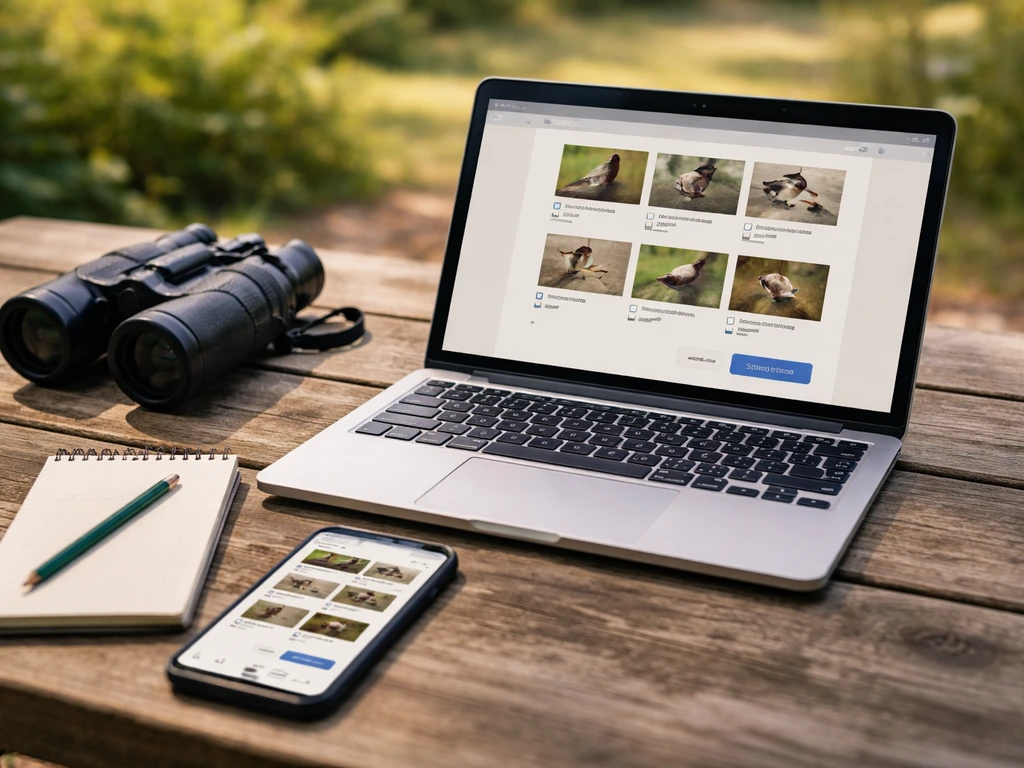
Here's the full flow from setup to submission, in order.
- Create a free eBird account at eBird.org before the count starts. This is where your checklist will be submitted. The account setup takes about two minutes.
- Download the Merlin Bird ID app on your phone (free, from Cornell Lab). You'll use it to identify birds you don't recognize during the count.
- Pick your location and your 15-minute (or longer) window. Write the start time down so you remember it for the submission form.
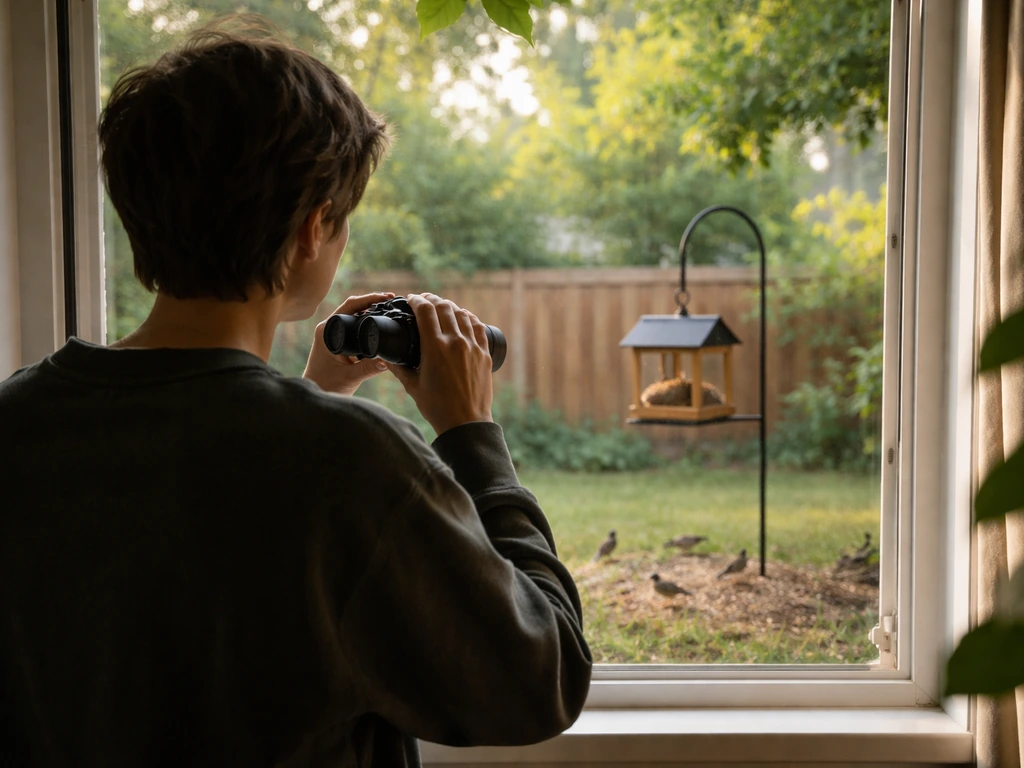
- Go outside (or watch from a window) and note every bird species you see or hear. Write species names and numbers on paper or in your phone's notes app as you go.
- For each species, record the highest number of individual birds you saw at one time during your session. If you saw 4 house finches at 9:02 AM and then 6 at 9:15 AM, record 6. Don't add them together.
- After your session, log in to eBird.org and click 'Submit.' Enter your location, the date, your start time, total time spent, count type (stationary or traveling), and the number of people who contributed to the count.
- Add your species and counts. When asked if your list is a complete checklist, answer honestly based on whether you listed all birds you were able to identify or just highlights.
- Submit. That's it.
If you want to count again later that day or at a different spot, just repeat the process and submit a new, separate checklist. Don't add a second session's birds to your first checklist.
Submit your sightings to eBird (and avoid common mistakes)
If you already use eBird regularly, you just submit your checklists as normal during the GBBC window and they automatically count toward the event. No special registration or tagging needed. If you're new to this, focus on how to record bird sightings in your checklist as you submit to eBird, since that's the core step the event uses Submit your sightings to eBird.
For everyone else, here are the mistakes I've seen trip people up the most.
Mistake 1: Adding up birds across the whole session instead of recording the peak number
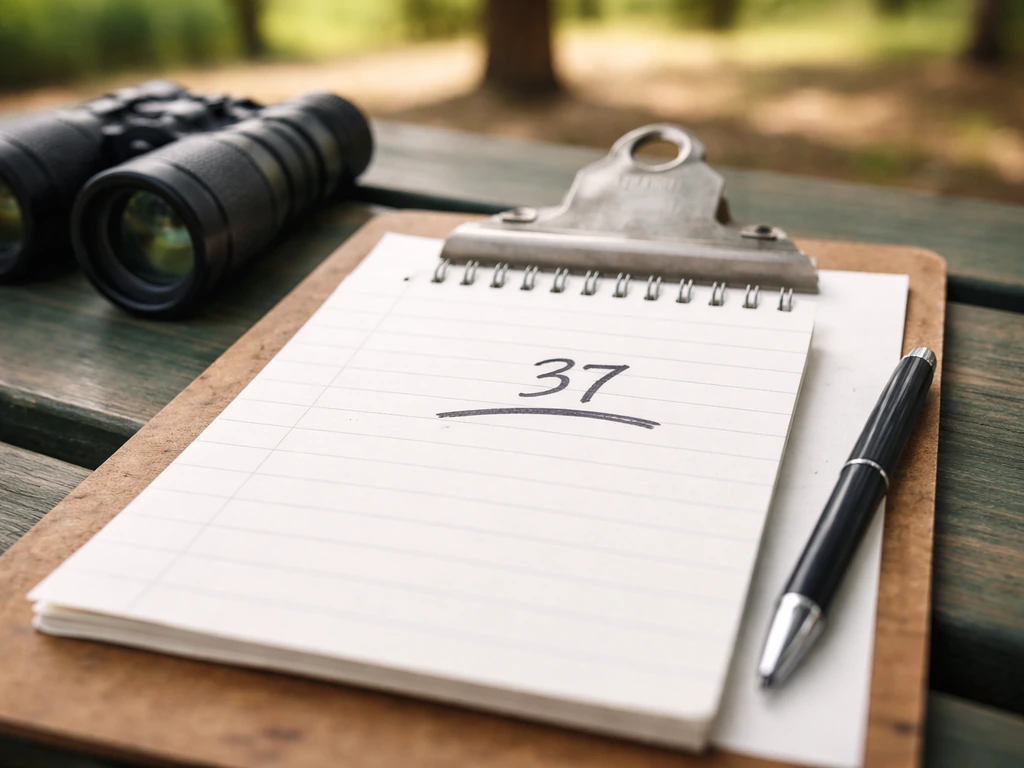
GBBC asks for the highest number of individuals you saw at one time, not a running total. The reason is smart: if you saw 4 robins, then 4 different robins landed, you could easily count 8 and accidentally double-count. The peak-count method removes that error. So if you saw 3 cardinals together at any one moment, write 3, even if you saw a total of 5 during the session.
Mistake 2: Skipping birds you couldn't fully identify
Don't skip that bird you couldn't name. eBird supports two great options for uncertain sightings. A 'spuh' is a broad catch-all category, like 'hawk sp.' when you saw a hawk but couldn't tell the species. A 'slash' covers species pairs that are hard to tell apart, like 'Greater/Lesser Scaup.' These entries still contribute useful data. In Merlin or the eBird search, type 'hawk sp.' or the two species separated by a slash and you'll find the right option.
Mistake 3: Marking a checklist incomplete when it should be complete
eBird asks whether you're submitting a complete checklist of all birds you were able to identify. This doesn't mean you had to identify every single bird you saw. It means: did you make a genuine effort to record everything you could identify, or did you just cherry-pick your favorites? If you watched for 15 minutes and logged everything you were reasonably able to name, mark it complete. This helps researchers know not just which birds were present, but which weren't.
Mistake 4: Forgetting to log the number of people
The submission form asks how many people contributed to the checklist. If you counted with your partner and two kids, that's 4 people. This metadata helps researchers interpret effort levels across submissions, so don't leave it as 1 if it wasn't just you.
Mistake 5: Submitting one checklist for multiple sessions
If you went out at 8 AM and again at 2 PM, those are two separate checklists. Merging them into one corrupts the time and effort data. Just submit twice. It takes an extra two minutes and actually makes your contribution more valuable.
Backyard prep tips to get more birds showing up
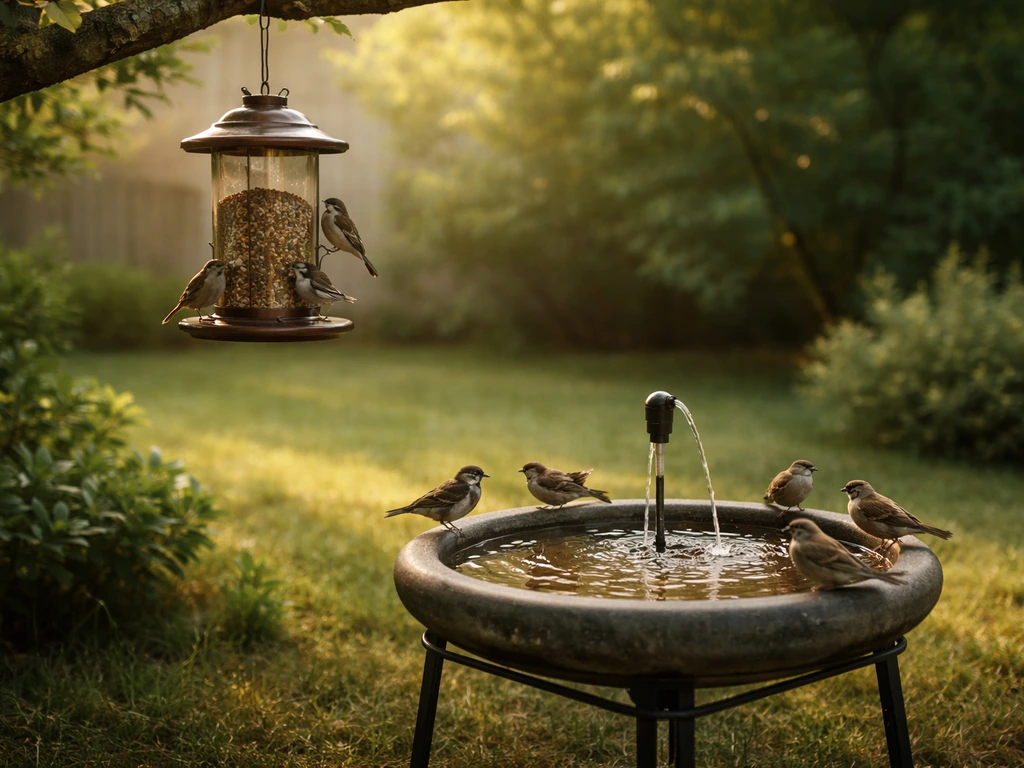
You can count from anywhere, but if you're watching from your backyard, a little prep in the days before the count can dramatically increase how many species you see.
Feeders and food
Set feeders up at least a few days before the count so birds have time to discover them. Different feeder types attract different birds. A tube feeder with black-oil sunflower seeds pulls in finches, chickadees, and nuthatches. A platform feeder with mixed seed brings in sparrows and juncos. Suet cages attract woodpeckers. If you only have one feeder, go with black-oil sunflower in a tube or hopper feeder. It's the most universally attractive option.
A heated birdbath or a dripper also pulls in birds that might not visit feeders, especially in cold February weather when water sources are frozen. If you want to go further than bird ID, it can also help to learn how the bird pollination process supports plant reproduction and habitat health.
Tools to bring to your count
- Binoculars: Even a basic 8x42 pair makes a huge difference for identifying distant birds. You don't need expensive gear to start.
- Merlin Bird ID app: Free from Cornell Lab, handles photo ID, sound ID, and has regional bird packs you can download for offline use.
- A field guide: A printed regional guide is helpful for cross-checking Merlin's suggestions, especially for tricky birds.
- Notepad and pen or your phone's notes app: Jot species and counts as you go so you don't forget by the time you submit.
- Warm layers and waterproof boots: February counts are cold. Comfort matters. A miserable observer stops counting early.
Feeder placement and safety
Place feeders either within 3 feet of a window or more than 30 feet away. This reduces window strike risk. Feeders in the middle range (3 to 30 feet) sit in the danger zone where birds build up enough speed to cause serious injury when flushed. Also, clean feeders before the count. Moldy or wet seed discourages birds and can spread disease.
Making it easier to identify birds (beginner ID basics)
Bird ID feels overwhelming at first, but you don't need to be an expert to contribute good data. Start with what's common in your area and work outward from there.
Use Merlin's Sound ID feature
This is genuinely one of the most powerful beginner tools available. Open the Merlin app, tap 'Sound ID,' and let it listen. It will identify birds calling or singing within range in real time, showing you the species name and a spectrogram. I've identified birds I never would have spotted visually just by running Sound ID for 5 minutes in my backyard. Download your regional bird pack in the app before the count so it works without a cell signal.
A simple 4-step visual ID approach
- Size: Is it smaller than a sparrow, sparrow-sized, robin-sized, or crow-sized? Size narrows down possibilities immediately.
- Shape: What's the beak like (thick and seed-cracking, thin and insect-probing, hooked like a hawk)? What's the tail shape? Are the wings pointed or rounded?
- Color and markings: Look for field marks like eye rings, wing bars, streaked breasts, or colored caps.
- Behavior: Is it clinging to a tree trunk? Hopping on the ground? Hovering? Behavior often narrows species down as much as color does.
If you're still stuck after trying these steps, use Merlin's Photo ID by snapping a picture. And if you're still not sure, enter the bird as a spuh (like 'sparrow sp.') rather than guessing a species. Honest uncertainty is better data than a confident wrong answer.
Keeping a running record of your sightings is a skill that gets easier with practice. If you want to build that habit beyond the GBBC, learning how to record bird sightings consistently and how to make a bird life list are great next steps that dovetail naturally with this kind of counting.
What to do after you submit
Once your checklist is in, you can watch the results come to life. The GBBC website at birdcount.org shows a live submission map during the four-day event, with markers appearing as checklists are submitted around the world. It's genuinely exciting to see your location light up alongside thousands of others.
eBird also lets you build a GBBC Trip Report that summarizes all the birds you found across your checklists during the four-day window. It's a nice way to see your personal contribution at a glance, especially if you did multiple sessions.
After the event closes, Cornell Lab and Audubon publish summary reports with highlights: species that showed up in unusual numbers, geographic range shifts, and record-breaking sightings. Reading those results is both fun and educational, and it puts your own checklist in context.
If eBird flags any of your entries for review (this happens when a count seems unusually high or a species is rare for your area), don't panic. It's a normal part of how the platform maintains data quality. You may be asked to add a note explaining what you saw. Just describe what you observed as clearly as you can.
Use the time between now and the next GBBC to build your skills. Spend 10 minutes a few mornings a week watching and logging birds in eBird. By February, you'll recognize most of your neighborhood birds on sight, your counts will be faster and more confident, and the event will feel less like a puzzle and more like visiting old friends.
| Task | When to do it | Notes |
|---|---|---|
| Create eBird account | Before the count opens | Free at eBird.org, takes 2 minutes |
| Download Merlin + regional bird pack | 1–2 weeks before | Download pack while on Wi-Fi so it works offline |
| Set up or clean feeders | 3–5 days before | Gives birds time to find them before count day |
| Plan your location and time slot | Day before | Write down your start time for the submission form |
| Count birds for 15+ minutes | During the 4-day window | Record peak count per species, not running total |
| Submit checklist on eBird | Same day as count | One checklist per location per session |
| Check live results map | During/after event | birdcount.org shows submissions in real time |
| Review your eBird Trip Report | After the event closes | Summarizes all your GBBC checklists in one place |
FAQ
Do I have to have an eBird account before the Great Backyard Bird Count starts?
You can create an eBird account anytime, but for a smooth day-of submission, set it up before the GBBC window. Then, during your count, you can log sightings and submit checklists without delays. If you already have an account, just make sure your profile location and default settings are correct.
What should I do if I start my 15-minute count and then get interrupted (dog, kids, noise)?
Keep the count as a single continuous session if possible, but if you are forced to stop early, treat it as a shorter session and submit it as such. Avoid combining birds seen at separate times into one checklist. If you resume later, start a new checklist submission.
How do I handle it when more than one person in my group sees different birds?
Submit one checklist for the shared session, but make sure the “number of people” field matches everyone who contributed observations. If you cannot track who saw what, record the birds you personally confirmed and use spuh or similar uncertainty entries rather than trying to guess based on someone else’s memory.
Can I count birds I only hear, not see?
Yes. If you can confidently identify a bird by sound, you can include it, using appropriate uncertainty options when needed. For uncertain calls, prefer the best matching “spuh” or the correct options using eBird’s sound-informed categories, since the goal is honest identification quality rather than perfect visuals.
What if I see a bird that I suspect is a different species but I am not sure enough to guess?
Use uncertainty options instead of a confident wrong species. For example, enter a “spuh” (like “sparrow sp.”) or a slash option when species are known look-alikes. This preserves the data’s usefulness and avoids contaminating results with incorrect species-level records.
Do I need to record birds in order or track the “peak” count in real time?
You do not need to record every moment. The key is to determine the highest number of individuals you saw at any one time, then enter that value. A practical approach is to mentally track group size whenever birds arrive, then keep the largest number you observe during the session.
Does it matter if I count from a window, and are there restrictions?
Counting from inside is allowed as long as you can observe birds clearly for at least 15 minutes. If you place feeders near windows, remember the safety guidance about window strike risk, and consider adjusting feeder location before the event. Counting from indoors does not replace these precautions.
How precise do my location details need to be?
Choose the location you actually watched from, and be as specific as the platform allows. If you move to a different spot during the four days, submit a separate checklist rather than mixing observations. This keeps effort estimates and hotspot patterns accurate.
What if eBird asks whether my checklist is “complete,” but I am sure I missed some birds?
Mark the checklist complete if you made a genuine effort to record all birds you could identify during the session, even if you cannot guarantee you caught every single bird. If you only logged a few favorite species, it is better to mark it differently. The “complete” setting is meant to reflect your logging effort, not the absolute number of birds in the area.
Can I submit multiple checklists in the same day, and will they all count toward GBBC?
Yes. Each separate watching session should be submitted as its own checklist, even if you watched at the same feeder. Submitting separate checklists helps preserve correct timing and effort information and increases the value of your overall contribution.
How should I count flock sizes if birds constantly move in and out?
Use the highest number you see at one time. If the group constantly reshuffles, aim for the largest size you observe during a brief overlap, then enter that peak number. Avoid adding counts over the full session because that can double-count individuals.
What should I do if my submission gets flagged for review because it seems unusually high or rare?
Do not panic. When eBird flags an entry, you may be asked to add a note. In your note, describe what you observed, including time of day, approximate conditions, and how you estimated numbers. If you genuinely cannot confirm the species, it may be better to revise to a spuh or a more accurate uncertainty option.
Is it worth using Merlin Sound ID, and does that “count” as part of the event data?
It is worth it, especially when birds are calling but hard to see. Merlin can improve your confidence before you submit. Your GBBC checklist still needs to be created in eBird as part of the GBBC submission process, so use Merlin to identify and then enter the results into your checklist.
Next Article
How to Bird Mouth a Rafter: Step-by-Step DIY Guide
Step-by-step guide to cut the bird-mouth notch in a roof rafter, measure pitch accurately, and fit for a tight seat.