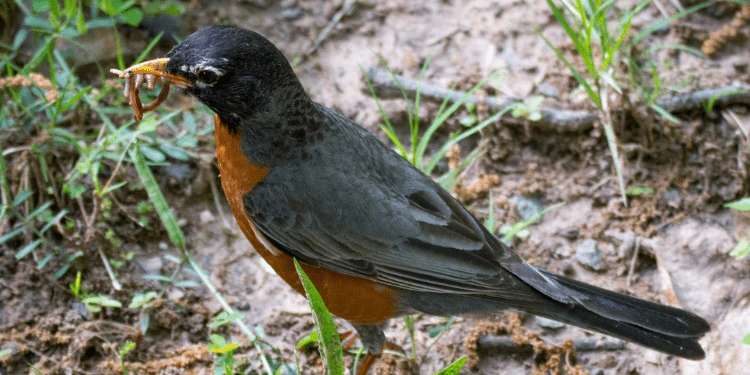
Birds find worms by combining several senses at once, not by relying on any single superpower. A robin hopping across your lawn is simultaneously watching for subtle soil movement, listening for the faint rustle of a worm shifting underground, and using environmental cues in the turf itself to narrow down exactly where to strike. It's a surprisingly sophisticated process, and once you understand it, you'll never look at a bird on a lawn the same way again.
How Does a Bird Find a Worm? Senses, Behaviors, Tips

Marcus Hendricks
30 Apr 2026
How birds locate worms: the big picture
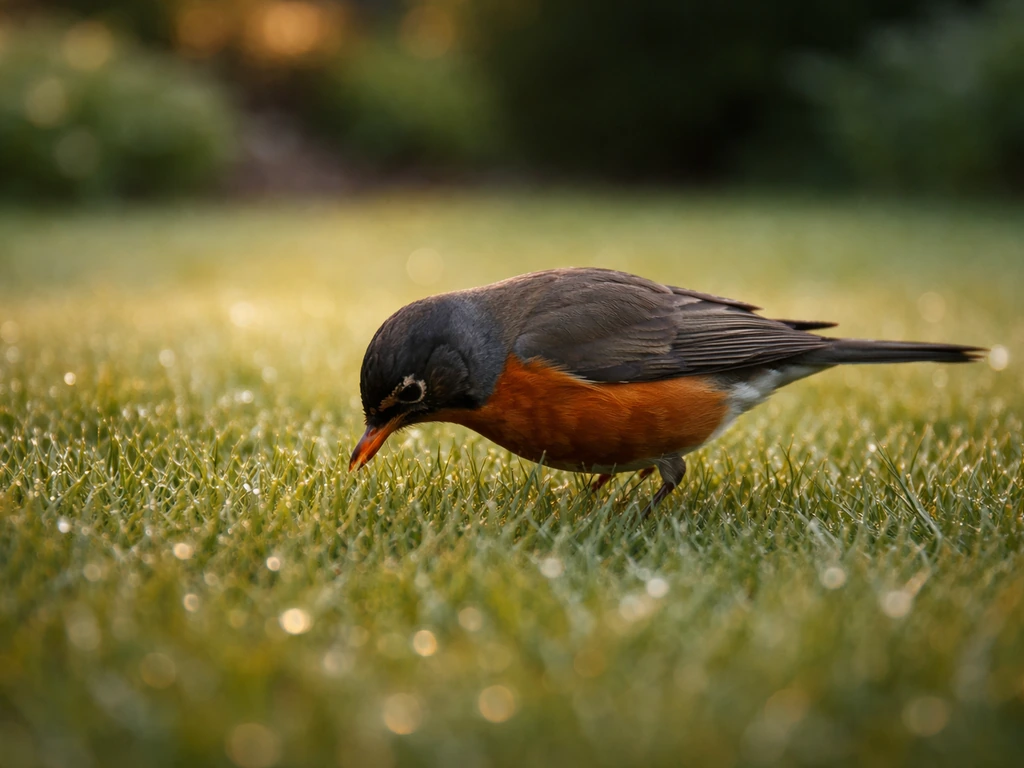
[The classic image is a robin cocking its head to one side on a dewy morning lawn. ](https://s3. amazonaws. com/assets.
cce. cornell. edu/attachments/22787/Robins-2012. pdf?
1493931287=) For a long time, people assumed that head-tilt meant the bird was smelling the soil. It's actually much more likely that the bird is positioning one eye or one ear toward the ground to gather as much information as possible before committing to a strike. Frank Heppner's foundational 1965 experiments with American robins were some of the first to test this systematically, removing different sensory cues one at a time to see which ones birds actually depend on.
What came out of that research, and the work that followed, is that birds are integrating multiple signals, and the balance between those signals shifts depending on conditions.
The key insight is this: worms are buried. Birds can't see them. So they're working with indirect evidence, movement at the soil surface, tiny vibrations, chemical signals in moist earth, and tactile feedback from the bill tip the moment it makes contact. Think of it like finding your phone in a dark bag. You use touch, sound (the buzz), and context (where you last put it) all at the same time. Birds do the same thing with worms.
Bird senses used to find worms: sight, sound, smell, and touch
Vision: reading the surface
Sight is a major player, but not in the way you might think. Birds aren't seeing through the soil. They're watching for surface clues: a faint ripple in soft mud, a raised cast of soil where a worm has been active, or a slight depression that signals recent burrowing. Robins patrolling short grass are essentially scanning the turf for these visual triggers. Wet or recently turned soil is a goldmine because worm activity is much more visible on the surface in those conditions.
Hearing: the surprising frontrunner
Research from Heppner (1965) and a later study by Montgomerie and Weatherhead published in Animal Behaviour in 1997 both found strong evidence that hearing plays a crucial role. In controlled experiments where visual and olfactory cues were removed, robins could still locate buried prey, pointing to sound as the fallback (and possibly the primary) detection method in many conditions. Audubon's summary of these studies puts it plainly: in at least some situations, robins succeed even when they can't smell or see the worm. That head-cocking posture almost certainly serves a listening function, angling the ear toward the ground to pick up the faint vibrations a moving worm makes through the soil.
Smell: real but limited
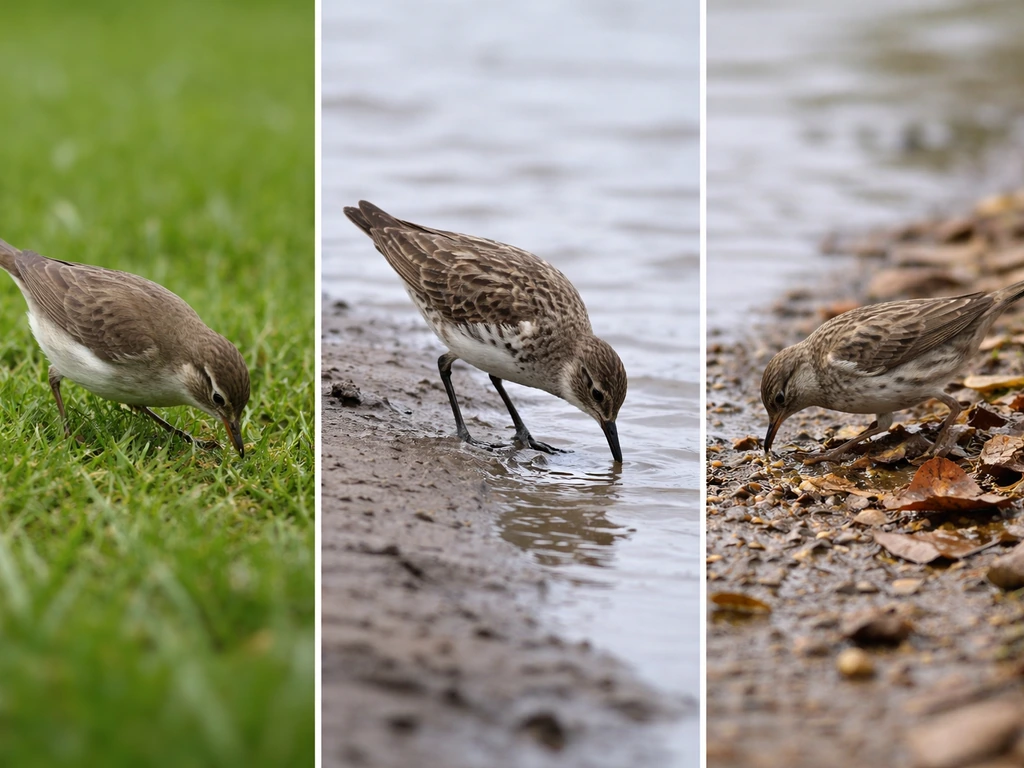
Olfaction isn't useless, but research suggests it's not sufficient on its own. Heppner's cue-elimination experiments showed that smell alone wasn't enough for robins to reliably locate earthworms. It's possible that chemical signals from moist soil or worm casts give a broad "there's something here" signal that prompts a bird to investigate further, but the precise targeting seems to come from vision and hearing. So if you've heard that birds sniff out worms, that's not entirely wrong, it's just incomplete.
Touch: the final confirmation
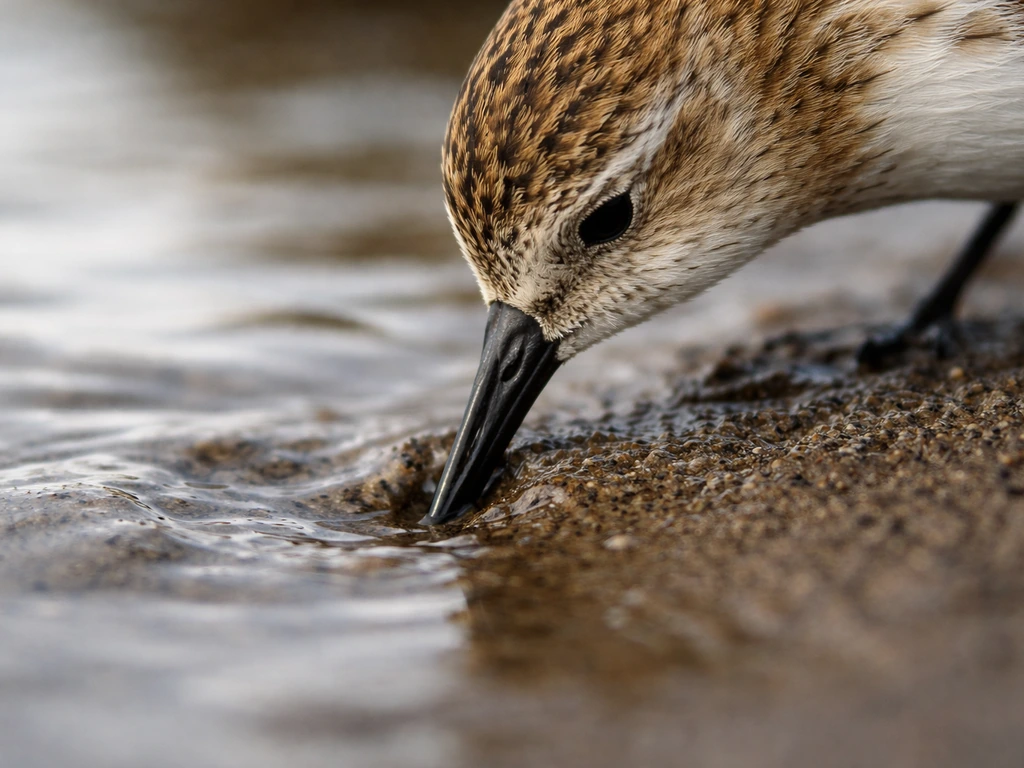
Once a bird commits and drives its bill into the soil, the job isn't over. Many birds, especially probing shorebirds, have bill tips packed with Herbst corpuscles, pressure-sensitive receptors that detect movement through the substrate. This tactile sense lets a bird feel a worm shifting in the mud even when it can't see or hear it clearly. For ground-foraging songbirds like robins, touch becomes important the moment the bill enters the soil, helping them adjust the grip before pulling.
Common foraging behaviors: pecking, probing, digging, and tapping
Different birds have developed distinct physical techniques for getting worms out of the ground, and watching these behaviors is one of the most rewarding parts of backyard bird observation. If you want to see this in action, learning how to find a bird starts with noticing where foraging happens and what conditions make it easiest.
- Pecking: Quick, sharp strikes at the surface. Robins do this to break through turf or test a spot before committing to a deeper probe. It's fast and exploratory.
- Probing: Driving the bill into soft soil or mud and opening it slightly to feel for prey. This is the signature move of shorebirds like godwits and sandpipers, whose long bills are specifically shaped for this technique.
- Digging: Some species, like thrushes in leaf litter, use both the bill and feet to toss material aside and expose worms hiding just below the surface layer.
- Tapping or foot-trembling: A few species, including some gulls, stamp or vibrate their feet on the ground to mimic rainfall, which causes worms to come to the surface. If you've ever seen a herring gull doing what looks like a strange rain dance on a lawn, that's exactly what's happening.
- Head-cocking and pausing: The dramatic pre-strike behavior of robins. The bird stops, tilts its head, gathers visual and auditory information, then lunges. The whole sequence from pause to grab can happen in under a second.
The behavioral sequence for a robin, specifically, goes something like this: detect (pause and cock the head), approach (short hop closer), crouch and lock eyes or ears on the target, then strike with a rapid jab and pull. That pull is important. Earthworms can anchor themselves with tiny bristles, so a robin may need to brace and tug firmly to extract one without breaking it.
Species and habitat differences in worm-finding
Not all worm-hunting looks the same, because different birds have evolved for different environments and prey types. Here's how the main groups compare:
| Bird Type | Primary Technique | Preferred Habitat | Key Sensory Advantage |
|---|---|---|---|
| American Robin | Head-cock, jab, and pull | Short lawns, moist turf | Hearing and vision combined |
| Shorebirds (sandpipers, godwits) | Deep probing | Mudflats, wet shorelines | Tactile (Herbst corpuscles in bill tip) |
| Thrushes (general) | Leaf-litter tossing and digging | Woodland floors, gardens | Vision in low light, digging technique |
| Gulls (herring, laughing) | Foot-trembling / rain dance | Lawns, playing fields | Behavioral mimicry of rain vibration |
| Starlings | Open-bill probing ("ricking") | Open grassland, parks | Strong jaw muscles to pry soil open |
Bill shape is a huge giveaway for foraging style. Decurved (downward-curving) bills like those on curlews are specialized for reaching into burrows. Long, straight bills like a godwit's are built for deep substrate probing. Short, stout bills like a robin's are ideal for grabbing and pulling.
If you're trying to identify birds by how they find worms, the bill is your first clue. This connects naturally to the broader skill of learning to identify bird species by their physical traits and behaviors, something worth exploring if you're getting into bird watching. If you're wondering how to find out bird species, start by noticing these physical traits and the behaviors you see during foraging identify bird species by their physical traits and behaviors.
Habitat matters just as much as species. Robins thrive on short, moist lawns where worm activity near the surface is highest. Shorebirds stick to intertidal mudflats where soft sediment allows deep probing. Woodland thrushes need the thick layer of decomposing leaves that supports high earthworm density underneath. Match the bird to its habitat and you'll know which foraging technique to expect.
What you can do today to attract and observe worm-hunting birds
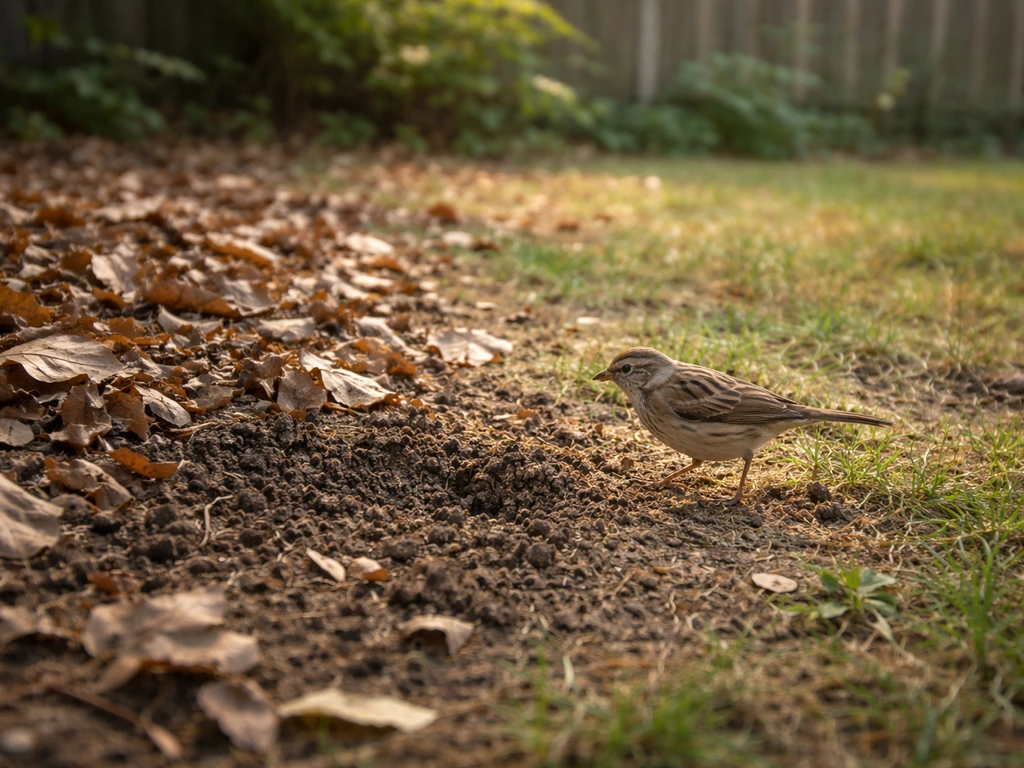
The good news is that making your yard better for worm-hunting birds is mostly about doing less, not more. To make this easier, you can also consult a bird field guide and learn how to find the right species and behavior notes quickly. Here's what actually works:
- Stop raking all your leaves. Leaf litter is where worms and insect larvae live. Audubon and the North Shore Audubon Society both recommend leaving leaves as mulch under trees and shrubs rather than bagging them. A small pile of leaves in a corner of the yard can attract thrushes and robins within days.
- Cut back on pesticides and synthetic fertilizers. This is the single most impactful change you can make. Pesticides kill the invertebrate food web that birds depend on. University of Missouri Extension guidance is explicit about this: reduce pesticide use and follow label directions if you use any at all. Healthy soil equals healthy worm populations equals more birds.
- Keep a section of lawn short and moist. Robins specifically prefer short grass where they can see and hear surface activity. If you have a sprinkler or you water in the early morning, you'll notice birds arriving shortly after. Moist soil brings worms closer to the surface.
- Add a water source. A simple birdbath or a dripping water feature does double duty: it attracts birds for drinking and bathing, and it keeps soil nearby more consistently moist. University of Missouri Extension lists water as one of the top backyard habitat essentials.
- Plant native species and reduce lawn area. Native plants support a richer insect and invertebrate community than non-native ornamentals. Audubon recommends replacing portions of grass lawn with native trees, shrubs, and flowers. Even a modest native garden patch will increase local worm and insect density.
- Watch in the early morning after rain. Earthworm activity peaks when soil is wet and temperatures are moderate. The best time to observe worm-hunting behavior is within an hour of sunrise after a rainy night. Bring binoculars and stay still.
One thing I'd encourage: resist the urge to "bait" a spot with purchased worms just to watch birds. It works in the short term, but it doesn't build the habitat that keeps birds coming back. Sustainable worm populations in healthy soil are what you're after, and that comes from the leaf litter, low pesticide, and native plant approach above.
Quick troubleshooting and common myths
There are a few stubborn misconceptions about how birds find worms that are worth clearing up, especially if you're trying to set up your yard or explain the behavior to someone else.
| Myth or Misconception | What's Actually True |
|---|---|
| Birds can smell worms underground | Smell alone isn't sufficient; experiments showed robins without olfactory cues still located prey. Smell may contribute, but it's not the main driver. |
| Head-cocking means the bird is listening only | Head-cocking likely serves both visual and auditory functions simultaneously. The bird is positioning its eye and ear for maximum information. |
| Birds see worms through the soil | Birds cannot see through soil. They detect indirect cues: surface movement, worm casts, vibrations, and moist patches. |
| Only robins hunt worms | Dozens of species hunt earthworms, including starlings, thrushes, gulls, woodcocks, and shorebirds, each with different techniques. |
| You need to put out worms to attract worm-hunting birds | The better approach is creating habitat (leaf litter, moist soil, reduced pesticides) that supports natural worm populations. Birds find those on their own. |
| Birds use one sense to find worms | Research is clear that birds combine multiple sensory cues, and which sense dominates depends on conditions, species, and prey availability. |
If you're not seeing worm-hunting birds in your yard yet, the most common reasons are: soil that's too dry or compacted (worms stay deep), heavy pesticide use that has reduced worm populations, grass that's too long and dense for robins to navigate easily, or simply no nearby water source to attract birds in the first place. Audubon recommends providing a nearby water source so birds have access to drinking, grooming, and cooling in your yard. Work through that list one by one and things will improve.
A quick checklist for spotting worm-hunting behavior
Use this to know when you're actually watching a bird hunt worms versus just wandering around: If you are dealing with an unwanted experiment, you can also learn how to find the bird in unwanted experiment by watching for the cues birds respond to.
- The bird is moving in short, deliberate hops across open ground (not flying between perches)
- It stops, tilts its head to one side, and holds still for 1 to 3 seconds
- It crouches slightly before striking (lowering its body toward the ground)
- It drives its bill into the soil with a quick jab, then pulls back steadily
- You can sometimes see it tugging against resistance before the worm comes free
- After a successful catch, it may toss the worm, re-grip it lengthwise, and swallow it whole or carry it off
Once you start recognizing this sequence, you'll spot it everywhere. And if you want to go deeper into understanding bird behavior in the field, learning how to track birds by their movement patterns and habitat use is a natural next step. If you still cannot locate the bird you were looking for, use these same observation ideas and check how to find missing bird as a related next step.
If you want help practicing this, learn how to track a bird by observing movement patterns, habitat cues, and foraging routines. To help you put these observations into practice, see our guide on how to find a bird book that matches your level and interests learning how to track birds by their movement patterns and habitat use.
If you want to practice, a quick way to start is learning how to find a bird by noticing its foraging cues and likely habitat. If you want to apply these ideas to your own yard, follow a step-by-step plan for how to bird-watch comfortably and confidently. If you're looking for a practical guide on how to bird-watch and observe worm-hunting behavior, start with the basics and build from there bird behavior in the field. The more you understand about how birds find food, the better you get at finding the birds themselves.
FAQ
Do birds ever find worms by smell alone, without using sound or sight?
Usually not. In experiments, birds could not reliably target earthworms when other cues were removed, meaning smell may help birds decide to probe an area, but pinpoint accuracy depends on other signals like surface clues and vibrations.
If a bird is head-cocking, is it always listening to vibrations?
Head-cocking likely helps gather more information with one or both senses, often angling toward the ground for better detection of subtle vibrations. In different lighting and soil conditions, that posture can also coincide with improved scanning of surface movement.
Why do I see birds searching but not pulling worms from the ground?
That often happens when worms are too deep (dry or compacted soil) or when the soil surface is hard enough that a probing strike does not reach the prey. Another reason is timing, birds may be probing at the right depth window but worms are less active during very hot, dry periods.
Does “baiting” with store-bought worms actually help birds learn to forage in my yard?
It can attract birds temporarily, but it does not build the underlying food web that supports long-term worm availability. Better results usually come from improving soil conditions and keeping consistent habitat features like leaf litter, moisture, and low chemical use.
How long should it take before changes to the yard start attracting worm-hunting birds?
It varies, but you should expect a delay because worm populations and soil structure need time to respond. In practice, noticeable increases in activity often take weeks, especially if compaction or chemical history is involved, and birds also need time to discover the improved area.
What soil changes matter most if I want more worms near the surface?
Focus on moisture and loosened structure rather than just adding fertilizer. Reducing compaction (avoid heavy foot traffic), keeping soil consistently slightly moist, and adding organic matter like leaf litter can shift worm activity closer to the surface.
Which birds are most likely to show up first for worm hunting in a backyard?
Robins are often among the first to visit lawns with short grass and moist soil. If your yard has wetter spots or you attract shoreline-like habitat (muddy edges, damp ground), you may also see probing birds with bill shapes adapted for deeper substrate.
Can I identify whether a bird is using sight cues or hearing cues while hunting?
Watch the pattern. Birds that repeatedly pause with a fixed stance before probing often indicate reliance on fine-grained detection (commonly hearing plus surface context), while birds that glide steadily and strike at visible surface triggers are likely responding more to surface movement or casts.
Do birds break worms when they pull them from the soil?
They can break them, but many species work to reduce loss by bracing and tugging with technique. Pulling decisively matters because worms can anchor with bristles, so gentle “tug and hope” often fails compared with a firm extraction.
Why aren’t worms visible even when birds keep probing?
Earthworms usually stay mostly below the surface, especially when the top layer is dry or firm. Birds can still locate them indirectly through vibrations, subtle ripples, and tactile feedback from their bill tip when they make contact with moving prey.
What’s the fastest way to confirm I’m seeing true worm-foraging behavior?
Look for a repeating foraging routine, pause then approach, crouch and orient the head toward a specific spot, then a quick jab followed by a pull. Random wandering usually lacks the repeated probe-and-extract sequence and the consistent target selection.
Next Article
How to Find the Bird in an Unwanted Experiment Fast
Step-by-step plan to locate the bird in your unwanted bird experiment, identify it, and secure the setup safely.