When most people search for 'how to do the bird dance,' they're looking for the classic thumbs-in-armpits flapping routine known as the Chicken Dance (also called 'Dance Little Bird' or 'Vogeltanz'). If you meant the more specific “ghetto bird” variation, look for a separate tutorial that breaks that style down move by move how to ghetto bird. It has a specific repeatable sequence: beak, flap, wiggle, clap, repeat. Once you break it into its four core moves and match them to the beat, it clicks fast. Even if you've got two left feet, you can land this in a single practice session.
How to Do the Bird Dance: Step-by-Step for Beginners
Marcus Hendricks
16 May 2026
What 'the bird dance' usually means (and which version to follow)
The phrase 'bird dance' floats around the internet attached to a few different things: viral TikTok bird-themed moves, generic flapping impressions, and choreographed routines. But the version that consistently shows up in search results, school events, and party playlists is the Chicken Dance. It goes by several names depending on the country: 'Vogeltanz' (German for bird dance), 'Vogerltanz,' and 'Dance Little Bird.' They all describe the same routine. That's the version this guide covers, because it has an actual structure you can learn and repeat, not just vague wing-waving.
If you came here looking for a different bird-inspired move like a bird walk or a hip-hop step sometimes called the 'ghetto bird,' those are separate dances with their own technique. This guide is for the classic four-part bird dance that's been filling dance floors since the 1980s.
Before you start: setup, posture, and basic safety
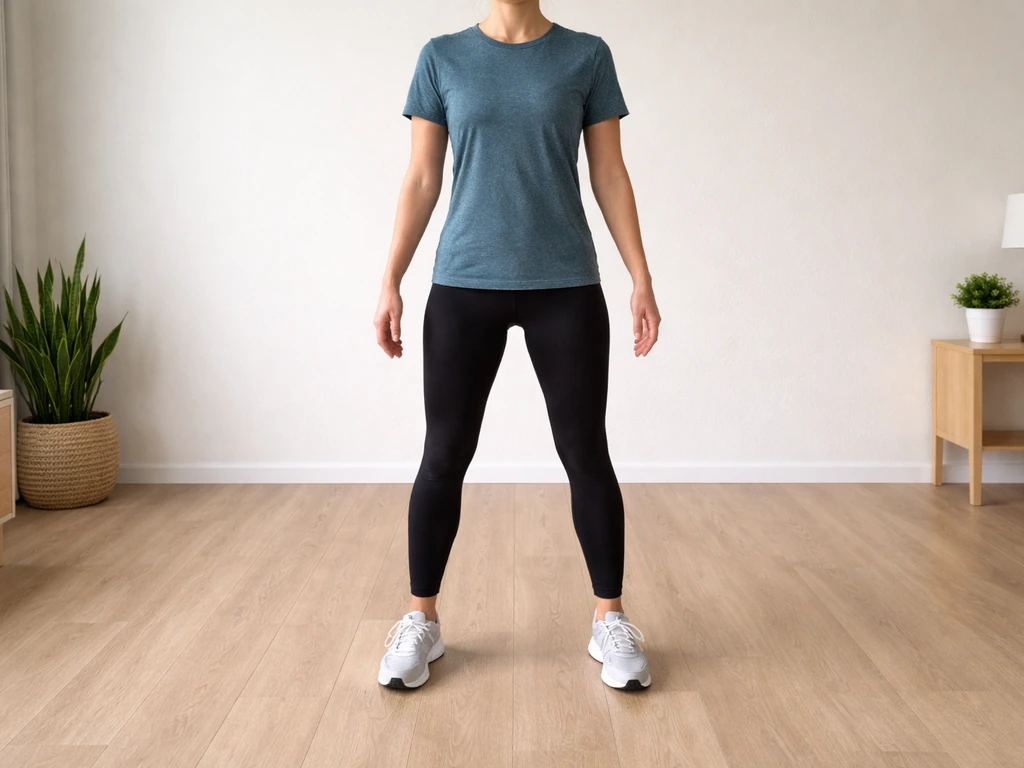
You don't need much space, but you do need enough room to swing your arms out to the sides without hitting anything. About an arm's-length clearance in every direction works. Wear comfortable shoes with a bit of grip. Socks on a hardwood floor sounds fine in theory until you're spinning and sliding into the furniture.
Posture matters more than most people expect for this dance. Stand with your feet about hip-width apart, soft knees (not locked), and your weight slightly forward on the balls of your feet. This keeps you balanced through the footwork sections and makes the hip wiggles feel natural rather than forced.
Warm up before you go full-speed, especially if you're going to practice repeatedly. Better Health Channel notes that there’s blank" rel="noopener noreferrer">limited evidence that stretching alone prevents injury, but it still recommends stretching, warming up, and cooling down as part of a sensible overall approach to exercise safety. Cold muscles are more prone to strain, and the repeated arm flapping works your shoulders more than you'd think. Two to three minutes of light movement is enough: roll your shoulders forward and backward, swing your arms across your chest, march in place, and do a few slow hip circles. When you're done practicing, take a minute to stretch your shoulders and calves so you don't tighten up. Stretching after each workout can help reduce the risk of injury, and a proper cool-down supports recovery after exercise blank" rel="noopener noreferrer">Stretching after each workout can reduce the risk of injury.
Step-by-step bird dance moves: arms, wings, and footwork
The Chicken Dance has four repeating components. Think of them as four 'verses' that cycle through. Here's each one broken down clearly.
Move 1: The beak
Hold both hands out in front of you, palms facing each other and fingers pointing forward. Open and close your fingers and thumb together four times, like a beak snapping shut. Each snap lands on a beat. Keep your elbows slightly bent and relaxed. This is the signal move that starts the whole sequence.
Move 2: The wing flap
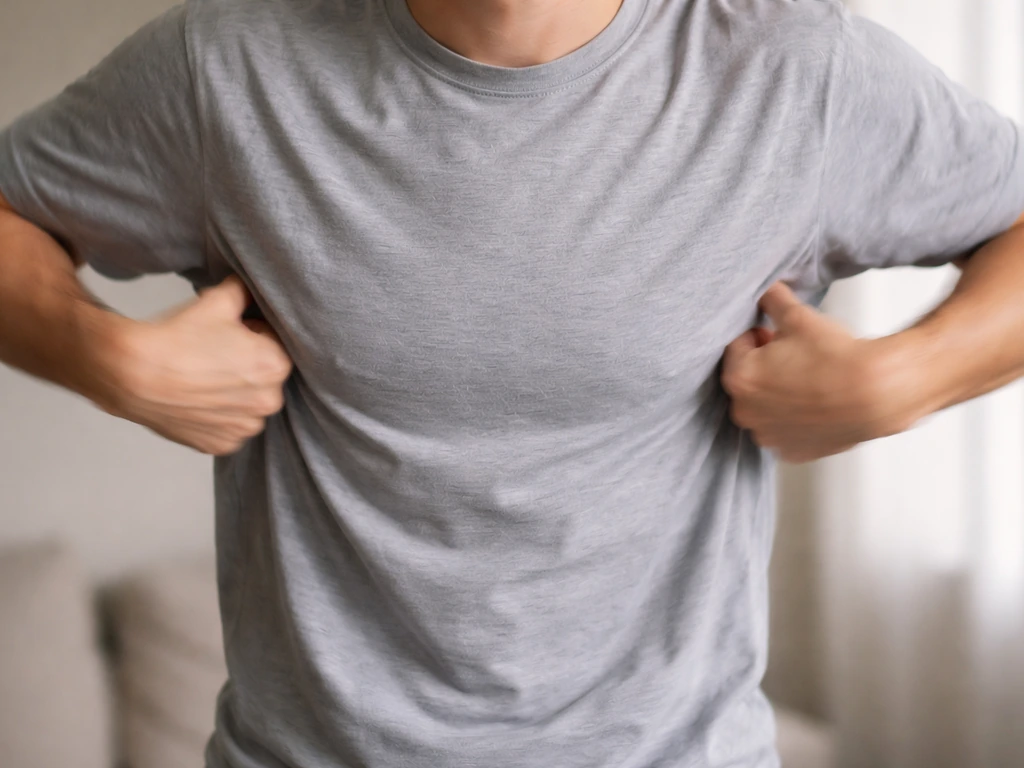
Tuck both thumbs into your armpits and let your hands flap up and down four times, one flap per beat. Your elbows are your wings. Flap them like a bird trying to take off. Keep your shoulders relaxed and don't lock your elbows. The flap should feel loose and bouncy, not stiff. During the bridge section of the song, some versions have you hold your arms straight out like an airplane and spin or turn in place instead of flapping.
Move 3: The wiggle
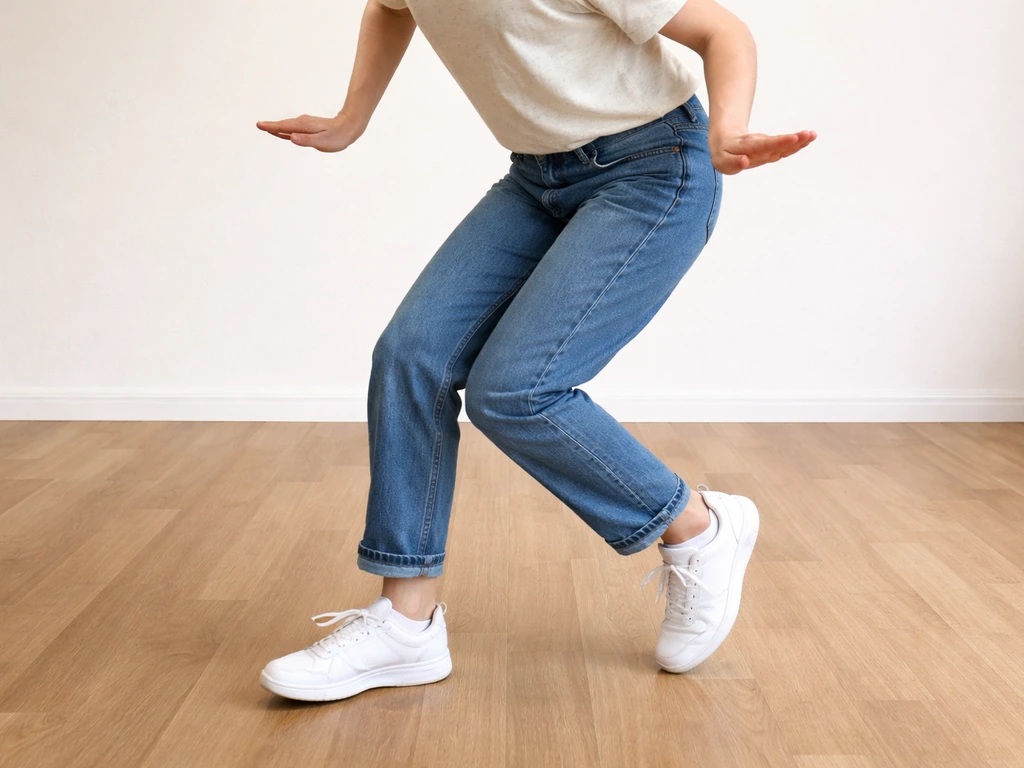
Lean forward slightly, put your hands on your knees or let them hang, and wiggle your hips and bottom four times. Think of a dog wagging its tail. Each wiggle is one beat. This is the part people feel most self-conscious about, but it's also the most fun once you stop overthinking it. Smile. Nobody's grading you.
Move 4: The clap
Stand back up and clap four times, one clap per beat. That's it. Simple, loud, satisfying. These four claps act as a reset and signal that the sequence is starting again from the top.
The partner/spinning section
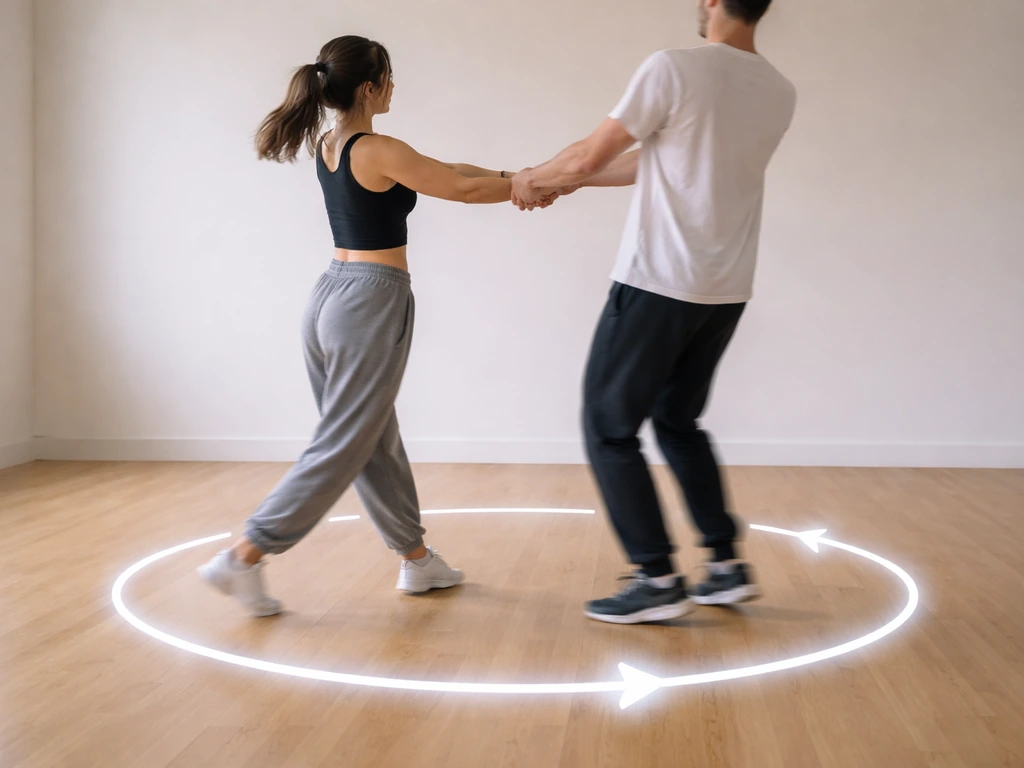
After a full cycle of beak-flap-wiggle-clap, the music shifts into a bridge. This is where you link arms with a partner and spin around in a circle (or spin solo with arms out like an airplane if you're dancing alone). The bridge usually lasts about 8 counts, then the whole sequence repeats, often getting faster each time.
| Move | What you do | How many counts |
|---|---|---|
| Beak | Snap fingers and thumb like a beak | 4 counts |
| Wing flap | Thumbs in armpits, flap elbows up and down | 4 counts |
| Wiggle | Lean forward, wiggle hips/bottom | 4 counts |
| Clap | Clap hands together | 4 counts |
| Bridge/spin | Link arms or hold out like an airplane and spin | 8 counts |
Timing and rhythm: how to keep the sequence and pace
The Chicken Dance music has a very clear, bouncy beat. Each move lands on a beat, so the trick is learning to feel the count rather than memorize abstract timing. The song follows a 4/4 rhythm, meaning there are four beats per measure. Each component of the dance (beak, flap, wiggle, clap) takes exactly one measure of four beats. Once that clicks, the whole thing feels automatic.
If you're practicing without music first, use a metronome app on your phone. Set it to around 120 BPM to start. Tap through the moves to the clicks: four beaks, four flaps, four wiggles, four claps. When that feels solid, pull up the actual Chicken Dance song and try matching your moves to it. The 'tap tempo' feature on most metronome apps lets you tap along to the recording to find its exact BPM, which removes the guesswork.
One thing I learned early: the song tends to speed up as it repeats. Most recordings do this intentionally to ramp up the energy. Don't panic when the tempo jumps. If you've drilled the sequence slowly first, your body already knows the pattern and can handle the faster pace without losing the order.
Practice plan for beginners
Don't try to run through the full dance with music on your first attempt. Break it into short drills and build up piece by piece. Here's a simple plan that works well over two to three sessions.
Session 1: Learn the moves without music (10 minutes)
- Warm up for 2 minutes: shoulder rolls, arm swings, march in place.
- Practice the beak snap slowly. Do it 10 times until it feels natural.
- Add the wing flap. Do beak-flap together, 5 times through, counting out loud.
- Add the wiggle. Run beak-flap-wiggle together, 5 times, counting out loud.
- Add the clap. Run the full four-move cycle 5 times with a metronome at a slow pace (around 80 BPM).
- Cool down with shoulder and hip stretches.
Session 2: Add music and the bridge (10 to 15 minutes)
- Warm up for 2 minutes.
- Run the four-move cycle 3 times through with a metronome at 100 BPM.
- Practice the spinning bridge section separately: arms out, 8 counts, spin.
- Put it all together: cycle, bridge, cycle, bridge at 100 BPM.
- Play the actual song at normal speed and go for it.
- Cool down and stretch.
Session 3: Confidence and speed (10 minutes)
- Warm up.
- Run the full routine twice with the song at normal speed.
- Try the fast version of the song if one exists (some recordings include a tempo ramp-up).
- Focus on keeping the sequence right rather than being energetic. Energy follows accuracy.
- Cool down.
Troubleshooting common mistakes and easy fixes
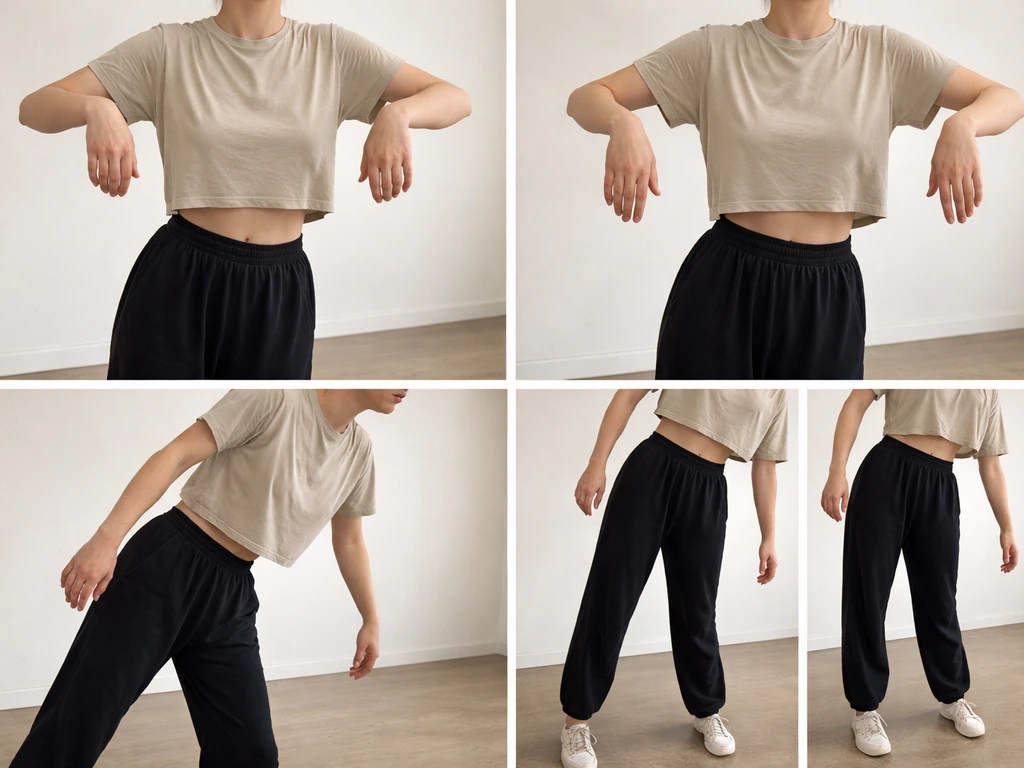
Most beginner problems with the bird dance fall into a small handful of categories. Here's what usually goes wrong and how to fix it fast.
- Stiff, robotic arm flapping: You're gripping too hard. Let your wrists go loose. Shake your hands out before you start, then try again. The flap should feel like you're trying to dry your hands off, not like you're lifting weights.
- Forgetting which move comes next: You're trying to remember the whole thing at once. Go back to drilling beak-flap-wiggle-clap in order until you could do it half-asleep. Saying the names out loud as you do each one helps it stick.
- Balance problems during the wiggle: Your weight is too far back. Shift slightly forward onto the balls of your feet before you start the wiggle. Soften your knees.
- Losing the beat when the music speeds up: Slow everything down. Practice with the metronome at 80 BPM until the sequence is automatic. Speed is just a byproduct of knowing the pattern cold.
- Spinning too fast or too slow in the bridge: Count the bridge out loud: 1-2-3-4-5-6-7-8. Each count is one small step around the circle. That gives you a concrete anchor instead of freestyling the spin.
- The whole thing looks awkward: It looks awkward because you're watching yourself think. Once the moves are automatic, it looks fun. Give yourself permission to be bad at it for the first two sessions.
Make it your own: beginner-friendly and more advanced variations
Once you've got the basic four-move cycle down, there's room to adapt the dance to your skill level or style.
For kids and absolute beginners
- Do the whole routine seated in a chair. The beak, flap, and wiggle all work sitting down, and it removes the balance challenge entirely.
- Cut the bridge section and just loop the four-move cycle without the spin.
- Slow the song down using a free app like YouTube's playback speed setting (try 0.75x speed) until the sequence feels easy.
For more experienced dancers
- Add footwork during the wiggle section: step side-to-side or bounce on alternating feet instead of standing still.
- During the bridge, try spinning with a partner and swapping partners each cycle if you're in a group.
- Exaggerate each move for theatrical effect: make the beak huge, the flap dramatic, the wiggle ridiculous. This is what separates a fun bird dance from a flat one.
- Try adding a small jump on the final clap of each cycle as a punctuation move.
Optional bird-inspired creativity: mimic behaviors, props, and music cues
This is where the dance connects to something bigger if you're into bird watching or bird-themed activities. The Chicken Dance isn't just a party gimmick. Its moves are actually modeled on real bird behaviors: the beak snapping, the wing flapping, the tail wiggle. Once you start noticing that, you can make your version more expressive by drawing on actual bird movements you've observed.
For example, try mimicking the proud chest-puffing of a pigeon between cycles, or a quick little hop like a sparrow landing. These aren't part of the 'official' routine, but they're great practice for developing body awareness and loosening up stiffness. Programs that use bird-inspired movement exercises suggest things like flapping your wings slowly and then fast, hopping like a bird, or gliding with arms held wide. Any of these make great warm-up drills before you run the actual dance.
If you want to add props, keep it simple. A feather boa or a colorful scarf tied around each wrist exaggerates the wing flap visually and makes the dance more fun to watch. For music cues, create a playlist that starts with the regular-speed Chicken Dance, then a faster version, so you're automatically pushed to speed up as you go. Some bird-themed toy instruments like whistles or shakers can be passed around in group settings to keep kids engaged and on the beat.
If this kind of movement exploration appeals to you, it pairs really well with other bird-themed activities on this site. If this kind of movement exploration appeals to you, it pairs really well with other bird-themed activities on this site, and you can also check out how to bird kendama for a different hands-on birdy challenge. Learning to mimic how different birds move, sound, and behave is a surprisingly effective way to get both more creative and more physically coordinated at the same time. The bird dance is a playful entry point into that world, and it's one worth taking seriously even if it looks silly at first glance. If you meant Twitter, you can find the Twitter bird icon by checking the app’s logo settings and using the correct in-app asset or share image.
FAQ
Is there more than one “bird dance” people mean when they ask how to do the bird dance?
Yes. The most common search result is the Chicken Dance (often called Vogeltanz or “Dance Little Bird”). If someone says “ghetto bird,” that is a different routine with its own sequence, so using this article’s steps may not match what they mean.
Which part should I do if I can’t keep my timing at the start, the beak or the claps?
Start by locking the reset, the four claps. Once you can reliably land clap 1 on beat 1, work backwards to connect beak, flap, wiggle, and then the claps will pull the sequence into place.
What should I do if my shoulders get tired quickly during the flaps?
Keep your shoulders “heavy” and your elbows “springy.” Let the motion come from relaxed forearms and a bouncy elbow hinge, not from shrugging. If you cramp, stop for 30 to 60 seconds and restart with smaller arm range.
My hips wiggle feels awkward or stiff. How do I fix that?
Use a smaller wiggle first, like moving only an inch side-to-side, while staying slightly forward on the balls of your feet. Once you can keep the wiggles on the beat, gradually widen the range.
Can I do the bird dance without getting dizzy during the bridge spins?
Yes. If the bridge spinning part feels rough, skip the turn and do a “stationary bridge” by holding arms straight out like an airplane and bouncing in place for the same 8 counts. This keeps the rhythm without the spin.
How do I practice if I don’t have the music version that speeds up?
Practice with a metronome at your current comfort tempo first, then raise by 5 to 10 BPM every few repetitions. This mimics the real recording’s speed-up without forcing you to learn timing and faster tempo at the same time.
What’s the best way to practice in short sessions if I only have 10 minutes?
Do three rounds: 2 minutes slow beak-flap-wiggle without claps, 2 minutes add the claps as the reset, 3 to 4 minutes run the full cycle in order, then 1 to 2 minutes repeat only the bridge section (or the stationary bridge).
Do I need a partner for the bridge, or can I do it solo?
You can do it solo. If dancing alone, keep your body facing forward and extend your arms like an airplane while you turn less or not at all, as long as you match the 8-count bridge timing.
What shoes or floor setup works best to avoid slipping?
Use comfortable shoes with grip and avoid slick socks on smooth floors. If you only have socks, stand on a textured rug or carpet to reduce sliding while you practice the foot-and-hip bounce.
How can I make the dance look better without changing the steps?
Add crisp finger beak snaps on each count and keep elbows consistently bent. Clean, repeatable arm and hand shapes make the routine read clearly even if your hips are smaller than someone else’s.
Is it okay to freestyle between cycles, or will it throw off the routine?
It will if you freestyle on the beat. Any add-ons should happen during the bridge or during the short pauses between cycles, and you should still return to the beak at the next beat reset.
What if I’m totally new and my order keeps mixing up, beak-flap-wiggle-clap?
Use a simple cue loop: say “beak, flap, wiggle, clap” quietly in your head while doing only the hands and torso (no big turns). Once the sequence stays correct for 5 full cycles, add hip range and then speed.
Next Article
How to Get Twitter Bird: Icon or Real Bird Guide
Get the Twitter bird icon fast or find and attract the real bird safely with practical steps, locations, and troubleshoo