Go outside, pick a spot, watch for 15 minutes, write down every bird species you see or hear and how many individuals you counted at one time. Great Backyard Bird Count and eBird guidance emphasize using the blank" rel="noopener noreferrer">highest number of individuals seen at one time during the observation period, rather than a cumulative total across time. That's the core of a bird count. Everything else, choosing a method, setting up your checklist, avoiding double-counts, submitting your data, is just layering good habits on top of that simple idea. This guide walks you through the whole process, start to finish, so you can do a count today and actually feel confident about the results.
How to Do a Bird Count: Step-by-Step for Accurate Results
Marcus Hendricks
28 Apr 2026
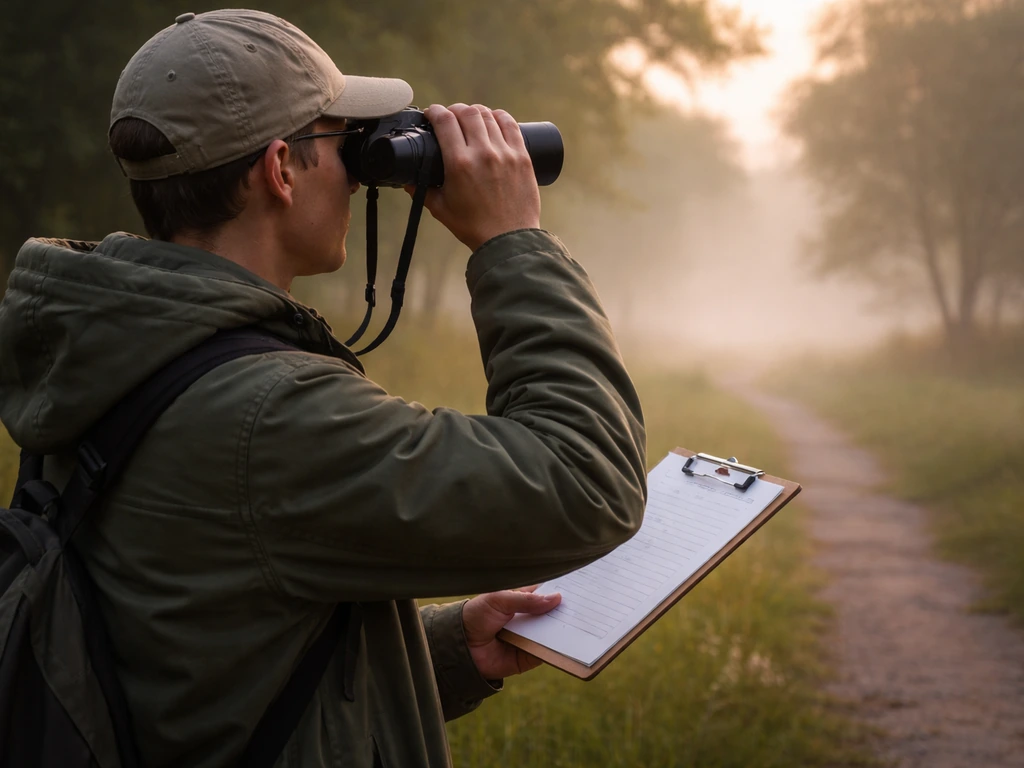
Pick the right type of bird count for today
There are a few different counting methods, and the one you choose shapes everything else. Don't overthink this step. Just match the method to what you're actually going to do.
| Method | What it is | Best for | Time commitment |
|---|---|---|---|
| Stationary (point count) | You stay in one spot and record all birds seen or heard | Beginners, backyards, parks | 15 min to 1 hour |
| Transect (traveling count) | You walk a set route and record birds along the way | Open fields, trails, area surveys | 30 min to several hours |
| Feeder count | You watch a feeder and log peak simultaneous numbers | Backyard birders, FeederWatch participants | 1–2 day windows |
| Area count | You cover a defined patch without a fixed route | Larger habitats, patches of woodland | Flexible |
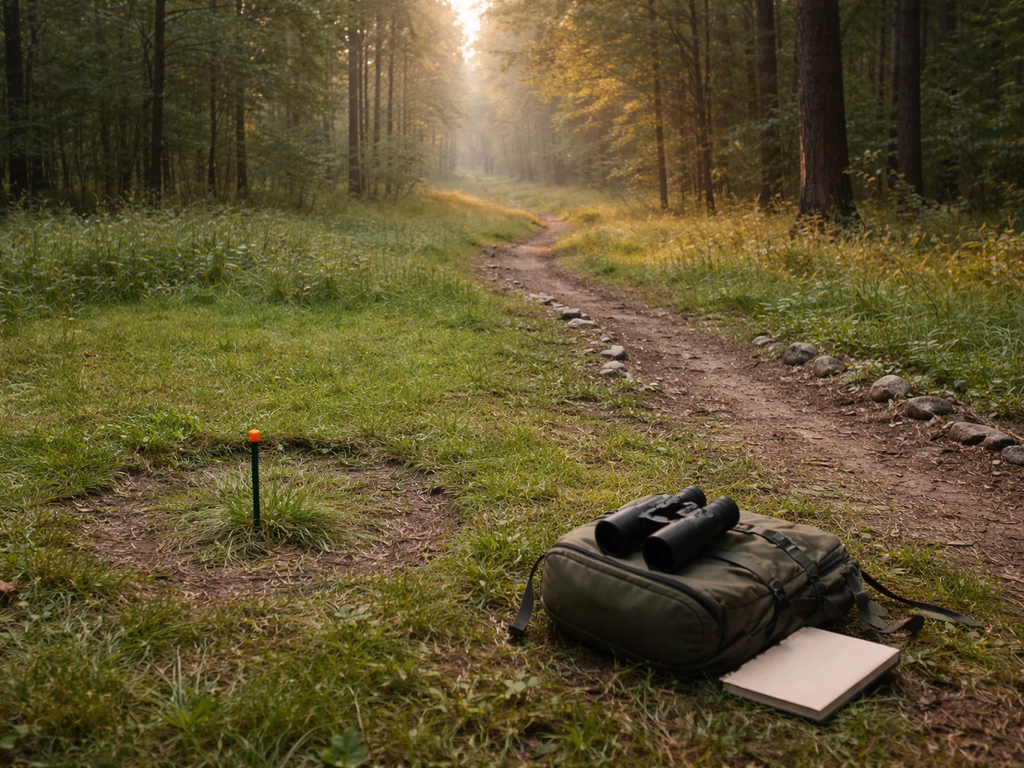
For most beginners today, a stationary point count is the easiest and most useful starting point. You pick one location, stay within about 100 feet (30 meters) of your starting point, and count everything you detect for a set period. This is exactly what eBird calls a Stationary checklist, and it maps cleanly onto what programs like the Great Backyard Bird Count (GBBC) ask you to do. The GBBC officially requires just 15 minutes of counting, which is genuinely achievable on a lunch break.
If you're specifically watching a bird feeder, the rules shift a little. Project FeederWatch uses a two-day count window, and the golden rule there is to record the maximum number of each species you see at the feeder at any one moment, not a running total over time. More on that under the recording section. For now, just decide: am I staying put, walking a route, or watching a feeder?
What to bring and how to set up your checklist
You don't need much. Here's the practical kit for a beginner bird count:
- Binoculars (even cheap 8x42s make a real difference)
- A field guide or the Merlin Bird ID app on your phone (free, and it can identify bird sounds in real time)
- Something to record on: a paper datasheet or the eBird Mobile app
- A timer so you know when your count period ends
- A pen if you're going paper
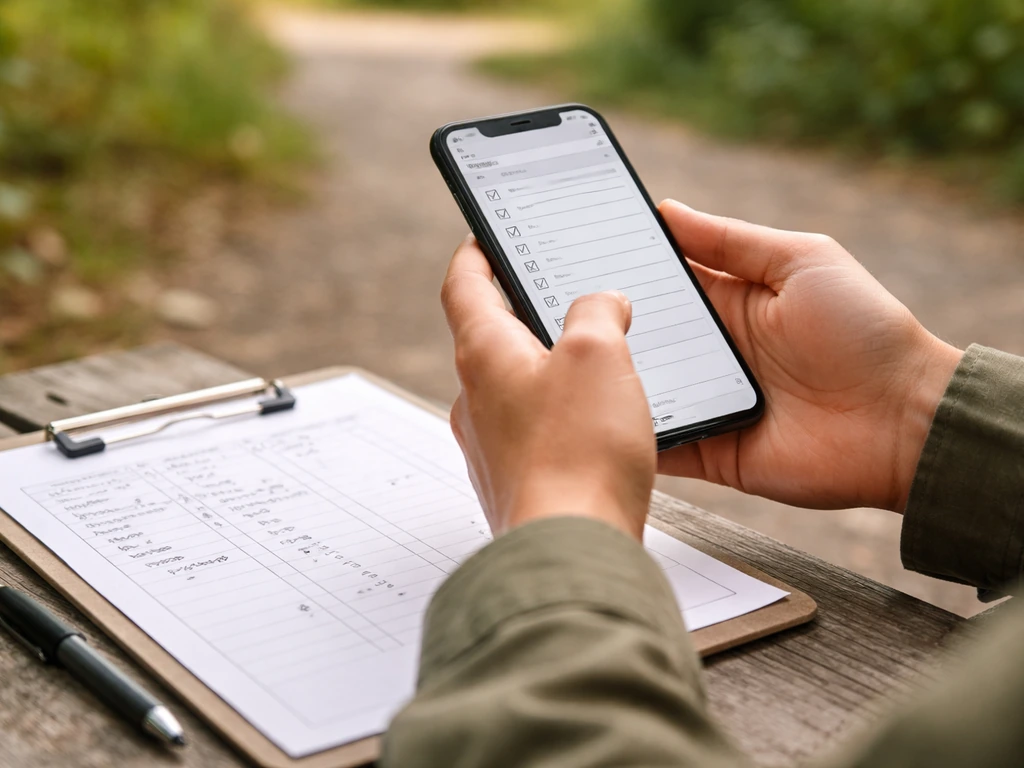
For your checklist setup, the eBird Mobile app is the easiest digital option. Open a new checklist, select your protocol (Stationary or Traveling), and let the app track your time. If you keep location tracking on, it will even set the protocol automatically based on whether you move. You can add species by typing the name, then enter how many individuals you counted. The app calls this Quick Entry and it's genuinely fast once you've used it once or twice.
If you prefer paper, draw a simple two-column datasheet: one column for species name, one for count. Add a row at the top for date, start time, location name, weather, and duration. A half-page is plenty for most counts. You can transfer everything to eBird or another platform later.
One thing worth setting up before you head out: make sure Merlin is downloaded and has the bird pack for your region. It can identify birds by their calls in real time, which is a massive help when you hear something you can't see. I use it constantly.
Choosing time and location (and how long to count)
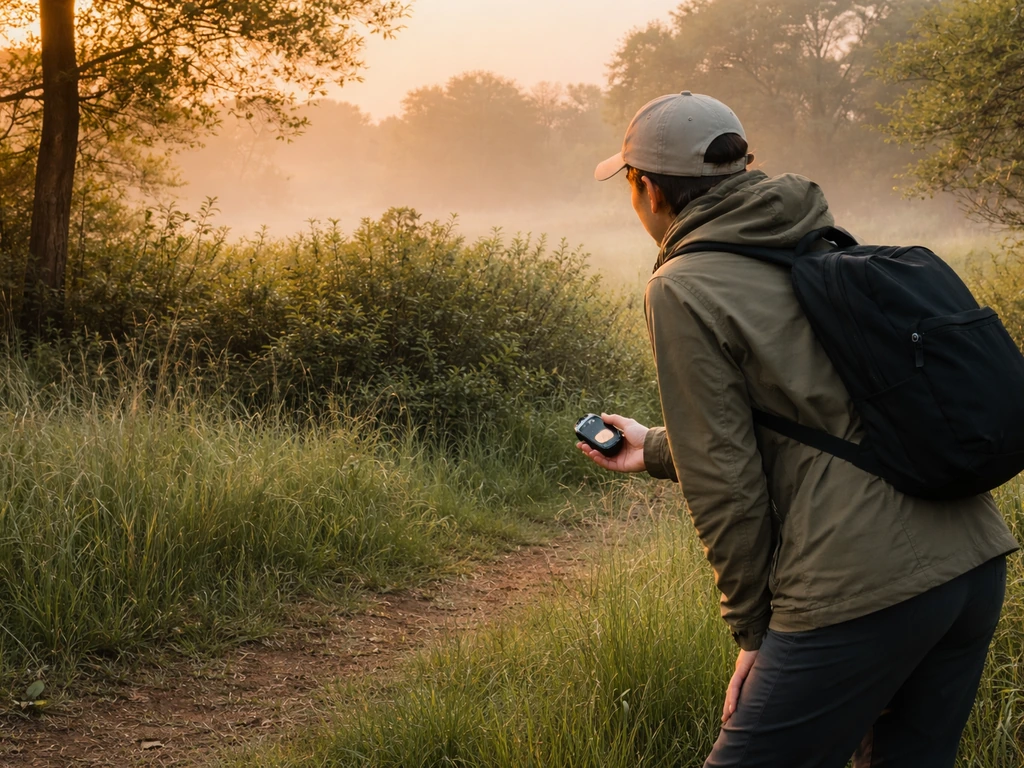
Timing matters more than most beginners expect. Birds are most active during the first two to three hours after sunrise. That's when they're singing, feeding, and moving around. Midday counts are quieter and you'll detect fewer species. If you can only count in the afternoon, do it, but temper your expectations a little.
For location, you don't need to find a famous birding hotspot. Your backyard, a local park, a patch of trees near a parking lot, all of these work. The key is picking somewhere you can stand or walk comfortably and actually focus. Avoid spots with heavy road noise or construction if you can, since calls become impossible to hear. Wind above about 15 mph has the same effect.
How long should you count? The GBBC minimum is 15 minutes and that's enough to get a real snapshot. A standard point count for citizen science is often 5 minutes at a fixed spot, though BBS (Breeding Bird Survey) protocol uses exactly 3 minutes per stop. For a beginner doing a casual count, I'd aim for 20 to 30 minutes. You'll start to notice repeat visits from the same birds after that, which is actually a good natural signal to stop.
How to count individuals without double-counting
Double-counting is the most common beginner mistake and it inflates your numbers in a way that makes the data less useful. The rule is simple: don't count the same bird twice. But in practice, that's harder than it sounds because birds move.
Here's how to handle it. When you see a bird, record it immediately. If you see another bird of the same species a few minutes later in a different part of your field of view, ask yourself: could this be the same individual that moved? If yes, don't add it. If the location and timing make it genuinely impossible for it to be the same bird (for example, you're watching two cardinals on opposite sides of a large clearing simultaneously), then count both. When in doubt, go conservative. eBird's own guidance says to give your best conservative estimate rather than padding numbers.
For feeder counts specifically, Project FeederWatch has an elegant solution to this problem: at the end of your count period, your tally for each species is the highest number you saw at the feeder at any single moment. So if you saw 1 chickadee at 9am and 4 chickadees at 11am, your count is 4, not 5. This way you're recording peak presence rather than cumulative traffic, and you never accidentally double-count a bird that flew off and came back.
If there are multiple observers counting together, assign one person to be the primary counter for a given area or direction at any moment. Two people watching the same bird from different angles and both recording it is a classic double-count trap. Communicate constantly: "I've got three house sparrows on the left" before your partner logs what they're seeing.
Recording birds you see vs hear, and handling uncertain IDs
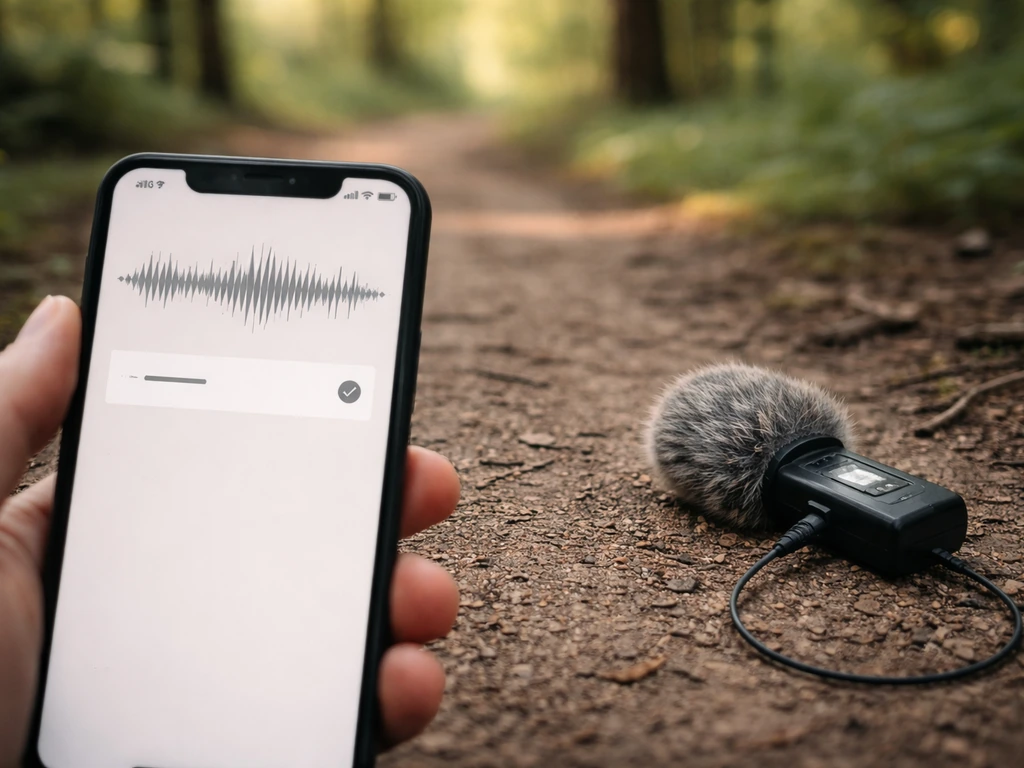
Both seen and heard birds count. This is important. A bird you hear but never see is still a valid record. In fact, in dense vegetation or forest, the majority of your detections will be by sound. Record these the same way, just note "heard only" in your comments if you want to be thorough.
If you manage to record the call on your phone, you can attach audio to an eBird checklist and it gets archived in the Macaulay Library. This is genuinely useful for your own records later and helps confirm uncertain IDs. Just make sure the recording is a real field recording you captured yourself.
Uncertain IDs happen to everyone, including experienced birders. Here's how to handle them without losing the record:
- Note what you did see or hear: size, shape, color, behavior, habitat, call description.
- Use Merlin's Sound ID or Photo ID features to get a starting point. The Photo ID tool uses machine learning to suggest species from your photo.
- If you narrow it down to two possibilities but can't confirm, record the bird at the broader taxonomic level (e.g., "Accipiter sp." for an unidentified hawk) rather than guessing.
- If you genuinely can't identify it at all, you can still note it as "Unknown" in your personal notes. eBird allows you to enter a slash species (like "Hairy/Downy Woodpecker") when two similar species are the only options.
- Don't stress about it. An honest uncertain ID is better data than a confident wrong one.
One thing I've learned the hard way: if you're not sure, don't force a specific species name just to have something on the list. eBird's concept of a "complete checklist" doesn't mean you identified every single bird perfectly. It means you made your best honest effort and reported everything you could identify. That's the standard to hold yourself to.
Turn your notes into a final tally and summary
Once your count period ends, stop adding new observations and consolidate what you have. If you used eBird Mobile, your checklist is already building in real time, so this step is mostly reviewing and cleaning up.
- Go through your species list and confirm the count for each one. Make sure you haven't accidentally summed birds over time when the rule for your count type requires a peak simultaneous count.
- For any species where you have a rough estimate rather than an exact number, use a round number you're confident about. eBird also accepts "X" as an entry when you know a species was present but you can't estimate a count reliably.
- Add any notes that give context: weather conditions, unusual behavior, habitat details. These make your data more useful over time.
- Record total duration, number of observers, and distance traveled (if applicable). These are standard eBird checklist fields.
- If you're on paper, tally each species column, double-check for any names you wrote twice under slightly different spellings, and you're done.
Your final summary should show: species name, maximum simultaneous count, and whether each bird was seen, heard, or both. That's the core of a usable bird count record, whether it's just for you or heading to a citizen science database.
Common problems and quick troubleshooting
A few things go wrong on almost every beginner count. Here's how to handle them without throwing off your whole session:
- Wind or noise drowning out calls: Move to a more sheltered spot if possible, or shift to visual-only counting. Wind above 15 mph consistently kills sound detection, so note it in your checklist comments.
- Poor visibility (fog, dense brush): Focus on what you can confirm. Don't guess at shapes in the dark. A short list of confident IDs beats a long list of questionable ones.
- Two similar species you can't separate: Use the slash species option in eBird (e.g., "Lesser/Greater Scaup") or note the sighting as unidentified in that group. Don't flip a coin.
- Birds moving in and out of your area constantly: Stick to your defined radius and count period strictly. Birds flying through that don't land or spend any time in your area are generally not counted for stationary or point counts.
- You lost count mid-flock: Give your best conservative estimate. Round down if unsure. Noting "approx. 40" in your comments is fine.
- Multiple observers logged the same bird: Debrief immediately after the count and reconcile before submitting. One combined checklist with the correct observer count noted is better than two separate overlapping checklists.
The biggest mental trap is feeling like you need a perfect count to submit data. You don't. Consistent, honest effort over time is what makes citizen science data valuable, not perfection on any single day.
Submitting your bird count to citizen science (or just logging it for yourself)
You have a few options depending on what you want to do with your count. If you need a related technique after your count, you can also look into how to weigh a bird for safe, practical handling. A bird wattmeter can help you measure how much electrical power different devices use during experiments how to use a bird wattmeter. Here's a quick breakdown:
| Platform | Best for | How to submit | Key requirement |
|---|---|---|---|
| eBird (Cornell Lab) | Any bird count, any location, any time | eBird app or website; enter species and counts into a checklist | Mark checklist as complete if you reported all identifiable birds |
| Great Backyard Bird Count (GBBC) | Casual backyard/outdoor counts, runs annually in February | birdcount.org or via eBird checklist during the event window | Minimum 15 minutes; follow GBBC protocol if submitting to that program specifically |
| Project FeederWatch | Feeder watchers; runs November to April | FeederWatch website after each two-day count period | Peak simultaneous count rule; enrollment required |
| Personal log | Keeping your own records | eBird private checklists, a notebook, or a spreadsheet | Whatever format works for you |
For eBird submission, the key fields you'll need to fill in are: observation date, start time, duration, number of observers, protocol type (Stationary, Traveling, etc.), location, and whether the checklist is complete. For each species, enter the count or "X" if you detected it but can't estimate a number. You can edit any of these fields later using the pencil icon in the app without losing your notes or photos.
One thing to know: if you're submitting to both GBBC and eBird during a GBBC event window, a complete eBird checklist automatically counts for GBBC. You don't need to submit separately. But if you're entering data for FeederWatch, that's its own system with its own login and entry process, since the counting rules are different.
If you're not ready to submit anywhere yet, just log it for yourself. An honest personal record of what you saw, when, and where is genuinely valuable over time. You'll start to notice seasonal patterns, newcomers after a storm, species that show up every year in the same week. That's when bird counting stops being a task and starts being one of the more satisfying hobbies you can do outside.
FAQ
What should I do if a bird calls or flies in right at the end of my count period?
Use a quiet “stop rule” so you do not keep adding birds after the clock ends. When the timer hits zero, finish the current observation only if it started before the end (for example, you heard a call during the last 30 seconds), then stop. This prevents late, drifting detections from inflating totals.
How do I record counts when I know a species is there but I cannot estimate how many?
Write down the best estimate of what you detected at that moment, and if you truly cannot estimate, enter it as an X for that species. If you can, add a short comment like “heard only, likely 2” to help you interpret your own uncertainty later.
Can I revise my bird count after I get home if I identify something differently later?
For most protocols, you should not “correct” your count later based on what you think you might have missed. If you realize an ID uncertainty after the fact, update the species name (or leave it at the best honest ID) and keep the same time window. Changing numbers after the session can create bias.
What if I start moving during a stationary count, does it ruin the checklist?
If your checklist is stationary and you accidentally start drifting, switch to Traveling only if you actually move between detections and can no longer treat it as a fixed radius count. If you stayed roughly in one place, keep Stationary and describe the situation in comments (for example, “stood near trail junction, minimal movement”).
How do I choose between a stationary count and a traveling count when my route changes?
Track the protocol as you intend to count, not as you hope you can count. If you are moving along a path and counting what you detect as you go, Traveling is the right fit. If you return to the same spot and treat it like a fixed watch area, then Stationary is more appropriate.
What’s the best way to adjust if it’s really windy and I can barely hear birds?
Wind is one reason your detection range shrinks, but the bigger effect is missing birds by sound. If it is windy, extend the duration slightly (for example, from 15 to 20 minutes) or choose a more sheltered spot. Also note “windy” in your weather field so future comparisons are fair.
I saw the same species twice a few minutes apart, how do I decide if it was one bird or two?
If two birds of the same species are likely the same individual and you cannot disprove it, go conservative and record it once. A practical approach is to treat “same bird” as the default when detections overlap in time, and only count both when you can clearly see they are separated in space (or you can track one individual).
If I’m counting with a friend, how can we prevent duplicates without missing birds?
Use a clear coordination rule: one person calls out species and counts for a specific sector, and the other person logs only what they are assigned. Avoid “I saw it too” confirmations after both have started writing, because it encourages duplicate entries.
Do heard-only detections count the same as birds I actually see, and how should I document them?
For “heard only” records, keep them as valid observations but mark the evidence in your notes (heard, call type, approximate distance if you know it). If you later confirm from a sighting, you can update the record, but do not retroactively inflate the number as if you saw more than you actually heard.
What if I can’t watch the feeder continuously during my feeder count?
For feeder monitoring, the peak method works best when you are actively watching for the whole window. If you leave your post for several minutes, shorten the session to the actual continuous watch time or exclude that break, since “maximum at any moment” assumes you were present.
What should I do when I’m fairly sure of the group (like sparrows) but not the exact species?
If you cannot identify confidently, use a broader category option when available (for example, “sparrow sp.”) rather than guessing a specific species. Then add a note with what you heard or saw (song type, size, wing bars) so future checks can narrow it down.
How can I make my bird counts comparable across different days?
Choose the same time of day and similar weather each time you count. If you switch from morning to midday routinely, your results will reflect activity differences more than population changes. Consistency makes your personal trends and any submissions much more meaningful.
Next Article
How to Weigh a Bird Safely: Step-by-Step Guide
Step-by-step how to weigh a bird safely: choose the right scale, tare, minimize stress, repeat, and record accurate resu