Starting a bird sanctuary is one of the most rewarding things you can do for birds and your community. But here is the honest truth: doing it right takes more than a big heart and a backyard. You need a clear legal structure, the right permits, safe housing, and a plan for every bird that walks (or flies) through your door. This guide walks you through every step, in the order you should actually do them, so you can launch something real instead of spinning your wheels.
How to Start a Bird Sanctuary Legally and Safely
Marcus Hendricks
14 Apr 2026
Start with your mission before anything else
Before you file a single form or build a single enclosure, you need to answer one question honestly: what exactly is this sanctuary for? Your mission statement is not just a nice-sounding sentence for your website. It determines your permits, your facility design, your staffing needs, and your budget. Get it wrong and you end up trying to do everything for every bird, which is a fast road to burnout and organizational chaos.
Start by deciding on your sanctuary's focus. The main categories are rescue and rehabilitation (taking in injured or orphaned wild birds, nursing them back to health, and releasing them), long-term sanctuary care (housing birds that cannot be released due to permanent injury or human imprinting), and education (using non-releasable birds to teach the public about wildlife). Many sanctuaries blend all three, but beginners do better by starting narrow and expanding later.
Next, define your species scope. Are you focusing on songbirds, raptors, waterfowl, or a mix? This matters enormously because raptors like hawks, eagles, and owls require specialized training and carry additional permit restrictions. In Minnesota, for example, the DNR notes that novice applicants are generally prohibited from possessing hawks, eagles, harriers, osprey, falcons, or owls for rehabilitation. Starting with songbirds and common waterfowl is almost always the smarter entry point.
Also set a realistic capacity limit. How many birds can you humanely house and care for with your current space, budget, and volunteer pool? Write that number down. It becomes part of your operations plan and helps you say no without guilt when you are already full.
Setting up your nonprofit legally (do this before you take in a single bird)
Operating as a nonprofit is not optional if you want to take in donations, apply for grants, and build lasting credibility. It also protects you personally from liability. Here is the sequence that works.
Incorporate at the state level first
File articles of incorporation with your state's Secretary of State office as a nonprofit corporation. This is different from an LLC. You need a nonprofit corporation to qualify for federal tax-exempt status. Include a specific purpose clause that matches what the IRS wants to see for 501(c)(3) organizations, something like: 'The organization is organized exclusively for charitable and educational purposes, including the rescue, rehabilitation, and education of wild birds.' Also include a dissolution clause stating that assets go to another tax-exempt organization if you shut down. Your state's filing fee is usually between $30 and $100.
Write your bylaws and assemble a board
Bylaws are your organization's rulebook. They cover how board members are elected, how decisions are made, what a quorum looks like, and what happens if someone needs to be removed. You need at least three board members in most states, and they should not all be from the same family. The IRS looks at board independence when reviewing your application. Assign clear roles: president, treasurer, and secretary at minimum.
Apply for federal tax-exempt status
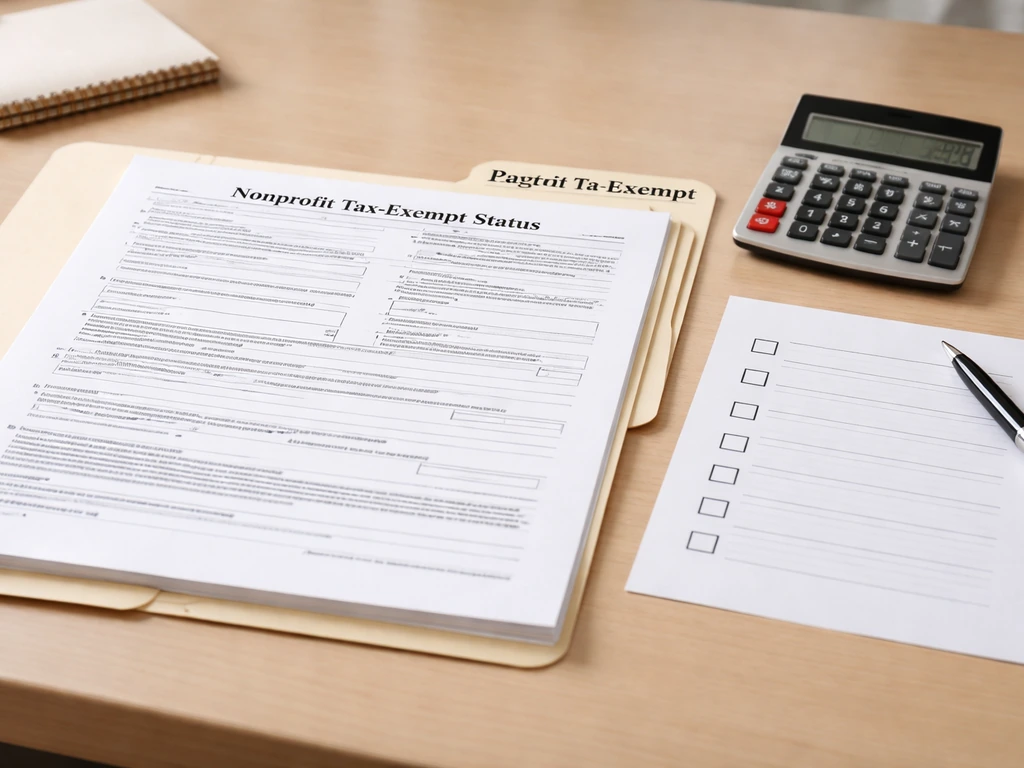
Once you are incorporated, apply to the IRS for recognition as a 501(c)(3) tax-exempt organization using Form 1023-EZ if your projected annual gross receipts are $50,000 or less. The user fee for Form 1023-EZ is $275 as of late 2025. Larger organizations file the full Form 1023. The IRS will issue a determination letter once processing is complete. Keep that letter forever. It is your proof of tax-exempt status for donors, grantmakers, and government agencies.
One thing beginners miss: once you are recognized as tax-exempt, you must file annual returns with the IRS. Most small sanctuaries file Form 990-N (the e-Postcard) or Form 990-EZ. These are due by the 15th day of the 5th month after your fiscal year ends, which is May 15 for calendar-year filers. Miss three years in a row and the IRS automatically revokes your tax-exempt status. Set a recurring calendar reminder the day you file your first one.
Also worth knowing: your Form 1023 or 1023-EZ and related IRS documents are subject to public disclosure rules. Anyone can request to see them, and you are legally required to provide copies. This is actually a good thing because transparency builds donor trust. Just keep clean records from day one.
Get your wildlife rehabilitation permits
This is where most people underestimate the paperwork. If you plan to take in wild birds, you need both state and federal permits. At the state level, you need a wildlife rehabilitation permit from your state wildlife agency. In Washington, that is the Washington Department of Fish and Wildlife (WDFW). In Michigan, the DNR requires a wildlife rehabilitation permit to possess, capture, transport, house, treat, or hold any native wild bird for rehabilitation. Every state has its own version, so look up your state agency's requirements directly.
At the federal level, most wild birds are protected under the Migratory Bird Treaty Act (MBTA). The USFWS federal migratory bird rehabilitation permit authorizes you to take, transport, and temporarily possess sick, injured, and orphaned migratory birds. 50 CFR § 21.76 requires a rehabilitation permit to take, temporarily possess, or transport migratory birds for rehabilitation purposes, with limited immediate “good samaritan” allowances. This permit is administered by the Migratory Bird Permit Office and is separate from your state permit. You need both. Federally protected birds like migratory birds and eagles may require federal authorization in addition to state authorization, as Michigan's DNR explicitly notes. Apply for these permits before you open your doors, because processing can take months.
Expect facility inspections. In Washington, WDFW staff including enforcement officers may inspect permits, records, and the rehabilitation facility at reasonable times. That means your housing, recordkeeping, and procedures need to be inspection-ready from the start, not just when you know someone is coming.
Bird intake: how to bring birds in safely
Intake is one of the highest-risk moments in a sanctuary's operation. A sick bird coming in can infect your entire population if you skip the right steps. Build your intake workflow before your first bird arrives, not after.
Intake criteria and the first 24 hours
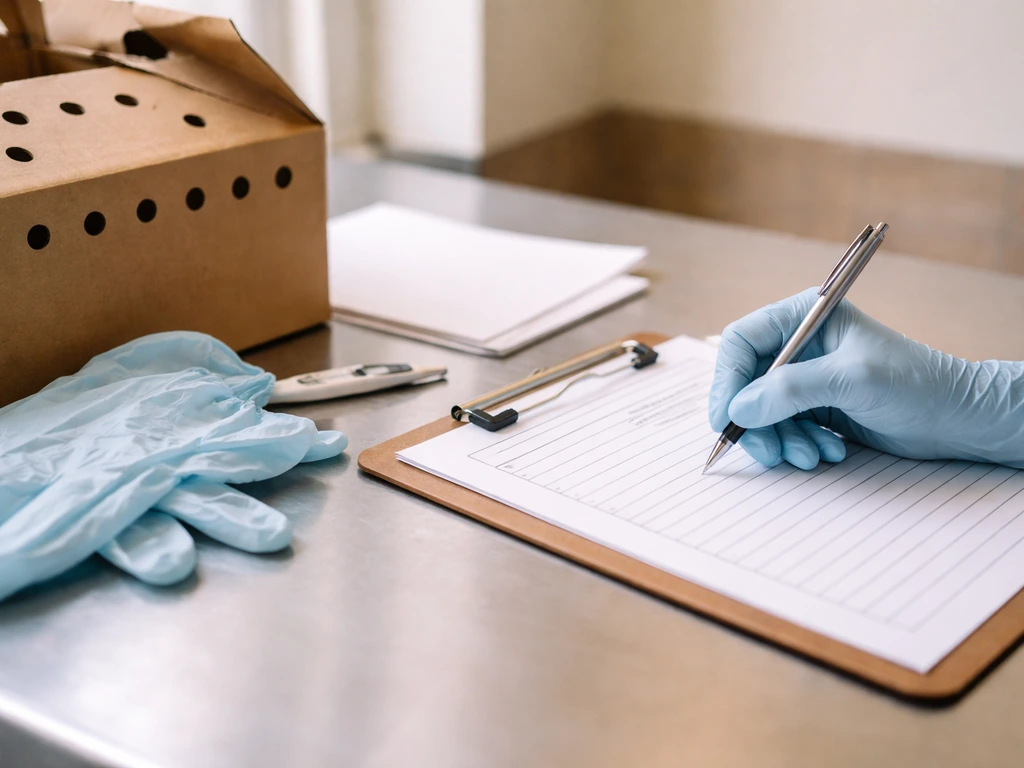
Decide in advance which birds you will accept. Your intake criteria should be based on your species scope, your current capacity, and your medical capabilities. A bird you cannot adequately treat should be transferred to a facility that can. Have a list of partner facilities ready so you can make that call fast.
When a bird arrives, document everything immediately: species (or best guess), date and time, condition on arrival, where it was found, and who brought it in. This is not just good practice. Wildlife agencies require it, and your permit may depend on it. In Washington, for example, you must notify the wildlife rehabilitation manager within 24 hours if you receive a state endangered or threatened species or an oiled bird.
Quarantine is non-negotiable
Every bird that comes in goes into quarantine. Full stop. The USDA APHIS guidelines are clear: the quarantine period starts when the last bird is introduced, and appropriate equipment must be available for cleaning and disinfection. Do not mix new arrivals with your existing population until the quarantine period is complete and the bird has been cleared by a vet.
Highly Pathogenic Avian Influenza (HPAI) is a real and serious threat. Cornell's CWHL guidance for wildlife rehabilitators advises that crates, carriers, food and water dishes, staff clothing, and any other objects a potentially infected bird contacts must be disinfected after each use. If you suspect a bird may be infected with HPAI, isolate it immediately and coordinate with your state wildlife health program. The guidance also notes you should not collect dead birds for disposal yourself. Instead, report them to your state wildlife health staff and let them handle it.
Hand hygiene is not optional. AAHA infection control guidelines emphasize strict enforcement of handwashing after handling animals and careful management of animal feces disposal to prevent contamination by zoonotic microorganisms. Post handwashing reminders everywhere in your facility. Make it part of your onboarding for every volunteer.
Care plans and release timelines
Every bird in your care should have a written care plan from day one: diagnosis or presenting condition, treatment plan, feeding schedule, and a target release date. Federal rules under the MBTA state that birds may not be held for more than 180 days unless specifically approved by the Regional Migratory Bird Permit Office. Washington's WDFW mirrors this, requiring release as soon as possible and no later than 180 days. Build that timeline into your intake form so no bird gets lost in the system.
Building your facilities and habitat
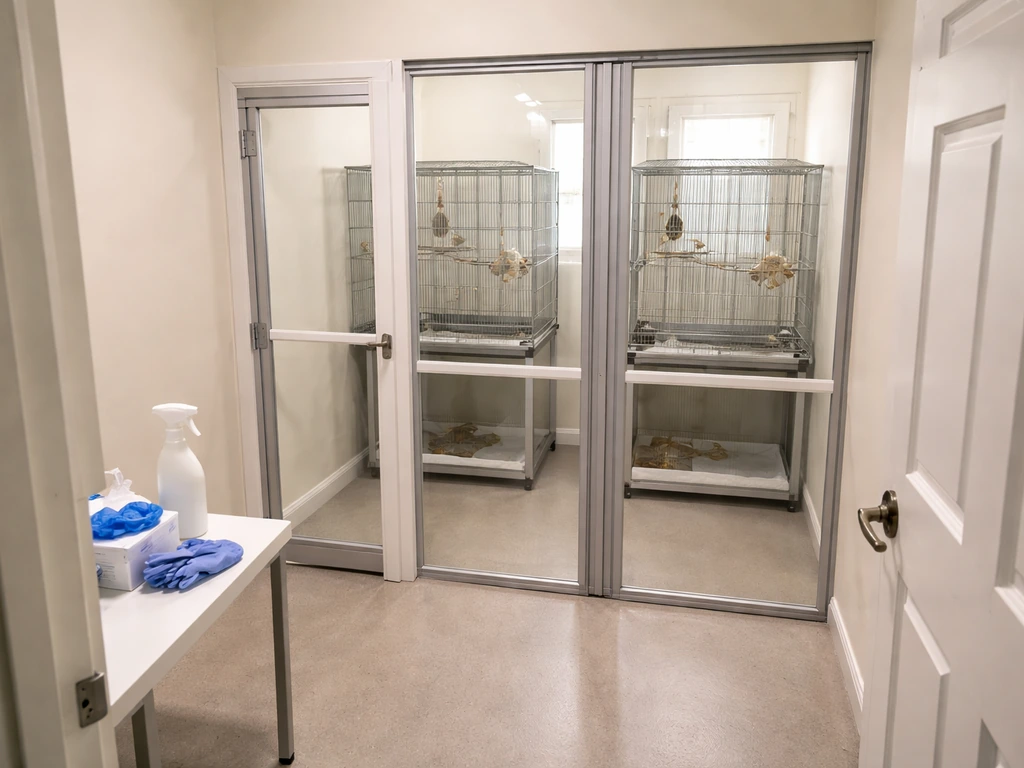
Your facility does not need to be fancy to be effective. It needs to be functional, safe, and compliant. Enclosure size and construction materials must follow the Minimum Standards for Wildlife Rehabilitation, 4th edition, published by the National Wildlife Rehabilitators Association (NWRA) and the International Wildlife Rehabilitation Council (IWRC). Both Washington WDFW and Texas Parks and Wildlife reference these standards, and they are widely accepted as the national baseline. Get a copy before you build anything.
Indoor vs. outdoor housing
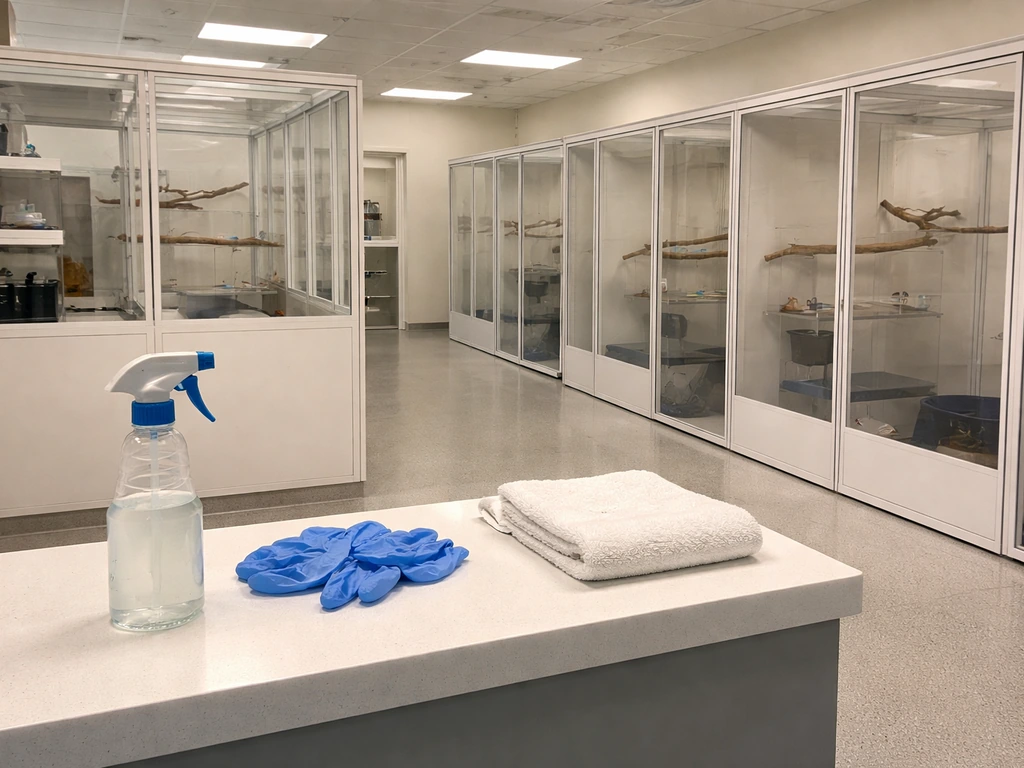
New arrivals and critical-care birds need indoor housing where temperature and humidity can be controlled. Recovering birds ready for conditioning need outdoor flight cages where they can build strength and weather tolerance before release. Long-term residents (birds that cannot be released) need large, enriched outdoor enclosures with shelter from rain and sun. Plan for all three zones even if you start small.
Triage area and essential equipment
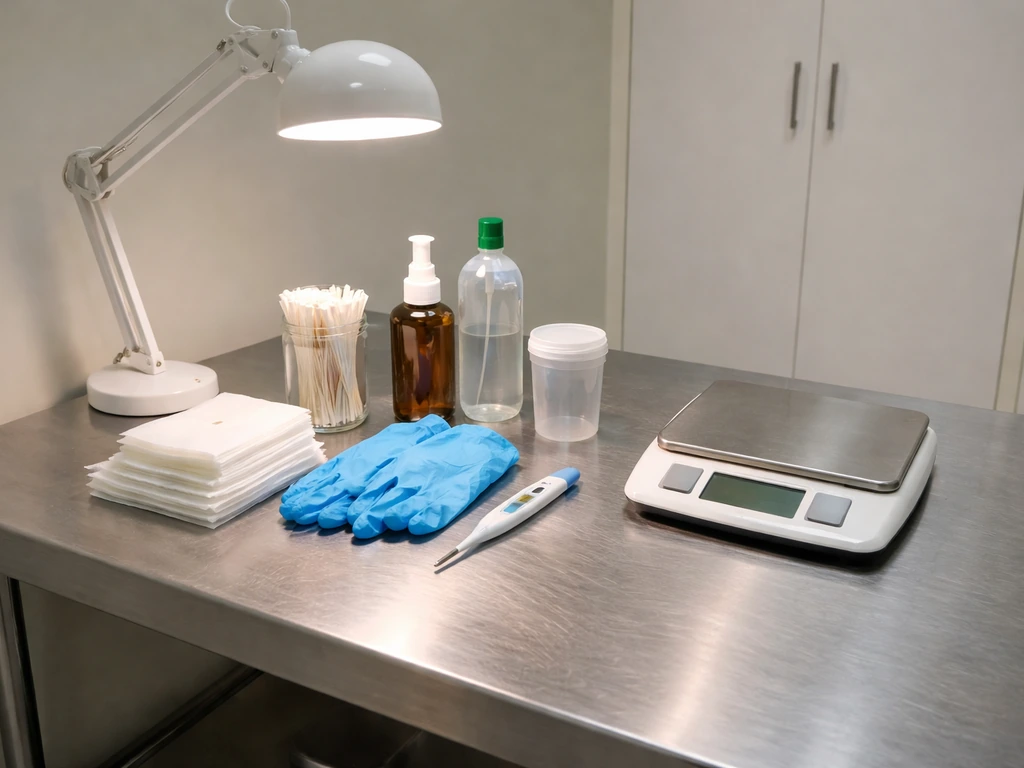
Texas Parks and Wildlife's facility guidelines include a dedicated triage area as a core requirement. Your triage space should have good lighting, a clean work surface, a scale for weighing birds, basic first aid supplies, and storage for medications and supplements approved by your vet. Keep it separate from public and volunteer areas.
Sanitation, safety, and enrichment
Design sanitation into your facility from the start. Every enclosure should be easy to clean with surfaces that can be disinfected. Separate the quarantine zone physically from the main population housing. Install footbaths at entry points to high-risk areas. For enrichment, think about what each species needs to maintain natural behaviors: perches at varying heights, foraging opportunities, natural materials, and for raptors, prey-lure exercises. A bird that sits in a bare cage will not recover the skills it needs to survive in the wild.
Visitor and volunteer safety matters too. Create clear protocols about which areas are off-limits, where personal protective equipment (PPE) is required, and how to handle a bird that escapes its enclosure. Post these rules visibly and enforce them consistently.
Funding, budgeting, and building your community
Money is the part nobody wants to talk about, but it is the part that kills most sanctuaries. Start with a realistic first-year budget that covers facility setup, permits, veterinary care, food and supplies, insurance, and your annual IRS filing. Then figure out how to cover it.
Your funding mix should include several streams, not just one. Individual donations, local business sponsorships, wildlife rehabilitation grants, and earned income from educational programs all contribute. If you want to explore creative revenue ideas alongside your mission-driven work, making money with birds offers some practical angles that can support your sanctuary's financial sustainability without compromising your nonprofit status.
- Individual donations: set up online donation pages through platforms like PayPal Giving Fund or Donorbox from day one
- Grants: search for wildlife rehabilitation grants through the NWRA, state wildlife foundations, and local community foundations
- Corporate sponsorships: local feed stores, pet supply companies, and veterinary clinics often sponsor sanctuaries in exchange for recognition
- Educational programs: school visits, nature center partnerships, and public events can generate earned income
- Merchandise: branded items like T-shirts and calendars are low-cost to start and keep your name in front of supporters
Community support is just as important as cash. Build relationships with local birding clubs, nature centers, schools, and social media communities early. These people become your volunteer pool, your donor base, and your word-of-mouth marketing. Document your work with photos and short stories about individual birds. People connect with specific animals, not abstract mission statements.
Staffing, volunteers, and your day-to-day SOPs
You cannot do this alone, and you should not try. Build a volunteer program with clear roles, training requirements, and expectations. Assign a lead rehabilitator or sanctuary manager who is responsible for medical decisions and regulatory compliance. Everyone else supports that person.
Onboarding volunteers the right way
Every volunteer should complete an orientation that covers your biosecurity protocols, bird handling basics, emergency procedures, and the specific tasks they are authorized to do. Not everyone needs to handle birds. Plenty of critical work involves cleaning, food prep, recordkeeping, social media, and facility maintenance. Match people to roles based on their skills and comfort level.
Write your SOPs before you open
Standard Operating Procedures (SOPs) are step-by-step written instructions for every routine task in your sanctuary. Think of them as recipes: anyone should be able to follow them, even on their first day. Start with the highest-risk and most frequent tasks.
- Bird intake and initial assessment
- Quarantine setup and monitoring
- Daily feeding protocols by species
- Enclosure cleaning and disinfection
- Medication administration and recordkeeping
- Emergency response (escaped bird, injured volunteer, disease outbreak)
- Release preparation and documentation
- End-of-life protocols
Keep your SOPs in a binder in your facility and also in a shared digital folder. Review and update them at least once a year or after any incident that reveals a gap.
Launching safely, measuring impact, and growing smart
The smartest thing you can do before your first official intake is partner with an existing licensed wildlife rehabilitator or sanctuary in your area. Shadow their operations. Ask about their biggest mistakes. Offer to volunteer for a season before you open your own doors. This shortcut is worth months of trial and error.
Build your professional network now
A wildlife vet is not optional. Find one before you need one, not during a crisis at 11pm on a Saturday. Introduce yourself to your state wildlife agency, your local USDA APHIS office, and any regional bird rescue networks. These relationships determine how fast you can get help when something goes wrong, and something will go wrong.
If you have ever thought about visiting established bird sanctuaries or wildlife parks to learn from them in person, understanding logistics like how to visit a bird park can help you prepare productive site visits that give you real operational insights. Similarly, if your sanctuary ever considers expanding its reach to coastal or island habitats, researching how experts access remote bird habitats like Bird Island in the Seychelles can inspire ideas for conservation partnerships beyond your local area.
Track your outcomes from the start
Funders and government partners want to see data. Track every bird that comes in: species, intake condition, treatment provided, outcome (released, transferred, died, or permanent resident), and release location. Calculate your release rate. Report it publicly. A 60 to 70 percent release rate is considered solid for a general wildlife rehabilitation program, though this varies by species. Transparent data builds credibility faster than any marketing effort.
Know what makes a sanctuary different from a breeder or business
It is worth being clear about this distinction, especially as your organization grows. A bird sanctuary focused on rescue and rehabilitation operates under very different rules than a bird breeding operation. If you ever consider expanding into avian breeding programs as a revenue stream, understanding the process of becoming a registered bird breeder is a separate legal and regulatory path. Likewise, starting a bird-related business involves different structure and intent than running a nonprofit sanctuary, even if some activities overlap.
Comparing the two main sanctuary models
| Feature | Rehab and Release Sanctuary | Permanent Residence Sanctuary |
|---|---|---|
| Primary goal | Return birds to the wild | Provide lifelong care for non-releasable birds |
| Permit focus | Federal MBTA rehab permit plus state rehab permit | State possession permit plus possible USFWS permit |
| Hold time limit | Up to 180 days (MBTA rule) | Indefinite with appropriate permits |
| Facility needs | Triage, quarantine, flight conditioning cages | Large enriched permanent enclosures |
| Staff skill level | Higher: medical triage and release assessment required | High: husbandry and behavioral management focus |
| Revenue opportunities | Education programs, grants, donations | Education programs, sanctuary tours, donations |
| Best for beginners? | Start here, narrower scope | Works well once you have experience and stable funding |
What to do this week to get started
- Write a one-paragraph mission statement that defines your bird focus, your services (rehab, sanctuary, education), your geographic area, and your starting capacity
- Contact your state wildlife agency and request the requirements for a wildlife rehabilitation permit, including any pre-permit facility inspection checklist
- Download and read the NWRA/IWRC Minimum Standards for Wildlife Rehabilitation, 4th edition
- Research nonprofit incorporation requirements in your state and file articles of incorporation
- Open a dedicated bank account for the organization (most banks require your state incorporation documents)
- Apply for an Employer Identification Number (EIN) from the IRS online, which is free and takes minutes
- Identify at least one licensed wildlife vet in your area and introduce yourself
- Connect with a local or regional wildlife rehabilitation organization and ask if you can shadow their operations
The path from idea to operating bird sanctuary takes patience, but it is absolutely doable. Plenty of the best sanctuaries in the country started with one determined person, a small property, and a willingness to learn the rules and follow them. If you have ever imagined what it actually takes to become a certified bird sanctuary, the answer is: exactly what this guide describes. Do the mission work, get the permits, build the infrastructure, and serve your birds well. Everything else follows from that.
And if you are looking for ways to document and share your sanctuary's story to grow your community, bird photography is one of the most powerful tools at your disposal. Great images of your birds in recovery create emotional connections that turn casual followers into dedicated donors. A camera and a commitment to telling your birds' stories honestly is marketing that no budget can replicate. You might also find value in learning how to grow bird peppers and other natural food sources on your property, since cultivating native plants and supplemental foods reduces your feed costs and adds environmental enrichment at the same time.
FAQ
Can I start a bird sanctuary without bringing in wild birds at first?
Yes. Many groups begin by doing education and volunteer training first, then apply for rehabilitation permits before they take any wild birds. This lets you test your SOPs, quarantine workflow, and fundraising while you wait for permit processing, but you still need to follow any facility and biosecurity expectations in your jurisdiction.
What’s the biggest legal mistake people make when they “just rescue” birds?
Assuming good intentions replace permits. If you possess, transport, or rehabilitate protected wildlife without the required federal and state authorizations, you can be in violation even if you plan to release the bird later. Before your first intake, verify your state wildlife rehabilitation permit and your federal authorization cover the exact species categories you plan to accept.
How do I choose my quarantine setup if I start small?
You do not need fancy buildings, but you do need separation that prevents cross-contamination. Plan for dedicated cleaning tools, separate storage, and controlled movement of people and supplies from quarantine to the general population. Quarantine equipment should be disinfectable, and staff should have clear rules on when they can work in both zones.
Do I need a vet on staff full-time?
No, but you need timely access to veterinary guidance. Set up a relationship with a wildlife-capable vet, define which decisions require the vet’s sign-off (medications, diagnosis, euthanasia decisions if applicable), and ensure your care plans include an escalation path for emergencies outside regular hours.
What should I do if I receive an endangered or threatened species?
Treat it as an exception case with extra notification and documentation requirements. In addition to recording intake details, follow your state’s notice timeline to the wildlife rehabilitation manager and confirm whether additional approvals are required for handling, holding, or transferring that species.
Can volunteers handle birds, or should only trained staff do it?
Volunteers can assist, but only for tasks that match their training and authorization. For safety and biosecurity, many sanctuaries restrict direct bird handling to rehabilitators or supervised trainees. Cleaning, food prep, recordkeeping, and enrichment support are common roles that still require training on PPE and contamination control.
How do I decide whether to accept a bird or turn it away?
Use a written “acceptance matrix” tied to your species scope, capacity limit, and medical capability. If a bird’s presenting condition is unlikely to be treatable with your resources or staffing, your policy should require a transfer to a partner facility rather than attempting care outside your plan.
Do I need a website and public messaging before I become tax-exempt?
You can do outreach without tax-exempt recognition, but keep fundraising claims accurate. If you accept donations before your 501(c)(3) status is confirmed, do not imply donors receive tax deductions unless you are authorized. Focus early on education and community relationships, then align your donation messaging with your determination letter.
What records should I keep beyond intake notes?
Keep a complete chain-of-custody style file per bird, including transfers to other facilities, treatments administered, test results if applicable, daily logs during quarantine, and the final outcome. Also maintain facility-level logs such as disinfection schedules, PPE usage protocols, and incident reports so you can demonstrate compliance during inspections.
How do I handle animal escapes or injuries during intake?
Create an emergency protocol that includes where the nearest catch tools are stored, how to notify your wildlife agency or enforcement contacts if required, and who has authority to pause intake operations. The protocol should also cover immediate containment steps to protect other birds and staff while minimizing stress and injury to the escaped animal.
If I’m overwhelmed, can I temporarily “hold” more birds until I find help?
Generally, no. Your capacity limit should be treated as a compliance and welfare boundary, not a suggestion. Overcapacity increases disease spread risk, can break quarantine separation, and may cause you to exceed what your permits and facility standards are intended to support. Instead, use a pre-built transfer list and partner network.
Do I need to report dead birds myself?
Often, you should not handle disposal or reporting alone. Many jurisdictions prefer that state wildlife health staff manage dead protected birds, especially during disease outbreaks. Your SOPs should specify what to do immediately after a death, including isolation, documentation, and who to call next.
How do I calculate and report release outcomes without overpromising?
Track outcomes in categories you can defend: released, transferred, died, and permanent resident. Use your release rate as an internal and reporting metric, but communicate your limitations clearly by species and condition type, since outcomes vary significantly by severity and species.
What’s the difference between a bird sanctuary and a breeding operation for permits?
They are usually treated as different regulatory activities with different documentation expectations. A rescue and rehabilitation sanctuary focuses on wildlife care and release timelines, while breeding can trigger separate business formation, welfare standards, and licensing. If you ever consider breeding as revenue, do it as a separate decision path with legal advice rather than mixing it into sanctuary operations.
Next Article
How to Bird Mouth a Rafter: Step-by-Step DIY Guide
Step-by-step guide to cut the bird-mouth notch in a roof rafter, measure pitch accurately, and fit for a tight seat.