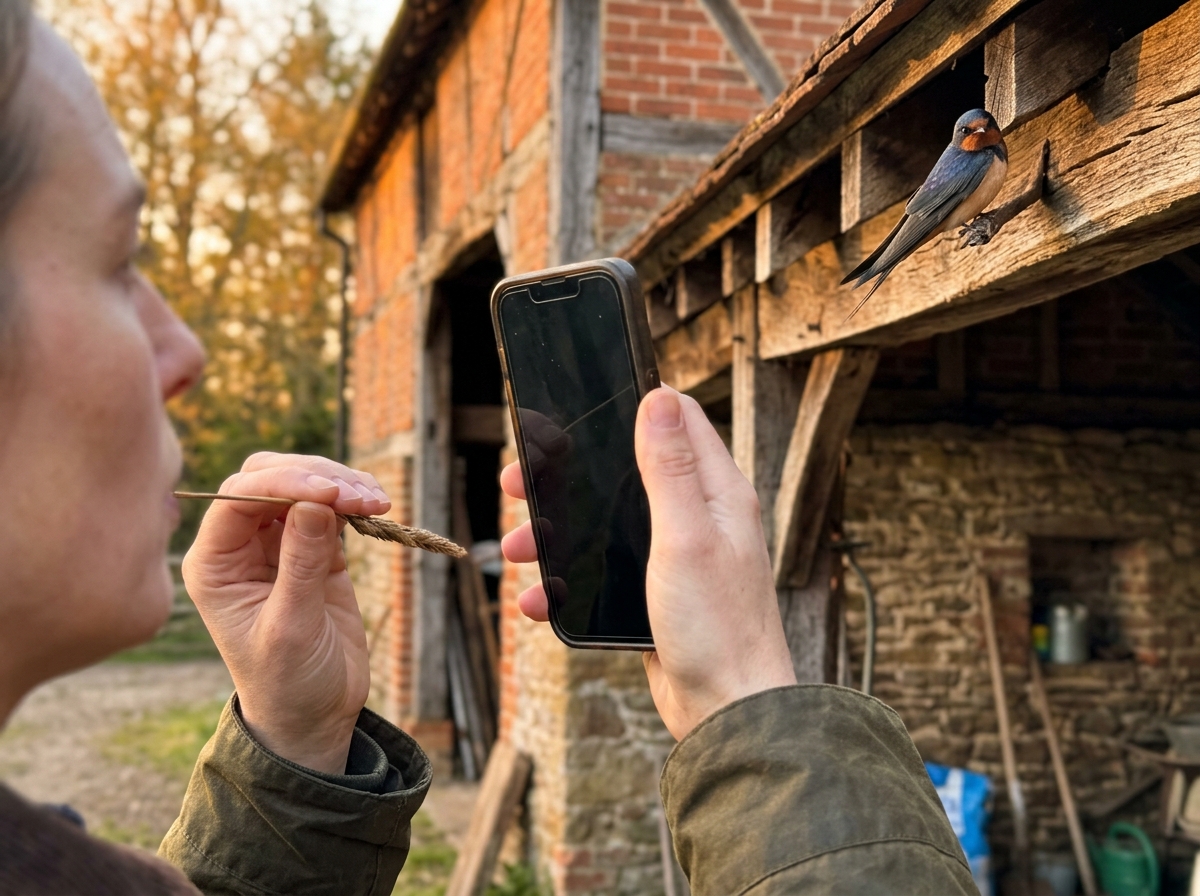
You can absolutely learn to make different bird calls as a beginner, and you don't need any special gear to start. The key is understanding that bird calls are built from a handful of core elements: pitch, rhythm, volume, and tone quality. Once you get a feel for those, you can break almost any bird sound into imitable pieces. This guide walks you through the ethics first (because that matters more than people realize), then the mechanics, then practice routines you can start today.
How to Do Different Bird Calls: A Beginner Guide

Marcus Hendricks
23 Mar 2026
Start with safety and ethics, this part actually matters
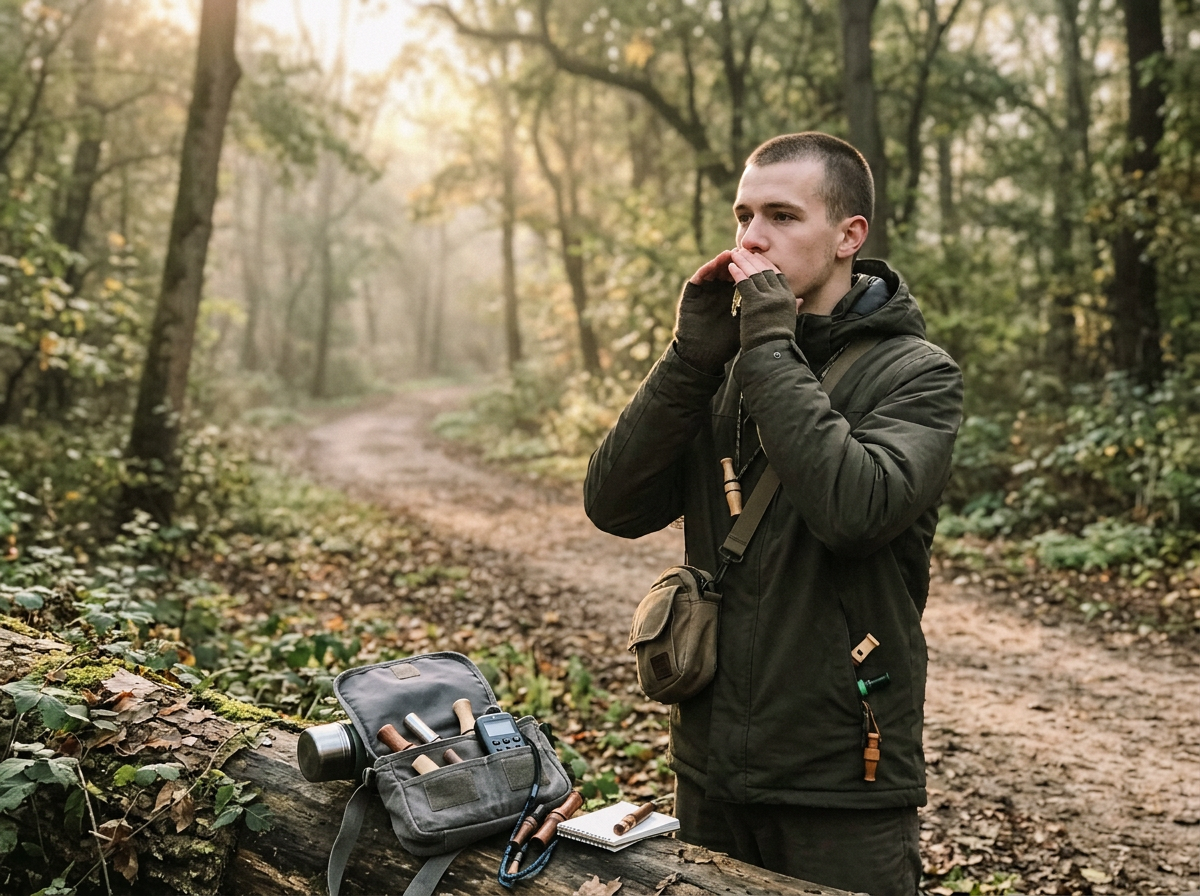
Before you ever attempt a bird call in the field, you need to know the rules. The American Birding Association's Code of Birding Ethics is clear: limit the use of recordings and other audio methods of attracting birds, especially in heavily visited areas. Certain species, anything threatened, endangered, rare in your region, or actively nesting, should never be targeted with calls or playback at all.
National wildlife refuges often prohibit recordings of any type entirely. Other preserves and protected areas may have similar restrictions posted at the trailhead or listed on their websites. Always check before you go. The Forsyth Audubon Society puts it plainly: a recording (or a convincing imitation) can be realistic enough that a bird becomes frantic searching for a territorial intruder. That's a real stress response, and doing it repeatedly in a nesting season can genuinely harm the bird.
The guiding principle from groups like the High Country Audubon Society is to minimize disturbance. Practically, that means: call sparingly, stop the moment a bird responds, never call in sensitive habitat without a clear reason, and read the room. If other birders are nearby, calling disrupts their experience too.
- Never use calls for threatened, endangered, or locally rare species
- Do not call near active nests or during peak breeding season unless you have a clear, limited purpose
- Stop immediately when a bird responds and comes toward you
- Check rules for the specific preserve, refuge, or park you're visiting
- In heavily birded areas, skip playback and calling entirely — there are better ways to find birds there anyway
How bird calls actually work: pitch, rhythm, volume, and tone
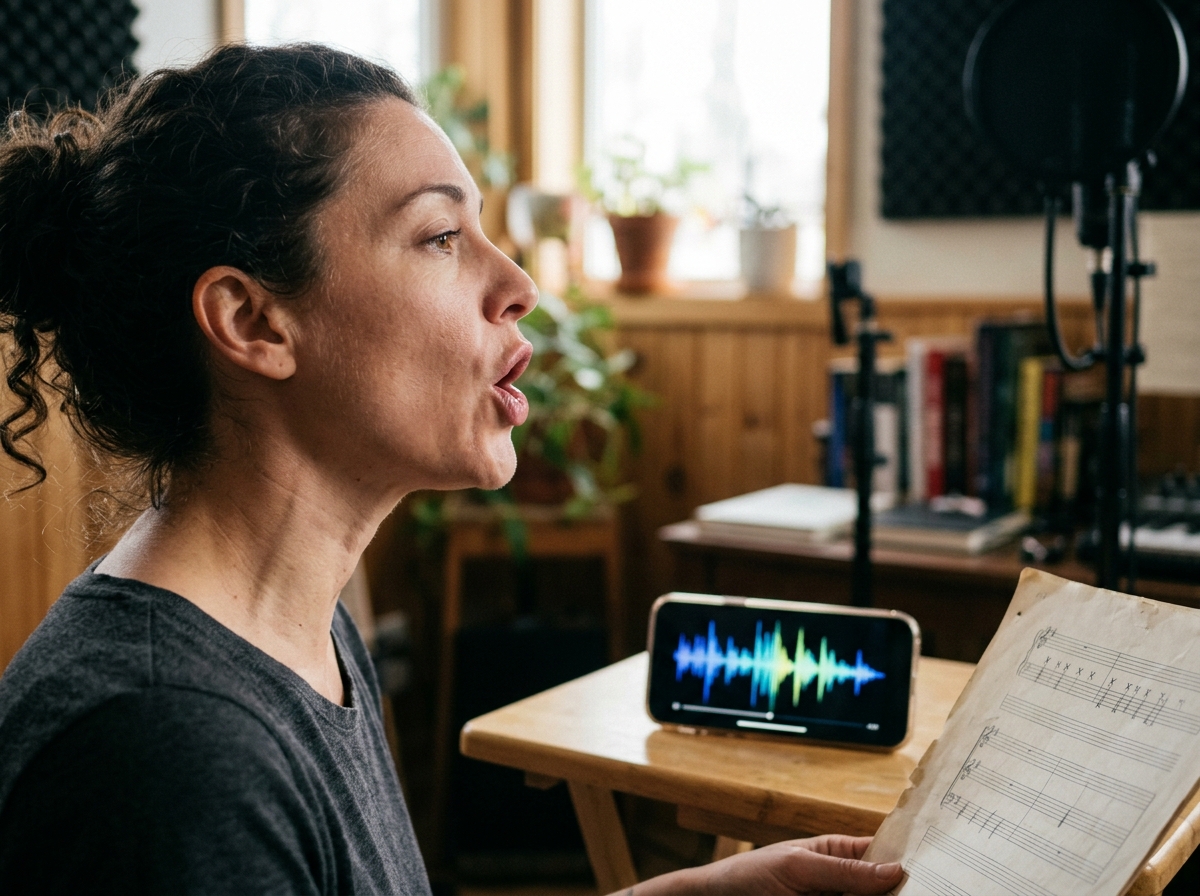
Every bird sound has four building blocks. Learn to hear and control these and you can approximate almost anything.
Pitch
Pitch is how high or low a note sounds. A Black-capped Chickadee's 'fee-bee' whistle is a simple two-note descending pitch drop. A Wood Thrush's flute-like phrases hit multiple rising and falling pitches in sequence. For beginners, start with single-pitch or two-note calls. They're the most forgiving to imitate.
Rhythm
Rhythm is the pattern and spacing of notes. The American Robin sings in short, cheerful phrases with brief pauses between them. The Eastern Towhee says 'drink-your-tea' in a very specific three-beat rhythm. Birders often use word or phrase cues to lock in rhythm, things like 'old Sam Peabody Peabody Peabody' for the White-throated Sparrow. These verbal mnemonics are genuinely useful and worth adopting from day one.
Volume
Most beginners call too loud. In practice and in the field, softer is almost always better. Birds communicate at relatively close range, and a blasting imitation sounds wrong and is more likely to alarm than attract. Aim for a conversational volume, loud enough to carry 20 to 30 feet, rather than projecting across a field.
Tone quality

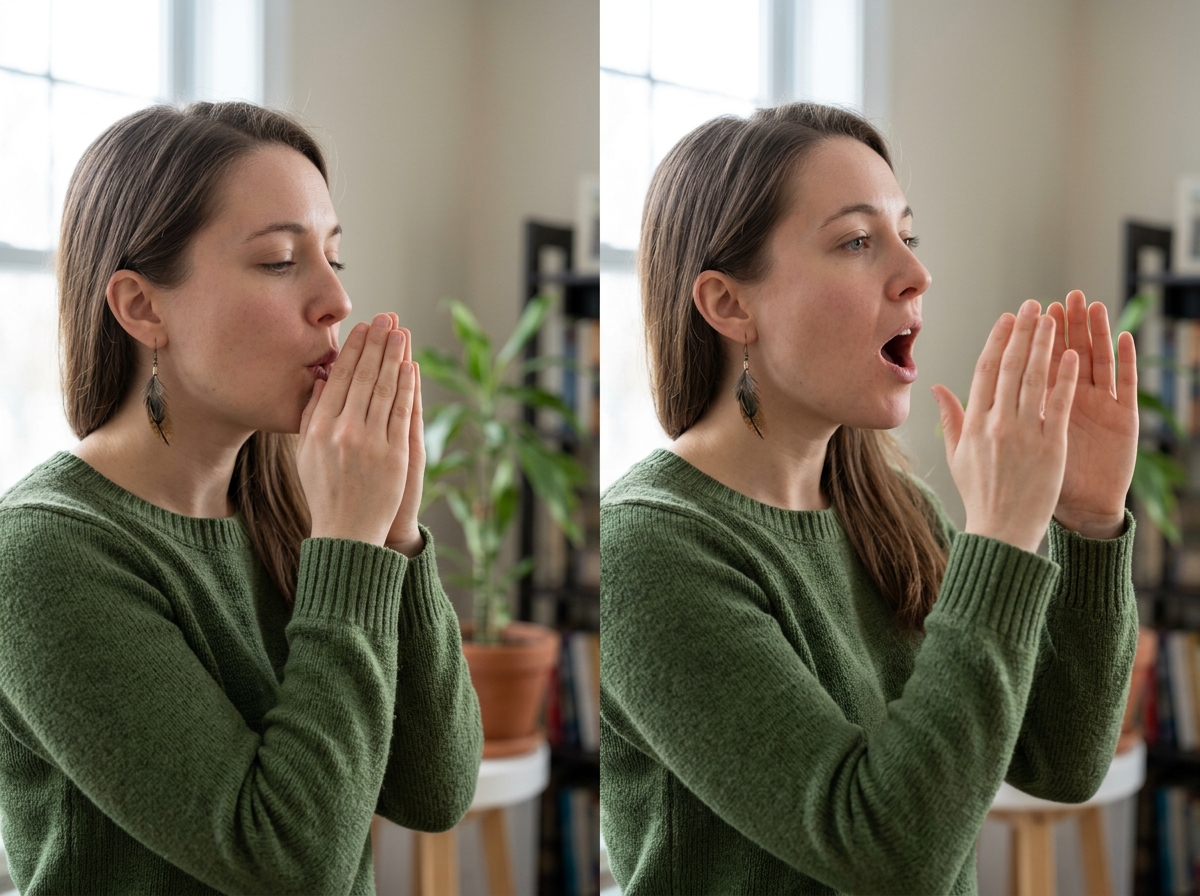
Tone quality (sometimes called timbre) is what makes one sound feel 'buzzy,' 'fluty,' 'raspy,' or 'clear.' This is the hardest element to control with your voice alone. Shaping your mouth cavity, controlling airflow through pursed lips or your throat, and adjusting tongue placement all affect tone. For example, cupping your hands around your mouth when whistling adds a muffled, hollow quality, useful for mimicking owl calls. Don't worry too much about perfect tone at first. Get the pitch and rhythm right and tone will improve with practice.
Making calls by imitation: how to match real bird sounds with your voice
Pure vocal imitation is the most portable skill you can develop. You need nothing but your mouth, and you can practice anywhere. The approach used by experienced birders is built on listening first, imitating second, and repeating both many times. Here's the process that actually works for beginners.
- Pick one bird to start. Seriously, just one. The Chickadee, American Robin, or Northern Cardinal are great starting points because their calls are simple, short, and very recognizable.
- Listen to a clean recording of the call at least three times before trying to imitate it. Focus on the shape of the sound — does it rise, fall, bounce, or stay flat? Use a resource like the Macaulay Library or the Merlin Bird ID app to find reliable reference audio.
- Translate the sound into a verbal mnemonic. The Chickadee's 'chick-a-dee-dee-dee' is its own mnemonic. The Cardinal's 'cheer cheer cheer' or the Towhee's 'drink-your-tea' helps your brain lock in the rhythm before your mouth has to produce it.
- Try the call quietly first. Whisper-imitate before you full-voice it. This lets you feel the shape of the sound without committing to bad habits at full volume.
- Record yourself and compare. Use your phone's voice memo app. Play your attempt back-to-back with the reference recording. The differences will be obvious — and that's exactly what you want to hear.
- Repeat with small adjustments each time. Change one thing per attempt: raise the pitch slightly, slow the rhythm down, soften the volume. Isolating variables is how you improve faster.
- Add a second species only when the first feels natural and consistent — not just 'close enough once.'
A few species that are genuinely beginner-friendly for vocal imitation: the Black-capped Chickadee (two-note 'fee-bee' whistle), the Northern Cardinal (clear, slow whistled phrases), the American Crow (broad 'caw' with variations), and the Mourning Dove (low, hollow cooing). Each of these uses a small pitch range, which makes them easier to hit accurately without musical training.
Simple tools that help you make different calls
Your voice alone can get you surprisingly far, but a few low-cost tools open up call types your voice simply can't produce well on its own. None of these are complicated or expensive.
Your hands

Cupping both hands together and blowing through a small gap between your thumbs creates a hollow, resonant tone that mimics owl calls and some dove calls remarkably well. The technique takes about 10 minutes to figure out but is very effective once you have it. We cover the hand-cupping method in more detail in our guide on how to make bird calls with hands, it's worth a read if you want to get into owl and dove sounds specifically.
Pee-wee whistles and simple bird call whistles
A basic two-toned plastic bird whistle (the kind sold at nature centers for a few dollars) can produce clear, carrying notes that closely approximate songbird calls. They're not species-specific by default, but with practice you can vary your blowing pressure and lip position to shift the pitch and produce different call shapes. These are great for beginners because they remove the variability of your own voice and let you focus on rhythm and pattern.
Species-specific wooden or acrylic call devices

Box calls, tube calls, and slate calls exist for specific bird groups, primarily game birds like turkeys and ducks, where calling is a long-established hunting and wildlife-study tradition. If you're interested in waterfowl or turkey sounds specifically, these purpose-built callers produce sounds that are hard to replicate any other way. Our guide on how to make a bird caller walks through the options if you want to go that route.
Apps as a practice and feedback tool
Apps like Merlin Bird ID (from Cornell Lab of Ornithology) are genuinely useful at home as a learning loop, not as a field-calling device. Merlin's Sound ID feature listens to sounds and matches them to species. Some birders use this at home to test whether their imitation is close enough to register as the target species. It's a surprisingly honest feedback system. Merlin also works offline once you've downloaded the relevant Bird Pack, so you can use it anywhere. In the field, though, use it to identify what you're hearing, not to broadcast calls through your phone's speaker.
| Tool | Best for | Cost range | Skill level needed |
|---|---|---|---|
| Voice only | Songbirds, simple short calls | Free | Beginner |
| Hand cupping | Owls, doves, hollow tones | Free | Beginner (10-min learning curve) |
| Simple bird whistle | General songbird tones, practice | Under $5 | Beginner |
| Wooden/acrylic call device | Turkey, duck, specific game birds | $10–$50+ | Intermediate |
| Merlin app (Sound ID) | Practice feedback, species ID at home | Free | Beginner |
A practice routine you can actually stick to
The biggest mistake beginners make isn't a wrong note, it's inconsistent practice. Short, regular sessions beat long occasional ones every time. Here's a routine that builds real skill without burning you out.
Daily home practice (10 to 15 minutes)
- Listen to your target call three times on a reference app or recording. Don't skip this even if you feel like you already know the sound.
- Attempt the call five to eight times, recording yourself each session.
- Compare your recording to the reference audio. Note one specific thing to adjust tomorrow.
- Try a second, different species for two to three minutes at the end of the session — just enough to start building familiarity without confusing your muscle memory.
Weekly field practice (one session per week if possible)
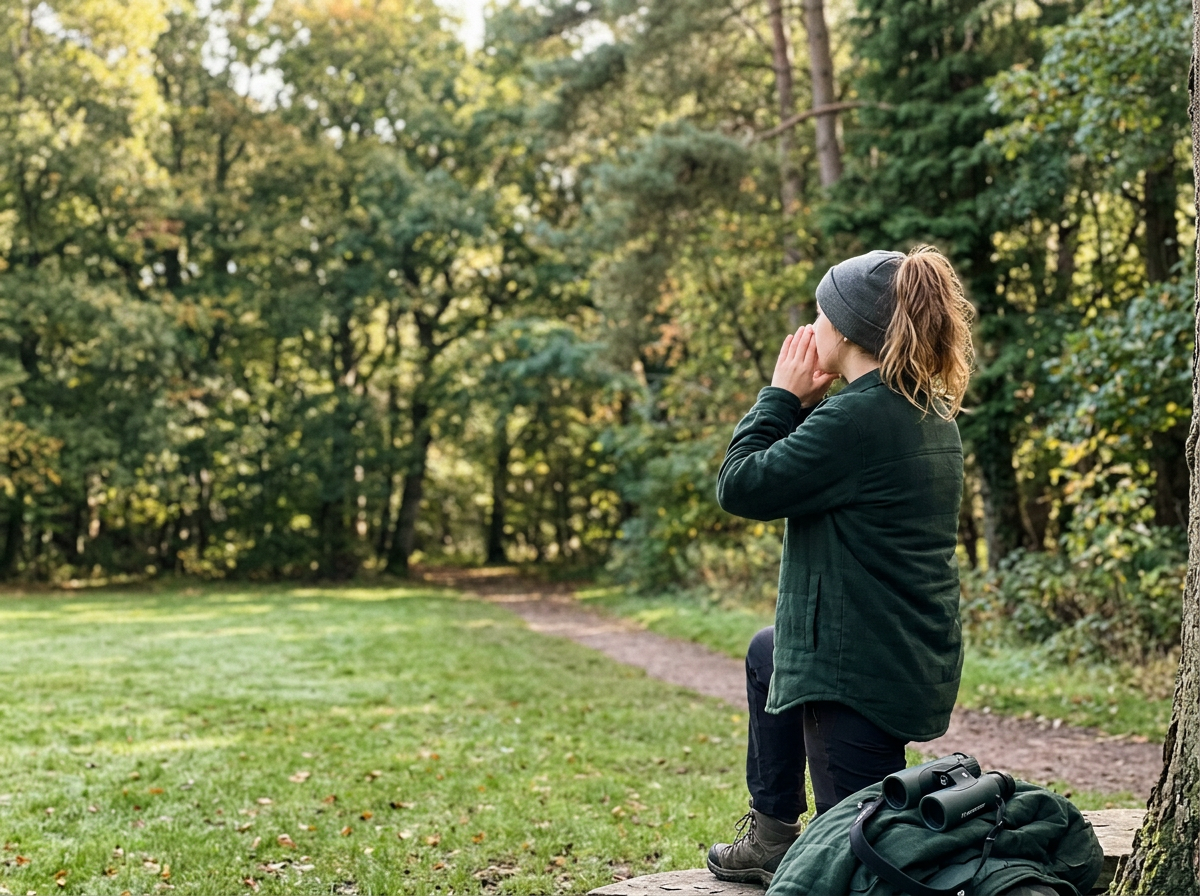
Take your calls outside and into a real environment, a local park, backyard, or trail. The acoustics are completely different outdoors and your calls will behave differently. Early morning (within the first two hours after sunrise) is when bird activity is highest, so it's the best time to hear natural calls around you and compare them to your own attempts. Just listen for the first 10 minutes before trying anything.
As a benchmark for progress: after two weeks of daily 10-minute practice, you should be able to produce a consistent, recognizable version of your first target species. After four to six weeks, you should be comfortable with three to four different call types. That's a realistic timeline, not a fast-track promise.
Common mistakes and how to fix them
Everyone hits the same wall at first. Here are the most common problems and exactly what to do about each one.
Calling too loud
This is the number one beginner error. Loud calls sound harsh, unnatural, and alarm birds instead of attracting them. Fix: Practice at half your natural speaking volume. If you can hear yourself clearly in a quiet room, you're loud enough. Build volume only after you have the pitch and rhythm nailed.
Wrong rhythm or rushed notes
Bird calls have deliberate pacing. Rushing makes them sound wrong to both you and any nearby bird. Fix: Tap your finger on your leg or a surface to beat out the rhythm before you call. Match the tempo of the reference recording deliberately. If it helps, count beats out loud first.
Flat or off-pitch notes
Your pitch drifts low, especially on longer practice sessions when your lip or jaw muscles get tired. Fix: Shorten your sessions when this happens. Take a break. Try the call again fresh. You can also use a simple whistle to anchor the correct pitch in your ear before switching back to vocal imitation.
Difficulty transitioning between two notes
Two-note calls where the pitch drops or rises (like the Chickadee's 'fee-bee') trip people up because the transition needs to be smooth, not stuttered. Fix: Practice the second note alone first. Then the first note alone. Then join them, slowing the tempo down until the transition feels fluid before speeding back up.
Over-calling in the field
Calling repeatedly when a bird doesn't respond is a common frustration reaction, and it makes things worse. More calling does not equal faster results. Fix: Call two or three times, then wait at least two full minutes in silence. If there's no response, move on. If a bird does respond and comes closer, stop calling immediately. You've done your job.
Confusing your own calls with real bird responses
Early on, you'll hear birds respond and wonder if they're reacting to you or just going about their business. Fix: Note the timing. If a bird vocalizes within 20 to 30 seconds of your call and moves toward you, that's a response. If it calls from the same spot without approaching, it may just be active independently. The Merlin app's Sound ID mode can help you log what you're actually hearing in real time.
Using calls responsibly while bird watching: what to realistically expect
Calling is a tool, not a guaranteed bird magnet. Most experienced birders use it very sparingly, or not at all, because patient, quiet observation produces better results in most situations. That said, a well-timed, accurate call can draw a secretive or shy species into view in a way that nothing else can. The key word is 'sparingly.'
When you do use a call in the field, have a specific plan: one target species, a specific habitat, a defined time limit. If the target bird appears, stop immediately, this is what the Wisconsin Breeding Bird Atlas survey guidance recommends for professional survey work, and it applies equally to recreational use. Continued calling after a bird has responded serves no purpose and causes unnecessary stress to the animal.
What you'll realistically experience as a beginner: small songbirds (especially territorial males during breeding season) are most likely to respond to calls. Raptors and waterfowl are generally less responsive to vocal imitation. Chickadees, nuthatches, titmice, and sparrows are among the most call-curious species and make great early targets for field practice, while being careful not to overdo it during nesting season.
One more thing: if you're birding with others, check in before calling. Some birders prefer to find birds without any artificial attractants, and that preference deserves respect. Announcing your intent and getting a nod from your group before you start is just good trail etiquette.
Your next steps: a starter plan and quick checklist
Here's a practical first week to get you moving today. Don't try to learn five species at once. One solid, recognizable call is more valuable than five shaky ones.
- Download the Merlin Bird ID app (it's free) and listen to the reference calls for Black-capped Chickadee and Northern Cardinal. Those are your Week 1 targets.
- Practice the Chickadee 'fee-bee' whistle for 10 minutes today, recording yourself and comparing to the reference. Just that.
- On Day 2 and 3, repeat the same drill with small adjustments based on what you heard in your recording.
- On Day 4, add the Cardinal's slow whistled phrases as a second call and alternate between the two.
- By Day 7, take your practice outside in the early morning. Just listen for 10 minutes first, then try your calls softly two or three times, and wait quietly.
Before your first field session, run through this quick checklist:
- Confirmed the location allows bird calling or audio use (not a protected refuge)
- Identified one target species for the session, not five
- Have a reference recording saved offline (Merlin works offline with downloaded Bird Packs)
- Committed to stopping immediately if the bird responds and approaches
- Not targeting any species that is threatened, endangered, or nesting nearby
- Prepared to wait two full minutes in silence between call attempts
If you want to go deeper on specific techniques, If you want to go deeper on specific techniques, check out our guides on how to make bird sounds with your mouth and hands and how to make a bird call easy, both cover complementary skills that build naturally on what you've started here. how to do a bird call easy
FAQ
How can I practice different bird calls without disturbing birds in my neighborhood or local park?
Use practice sounds only where it is unlikely you are affecting nesting or heavily used spots, start by listening for 10 minutes, and aim for quiet volume. In many areas you should avoid calling at dawn during peak nesting activity, and if you see or hear birds behaving nervously (flight, alarm, repeated frantic calling), stop immediately and switch to silent observation.
What should I do if I am not getting any response from birds after I call?
Don’t escalate. Call two or three times, pause at least two minutes, and if there is no approach or clear behavioral change, move to another location or species rather than repeating. Also check that you are calling at a time birds are active (often early morning) and that your target call matches the habitat you are in.
How do I tell whether a bird is responding to my call or just calling on its own?
Track timing and movement. A likely response is when vocalizations occur within about 20 to 30 seconds of your call and the bird moves toward your direction or changes its behavior to investigate. If the bird calls from the same spot and does not approach, it is often just active independently.
Can I learn multiple bird calls at once, or should I stick to one species?
Stick to one target call type until you can produce it consistently, then add the next. If you split your attention too early, rhythm and pitch drift, which makes later corrections harder. A practical approach is one “main” species for the week, one alternate species for 2 to 3 short sessions, and only if the main species is stable.
How do I keep pitch from dropping as my mouth and breath fatigue during practice?
Use shorter sessions (stop when you notice drift), take a break, then restart. If you want a quick ear-anchor, blow a correct pitch with a simple whistle for a few seconds before switching back to your voice, so your muscles and hearing reset.
What’s the best way to nail the transition between two notes (like a falling or rising two-note call)?
Practice the second note alone first, then the first note alone, then combine them slowly with a deliberate tempo. Only increase speed once the join feels smooth, and avoid “stuttering” at the change by keeping the rhythm steady through the transition.
How loud should I be when practicing bird calls in the field?
Aim for conversational volume, and use your ability to hear yourself in a quiet room as a ceiling. If your voice carries farther than you can comfortably control, you are likely too loud. Soft calls are both more natural and less likely to trigger alarm behavior.
Are bird call apps like Merlin safe to use, and can I use them to broadcast calls in the field?
Use them as a learning and identification tool, not as a speaker to broadcast calls. At home, you can use Sound ID feedback to judge how close your imitation sounds, but in the field rely on the app for listening and logging what you hear rather than playing audio back to birds.
If I want to practice owl or dove-type calls, is the hand-cupping method hard to learn?
It is usually quick to get the basic sound, but accuracy comes from consistent airflow and mouth shape. Expect about 10 minutes to figure out the setup, then focus on repeating the same rhythm and starting pitch each time so your “hollow, resonant” tone stays stable across attempts.
Do different bird calls require different mouth shapes or just different airflow?
Both matter. Pitch and rhythm are easier to start by controlling breath and timing, while tone quality depends on mouth cavity shape, tongue placement, and how you manage airflow through pursed lips or your throat. If your pitch is correct but the sound feels “off,” adjust tone shaping rather than forcing the pitch further.
What should I bring or use, beyond my voice, if I want faster progress?
A basic two-toned plastic whistle can stabilize pitch early and helps you focus on rhythm. Hand-cupping is useful for certain owl and dove-like tones. Keep tools simple at first, and use them to support your hearing and timing, not to replace your own practice.
Is it okay to use bird calls while birding with friends or in groups?
Coordinate. Some birders prefer no artificial attractants, so check your plan before calling. If you do call, agree on whether to keep it brief, and stop if anyone signals discomfort or if birds show stress behaviors.
Next Article
How to Make a Swallow Bird Call: Beginner Guide
Step-by-step guide to make a swallow bird call: pick the right species, master timing and pitch, then practice safely ou