You can figure out a bird call by working through a repeatable process: document what you heard, break down the sound's key features, filter candidates by location and season, then confirm with recordings and apps. That's the whole loop. It sounds simple, but most beginners skip one of those steps and end up stuck. This guide walks you through each one, including what to do when nothing seems to match.
How to Figure Out Bird Calls: A Step-by-Step Method

Marcus Hendricks
22 Apr 2026
Start with what you have: setting, time, and sound quality

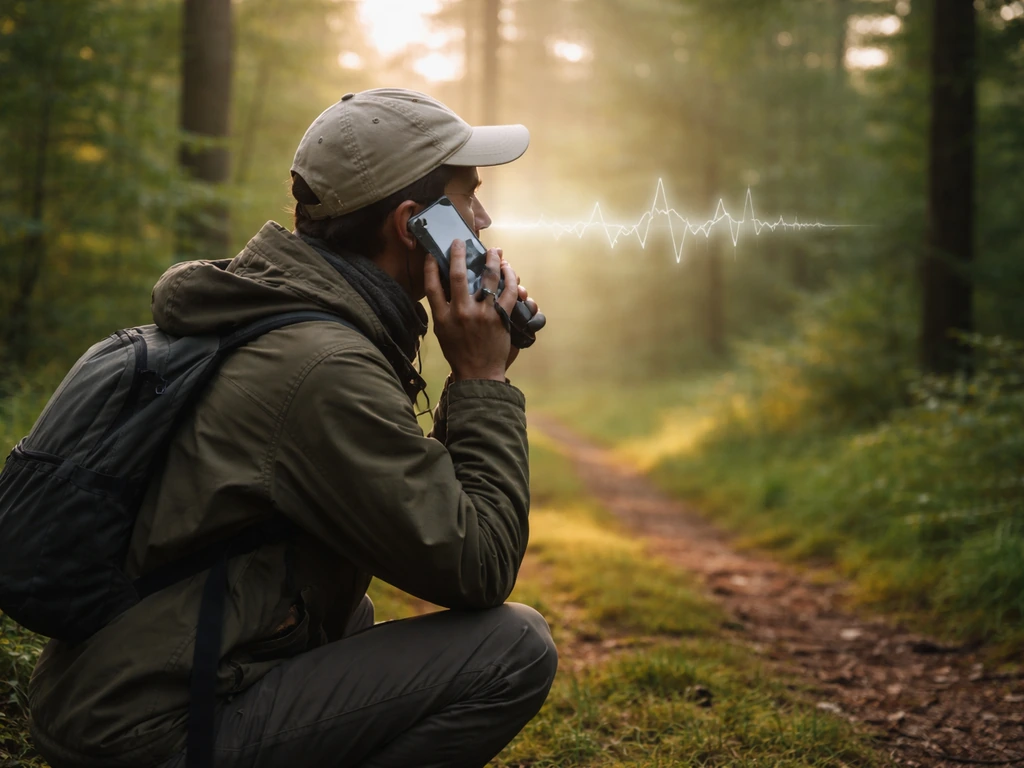
Before you try to name the bird, capture the context. The moment you notice a call, take a quick mental (or physical) snapshot: Where exactly are you? What time is it? What's the date? Is the bird close or distant? Is there wind, traffic, or other birds drowning it out? These details are not background noise for your notes; they are the first filter that trims your candidate list dramatically.
Jot down or voice-memo the following right away, because memory fades fast. Cornell's Bird Academy recommends noting date, time, and location before anything else, and that advice holds whether you're recording audio or just using your ears.
- Date and time of day (morning chorus birds differ from midday or dusk callers)
- Your exact location: neighborhood, park name, habitat type (forest edge, wetland, open field, backyard)
- Distance from the bird: nearby and clear vs. far off and faint
- Background noise level: wind, rain, traffic, other birds calling simultaneously
- How often the bird called: one burst, repeated every few seconds, continuous singing
If you can, hit record on your phone immediately. Even a mediocre recording beats your best mental note. Don't worry yet about quality; just capture something. You can deal with wind noise and muffled audio later. If you're using the Merlin Bird ID app, it works offline, so you can record and run Sound ID even without cell service in the field.
Listen for the call's structure: pitch, rhythm, notes, and pauses
Once you have a recording or a fresh memory of the sound, your job is to describe it like a music teacher would. This is the step most beginners rush past, and it's actually the most useful skill you can build. The key features to focus on are pitch, rhythm, tone quality, and structure.
Pitch
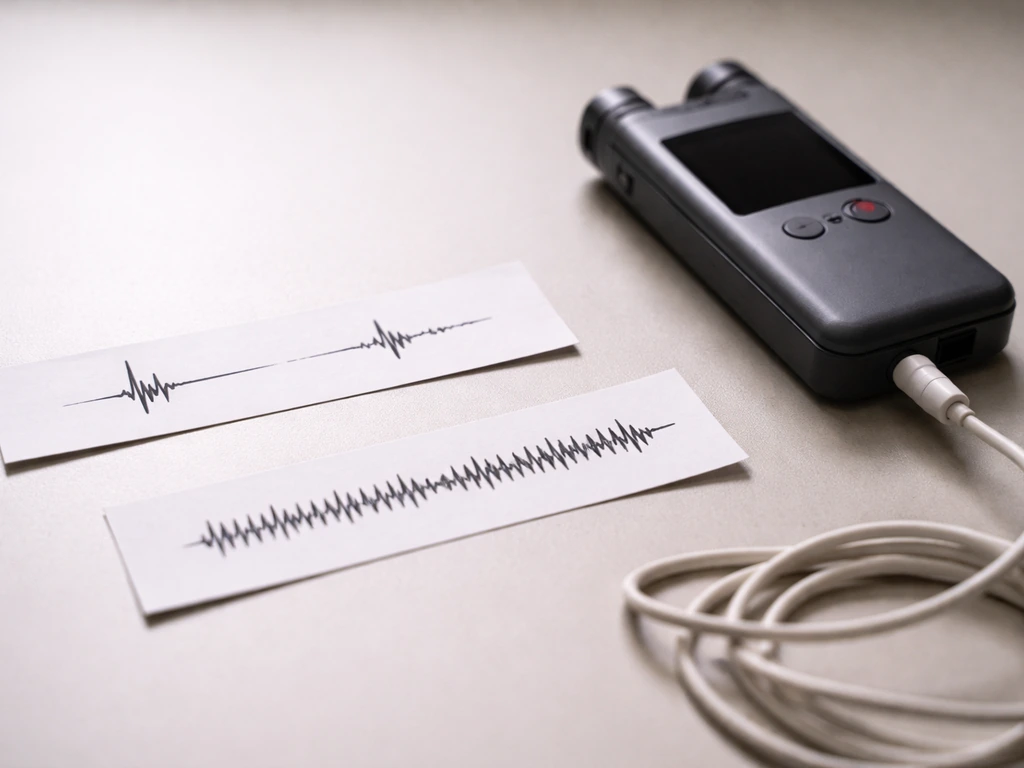
Was the call high-pitched (think tiny wren or warbler) or low-pitched (think dove or owl)? Did it rise at the end, fall, or stay flat? A rising note sounds like a question; a falling note sounds like a sigh. Pitch alone won't nail the ID, but it narrows the field. One honest note: pitch can vary a bit within a species, and your perception of pitch changes with distance. Use it as a ballpark, not a definitive test.
Rhythm and pattern
Was it a single sharp chip, a repeated note, or a longer song phrase? How fast were the notes? Were there obvious pauses between bursts, or did the notes run together into a trill? Cornell categorizes bird sounds into patterns like single note, repeated note, two-to-three syllable phrase, and complex song, and knowing which bucket your call falls into saves a lot of time.
Tone quality
Try to describe the texture of the sound. Was it clear and flute-like, or buzzy and raspy? Harsh and scolding, or liquid and melodic? Experienced birders use words like 'burry,' 'whistled,' or 'metallic' for a reason; these qualities help separate species that call at similar pitches and speeds.
Use spectrograms to see what you heard
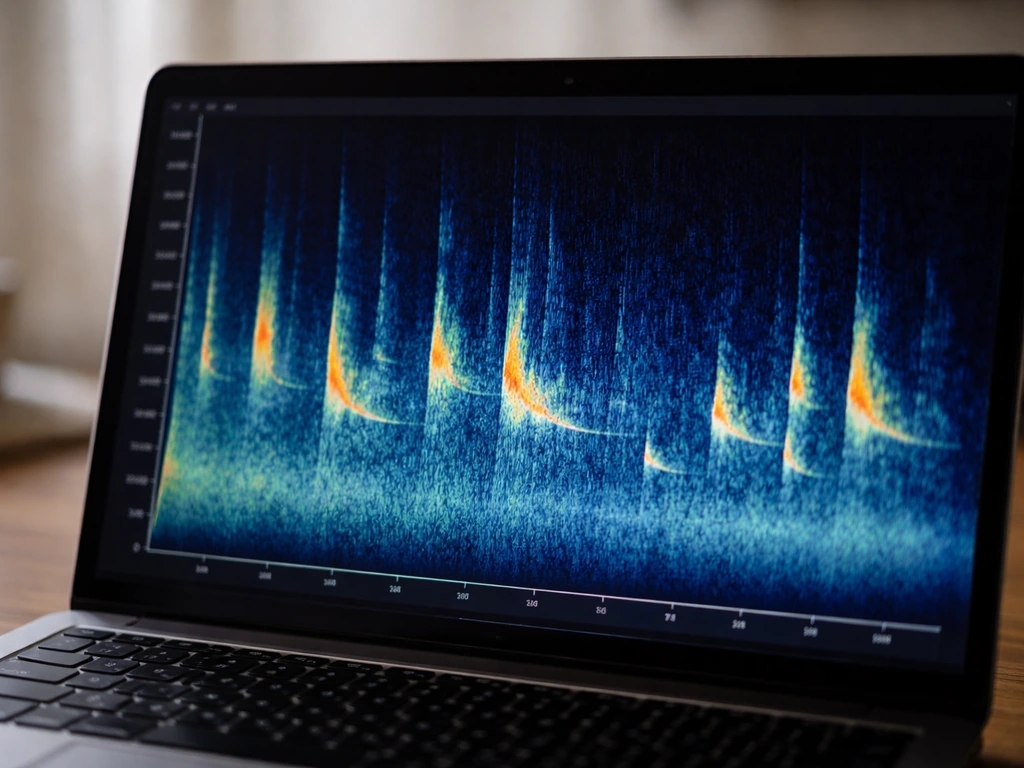
If you have a recording, open it in Merlin or pull it up in a free tool. Spectrograms show pitch on the vertical axis and time running left to right, basically like sheet music for birds. You can count syllables, spot trills, and see whether notes rise or fall, things that are surprisingly hard to catch just by ear. Spectrograms can also reveal subtle differences between similar species, like the exact rate of a trill, that your ears might miss entirely. Tracy Aviary and Cornell's Bird Academy both recommend counting notes from spectrograms as a regular learning drill, and after doing it a few times it genuinely clicks.
Narrow candidates using habitat, season, and local range
Here's something that saves a ton of time: you don't need to search every bird on the planet. You only need to search the birds that actually exist in your area at this time of year. That's a much shorter list, and it changes everything about how quickly you can get to an answer.
eBird Mobile generates checklists customized to your exact location and the current date, drawing on real observation data from birders near you. Merlin Bird ID does the same thing when location services are enabled; it predicts likely species based on eBird sightings and filters its Sound ID matches accordingly. This is why both apps ask for your location before doing anything else. An accurate location isn't just helpful; it's the core filter.
Once you have a regional shortlist, apply habitat as a second filter. A bird calling from a dense marsh reed is not going to be the same as one calling from a dry scrubby hillside, even if the calls sound similar. Ask yourself: am I in a forest, a wetland, an open meadow, a suburban yard, a coastal area? Most field guides and apps list the preferred habitats for each species, and that alone can eliminate half your candidates.
Season matters too. Many species are only present during breeding season or migration windows. A warbler you'd hear in May might be completely absent in August. Time of day is another real filter: dawn-chorus singers are different from midday callers, and owls are obviously nocturnal. Stack all of these together and you've already done most of the work before you even play a single reference recording.
Use tools to confirm: recording, playback, and call databases
Once you have a short list of candidates, it's time to confirm. This is where apps and sound libraries really shine. The goal is to compare your sound (or your description of it) against verified recordings of real birds, not just read a text description.
Merlin Bird ID (free, recommended starting point)
Merlin's Sound ID feature analyzes audio in roughly 3-second intervals and suggests likely species in real time. It was trained on 750,000 recordings and can currently identify over 450 species by sound. eBird notes that training new Merlin Sound ID species is resource-intensive, so coverage may be limited in some regions. For best results: enable location services, hold the phone steady toward the bird, and minimize wind noise. Once Merlin suggests a match, don't just accept the label. Tap through to listen to Merlin's reference recordings and compare them directly to what you heard. That comparison step is built into the app and is how you actually confirm the ID rather than just trust the algorithm.
Xeno-canto and Macaulay Library (deeper search)
When you want to browse more recordings than any app shows, Xeno-canto and the Macaulay Library (at Cornell) are the two biggest free databases. Xeno-canto has recordings tagged with species, location, date, time, and elevation, so you can search recordings from your specific region and season. The Macaulay Library is the same archive that Merlin draws from. Search by species name, filter by region, and listen to multiple recordings because birds vary, and one recording might not sound like the individual you heard.
BirdNET (for recorded audio you want to analyze)
If you recorded a longer audio clip and want a second opinion, BirdNET-Analyzer (also from Cornell) is worth trying. It scans 3-second windows of your recording, scores confidence per species for each window, and can apply location and date filters to reduce false positives. It's a bit more technical than Merlin but it's free and handles formats like MP3, WAV, and FLAC. Just be aware that any automated classifier will throw false positives sometimes, especially with faint or noisy recordings.
Tips for better recordings in the field
A clean recording makes every tool work better. Point your phone directly at the bird and get as close as you safely can. Wind is the number one problem: cup your hand around the mic or use a foam windscreen if you have one. Adjust your phone's gain if possible to avoid clipping (a distorted, blown-out sound). If you're getting serious about this hobby, a directional shotgun or parabolic microphone captures distant birds much more clearly than any built-in phone mic. For the average beginner, though, your phone plus a windscreen is totally workable.
Compare and eliminate: similar species and how to tell them apart

The hardest part of bird call ID isn't finding a match; it's ruling out the near-matches. Most identification errors happen because two species sound genuinely similar and you grab the first plausible answer without checking the second. Here's a practical approach to comparing and eliminating.
When Merlin or a database gives you a candidate, immediately search for 'species most similar to [that bird] by call.' Field guides and apps like Merlin's ID help text usually flag these directly. Pull up recordings of both birds side by side. Listen for the differences and then look at the spectrograms: you'll often see the distinguishing feature more clearly than you'll hear it, especially for things like trill speed or note shape.
| What to compare | Why it matters | How to check it |
|---|---|---|
| Pitch contour (rising vs. falling) | Many confusable species share pitch range but differ in direction | View spectrogram; rising lines vs. falling lines are obvious visually |
| Number of syllables or notes per phrase | A 2-note call and a 3-note call are easy to mix up by ear, clear on a spectrogram | Count note elements in spectrogram or on repeated careful listening |
| Trill rate (fast vs. slow) | Trills that sound similar can have measurably different speeds | Spectrogram shows spacing between note elements clearly |
| Tone quality (buzzy vs. clear) | Warblers can sound alike in pitch but differ sharply in texture | Listen for harshness, buzz, or liquid quality; compare reference clips |
| Call vs. song context | Some species have very different alarm calls vs. songs | Cross-reference which vocalization type you heard against database labels |
| Presence in your area at this date | One species may be migratory and out of range right now | Check eBird range maps filtered to current month |
The elimination mindset is key. You're not looking for a perfect match on one recording. You're building a case: this call fits Species A better than Species B because of X, Y, and Z. Three reasons beat one.
Troubleshooting when you can't identify the call
Sometimes you do everything right and still can't ID the bird. That's normal, and it happens to experienced birders too. Here's how to work through the most common failure points.
The recording is too noisy or too short
Merlin analyzes audio in roughly 3-second windows, so if your clip is only a second or two you may not get a confident result. Try to capture at least 10 to 15 seconds if possible. For wind noise, try trimming the clip to the cleanest segment before running it through any app. Audubon recommends noting the timestamp in your clip where the vocalization actually occurs so you can direct any tool (or a human helper) to the right moment.
Multiple birds are calling at once
This is brutal during dawn chorus. The spectrogram can actually help here because you can see overlapping calls as separate visual tracks even when your ears can't separate them. Try recording from a different angle or moving closer to the one bird you're trying to ID. If that's not possible, note which calls feel prominent vs. background and focus your search on the clearest one first.
No app result makes sense
Automated classifiers make mistakes, especially with partial calls, distant birds, or unusual vocalizations like alarm calls or juvenile sounds. If Merlin and BirdNET both return weak or confusing results, step back and do a manual search: describe the call in plain language (high buzzy trill, low two-note whistle) and search that description plus your region on eBird or in a regional field guide. Human pattern-matching sometimes beats the algorithm.
You only heard it once and it's gone
Write down or voice-memo every detail immediately, even if it feels vague. Note the habitat, the approximate pitch (high/medium/low), the rough rhythm (quick chip, long whistle, repeated phrases), and how many times it called. Then search eBird's likely species list for your location and date, and listen to calls for every plausible species. You're looking for that 'oh, that's it' moment. If you don't find it that session, file your notes and keep your ears open on future visits. The bird will likely call again.
You think you know the bird but the call doesn't match
Remember that most species have multiple vocalizations: songs, calls, alarm notes, chip notes, flight calls, and juvenile sounds. The recording in your field guide is often just one of them. Search the species name plus 'call types' or look for the full audio library entry on Macaulay Library to hear the full range. What you heard might be a contact call, not the song you're used to hearing on a YouTube tutorial.
A practice plan to get better at bird call ID quickly
Identifying bird calls is a skill, which means it gets easier with intentional repetition, not just passive listening. If you're specifically trying to learn bird song, the same process can be turned into a focused routine: record, break it into parts, and compare it until you recognize it reliably. If you're specifically trying to learn bird song, the same process can be turned into a focused routine: record, break it into parts, and compare it until you recognize it reliably. Here's a routine that actually works, even if you only have 10 to 15 minutes a day.
- Build your local shortlist first. Open eBird for your neighborhood and note the 15 to 20 species most commonly reported near you year-round. These are your priority birds. Learn them before anything else.
- Learn one new call per day. Pull up the species on Macaulay Library or All About Birds, listen to 3 to 5 different recordings of the same species (not just one), and look at the spectrogram for each. Notice what stays consistent across recordings; that's the reliable feature.
- Do daily live listening sessions. Step outside for 10 minutes in the morning with your phone or a notebook. Before using Merlin to check, try to describe the call yourself first: pitch, rhythm, tone. Then confirm. The act of forming your own description first is what builds the skill.
- Run ID drills with recordings. Pull up a random Xeno-canto recording from your region without looking at the species label, describe what you hear, guess the bird, then check. This is the fastest way to build pattern recognition.
- Review spectrograms of your own recordings. After any outing, open your clips and look at the spectrograms. Practice matching what you saw visually to what you remember hearing. Over time this creates a mental map of sound shapes.
- Keep a personal call log. After each confirmed ID, write a one-line description of the key feature that cracked it (example: 'White-throated Sparrow: slow three-note whistle, two same notes then one lower'). This log becomes your personal field guide, faster to search than any book.
- Revisit your shortlist every season. Your local bird community changes with migration. Update your priority list quarterly so you're always practicing the species most likely to cross your path.
Getting faster at this genuinely compounds. After a few weeks of this routine, common birds in your area become almost automatic, which frees up your attention for the unusual ones. If you want to go deeper on retaining what you learn, the practice of memorizing bird calls is its own topic worth exploring. And once you're comfortable with the basics, learning to read and search call databases efficiently opens up a much wider world of identification resources.
The most important thing is to stop waiting for perfect conditions and just start. A bad recording you actually made beats a perfect one you imagined. Write things down, compare them to references, and trust the process. You'll be surprised how quickly it starts to click.
FAQ
What should I do if I can only remember the call and I do not have a recording?
Treat it like an experiment. Write a time-stamped description (high or low pitch, number of notes, rhythm type such as single chip or trill, and tone texture like whistled or buzzy), then run a manual search for likely species in your region for that date. Finally, listen to several reference recordings back-to-back and note which one matches your rhythm and structure, not just your best guess pitch.
How long does my recording need to be for apps like Merlin or BirdNET to work well?
Aim for at least 10 to 15 seconds when possible. Short clips can fall inside only one or two 3-second analysis windows, which often reduces confidence. If you only have a brief call, try recording again on the next repeat and capture the segment that includes the clearest part of the vocalization.
If the bird is far away or the audio is quiet, how can I improve results without special gear?
Get the phone as close as you safely can and aim the mic directly at the bird. Reduce wind and traffic masking by waiting for brief quieter moments, and if the call repeats, record multiple attempts. When reviewing, trim to the cleanest portion before running identification to avoid confusing the classifier with silence or overlapping sound.
My spectrogram shows multiple tracks, but I am not sure which bird made which call. What is the best way to sort it out?
Use the visual separation to pick one dominant track, then isolate a short clip around the clearest segment that shows that one track. Record again from a different angle if you can, or focus your notes on which call sounds most prominent to your ears, then confirm that one first before tackling the overlapping calls.
Can a bird ID be wrong because I assumed the pitch or rhythm category too early?
Yes. Pitch perception changes with distance and hearing conditions, and beginners often lock onto one feature while ignoring structure. Use your pitch and rhythm only to build a shortlist, then confirm with reference recordings and spectrogram details like trill rate, note shape, and whether the call rises, falls, or stays flat.
Do I need to identify the bird’s song every time, or are there different call types I should check?
Different vocalizations can belong to the same species, and confusing “call types” is a common mistake. If what you heard is not the typical song, search specifically for call types such as contact calls, alarm notes, flight calls, juvenile sounds, or chip notes, and listen to the full audio library entry for that species.
What if the app gives multiple candidates with similar confidence, and none sound perfect?
Do a structured elimination. For each candidate, compare the most diagnostic features you noted (for example trill speed, number of notes per phrase, and tone quality). Then look at spectrograms for the distinguishing trait, and choose the one that matches the rhythm and structure consistently across repeats, not just one moment.
Are automated classifiers reliable for unusual sounds like alarm calls or juvenile calls?
They can be less reliable. Unusual vocalizations, partial calls, or faint recordings increase false positives. If Merlin and BirdNET both return weak matches, switch to manual description plus regional search in eBird and local field guides, and prioritize candidates whose call type fits what you heard (alarm versus song, juvenile chips versus adult phrases).
How do I avoid candidate-list mistakes related to season or time of day?
Do not rely on your memory alone. Confirm the date and local conditions, then check likely species for that exact window in your region, because migration and breeding timing can change quickly. Also treat dawn chorus, daytime song, and nocturnal owl calls as different “contexts,” even if the pitch seems similar.
If I want to learn to figure out bird calls faster, what practice method should I use between outings?
Run a short “record, break down, compare” drill using calls from your region. Each day, pick one target species and listen to a few reference recordings, then record any similar calls you encounter and compare by specific features like note count and trill rate. Repetition is what turns pattern recognition into something automatic.
Next Article
How to Bird Mouth a Rafter: Step-by-Step DIY Guide
Step-by-step guide to cut the bird-mouth notch in a roof rafter, measure pitch accurately, and fit for a tight seat.