If you searched 'how to play Blue Bird on recorder,' you are probably looking at one of two things: Stanford's beautiful 'The Blue Bird (L'Oiseau Bleu),' or a simpler folk/nursery tune called 'Little Robin Redbreast' or 'Bluebird Through My Window' that shows up in school recorder books. Let's sort that out right now before you waste time learning the wrong melody.
How to Play Blue Bird on Recorder: Fingering Tips

Marcus Hendricks
18 Apr 2026

First: Which Blue Bird Are You Actually Trying to Play?
The most well-known 'Blue Bird' in the classical world is 'The Blue Bird (L'Oiseau Bleu)' by Charles Villiers Stanford, composed in 1910. It's a hauntingly gentle piece originally written as a part-song for SAATB voices (soprano, alto, alto, tenor, bass), and the soprano line is the one most people adapt for solo instrument. The original key is G-flat major, which is unusual and a bit tricky, but many printed recorder arrangements transpose it to a friendlier key like G major or F major.
The other 'Blue Bird' you might mean is the children's circle game song 'Bluebird, Bluebird Through My Window,' which is a common first-year recorder piece. It uses only a handful of notes (usually B, A, G, and sometimes E and D) and appears in almost every school recorder method book.
Here is the quickest way to figure out which one you have: hum the first few notes of the melody you're looking for. If it sounds flowing, lyrical, and almost like a lullaby with longer phrase arches, you're after Stanford's piece. If it bounces along in a simple stepwise pattern that kids can clap to, that's 'Bluebird Through My Window.' Both are worth learning, but this guide focuses primarily on helping you play the Stanford melody since that's the one most intermediate players and adults come looking for, while also covering the children's version for complete beginners.
Free score resources to confirm your melody: Dolmetsch hosts a free downloadable PDF of Stanford's 'The Blue Bird' with the soprano/descant line clearly marked. Indiana University's InHarmony music library also has it listed by title. Search either of those to pull up the actual notation and match the contour to what you're hearing in your head.
Recorder Setup Before You Play a Single Note
You need a soprano (descant) recorder for this. It's the small one, roughly 30 cm long, and it's the standard for beginners. If you have an alto recorder (larger, lower-pitched), the fingering charts still work but everything sounds a fifth lower, which will be off if you're playing with a recording or another instrument.
Posture and Hand Position
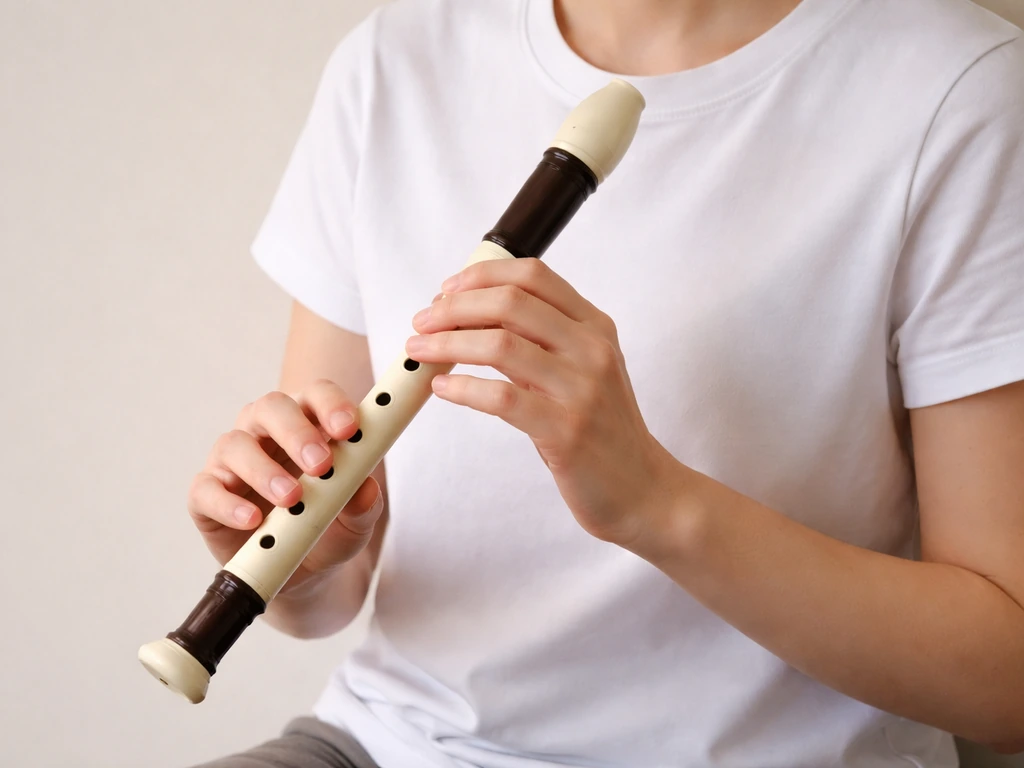
Sit up straight or stand. Hold the recorder angled downward at roughly 45 degrees from your body. Left hand goes on top (closest to the mouthpiece), right hand on the bottom. This is the one thing beginners get backwards most often, and it matters because the fingering system is designed around it. Your thumbs should curve naturally, not press flat against the instrument.
Breath Support: Softer Than You Think
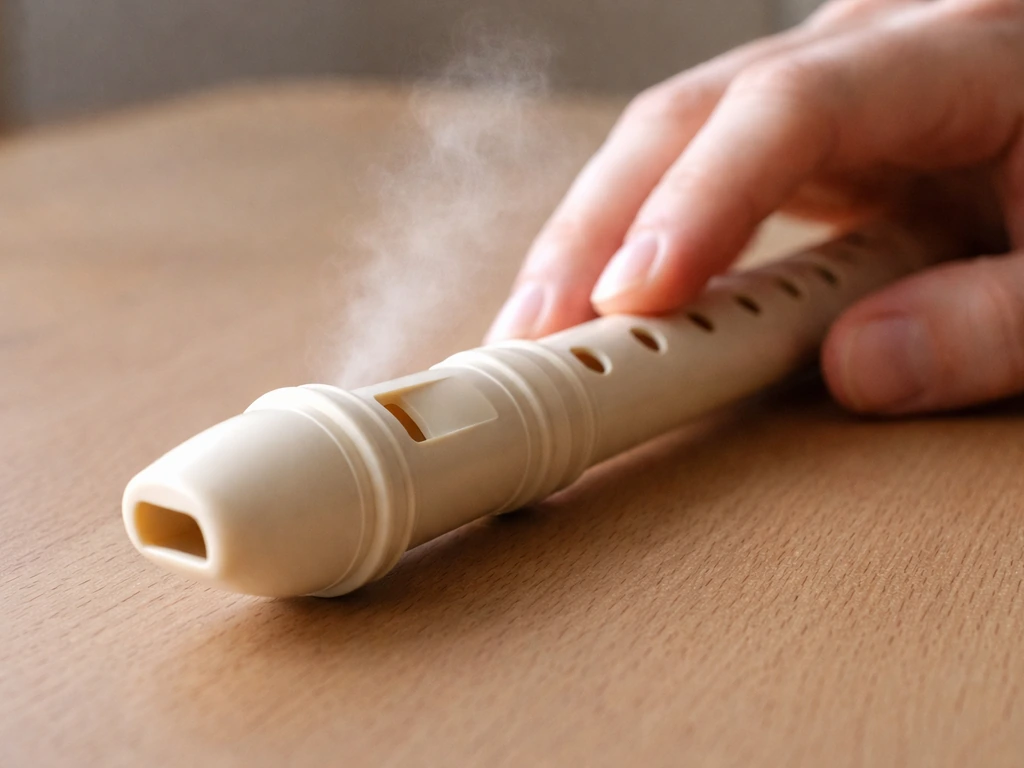
The recorder is deceptively sensitive to air pressure. Blow too hard and the note squeals up an octave or sounds like a strangled cat (I learned this the embarrassing way in front of a roomful of people). The goal is a steady, warm stream of air, like you're fogging up a cold window. Think 'du' not 'hoo,' and definitely not 'pooh.' The 'du' sound naturally controls the airflow better.
Tonguing: How You Start Each Note
Every note you play should begin with your tongue touching the roof of your mouth just behind your top teeth, as if you're saying 'tu' or 'du.' This is called tonguing, and it gives each note a clean, defined start instead of a breathy blob. For slurred passages (where multiple notes are connected under one bow-like phrase mark), you tongue only the first note and keep the air flowing through the rest. For Stanford's 'Blue Bird,' the long flowing phrases are slurred, so you'll tongue the start of each phrase and then glide through.
Reading the Notes: A Fast-Track Primer
If you can't read music yet, don't panic. The soprano recorder's most-used notes sit between middle C (one ledger line below the staff) and D an octave above. The notes you'll use most in Blue Bird are G, A, B, C, D, E, and F-sharp (if you're in G major). Each sits on a specific line or space of the treble clef staff. A simple memory trick: the lines from bottom to top are E, G, B, D, F (Every Good Boy Does Fine) and the spaces spell FACE from bottom to top.
Fingering Chart for the Notes You'll Actually Need
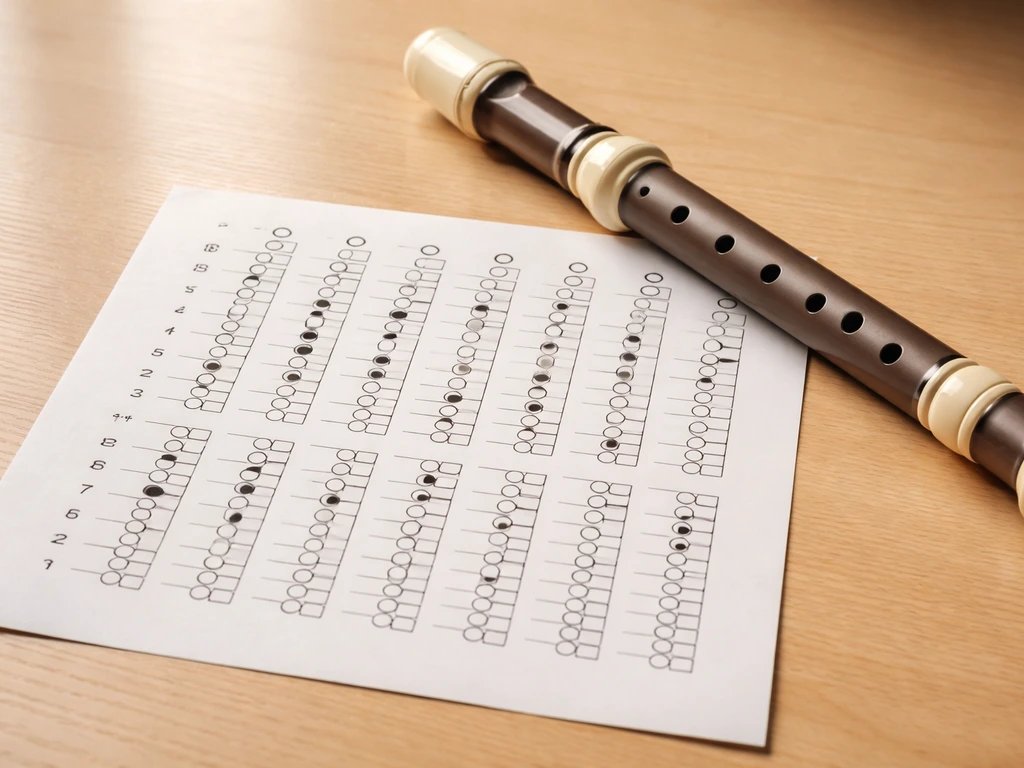
Here are the core fingerings for the soprano recorder notes used in most Blue Bird arrangements. A blank" rel="noopener noreferrer">baroque (English) soprano/descant recorder fingering chart image is available on Wikimedia Commons, showing the standard fingering range in a single sheet format. In the chart below, T = thumb (back hole), 1-4 = left hand fingers top to bottom, 5-8 = right hand fingers top to bottom. A filled circle means the hole is covered, an open circle means it's open.
| Note | Thumb (T) | L1 | L2 | L3 | R1 | R2 | R3 | R4 |
|---|---|---|---|---|---|---|---|---|
| G (low) | Covered | Covered | Covered | Covered | Covered | Covered | Covered | Covered |
| A | Covered | Covered | Covered | Covered | Covered | Covered | Covered | Open |
| B | Covered | Covered | Covered | Covered | Covered | Open | Open | Open |
| C | Covered | Covered | Covered | Covered | Open | Open | Open | Open |
| D | Covered | Covered | Covered | Open | Open | Open | Open | Open |
| E | Covered | Covered | Open | Open | Open | Open | Open | Open |
| F# | Covered | Covered | Open | Covered | Open | Open | Open | Open |
| G (high) | Half-cover | Covered | Covered | Covered | Covered | Covered | Open | Open |
The high G (second octave) uses a 'pinched' or half-covered thumb hole, meaning you roll your thumb slightly so only part of the back hole is covered. This is called 'thumbing' and it's the technique that unlocks the upper register. It takes practice to find the sweet spot, but once you feel it, it clicks fast.
Step-by-Step Melody Walkthrough
Stanford's 'The Blue Bird' (Soprano/Descant Line)
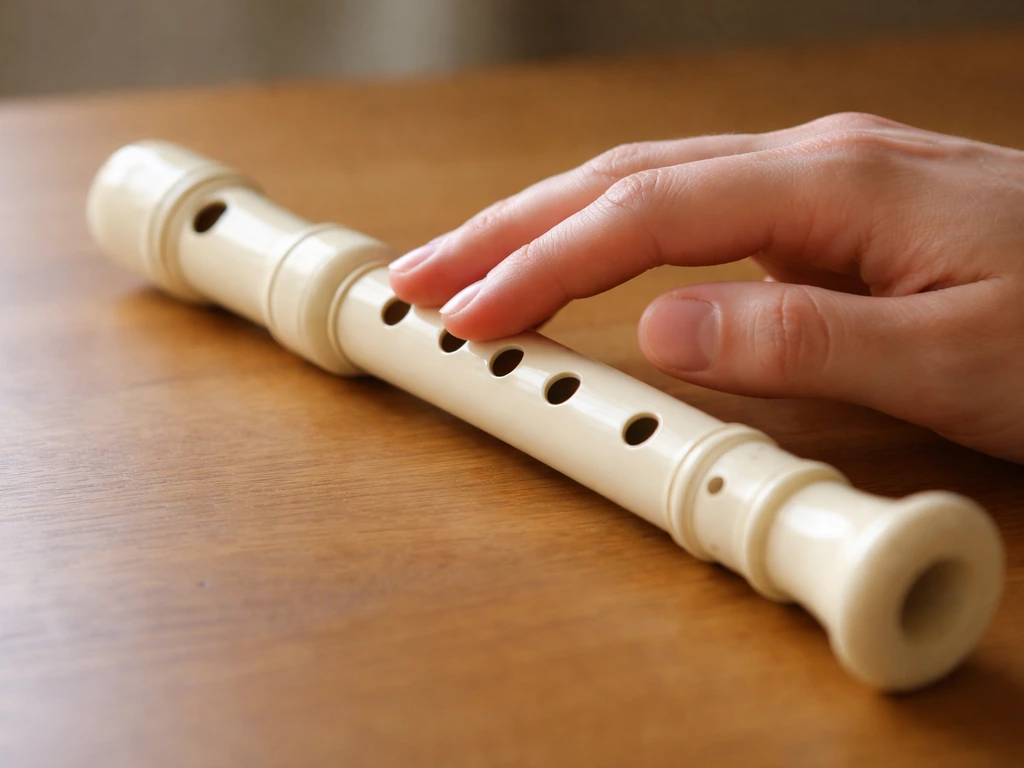
Most recorder arrangements of Stanford's piece are transposed to G major or F major for ease of playing. The melody is built on gentle stepwise motion (notes moving mostly by steps rather than jumps), which actually makes it very learnable on recorder despite sounding sophisticated. The tempo marking is typically slow and expressive, around 52-60 beats per minute.
The melody opens with a rising phrase that moves upward through the scale in a flowing triple feel (3/4 time). Think of it in three-beat groupings, like a slow waltz. The first phrase rises, the second phrase answers by gently falling back down. That call-and-response arc is the emotional heart of the whole piece, so getting those two opening phrases right sets up everything that follows.
- Learn the rhythm first without the recorder. Clap or tap the beat and speak the note names in rhythm: 'G, A, B... D, C, B, A...' Getting the rhythm in your body before you add fingering saves hours of frustration.
- Add fingering on one phrase at a time. Play the opening four-bar phrase until it feels automatic, then move to the next. Don't chain the whole melody together until each small chunk is solid.
- Connect phrases with smooth slurs. In Stanford's piece, phrases are long and connected. Tongue only the first note of each phrase, then keep air flowing continuously through the rest. Lift and re-tongue at each new phrase beginning.
- Work the middle section separately. The melody typically rises to its highest point in the middle (reaching up toward high D or E depending on your arrangement key). Practice that peak moment slowly, then approach it from earlier in the phrase at tempo.
- Put it together at half speed. Use a metronome set to about 26-30 BPM (half of your target tempo) and play through the full melody without stopping. If you stumble, make a mental note but keep going. Fix the stumble point in isolation afterward.
- Gradually bring the tempo up. Add 4-5 BPM every time you can play through cleanly. This is slower than it feels like it should be, but it's genuinely the fastest route to a polished result.
'Bluebird Through My Window' (Beginner Version)
If you're working on the children's version, the whole melody sits within B, A, and G with occasional dips to E and D. The rhythm is simple and repetitive: quarter notes and half notes in 4/4 time. The phrase structure is predictable: four bars, repeat, four bars, slight variation. Once you can play B, A, and G cleanly and switch between them without squeaking, you can play this melody. Practice just those three notes in sequence until the transitions are smooth, then add the full rhythm.
Common Problems and How to Fix Them Fast
| Problem | Likely Cause | Quick Fix |
|---|---|---|
| Note squeals or jumps octave | Too much air pressure | Reduce breath to a gentle, steady stream. Think 'warm fog,' not 'sharp blow.' |
| Note sounds airy or weak | Hole not fully covered | Press each finger flat against the hole, not on the tip. Check for tiny gaps by looking at the light reflection off the instrument. |
| Transitions between notes are clunky | Fingers lifting at different times | Practice the transition in slow motion: lift the departing finger and place the arriving finger simultaneously. |
| High notes won't speak | Thumb hole fully open instead of pinched | Roll the thumb down until only the edge of the nail covers the back hole. It's a tiny adjustment with a big effect. |
| Rhythm is uneven | Not internalizing the beat | Use a metronome, even at extremely slow tempos. Clap the rhythm away from the recorder first. |
| Phrases sound choppy | Tonguing every note instead of slurring | Find the phrase marks in your score. Tongue only the first note of each slurred group and let the air carry through the rest. |
| F-sharp sounds flat or buzzy | Incorrect half-hole technique | F-sharp uses a fork fingering on some recorders. Check your specific instrument's fingering chart, as it varies between baroque and German fingering systems. |
One thing worth knowing: soprano recorders come in two main fingering systems, baroque (also called English) and German. The main difference shows up on F and F-sharp. Baroque fingering is the standard for classical music and is what most printed arrangements assume. If your recorder says 'German fingering' on the packaging, double-check your F-sharp fingering against a German-specific chart, because it differs from baroque and can cause exactly the flat, buzzy sound described above.
A Practical Practice Plan to Actually Get This Sounding Good
Short, consistent sessions beat long, sporadic ones every single time. Here's a realistic daily structure that works whether you have 15 minutes or 45.
- Warm up for 2-3 minutes: play long tones on G, A, B, and D. Hold each note for 4-8 counts and focus on steady, consistent air. This also tells you immediately if your instrument needs cleaning (a wet, gurgling tone means moisture in the windway, so blow a sharp burst through it or wipe with a cloth).
- Spend 5 minutes on your problem spots only. Isolate the one or two transitions or phrases that fell apart in the previous session and work those in slow motion.
- Run the full melody twice at a slow, comfortable tempo. Don't stop for mistakes. Getting through the whole piece in sequence trains your memory and confidence.
- Finish with one 'performance run' at target tempo. Record it on your phone. Listening back is humbling but invaluable; you'll hear things your brain filtered out while you were playing.
- Ear-training bonus (5 minutes): Listen to a recording of Stanford's 'The Blue Bird' as performed by a vocal ensemble or solo instrument. Follow along with your score and notice where the long phrases breathe and swell. The piece is about imitating that floating, gliding quality. Matching your recorder's phrasing to what you hear in a good recording is the fastest way to move from technically correct to actually musical.
The ear-training angle here is genuinely useful, and it connects to something that makes this piece special: 'Blue Bird' is fundamentally a song about movement and lightness, the imagery of a bird gliding and settling. If you listen to how a good soprano singer or flute player shapes the long phrases, letting notes 'land' gently rather than stopping them abruptly, and then try to recreate that feeling in your playing, the music becomes much more convincing and much more fun to practice.
If You're Coming From Violin, Clarinet, or Flute: Here's What's Different
A lot of searches for 'how to play Blue Bird' come from people who play or are learning another instrument and want to know if they can double the part on recorder, or who have landed on recorder information by accident while looking for violin or clarinet guidance. Here's a quick breakdown of what changes between instruments.
Violin
On violin, 'The Blue Bird' is usually arranged in first position and fits naturally in G major or D major. The bow does the work that your breath does on recorder: long, even bow strokes replace steady airflow, and slurs are executed by keeping the bow moving in one direction across multiple notes. The big difference is vibrato: violinists typically add gentle finger vibrato to sustained notes to create warmth, whereas recorder players have no vibrato mechanism beyond very subtle breath variation. If you're a violinist trying out recorder, you'll also find that left-hand technique is completely different because there are no strings to press, just holes to cover or uncover.
Clarinet
The clarinet is a transposing instrument (a B-flat clarinet sounds a whole step lower than written), so if you're playing from a score written for C instruments (like recorder or flute), your written notes will be different from what's on the page. Clarinet uses a single reed and a completely different fingering system; the Boehm key system means your fingers operate padded keys rather than open holes. Articulation is similar in concept (tonguing with 'tu' or 'du') but the reed responds differently to air pressure, being much more forgiving of variation. The clarinet also has a natural 'break' between the lower register (chalumeau) and upper register (clarion) that requires a specific technique to cross smoothly, something recorder players don't deal with in the same way.
Flute
The flute is probably the closest relative to the recorder in terms of sound concept (both are flutes in the acoustic family), but the technique is quite different. Flute tone is produced by blowing across an embouchure hole, which requires shaping your lips precisely and angling the air stream. This is actually harder to learn than recorder, where you just blow into a fixed mouthpiece. Flute fingering uses the Boehm system with padded keys, similar to clarinet. Vibrato on flute is standard and expected; it's produced by fluctuating the diaphragm or jaw. On recorder, vibrato is optional and stylistic, used more in Baroque-style playing than in arrangements of 20th-century pieces like Stanford's Blue Bird.
| Feature | Soprano Recorder | Violin | Clarinet | Flute |
|---|---|---|---|---|
| Sound production | Blow into fixed mouthpiece | Bow across strings | Single reed + keys | Blow across open embouchure hole |
| Fingering system | Open holes, 8 fingers + thumb | Pressing strings on fingerboard | Boehm key system | Boehm key system |
| Vibrato | Optional / minimal | Finger vibrato, standard | Diaphragm vibrato, common | Diaphragm/jaw vibrato, standard |
| Articulation | Tongue: 'tu' or 'du' | Bow direction changes / détaché | Tongue: 'tu' or 'du' | Tongue: 'tu' or 'du' |
| Transposition needed? | No (C instrument) | No (C instrument) | Yes (B-flat instrument) | No (C instrument) |
| Beginner accessibility | Very high | Low (long learning curve) | Moderate | Moderate to low |
If you arrived here looking for Blue Bird on guitar, that's a different search entirely. If you want to learn how to play this kind of bird-themed melody on guitar, look for guides that cover chords, strumming or picking patterns, and how to match the phrasing Blue Bird on guitar. If you arrived here looking for play Blue Bird on guitar, that's a different search entirely.
If you’re specifically trying to play it on guitar, check a guitar-focused guide for chords and strumming patterns that fit Blue Bird play Blue Bird on guitar. If you specifically want to play this on guitar, you will need different chords and strumming patterns than the recorder version Blue Bird on guitar. Guitar arrangements of bird-themed pieces like this one involve chord voicings and picking patterns that don't translate to the recorder world at all.
The site does have guides on playing bird-related songs on guitar that might be more useful for that path. If you meant playing a bird-on-a-wire vibe on guitar instead, see how to play bird on a wire on guitar as a related option for chords and strumming.
If you arrived here for the recorder version but you actually want the guitar one, use this guide on how to play bird song on guitar as a related option for chords and strumming.
Where to Find the Right Sheet Music
Getting the correct score matters more than most beginners realize. Here's where to look:
- Dolmetsch Online: Hosts a free PDF of Stanford's 'The Blue Bird' with the soprano/descant line. Search 'Dolmetsch The Blue Bird Stanford' to find it directly.
- IMSLP (Petrucci Music Library): Stanford's work is in the public domain. Search 'The Blue Bird Stanford' and download the full score, then use the soprano line.
- Indiana University's InHarmony library: Lists the piece by title and can help you confirm you have the right work before downloading.
- Local music store or teacher: If you want a pre-arranged recorder-specific version with fingering guidance built in, a music teacher or well-stocked sheet music retailer can often provide a graded arrangement in a more recorder-friendly key.
One final tip from hard experience: always check the key signature before you start learning a piece. If your score shows G-flat major (six flats), that's the original transposition and it will be genuinely difficult on a standard recorder. If it's in G major (one sharp) or F major (one flat), you're working from a transposed arrangement designed for ease of playing. Both are valid, but knowing which you have saves you from wondering why the fingerings feel so awkward.
FAQ
How can I tell which Blue Bird melody I have before I start practicing?
Most “how to play Bluebird” pages mix up Stanford’s “L’Oiseau Bleu” with the children’s tune “Bluebird Through My Window.” If your sheet music says “L’Oiseau Bleu” (often by Charles Villiers Stanford) or you see a 3/4 waltz feel, you’re on the Stanford piece. If it’s a simple 4/4 classroom melody limited mainly to B, A, and G, it’s the children’s song.
If my recorder says German fingering, can I still use the same fingering chart?
Yes, but don’t rely on a single “high note” finger chart alone. If you have a German fingering recorder, confirm the chart specifically for German (especially F and F-sharp), then test the notes by alternating short bursts (for example, F to E) rather than playing long runs, because German/baroque mismatches often show up as buzzing or flat tone mid-phrase.
What should I do if my notes sound breathy or not connected on slurs?
Recorder doesn’t work well with a “breath only” attack, because each note has to start cleanly with tonguing. Even in slurred passages, tongue the first note of each phrase (or each beat group in a rhythm you’re learning), and keep the air steady afterward. If you never tongue or you tongue every note too aggressively, the melody will sound either blurry or choppy.
My higher notes squeak or jump. What’s the fastest way to fix that?
For the common beginner issue of “squeaks,” check your air speed first, then your thumb coverage. A typical fix is to reduce force (steady, warm airflow) and use a more reliable seal on the thumb hole, then re-try the note. If the squeal keeps happening only on the top G, practice the half-covered thumb motion in very short repeats until it stops jumping.
Can I play along with a recording if the key seems different?
You can, but you should match the same octave and transposition as your arrangement. If the accompaniment or recording is in a different key than your sheet, the fingerings will still work but the pitch will not line up, which feels like “wrong notes.” Choose a recording that explicitly matches the key (like a transposed G major or F major arrangement) or transpose your part to match what you hear.
How do I know if I’m practicing the hard original key by accident?
If your fingering feels “awkward,” the key signature is often the reason. G-flat major (original) is much tougher on many soprano recorder setups, while G major or F major usually use an easier transposition. Check the key signature at the start of the score before blaming technique, then compare which version of the piece you’re using.
I can’t read music yet. How should I practice the notes for the children’s Blue Bird version?
Even without reading music, you can train accuracy by practicing note sequences using a simple checklist: cover/uncover for each note, then confirm by ear after each 2 to 3-note pattern. For “Bluebird Through My Window,” start with just B-A-G transitions until they sound stable, then add E and D only after the switch points stop squeaking.
My tonguing sounds too harsh or too late. How do I adjust it?
On soprano recorder, the tongue placement matters more than force. Aim for a light “tu” or “du” touch just behind the top teeth, then lift and move into the next note quickly. If your attack sounds sharp or rattly, soften the tongue contact, and if it sounds delayed or mushy, tongue a tiny fraction earlier.
How can I make Stanford’s “Blue Bird” sound lyrical even without vibrato?
A good way is to practice phrase “landings” rather than just rhythm. Play each phrase with slightly less abrupt stop at the end, like you’re letting the last note drift, then breathe silently and start the next phrase. This keeps the long-line style without needing vibrato, which recorder does not use in the same way as strings or flute.
Next Article
How to Play Bird Song on Guitar: Step-by-Step Guide
Step-by-step guide to play bird song on guitar, from matching pitch and rhythm to practice loops, tabs, and setup tips.