Before you play a single chord, you need to pin down which 'Little Bird' you're actually learning. There are at least three common versions floating around: Ed Sheeran's folk-pop 'Little Bird' (capo 1, chords Em/C/G/D/Am, around 104 BPM), Sierra Ferrell's country version (key of E, chords F#m/B7/E), and the Traditional 'Little Bird, Little Bird' folk song (often just D and A7, great for absolute beginners). Each one sounds completely different and uses a different setup, so matching the right version first saves you hours of frustration.
How to Play Little Bird on Guitar: Beginner Guide

Marcus Hendricks
14 May 2026
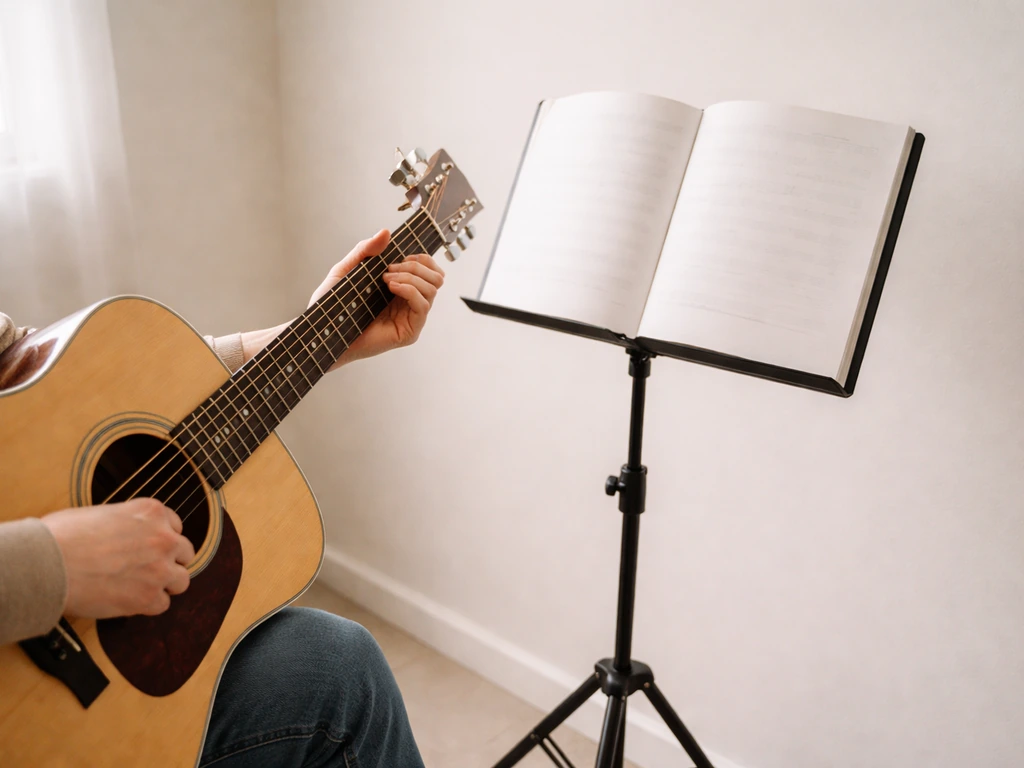
Step 1: Figure Out Which 'Little Bird' You Mean
This is genuinely the most important step. I've seen beginners spend a week learning the wrong chord shapes because they grabbed the first tab they found. Here's how to confirm your version quickly.
Hum or listen to the song you have in mind and match it against these three families. Ed Sheeran's version has an intimate, fingerpicked acoustic feel with a gentle folk groove. Sierra Ferrell's version leans harder into country with a classic two-step feel. The Traditional 'Little Bird, Little Bird' is a simple folk/children's song that moves between just two chords and often appears in beginner guitar books and school music materials. There's also a hymn version called 'A Little Bird I Am' that uses capo 3, and The Beach Boys and Kasey Chambers both have songs with this title too. If you're working from a tab or sheet music, the chord names printed at the top will tell you instantly which family you're in.
| Version | Artist/Source | Key Chords | Capo | Difficulty |
|---|---|---|---|---|
| Little Bird (folk-pop) | Ed Sheeran | Em, C, G, D, Am | Capo 1 | Beginner-intermediate |
| Little Bird (country) | Sierra Ferrell | F#m, B7, E | None listed | Beginner-intermediate |
| Little Bird, Little Bird (folk) | Traditional | D, A7 | None required | Absolute beginner |
| A Little Bird I Am (hymn) | Traditional hymn | Varies | Capo 3 | Beginner |
The rest of this guide focuses mainly on the Ed Sheeran version because it's the one most people searching this topic are after, but I'll flag where things differ for the Traditional and Sierra Ferrell versions so you can adapt.
Guitar Setup and Tools You'll Need
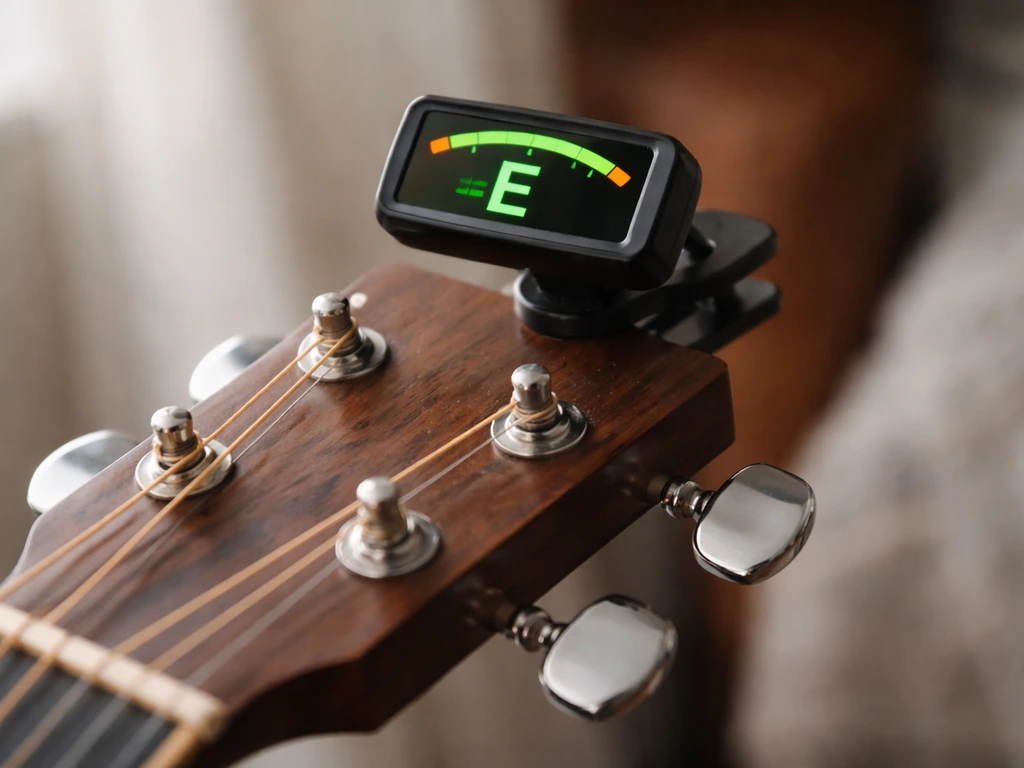
You don't need anything fancy. An acoustic guitar works perfectly for all three versions of 'Little Bird,' and that's what most arrangements are written for. A steel-string acoustic gives you the brightest sound for the Ed Sheeran version, but nylon-string is fine for the Traditional folk arrangement. Electric guitar works too if that's what you have.
Here's what to have on hand before you start:
- A tuner (clip-on or app-based): tune to standard EADGBE before anything else
- A capo: essential for the Ed Sheeran version (place it on fret 1) and the hymn version (place it on fret 3)
- A pick: medium gauge is a good all-around choice, though the Ed Sheeran version can also be fingerpicked
- A metronome (free app works fine): you'll use this heavily in the practice section
- Printed or screen-based chord diagrams for whichever version you chose
One thing beginners often skip is tuning after placing the capo. Don't do that. The capo changes the tension on the strings slightly, which can pull individual strings sharp or flat. Put the capo on fret 1, then re-check your tuning with your tuner. This alone fixes a lot of 'something sounds off' moments.
Learning the Chords Step by Step
Ed Sheeran's 'Little Bird' (Em, C, G, D, Am)
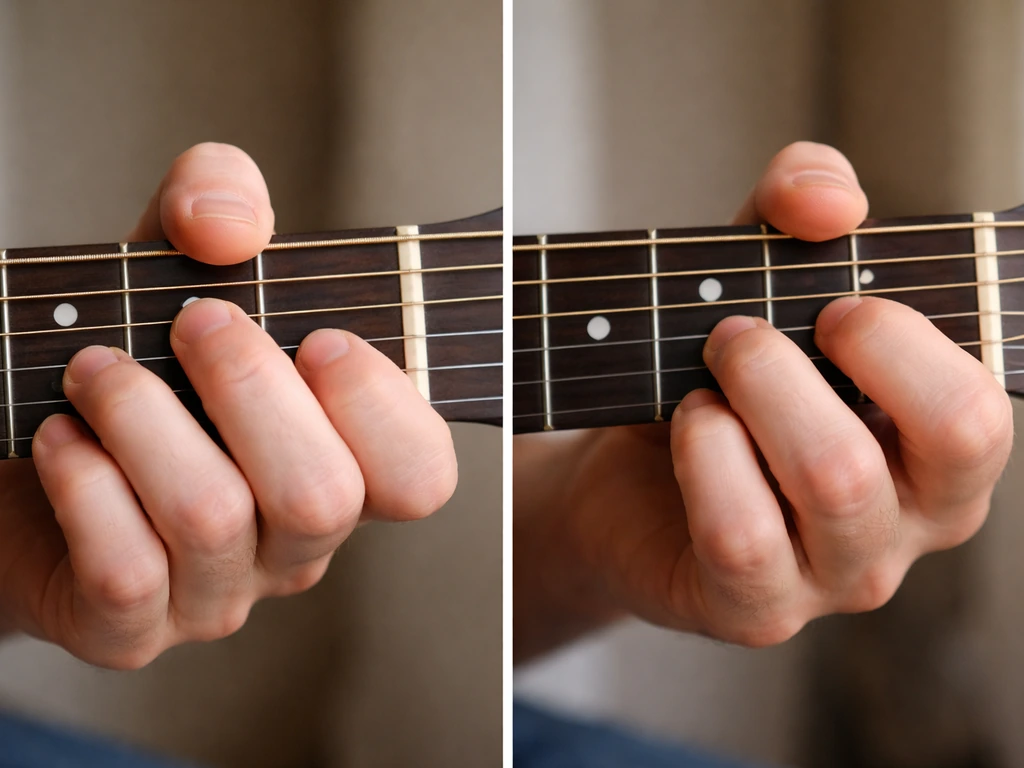
This version uses five chords in standard tuning with capo on fret 1. Learn them in this order, from easiest to trickiest, before you try to play the song from start to finish.
- Em (E minor): Two fingers on the 5th and 4th strings at fret 2. This is the most forgiving chord to land on and a great home base.
- Am (A minor): Three fingers covering strings 4, 3, and 2 at frets 2, 2, and 1. Very close physically to Em, so transitions between them are easier than they look.
- C major: Three fingers in an L-shape (fret 3 on string 5, fret 2 on string 4, fret 1 on string 2). The tricky part is keeping string 1 open and clear.
- G major: There are two common fingerings. The 'beginner G' uses frets 3, 2, 3 on strings 6, 5, 1. The full G barre version sounds fuller but isn't required at first.
- D major: Four strings only (strings 1-4). Fingers sit at frets 2, 3, 2 on strings 3, 2, 1. The jump from C to D is the hardest transition in this progression, so drill that specific change the most.
The main verse and chorus progression in the Ed Sheeran version cycles through Em, C, G, and D. Practice just those four in a loop before adding Am. Spend at least 10 minutes on each chord change individually: Em to C, C to G, G to D, and D back to Em. You'll feel the transitions get smoother within a single session.
Sierra Ferrell's 'Little Bird' (F#m, B7, E)
This version repeats a three-chord loop through the intro and chorus: F#m, B7, E. The E major chord is easy. F#m is a partial barre chord (barre fret 2, add fingers on frets 4 and 4 on strings 4 and 3), which beginners find trickier but very doable with practice. B7 has a distinctive open-position shape with four fingers active. Practice the B7-to-E transition most since it's the most common pivot in the song.
Traditional 'Little Bird, Little Bird' (D and A7)
This is the most beginner-friendly option. D major and A7 are both open-position chords that most guitar books introduce in the first two lessons. The progression shifts between them as the melody moves through the song. If you're still building chord vocabulary, start here. It's genuinely satisfying to play from day one.
Strumming and Picking Patterns That Fit the Song

Ed Sheeran version strumming pattern
The Ed Sheeran 'Little Bird' has a gentle down-up folk strum that fits the verse and chorus. A good starting pattern is: Down, Down-Up, Down-Up, Down-Up (in eighth-note feel across four beats). Written out rhythmically, that looks like: D, D-U, D-U, D-U. Start with just constant downstrokes on the beat while you get chord changes solid, then layer in the ups once your hands know where to go.
Sheeran's recorded version also has fingerpicked moments where individual notes within a chord ring out separately. If you want that sound, try a simple arpeggio pattern: thumb on the root note (lowest string of the chord), then index/middle/ring fingers picking strings 4, 3, and 2 in sequence. Don't rush to this until your chord shapes are clean and reliable.
Sierra Ferrell version picking feel
Sierra Ferrell's arrangement has a flowing country-folk feel. The repeating F#m, B7, E loop works well with a steady down-strum on beats 1 and 3, and a lighter down-up on beats 2 and 4. This gives it a country lilt rather than a straight rock feel. Let the chords ring fully between changes.
Traditional 'Little Bird, Little Bird' rhythm
Worth knowing: the Traditional version sometimes shifts between 2/4 and 3/4 time, meaning you might count 'one-two' for some phrases and 'one-two-three' for others. This is actually noted in some published arrangements and it explains why it can feel rhythmically loose or 'free.' If your version feels uneven, check whether your source material is mixing time signatures. A simple strum on beat 1 of each measure works well until you get comfortable.
Rhythm, Timing, and How to Practice Efficiently
Bad timing is the most common reason a beginner's version of a song sounds wrong even when the chords are correct. The fix is always a metronome, used the right way.
Ed Sheeran's 'Little Bird' sits around 104 BPM. That's not fast, but it's fast enough to feel rushed when you're also managing chord changes. Here's the practice sequence I'd recommend:
- Set your metronome to 60 BPM. Play just the chord changes, one strum per beat, no fancy pattern. Just make sure every chord lands cleanly on the click.
- When 60 BPM feels easy, bump to 70 BPM. Repeat until changes are reliable at 80, then 90 BPM.
- At 90 BPM, introduce your strumming pattern. Count out loud: '1 and 2 and 3 and 4 and.' Your down-strokes hit on the numbers, your upstrokes hit on the 'ands.'
- Keep incrementing by 5-10 BPM until you reach 104 BPM. Don't skip steps, it's tempting but it creates sloppy habits.
- Once at full speed, play through two full run-throughs without stopping to fix mistakes. Train your recovery, not just your precision.
Short focused sessions beat long unfocused ones every time. Twenty minutes of deliberate practice with a metronome will get you further than an hour of noodling. I learned this the hard way after months of playing songs 'close enough' that never actually tightened up.
Adding Fills, Dynamics, and Playing It Smoothly
Once the core chord progression and strum pattern are locked in, this is where the song starts sounding like a real performance rather than a chord exercise. A few things to layer in one at a time:
- Dynamics: Don't strum every beat at the same volume. Let the first beat of each measure hit slightly harder, and let the upstrokes be lighter. This creates a natural pulse that makes the song feel alive.
- Bass note emphasis: On chords like G, C, and D, try picking just the lowest string first with your thumb (or pick), then strumming the rest. This 'bass then strum' technique is sometimes called a 'boom-chick' pattern and it instantly makes simple chords sound more musical.
- Simple fills: Between chord changes, you can lift one finger slightly to let an open string ring, or add a hammer-on on the way into a chord. For example, approaching an Am chord, you can slide into fret 2 from fret 1 on the B string. Small moves, big difference.
- The turnaround: In the Ed Sheeran version, listen for where the chord progression resets back to Em. You can add a single descending note run (E on string 1, D on string 1, then back to Em) to mark that turnaround and it sounds intentional rather than choppy.
If your version includes a solo or bridge section (more common in the Sierra Ferrell arrangement), work on that section completely separately from the rest of the song. Isolate the 8 or 16-bar section, learn it at slow tempo, and only stitch it back into the full song when it's solid on its own. Jumping into a solo section cold in the middle of a run-through almost never works early on.
Common Mistakes and How to Fix Them
Buzzing strings
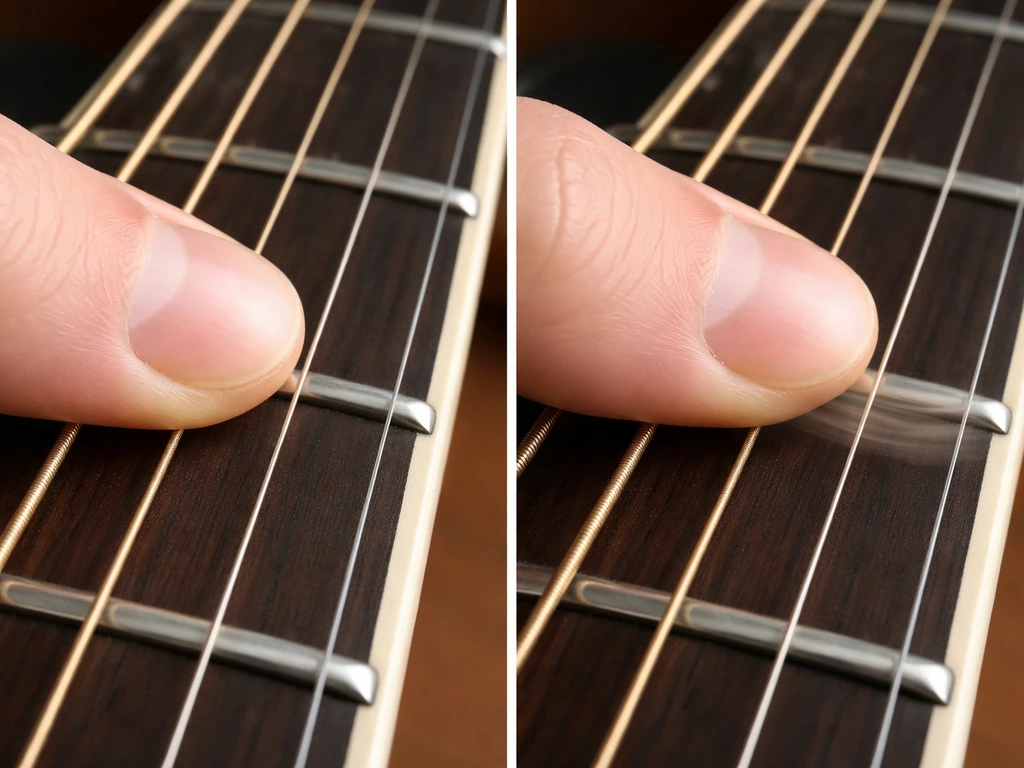
Buzzing usually means one of three things: your finger isn't pressing close enough to the fret (move the fingertip toward the metal fret wire, not the middle of the fret space), another finger is accidentally touching an adjacent string, or your capo isn't sitting flush across all strings. For capo buzz specifically, make sure the capo bar is right behind the fret wire (just on the headstock side of it), not sitting in the middle of the fret space. Pressing too hard or too light can both cause buzz, so experiment with pressure until the note rings clean.
Wrong chord shapes
If a chord sounds muddy even though you think you're pressing the right frets, play each string individually (this is called 'rolling through the chord') to identify exactly which string is muted or buzzing. Then adjust just that finger. Trying to fix 'the whole chord' at once usually just shifts the problem around without solving it.
Missing chord changes
If you're always late on a chord change, the fix isn't to practice the song faster. It's to slow down and look for the 'pivot finger,' meaning the one finger that stays roughly in place between two chords or moves the least. For example, between C and Am, your middle finger barely moves. Lock onto that anchor finger and let it guide the rest of your hand into position. This technique alone cut my chord change time in half when I first learned it.
Tempo inconsistency
If you speed up during easy parts and slow down during hard chord changes, that's almost universal for beginners and totally fixable. The metronome practice plan above addresses this directly. The key insight is that you slow down because you're anticipating difficulty, not because the physical move is actually slower. Playing with a metronome trains you to commit to the change on time even when it's not perfect yet.
Capo tuning issues
If the song sounds slightly off-pitch even with correct chords, re-check your tuning after the capo is placed. The capo changes string tension enough to push some strings sharp. Tune up with the capo already on, not before. Also make sure the capo is evenly clamped across all strings and not pressing harder on one side than the other, which can pull individual strings out of tune.
A Realistic Practice Plan to Get This Done
Here's how I'd structure the first week if I were learning this from scratch today. Each session should be about 20-25 minutes.
| Day | Focus | Goal |
|---|---|---|
| Day 1 | Identify your version, set up guitar and capo, learn chord shapes | All chords ring clean individually |
| Day 2 | Chord transitions only, metronome at 60 BPM, one strum per beat | Changes happen on the click without pausing |
| Day 3 | Introduce strumming pattern at 70 BPM | Pattern consistent for 2 full progressions |
| Day 4 | Increase to 85 BPM, focus on problem transitions | Weakest change feels solid |
| Day 5 | Play through full song at 90-95 BPM, add bass note emphasis | Full run-through without stopping |
| Day 6 | Add dynamics and any fills you want | Song sounds musical, not mechanical |
| Day 7 | Full performance run-through at 104 BPM | Play it start to finish confidently |
Once you have 'Little Bird' under your fingers, the same chord vocabulary (especially Em, C, G, D, and Am) transfers directly to a huge number of other songs. If you want to play free as a bird on piano, the same idea applies: identify the exact version first, then practice the chord loop slowly until it feels automatic how to play free as a bird on piano. If you specifically want how to play Surfin' Bird on guitar, use the same chord and timing habits, then match the strumming to the vocal groove Once you have 'Little Bird' under your fingers. If you enjoy this style, exploring other bird-themed guitar pieces like 'Flightless Bird' or 'Yellow Bird' is a natural next step, and several of the chord shapes and fingerpicking habits you've built here will carry right over. If you're already comfortable with this chord vocabulary, you can use the same approach to learn how to play Flightless Bird on guitar.
FAQ
How do I know which version of “Little Bird” I’m learning if I only have audio and not a chord chart?
Pick the setup cue first. If the song uses Em, C, G, D with a capo on fret 1, it matches the Ed Sheeran folk-pop family. If it centers on F#m, B7, E as a repeating loop, it’s the Sierra Ferrell style in that key. If it mainly cycles between D and A7 with a very simple folk feel, it’s the traditional “Little Bird, Little Bird” track. Once you identify the chord family, use the tempo and strum feel (gentle down-up vs country down-strums) to confirm.
What should I do if my chord shapes are correct but the rhythm still feels “off” or uneven?
Check whether your source is mixing time signatures, especially for the traditional variant. A quick test is to count one beat per strum on the downbeat of each measure. If the song still drifts, focus on placing chord changes on the same numbered beat every time, then use a metronome subdivision (set it to 8th notes) so your down-up pattern lines up.
Can I play “Little Bird” without a capo?
Yes, but you need a consistent transposition. If you want the Ed Sheeran arrangement without capo on fret 1, you’ll shift the chord shapes up or down by the capo amount (capo 1 lowers the pitch of the chord shapes by one semitone compared to open position). Instead of guessing, take one chord from the chart (for example Em shape), transpose it by the capo distance using a tuner or pitch reference, then verify by ear on the recording.
My notes buzz most on one chord, what’s the fastest way to troubleshoot?
Do a targeted string check. Roll through the chord one string at a time, lightly mute the others, and identify the exact string that buzzes or sounds dead. Then adjust only that finger, and re-check capo contact if you hear buzz right near the first few frets, since a capo that is slightly lifted on one side can cause a single-string buzz.
What capo placement gives the cleanest sound for this song?
Place the capo directly behind the fret wire (the side closer to the headstock), and make sure the clamp is even across all strings. If one side is tighter, you can get uneven tuning even when the rest of your fretting is solid. After clamping, tune again immediately, then run the hardest transition (commonly B7 to E or F#m to B7) to confirm the capo is stable.
Which chord change should I practice first for the Ed Sheeran version if I’m a total beginner?
Start with D to Em and Em to C if you feel shaky with finger coordination, then move to G to D and the most common pivot, D to Em again. If you struggle more with partial barre shapes, prioritize any transitions involving Am after you can loop Em, C, G, D cleanly with stable timing.
How do I practice “Little Bird” with a metronome if I keep speeding up during easy parts?
Use a two-step tempo method. First, set the metronome to a slower speed where you can hit every chord change on time for 2 to 3 full run-throughs. Second, keep the same tempo and add accuracy, not speed, by counting “1 and” subdivisions for the down-up strum. When you miss, stop and reset to the last section that was correct, rather than pushing through faster.
I can play the chords but my strumming sounds harsh, how can I make it sound more like the recording?
Match the attack and spacing, then control the volume. For the Ed Sheeran groove, start with consistent downstrokes on the beat until chord changes are clean, then add the lighter ups. Keep your strum hand relaxed so ups don’t hit too hard, and let the pick travel enough to sound full chords without slapping the strings. If it still sounds sharp, re-check tuning with the capo on.
What if my “fingerpicked” moments sound messy or out of time?
Delay the arpeggio until your chord grip is stable, then simplify the pattern. Start with the thumb root note on the lowest string, then pick only two strings (for example strings 4 and 3) in a slow loop that fits the metronome. When that locks, expand to strings 4, 3, and 2, keeping the same rhythm each repetition so it blends into the strum rather than competing with it.
Does switching guitars matter for “Little Bird,” especially fingerstyle versus strumming?
It can. A steel-string acoustic tends to make the Ed Sheeran style ring brighter, which helps you hear if a note is muted. A nylon-string guitar may feel easier on the fingers but can blur fast transitions if your pressure is inconsistent. Electric guitar can work, but use a clean or lightly compressed tone so arpeggios and chord changes remain distinct rather than disappearing into reverb or distortion.
What’s a good first-week practice plan if I only have 15 minutes a day?
Do 10 minutes of metronome chord loops (Em to C to G to D, then add Am) and 5 minutes on one transition that fails most (for example B7 to E or D to Em). Keep sessions short but repeat the same targets daily. Record yourself once or twice during the week so you can compare timing on the exact beat of chord changes, not just how it sounds overall.
Next Article
How to Play Free as a Bird on Piano Step by Step
Step by step guide to play Free as a Bird on piano with chords, melody, left hand patterns, timing tips.