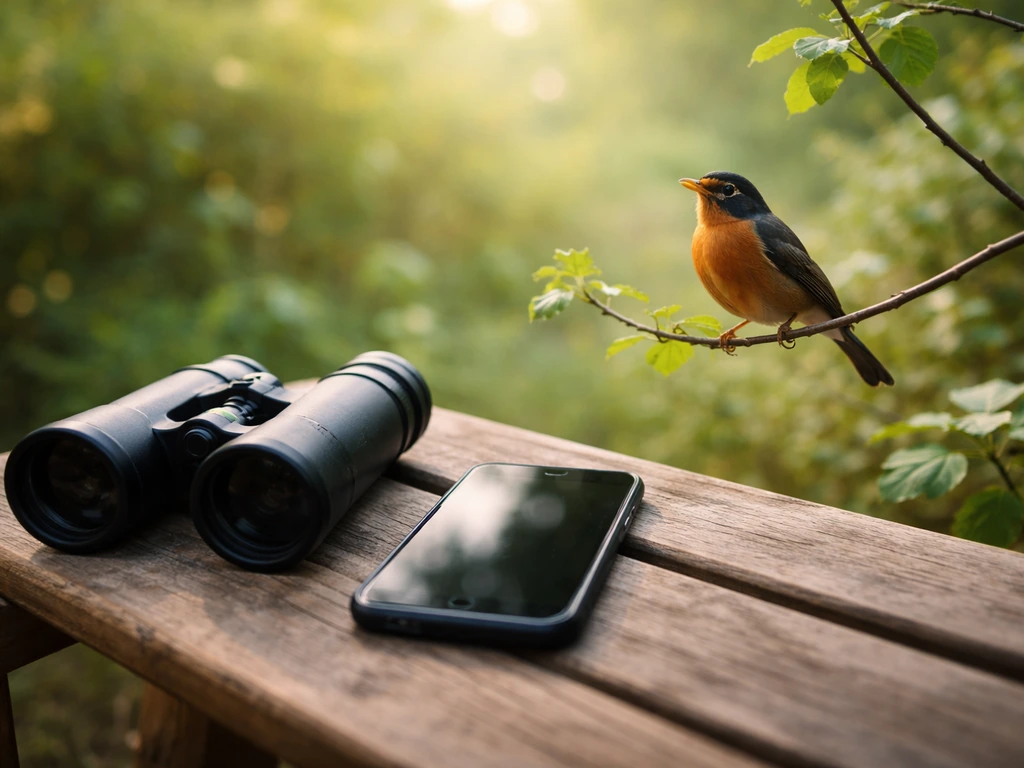
"Bird up" is worth addressing too. In birding circles, "birding up" loosely means leveling up your setup or routine: getting better gear, adding a feeder, or building habits that put more birds in your life on a daily basis. This guide covers that angle as well, so whether you're starting from zero or just trying to do more with what you already have, keep reading.
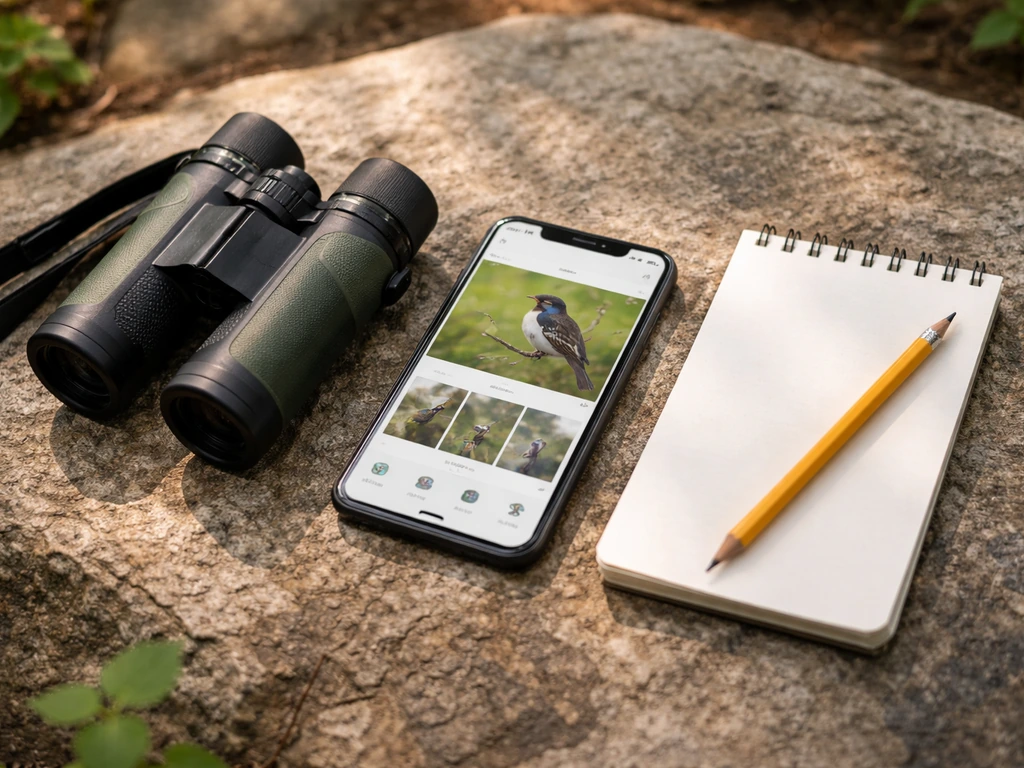
The honest minimum to start birding today is just your eyes, your ears, and a phone. That's it. But a few simple additions make the experience dramatically better from day one.
Binoculars
You don't need to spend a fortune, but don't grab the cheapest pair at a dollar store either. For birds, you want binoculars with a wide field of view, ideally at least about 6.5 degrees (which translates to roughly 341 feet of view at 1,000 yards). A classic beginner pairing is 8x42 (8x magnification, 42mm objective lens), which balances brightness and steadiness well for most people. The legendary birder Roger Tory Peterson famously used 7x42s, and that class of binocular still holds up for birding. Avoid any pair that has separate focus wheels on each barrel instead of a single central focus knob; those are genuinely miserable to use when a bird is moving through brush.
Apps: Merlin and eBird are your new best friends
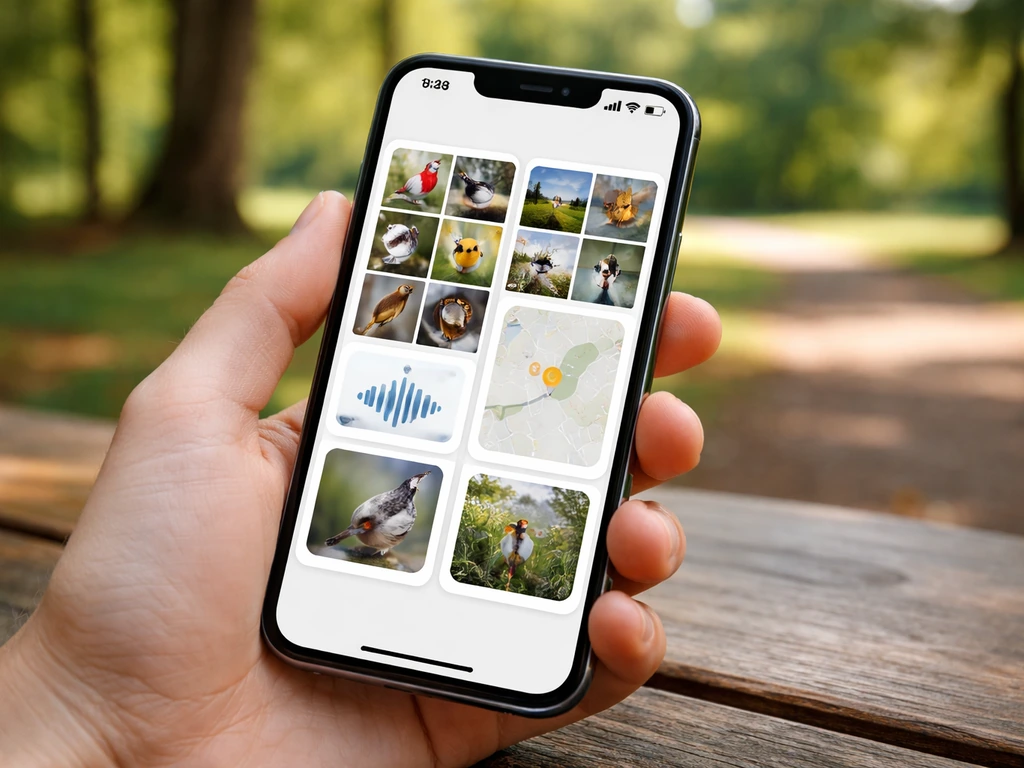
Download two apps right now: Merlin Bird ID (from the Cornell Lab of Ornithology) and eBird. Merlin is a free identification tool that uses photos and audio to help you figure out what you're looking at or listening to. eBird is where you log what you see, discover nearby birding hotspots, and join a global community of birders contributing to real citizen science. The Audubon Bird Guide app is another solid free option that pulls from eBird data and includes calls and songs, making it useful for both identification and finding specific birds near you. Having at least one of these installed before you go outside changes everything.
A field guide (physical or digital)
Apps are great, but a lot of birders still swear by a printed field guide for their region. There's something about flipping through pages that helps knowledge stick. If you're not sure which one to pick up, check out this guide on how to find a bird book that fits your region and skill level. Regional guides (covering just your part of the country) are easier to use than continental ones when you're starting out.
Where to actually go
Open eBird, tap "Explore," and look for hotspots near you. A hotspot is simply a location that other birders have found productive, which is a public park, a nature preserve, a lake edge, even a cemetery (birds love them). The Cornell Lab explicitly points beginners to eBird hotspots as the fastest way to find birds without doing hours of scouting on your own. Start within 15 minutes of home. The point is to go often, not to travel far.
Bird watching basics: observing, identifying, and tracking what you see
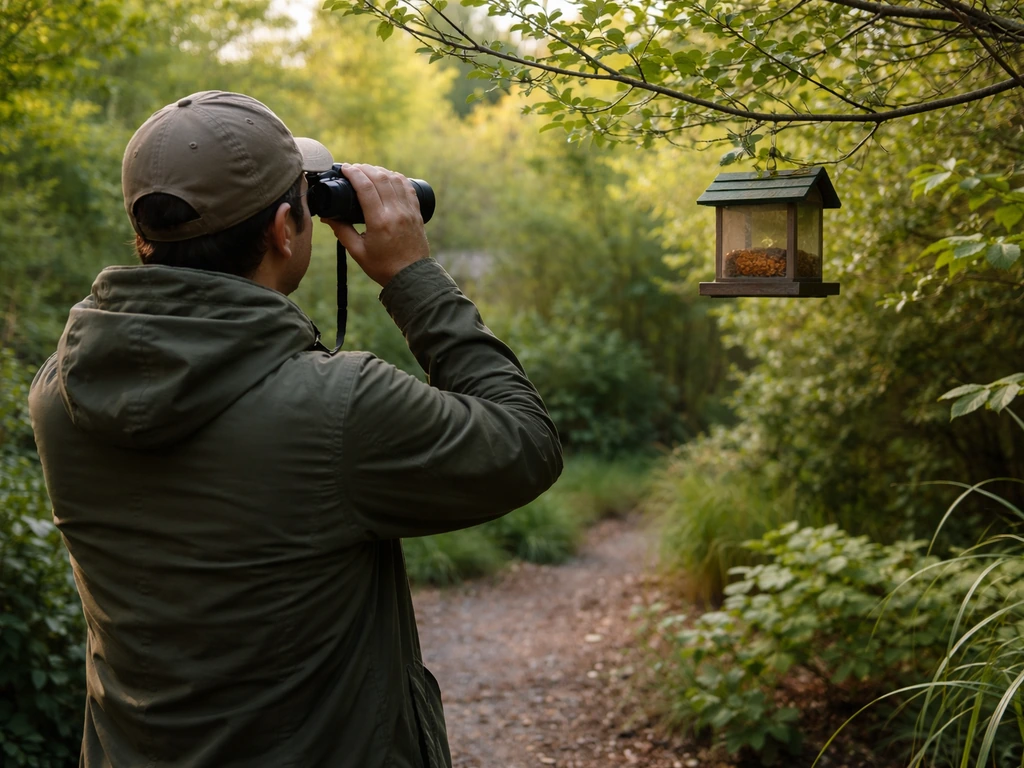
Good birding is mostly about slowing down and paying attention in a structured way. Here's a simple workflow that works whether you're in a park or your own backyard.
- Stop and stand still for at least two to three minutes before moving. Birds that flushed when you arrived will come back.
- Notice size first. Is it sparrow-sized, robin-sized, crow-sized, or bigger? This alone narrows the field dramatically.
- Look at color, but don't stop there. Note wing shape, tail shape, and any distinct markings like eye rings, wing bars, or streaking on the breast.
- Watch what it's doing. Is it foraging on the ground, probing bark, hovering, or diving? Behavior is one of the most underrated ID clues.
- Note the habitat. A bird in a cattail marsh and a bird in a dry scrubby hillside are going to be different species even if they look similar.
- Check the range. When you look up a possible match in Merlin or a field guide, confirm the species is actually expected in your area. Birds do occasionally show up outside their normal range (these are called vagrants), but don't assume a rare bird before you've ruled out the common ones.
- Write it down or log it in eBird before you walk away. Memory is less reliable than you think, especially after a full morning of birding.
One thing I learned the hard way: distance and lighting will fool you constantly. A bird backlit against a bright sky loses almost all its field marks. A bird in heavy shade looks darker than it is. When conditions are tricky, collect as many clues as you can (size, shape, behavior, habitat) rather than betting everything on color. Take a photo, even a bad one, so you can review it later. Sketching works too, and forces you to look more carefully than you would otherwise.
The Audubon Bird ID checklist covers the main things to observe when trying to pin down a species: size, color, body type and activity, habitat, voice, wing shape, and tail shape. Running through those mentally becomes automatic after a few outings. If you want a deeper dive into how to find out bird species from a tricky sighting, there's a full walkthrough that goes beyond the basics.
Logging your sightings in eBird does more than keep a personal record. It contributes to real scientific data, and it gives you a personal history to look back on. You'll start noticing seasonal patterns ("that warbler shows up here every April") faster than you'd expect. For more hands-on tips about how to find a bird in a specific habitat or situation, that's a good follow-on read once you've got a few sessions under your belt.
Bird sounds: listening, matching calls, and simple sound-ID practice
Learning bird sounds is, honestly, one of the most satisfying skills you can build as a birder. Most experienced birders identify the majority of what they find by ear, not by sight. The good news is that you don't have to memorize calls from scratch: Merlin Sound ID does the heavy lifting while you learn.
How to use Merlin Sound ID
Open Merlin, tap "Sound ID," and let it listen. The app will display species names in real time as it detects calls. The key best practice here: let it record for at least 30 seconds, longer if the bird keeps singing. Short recordings reduce reliability significantly. Merlin Sound ID currently recognizes the voices of 458 species in the U.S. and Canada, so for common backyard and park birds, it's remarkably accurate. For very rare species, treat its suggestions as a starting point rather than a final answer, since the app performs best on well-documented species with large training datasets.
Building your ear over time
The Cornell Lab's All About Birds site has a great piece of advice for beginners: it's much easier to learn a sound when someone (or something) points it out first. That's exactly what Merlin does. Once the app tells you "that's a Carolina Wren," you can look up the call, listen to it a few times, and then start recognizing it on your own. This learn-by-association method works far better than trying to memorize calls from a list in the abstract.
For deeper practice, a site called Xeno-canto hosts a huge public collection of bird sound recordings from around the world, searchable by species. It's a great resource for comparing calls from different individuals and regions, especially if you suspect a bird sounds a bit different from the "standard" recording in your app.
A simple daily practice: spend five minutes each morning just listening in your yard or near a window. Don't try to ID everything. Just notice how many distinct voices you can count. Over a few weeks, you'll start recognizing familiar calls without even thinking about it. If you're curious about the mechanics behind how a bird finds a worm using its senses, that's an interesting rabbit hole that also sheds light on why birds behave the way they do in the field.
"Bird up" gear and next steps: feeders, habitat, and routines
Once you've gone out a few times and started recognizing birds, the natural next step is bringing more birds to you. Feeders and a little habitat work can turn your backyard into a reliable birding spot you visit every morning in your pajamas. That's not a joke: some of my best birds have been spotted before coffee.
Setting up a feeder
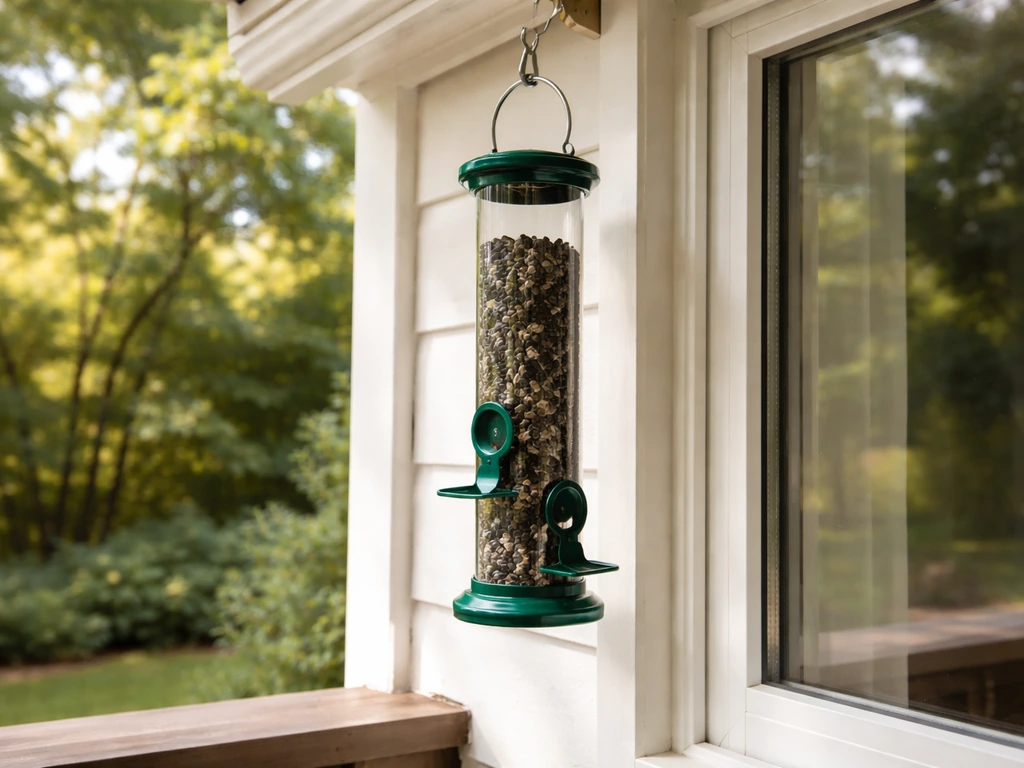
Start with one tube feeder filled with black-oil sunflower seeds. It's the most universally appealing seed for a wide range of backyard species. Add a suet cage in winter for woodpeckers and nuthatches. Platform feeders work well for ground-feeding birds like juncos and sparrows. Keep it simple at first: one or two feeder types, one or two seed types. You can expand from there once you know what birds are visiting.
Feeder placement matters more than most beginners realize. Keep feeders either very close to windows (within 3 feet, so a startled bird can't build up dangerous speed) or at least 30 feet away from glass. That middle distance of 5 to 25 feet is actually the most dangerous zone for window collisions. If birds are hitting your windows, window decals or exterior screens can help them detect the glass.
Keeping things clean
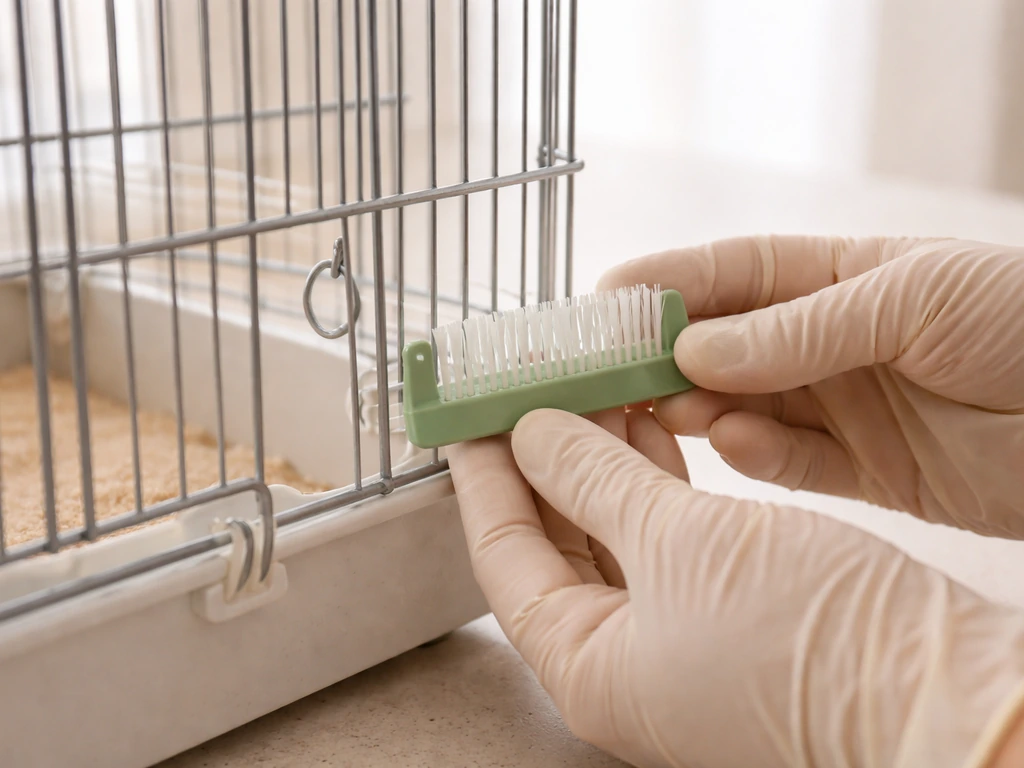
This is the part most beginners skip, and it matters. Dirty feeders spread disease. The standard recommendation from multiple wildlife authorities, including Audubon and the American Bird Conservancy, is to clean your feeders at least every two weeks. Use a solution of one part bleach to nine parts water. Soak for about 15 minutes, scrub, rinse thoroughly, and let the feeder dry completely before refilling. If you notice sick or lethargic birds at your feeder, clean immediately and increase frequency. Avian influenza concerns in recent years have made regular cleaning even more important, and the Indiana DNR specifically recommends the 10% bleach solution and allowing feeders to dry fully before use.
Building a birding routine
The birders who learn the fastest are the ones who go out consistently, not occasionally. Even 15 minutes a day beats a four-hour outing once a month. Pick one or two spots and visit them regularly. You'll learn the "baseline" of what's normally there, which makes it easy to notice when something new shows up. Log every outing in eBird, even the slow ones. Tracking your observations over time is also a great way to use how to track a bird across seasons and spot patterns you'd otherwise miss.
Safety and best practices for interacting with birds and wildlife
Birding is a low-risk hobby, but there are a few practices that protect both you and the birds you're watching.
- Don't approach nests. If a bird is acting agitated (alarm calls, dive-bombing, or broken-wing displays), you're too close. Back off.
- Avoid using recordings to lure birds during nesting season. Playback attracts birds by tricking them into thinking there's an intruder, which stresses them and can interfere with breeding.
- Keep cats indoors. Even a well-fed house cat is an effective predator. Feeders concentrate birds in one spot, and outdoor cats exploit that. Virginia Department of Wildlife Resources is direct on this point: indoor cats are the responsible choice for anyone feeding birds.
- Don't handle wild birds unless you're trained and licensed. If you find an injured bird, contact a licensed wildlife rehabilitator rather than trying to care for it yourself.
- Wash your hands after handling feeders, seed bags, or anything a bird has contacted. Standard hygiene applies.
- Stay on trails and paths when birding in nature areas. Trampling habitat to get closer to a bird causes more harm than the sighting is worth.
If you ever have a bird disappear from a spot where it was reliably showing up, or if you find a banded bird or one that seems lost or disoriented, there are practical resources for that too. A guide on how to find a missing bird covers what to do when a familiar bird vanishes, which is more common after storms or habitat disruption than most people expect.
One more thing worth knowing: birds occasionally show up in places they're not expected. A species far outside its normal range is called a vagrant. If you think you've spotted something genuinely unusual, document it carefully with photos, notes, and audio if possible. Don't dismiss it outright, but do rule out the common look-alikes first. The tools and workflow covered in this guide, specifically the how to find the bird in unwanted experiment approach of systematically eliminating possibilities, apply here just as well.
Your quick-start checklist
Here's everything you need to do to bird today, condensed into one place:
- Download Merlin Bird ID and eBird (both free).
- Open eBird and find a nearby hotspot to visit this week.
- Grab a pair of 8x42 binoculars if you don't already have them (or borrow a pair to start).
- Pick up or download a regional field guide, or use the Audubon Bird Guide app.
- Go outside, stand still for a few minutes, and start noticing: size, shape, behavior, habitat.
- Use Merlin Sound ID during your outing and let it record for at least 30 seconds per bird.
- Log your sightings in eBird when you get home.
- Set up one simple feeder (tube feeder with black-oil sunflower seeds) and clean it every two weeks with a 1:9 bleach-to-water solution.
- Make it a daily habit, even if it's just five minutes of listening at your window each morning.
That's genuinely all it takes to get started. The skills build fast once you're paying attention regularly, and the hobby has a way of quietly taking over in the best possible way.