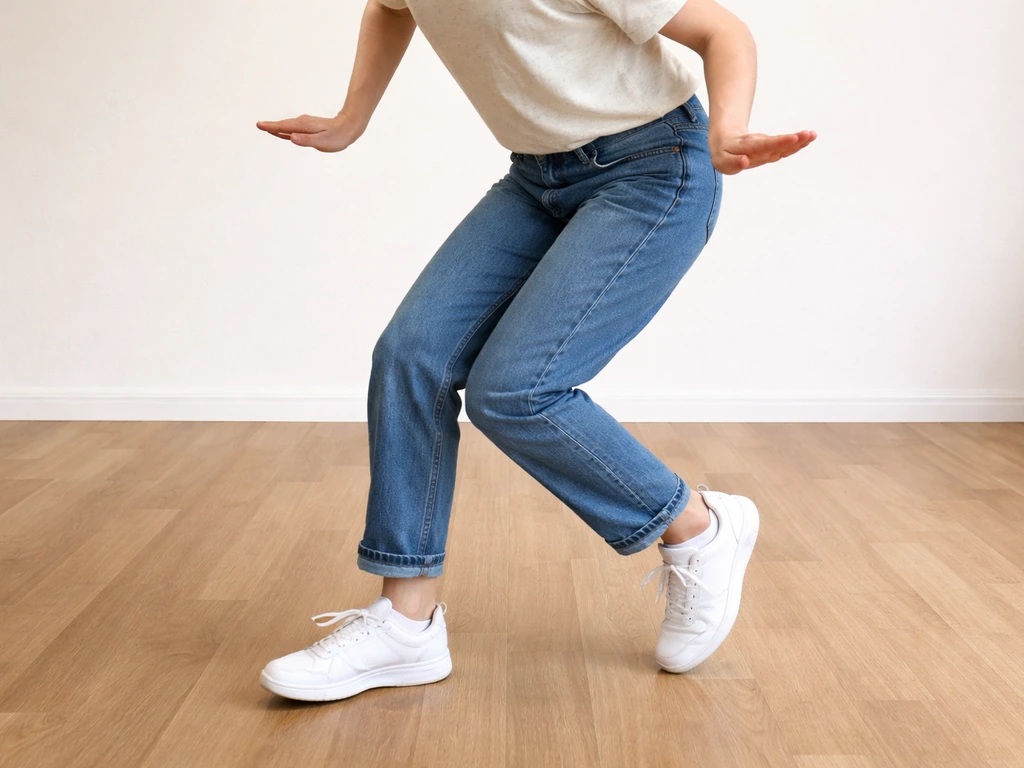
Bird walking is simply the practice of moving through a natural area at a slow, deliberate pace with the specific goal of spotting and enjoying birds. You're not power-walking for exercise or hiking to a summit. You're wandering, pausing, listening, and scanning. It's one of the most accessible outdoor hobbies there is: no special fitness level required, no expensive membership, and you can start today at a local park.
How to Bird Walk: Beginner Steps, Gear, and Techniques
Marcus Hendricks
23 May 2026
What bird walking actually is (and what you're trying to do)
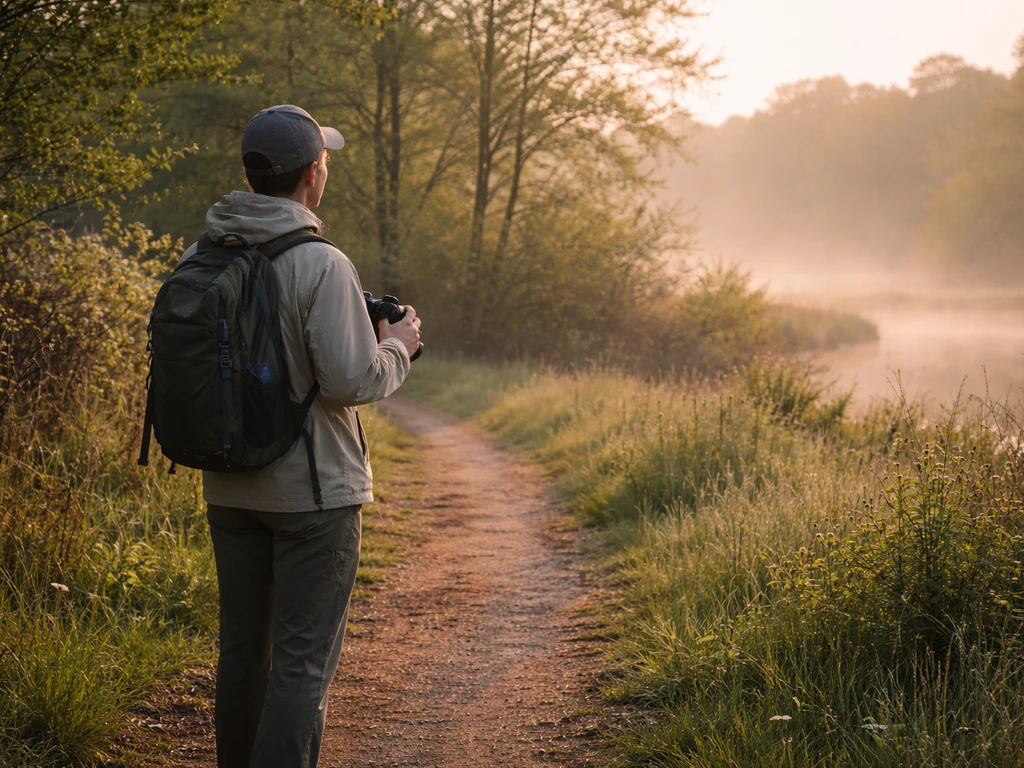
The Audubon Society describes birding as observing and appreciating birds in the natural world, and that includes actively moving through a landscape while scanning for sights and sounds. Bird walking is that in its purest form. You're not sitting at a feeder waiting. You're covering ground, working a trail, and building a mental (or physical) list of every species you encounter along the way.
The goal isn't to become a competitive lister overnight. At the beginner stage, you're training yourself to notice birds you'd normally walk right past. A rustling in the shrubs, a flash of color overhead, a call you don't recognize yet: all of that counts. Every walk makes you sharper. Think of it less like a quiz and more like learning to read a landscape.
Bird walking sits right alongside other bird-related activities like learning the bird dance or practicing kendama bird tricks, but it's its own skill set. This guide focuses specifically on the technique of moving through outdoor spaces to find and observe wild birds.
Best times, places, and how to plan your route
When to go
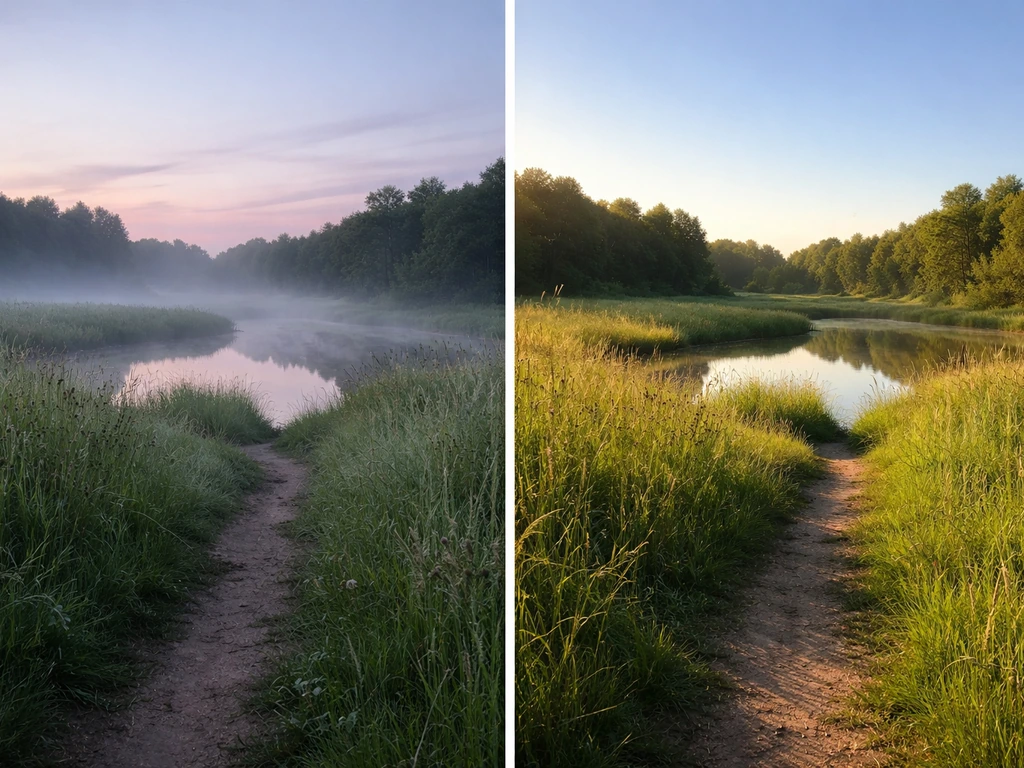
Dawn is the single best time to bird walk, and the science backs it up. Cornell Lab research shows that vocal activity is substantially higher at dawn compared to dusk across at least 20 studied species. Birds are active, calling constantly, and the light is soft and directional, which makes spotting movement in foliage much easier. Most trails at natural areas are open from dawn to dusk, so you can start the moment it's legal to enter.
That said, don't let the ideal stop you from going at all. A mid-morning walk at 8 or 9 a.m. still produces plenty of birds, especially in spring and fall migration windows. Audubon notes that fall migration in some regions can start as early as mid-June and stretch into early January, so there's rarely a truly dead period. Spring songbird migration is the most dramatic and is widely considered the best season for beginners because birds are singing at their most active.
Where to go
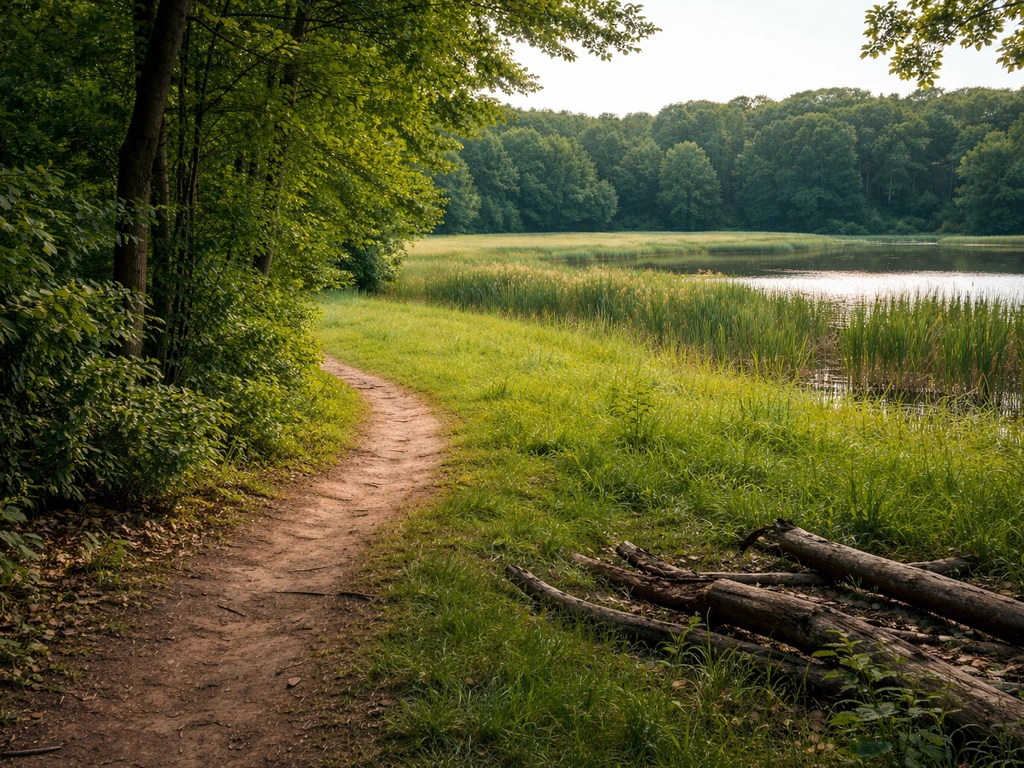
For your first few walks, pick a place with edge habitat. That means somewhere with a mix of open areas and trees or shrubs nearby, like the edge of a park, a pond with reedy margins, or a trail that runs between a meadow and a wood. Birds concentrate along edges because they offer both food and cover. A flat, maintained trail through dense forest looks dramatic but can be surprisingly quiet.
- Local nature reserves or wildlife refuges with marked trails
- City or county parks with ponds, meadows, or hedgerows
- Riparian corridors (trails along rivers or streams)
- Coastal areas or shorelines (especially during migration)
- Botanical gardens or arboretums with diverse plantings
Route planning
Keep your first route short: one to two miles is plenty. A long walk where you rush past everything is worth less than a short walk where you stop every few minutes. Plan a loop if possible so you're not retracing your steps and spooking birds you've already disturbed. Check if your chosen site has a trail map online before you go, and note any water features or open clearings on the map. Those are your priority spots.
Gear you need (and gear that just helps)
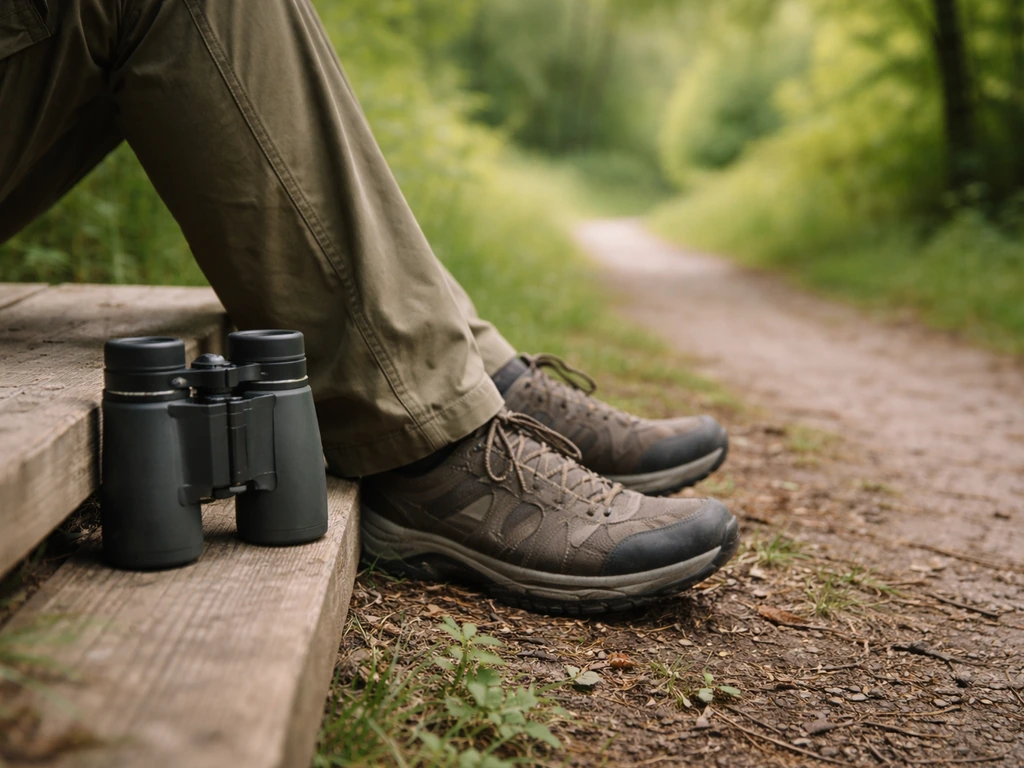
You don't need much to start. Comfortable walking shoes and quiet, muted-color clothing (avoid bright white or neon) are the real essentials. Birds key in on movement and contrast, so blending in a little goes a long way.
| Item | Why It Helps | Priority |
|---|---|---|
| Binoculars (8x42 recommended) | Brings distant birds close; 8-power gives brightness and a wide field of view for tracking birds in flight | High |
| Merlin Bird ID app (free) | Identifies birds by sound in real time and provides photos, range maps, and expert tips | High |
| Field notebook or notes app | Recording what you see helps you learn faster and builds your personal species list | Medium |
| A printed or downloaded trail map | Helps you plan stops at productive habitat features | Medium |
| Water and sun protection | You'll be outdoors for 1-2 hours, often standing still | High |
| Quiet, close-fitting layers | Rustling rain gear or loose fabric is surprisingly loud and spooks birds | Medium |
On binoculars: Audubon recommends 7- or 8-power models for birding because they're bright and have a wide field of view, making it easier to lock onto a fast-moving bird. The 8x42 format is the most popular all-around size. You don't need to spend a fortune to start: there are solid beginner options under $150 that do the job. If you have a pair sitting in a drawer from a sporting event, clean the lenses and bring them.
On apps: Cornell Lab's Merlin Bird ID is the most useful free tool available right now. Its Sound ID mode listens through your phone's microphone and identifies birds in real time, even highlighting the moment in the recording where a specific bird called. It also includes photos, range maps, and expert tips for every species. Download it before you leave the house. If you mean the Twitter Bird profile, you can learn how to get it back by updating your app, logging out and in, or checking your account settings get the Twitter Bird.
The actual technique: pace, scanning, and listening
This is the part most beginners get wrong by going too fast. Bird walking is closer to a slow stroll than a hike. If you want to go deeper, check out a guide to how to ghetto bird so you can spot more birds with smart movement bird walking. Aim for roughly half your normal walking pace. The moment you slow down, you'll start seeing things you never noticed before.
The stop-look-listen loop
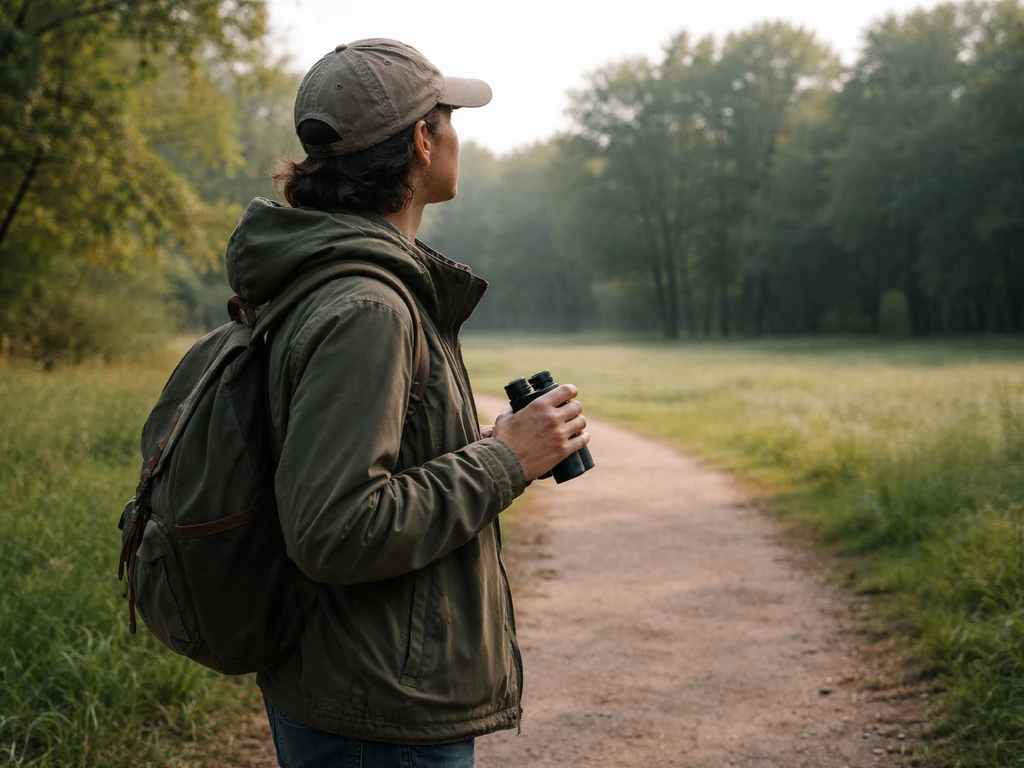
Audubon's core advice for finding birds is to meander slowly, scan the sky and landscape, and always keep an ear cocked for sounds. When something catches your eye or ear, stop completely. Then look and listen again. Repeat that stop-look-listen loop at every interesting feature: a gap in the canopy, a shrubby thicket, the edge of a pond. I've learned the hard way that birds you walk past in motion will sit up and call behind you the moment you take five steps past them.
- Walk slowly and steadily, scanning ahead and to both sides, not just down at the path
- Stop every 50 to 100 meters, even if nothing obvious has caught your attention
- Stand still and listen for 30 to 60 seconds before moving on
- Scan at multiple heights: ground level, mid-shrub, canopy, and open sky
- When you spot movement, use binoculars and freeze; sudden motion pushes birds off
- When you hear a call, turn toward it slowly, locate the general area, and wait for the bird to move or call again
Using your ears as your primary tool
Sound is often how you find a bird before you ever see it. Audubon's birding-by-ear guidance makes clear that vocalizations are frequently the best way to detect a bird's presence, especially in thick cover. You don't need to memorize calls before your first walk. Open Merlin's Sound ID on your phone, hold it up, and let it listen. The app will flag species in real time and you can follow up visually. Over time, you'll start to associate the sounds it identifies with specific birds and build that knowledge naturally.
One practical tip: don't try to listen and walk at the same time until it becomes second nature. When you're moving, your footsteps mask quiet calls. Stop to listen, then move, then stop again.
Finding and identifying birds on the move
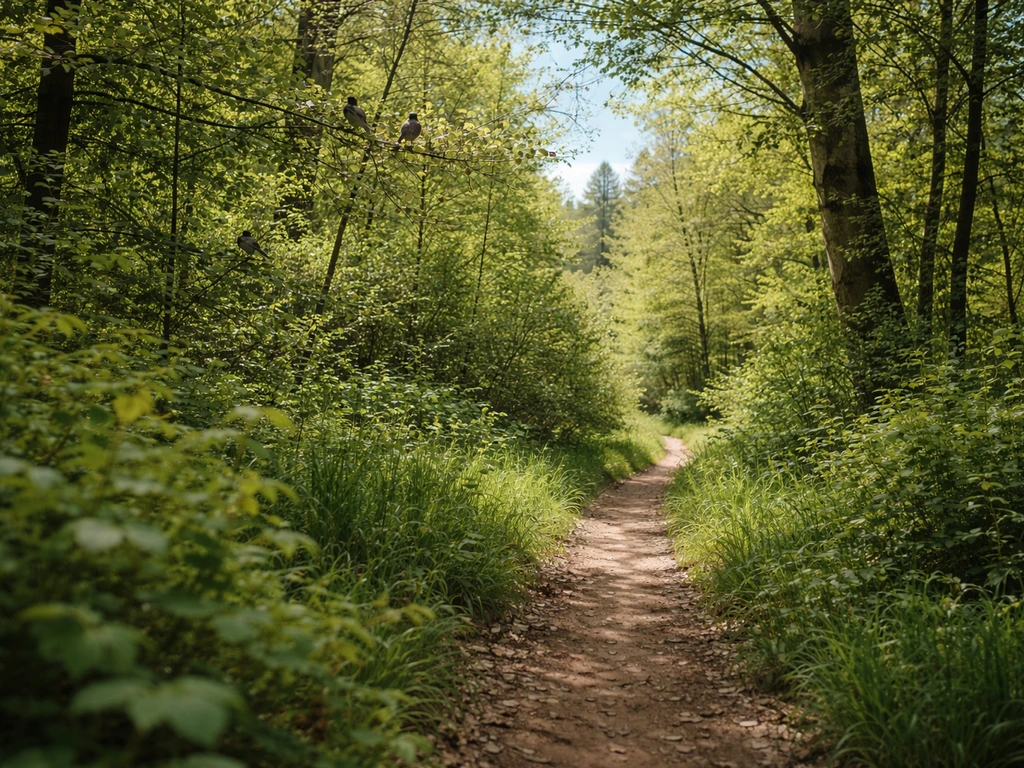
Where to look first
Birds cluster around food and shelter. Focus your scanning on: the edges where two habitat types meet, branches with good sightlines (birds perch where they can see predators coming), fruit-bearing or flowering plants, water edges, and any area with visible insect activity. Movement is your biggest visual cue, not color or shape. Your peripheral vision is better at detecting motion than your focused gaze, so train yourself to notice flickers at the edge of your visual field.
A simple ID workflow for beginners
Cornell Lab frames beginner bird identification around four keys: size and shape, color pattern, behavior, and habitat. Use them in that order when you spot something unfamiliar.
- Size and shape: Is it sparrow-sized, robin-sized, or crow-sized? What's the bill shape (stubby, long, hooked)?
- Color pattern: What's the main body color? Any obvious wing bars, eye rings, or patches?
- Behavior: Is it hopping on the ground, clinging to bark, hovering over water, or pumping its tail?
- Habitat: Are you in a marsh, a forest, an open field? That rules out a huge number of species immediately
- Then check Merlin: Enter those details or let Sound ID confirm. Merlin will give you a short ranked list of likely matches with photos
Don't expect to nail every bird on your first walk. Audubon is honest that some calls are distinctive and instantly recognizable while others are similar and tricky even for experienced birders. Getting 60 to 70 percent of your sightings identified is a great result as a beginner. Write down what you're not sure about and look it up later at home, where you have more time.
Birding etiquette and staying safe out there
Being a respectful birder matters both for the birds and for the other people using the space. The American Birding Association's Code of Birding Ethics is clear: minimize habitat disturbance and stay on trails where they exist. Cutting through vegetation to get closer to a bird damages the very habitat the bird depends on, and it almost always results in flushing the bird anyway.
The rules that actually matter
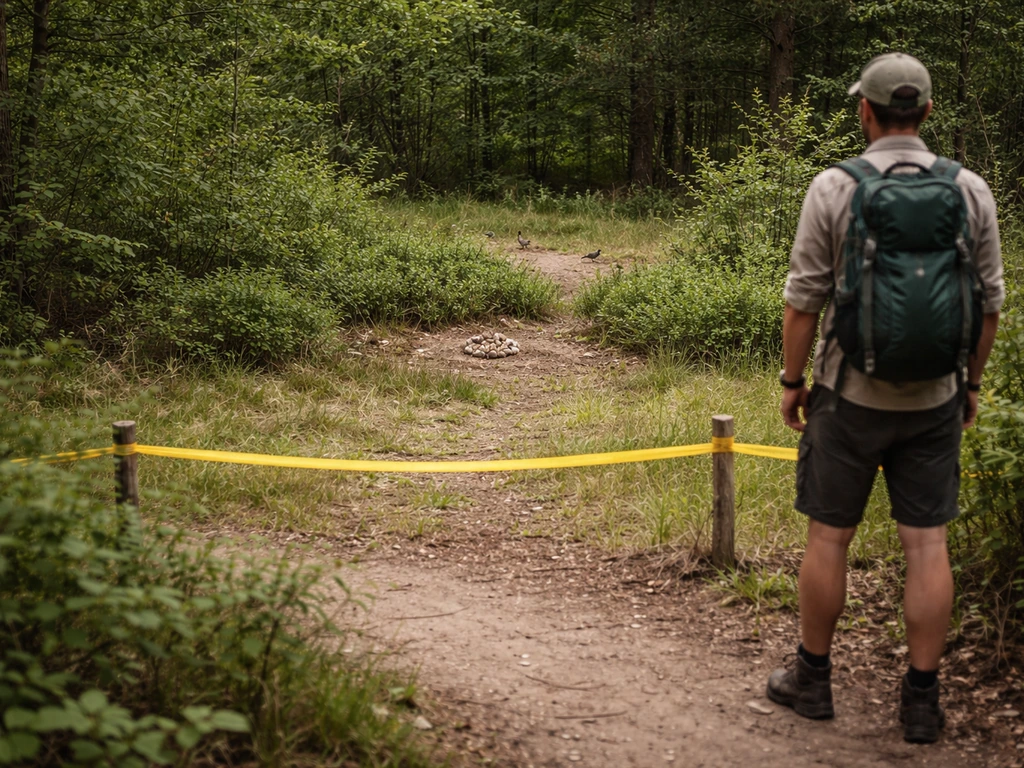
- Stay on marked trails unless you have specific permission to leave them
- Keep your distance from nesting birds; if a bird is alarm-calling at you, you're too close
- Don't use playback (recorded bird calls from your phone speaker) to attract birds: Audubon and ethical photography guides both advise against it, especially in high-traffic birding areas where repeated playback can cause real stress to birds
- Keep noise low: talk quietly and avoid sudden loud sounds
- Don't share exact GPS coordinates of sensitive nesting sites publicly
- Pack out everything you bring in
On personal safety: tell someone where you're going, especially if you're birding alone in a remote area. Bring water, know the trail layout, and don't get so fixated on a bird in a treetop that you trip over a root. That last one sounds obvious until it happens to you.
When things go wrong: troubleshooting and a beginner practice plan
Common problems and quick fixes
| Problem | Why It Happens | What To Do |
|---|---|---|
| No birds at all | Wrong time of day, too much noise, wrong habitat | Go earlier (dawn to 9 a.m.), slow down, try a spot near water or shrubby edges |
| Birds keep flying away before I see them | Walking too fast or making too much noise | Halve your pace, stop more often, let areas settle for 2-3 minutes before moving on |
| I can hear birds but can't see them | Dense vegetation; birds often call from deep cover | Open Merlin Sound ID, identify by ear, then scan the exact area the sound is coming from and wait |
| I can't tell what I'm looking at | Happens to everyone; lighting and movement make IDs hard | Note size, shape, and behavior first; use Merlin's photo ID or Sound ID; accept 'unknown' as a valid entry |
| Birds seem agitated or are dive-bombing me | You're too close to a nest or chicks | Back away calmly and slowly; don't run, which can trigger more alarm behavior |
A simple four-week practice plan
The best way to get better at bird walking is to go consistently, even for short sessions. Once you can slow down and pay attention, you can even learn how to do the bird dance as a playful way to keep practicing your pacing and scanning. Here's a realistic starter routine you can begin today.
- Week 1: Two walks of 45-60 minutes each at the same local spot, any time of day. Goal: identify 5 species by sight using Merlin. Don't worry about calls yet. Just get comfortable moving slowly and using binoculars
- Week 2: Go at dawn for at least one walk. Turn on Merlin Sound ID and let it run for 10 minutes while you stand still at your first stop. Listen actively and try to match what you hear to what Merlin flags
- Week 3: Try a second location with different habitat (if your first spot was a park, try a marsh or a woodland trail). Compare the species lists. Notice how different habitat produces different birds
- Week 4: Do a walk without Merlin Sound ID running. Try to identify at least three birds by ear alone before checking the app to confirm. This is how you start building real birding instincts
After a month of this, you'll have a working mental map of your local birds, a feel for productive habitat and timing, and the confidence to handle an unfamiliar bird sighting without freezing up. That's honestly the hardest part of bird walking: training your brain to slow down and pay attention. Once that clicks, the birds start appearing everywhere.
If you want to keep building skills after nailing the basics of bird walking, exploring how to identify birds by their songs and calls is the natural next step. It opens up a whole new dimension of the experience, and Merlin makes it more approachable than it's ever been.
FAQ
How long should a beginner bird walk session last?
Start with 45 to 60 minutes. If you have a short attention span, use a “stop-look-listen” loop every 3 to 5 minutes and keep moving only between loops. Consistency beats long sessions, especially while you are still learning to slow down.
What if the birds are quiet where I’m bird walking?
Try changing only one variable at a time. Move 200 to 500 feet along the same habitat edge, then pause for 2 to 3 minutes. If it is still dead, switch to a different edge feature like a water margin or a flowering patch, since bird activity often concentrates where food and cover meet.
Do I need to bring binoculars on my first bird walk?
No. If you do not have binoculars, prioritize distance spotting and careful listening, then get one clear view through your phone camera zoom as a temporary substitute. When you buy later, choose 8x42 for an easy all-around option, since it is often the best balance of brightness and stability.
How do I avoid spooking birds while bird walking?
Walk slower than you think you need, and stop before you pass a likely perch or thicket edge. If you flush a bird, do not immediately re-enter the exact spot, instead circle back using a different angle after a 10 to 15 minute pause.
Should I use my phone camera or apps during the walk?
Use them briefly, not constantly. For Merlin Sound ID, stop to listen for a few seconds, then resume scanning. If you are photographing, keep the phone low and avoid shining bright light at dusk, since extra distraction and movement can push birds away.
What clothing colors should I wear when I bird walk?
Muted earth tones and dark neutrals usually blend best, especially in wooded areas. Avoid high-contrast patterns and bright reflective items (like shiny hats, bright watch faces, or neon backpacks) because birds detect movement and contrast strongly.
How do I choose a “good” first location if I do not know birding sites?
Look for edges, not deep interiors. Parks with ponds, meadows next to woods, or trails that run beside reeds are reliable. If there is no obvious edge, pick the most varied section of habitat you can find within 1 to 2 miles, since variety increases your chances.
What should I do if I cannot identify what I see?
Use the four-step framework in order: size and shape, then color pattern, then behavior, then habitat. If you still cannot narrow it, write down your best guess plus one detail you are certain about (like “white wingbar” or “long tail”), then confirm at home using that note.
Is it okay to bird walk in winter or does it only work at dawn?
You can bird walk any time there is legal access, but winter often requires longer pauses because birds may move less and calls can be sporadic. If it is not dawn, aim for calmer weather and stillness, and check sheltered edges like brush lines or near evergreen cover.
How do I practice listening without giving up the walk?
Do not try to listen and walk continuously. Use a rhythm: 1 to 2 minutes of walking at a reduced pace, then stop for 30 to 60 seconds to listen, then move again. This prevents footsteps from masking quieter calls and gives your brain time to associate sounds with what you are seeing.
What safety steps matter most when bird walking alone?
Stick to well-marked trails, carry water, and tell someone your route. Also set a time limit so a rare bird does not pull you off track, and keep your attention on footing during stop moments so roots and uneven ground do not become hazards.
What common mistakes should beginners avoid while bird walking?
Going too fast is the big one. Second, rushing past without stopping at features, and third, cutting into vegetation to get closer. Another frequent issue is staring only with your eyes, when you also need to watch your peripheral vision for flickers at the edge of sight.
Next Article
How to Do the Bird Dance: Step-by-Step for Beginners
Step-by-step beginner guide to the bird dance, with footwork, wing flaps, timing, practice plan, and fixes for balance.