A breeding bird survey is a structured way of visiting a site during nesting season and recording which birds are there, what they're doing, and how strongly their behavior suggests they're actually breeding. You pick a method (point counts, line transects, or territory mapping), visit on a set schedule early in the morning, note every bird you detect, and then classify each species using a tiered evidence system: possible, probable, or confirmed breeding. That's the core of it. Everything else is just detail around making those steps repeatable and useful.
Breeding Bird Survey Methods: A Step-by-Step Guide

Marcus Hendricks
12 May 2026

What breeding bird surveys are (and why you'd run one)
A breeding bird survey is different from a casual bird walk. It's designed to answer a specific question: which species are breeding at this location, and how confidently can you say so? That distinction matters because just seeing a robin in June doesn't mean it's nesting nearby. Surveys build a documented, repeatable record that you, a researcher, or a conservation group can actually use.
The most organized version of this is a Breeding Bird Atlas, where hundreds of volunteers cover systematic grid blocks over multiple seasons. According to USGS, atlas participants record breeding evidence ranging from 'a pair seen on a branch' (possibly breeding) all the way to 'feeding young' (confirmed breeding), and that data gets compiled to map breeding distribution across entire regions. USGS describes Breeding Bird Atlas Explorer as documenting these breeding evidence categories, including possibly breeding and confirmed breeding behaviors breeding evidence ranging from 'a pair seen on a branch' (possibly breeding) to 'feeding young' (confirmed breeding). You don't have to join a formal atlas to run a good survey, though. You might just want to monitor what's breeding in your local park, document a species you suspect is nesting on your property, or contribute data to your regional bird group.
Either way, the payoff is real. You end up with records that mean something beyond 'I saw a warbler.' You'll know whether it was singing on territory, carrying nest material, or actually feeding chicks. That difference changes everything for conservation planning and even your own understanding of the birds around you.
Choosing the right survey method for your goal
There's no single 'correct' breeding bird survey method. The right one depends on what you're trying to find out, how much time you have, and what the habitat looks like. Here's a plain breakdown of the main options.
| Method | Best for | Skill level | What you record |
|---|---|---|---|
| Point counts | Open areas, patchy habitat, large sites | Beginner-friendly | All birds detected (seen or heard) within a fixed radius for a fixed time, usually 5 or 10 minutes |
| Line transects | Linear habitats, roads, trails | Beginner to intermediate | All birds detected along a walked route, noting distance from the line |
| Territory mapping (census) | Small, well-defined sites you can revisit intensively | Intermediate | Plotting individual bird locations across repeated visits to identify territory clusters |
| Nest searches | Confirming actual breeding, specific species studies | Intermediate to advanced | Active nests with eggs, chicks, or adults at nest |
For most beginners, point counts are the best starting point. You stand at a fixed spot for a set period, record every bird you detect within a defined radius (typically 50 to 100 meters), and move on to the next point. It's structured, it's repeatable, and it doesn't require you to walk a precise GPS route on your first outing. Line transects work well if your site has a trail or road you'll naturally follow. Territory mapping is powerful but time-intensive. Nest searches are best saved for when you already have a strong breeding suspicion for a particular species and want confirmation.
My honest recommendation: if you're new to this, start with point counts. You'll get solid data and learn the behavioral cues you need before tackling territory mapping or nest-focused work.
Planning the survey: timing, site setup, visit schedule, and effort
When to survey
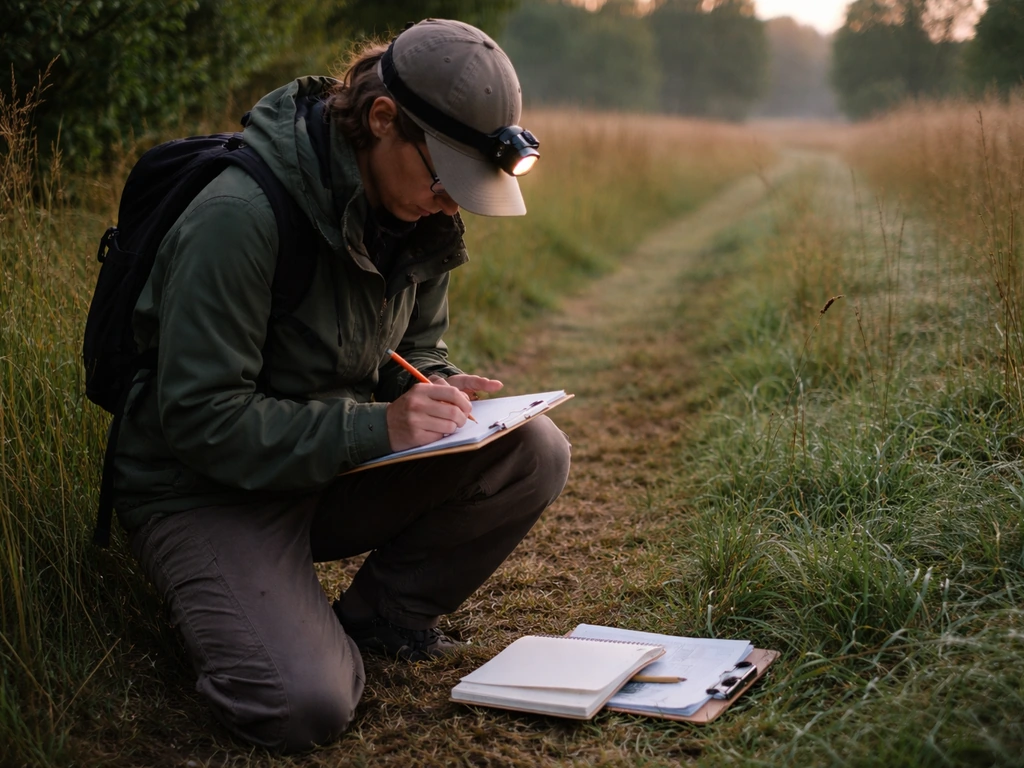
Timing is everything in a breeding bird survey. You need to be out during the breeding season for your region, and you need to be out early. Most songbirds are most active in the first two to three hours after sunrise. That's when territorial singing peaks and breeding behaviors are easiest to detect. Surveys done at midday will miss a significant chunk of activity. A good rule of thumb: start within 30 minutes of local sunrise and aim to finish your count points before 10 AM.
In the Northern Hemisphere, the core breeding window for most passerines (songbirds) runs from roughly late April through early July, with peak territorial activity in May and June. Waterbirds and raptors often start earlier. Check regional breeding phenology data or local birding groups to fine-tune your timing for the species you expect.
Setting up your site and points
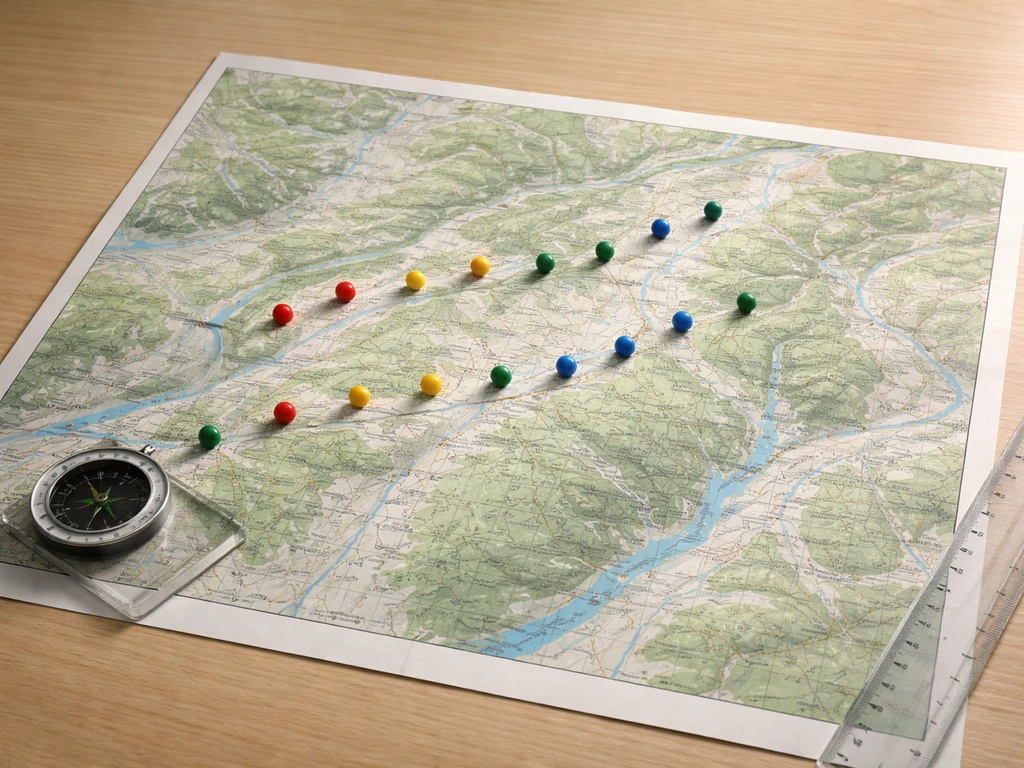
Before your first visit, map out your survey area using a satellite image or a topographic map. If you're doing point counts, place points at least 200 to 300 meters apart to avoid the same bird being detected at two consecutive points. Mark the exact coordinates of each point using a GPS app (Google Maps works fine for beginners). If you're doing a line transect, walk the route once before your formal counts to get a feel for the terrain and note any obstacles.
Keep your site design consistent season to season. The whole point is comparability. If you shift your points 100 meters next year because it's more convenient, you've broken the dataset.
How many visits and how much effort
For a breeding bird survey that can actually distinguish possible from confirmed breeders, plan for at least two to three visits spread across the breeding season. A single visit can tell you what's present. Multiple visits, spaced two to four weeks apart, let you detect behavioral changes like territory establishment, mate pairing, and fledgling sightings. For territory mapping specifically, you typically need six or more visits across the season to reliably delineate territories. That's a real time commitment, so be honest with yourself about capacity before you start.
- Visit 1 (early season): Captures early territorial singing and pair formation
- Visit 2 (mid-season): Peak nesting activity, most species active
- Visit 3 (late season): Fledglings, family groups, post-breeding dispersal
Avoid surveying in bad weather. Wind above Beaufort scale 3 (small branches moving) and rain both suppress bird activity and mask detections. If you show up and conditions are rough, reschedule. One missed visit is far less damaging to your dataset than a count done in poor conditions.
Field protocol: routes, points, recording detections, and avoiding double-counts
At each point or along each transect
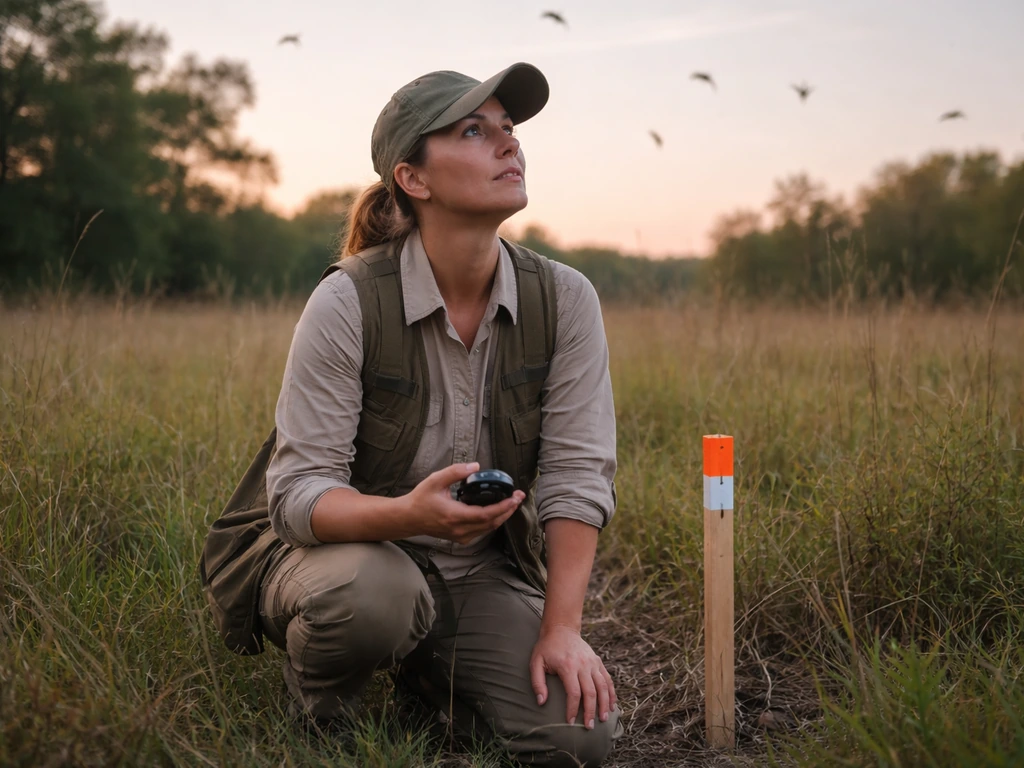
- Arrive at your first point quietly and without rushing. Give yourself 30 to 60 seconds to settle before you start the clock.
- Start your timer. For standard point counts, count for exactly 5 or 10 minutes. Be consistent across visits.
- Record every bird you detect, whether seen or heard. Note the species, how you detected it (S for song, C for call, V for visual), your estimated distance from the point (within 50m, 50-100m, or beyond), and any breeding behavior observed.
- Do not walk around during the count period. Movement flushes birds and creates false detections.
- When the timer ends, record any additional incidental detections while walking to the next point, but flag them separately so they don't inflate your count data.
- Repeat at each point, recording start time, weather conditions, and observer name at each one.
Avoiding double-counts
Double-counting is one of the trickiest problems in breeding surveys, especially for territorial males that move between singing perches. The main safeguard is spacing your points far enough apart (200m minimum) so the same bird is unlikely to be detected twice. During territory mapping, you'll be intentionally plotting every individual detection on a map, then looking for clusters across visits to identify territory centers. A cluster of three or more detections in the same small area across multiple visits is your evidence of a territory, not just a bird passing through.
Another helpful habit: if a bird flushes from one point and you think you see it land ahead, don't count it again at the next point unless you're certain it's a different individual (for example, different sex or plumage). When in doubt, leave it out.
How to interpret breeding evidence and results

This is where breeding bird surveys get genuinely interesting. Not every bird you detect is breeding. The evidence-coding system used by atlas projects (and recommended for any serious survey) organizes your detections into three tiers. These categories come from the NORAC atlasing framework and are used by USGS Breeding Bird Atlas Explorer to map breeding distribution across North America.
| Evidence Level | Code | What it looks like in the field | Examples |
|---|---|---|---|
| Observed (non-breeding) | O | Bird present but no breeding behavior | A migrant warbler passing through in June |
| Possible breeding | PO | Species in suitable habitat during breeding season, or singing male | A male song sparrow singing repeatedly in scrubby edge habitat |
| Probable breeding | PR | Territorial behavior, pair observed, courtship, agitation, or carrying food | A pair of chickadees visiting the same tree cavity repeatedly |
| Confirmed breeding | CO | Direct evidence of active nesting or dependent young | An adult robin carrying a fecal sac away from a nest, or fledglings begging for food |
When you compile your visit data, assign the highest evidence level you observed for each species across all visits. If you saw a singing male on visit 1 (possible) and a pair visiting a nest cavity on visit 2 (confirmed), the species gets coded as confirmed for that site. Always use the strongest evidence you actually documented, not what you think is 'probably' happening.
A common beginner mistake is coding a species as confirmed based on a gut feeling rather than an observed behavior. Singing doesn't confirm breeding. It's possible or probable at best, depending on context. A bird feeding fledglings that clearly can't fly yet is confirmed. Keep that bar clear in your mind.
Handling false positives across visits
Sometimes a species appears on one visit and never again. Before coding it as breeding, consider whether it could be a late migrant or a floater (a bird without a territory moving through). A one-time detection with no breeding behavior should generally stay at 'observed' unless other evidence supports it. This is exactly why multiple visits matter. Consistency across visits is your best quality-control tool.
Tools, equipment, and data recording templates
What you actually need in the field

- Binoculars: 8x42 is the most versatile choice for woodland and open habitat surveys
- Field guide for your region, ideally one you've already used enough to find species quickly
- A GPS app (any smartphone with Google Maps or a dedicated birding app like eBird works fine) to navigate to and log your points
- A waterproof notebook or printed datasheet on a clipboard
- A mechanical timer or stopwatch for count periods
- A compass or phone compass to estimate direction of detections from your point
- Optional: bioacoustic recorder or smartphone voice memo app to record songs for later ID verification
Datasheet and spreadsheet structure
Your field datasheet should have a header row for date, site name, observer, start time, point ID, and weather conditions. If you create blank" rel="noopener noreferrer">incidental checklists, eBird notes that they are less useful for eBird Science because they lack key effort information such as start time and duration, and checklist effort requirements vary by protocol type. Those breeding codes also help you capture key steps in the bird pollination process by linking detections to breeding evidence breeding behavior codes. Then for each detection, record: species, detection type (S/C/V), distance band, count of individuals, and breeding behavior observed (use the code: O, PO, PR, CO). Point counts are structured so that you follow consistent timing and recording procedures, and Az Sky Island Birds provides a downloadable point count protocol PDF outlining those elements breeding behavior observed (use the code: O, PO, PR, CO). After the survey, enter that data into a spreadsheet with one row per detection. Add a column for your final breeding evidence code per species per visit, and a summary column showing the highest code across all visits.
If you're planning to submit data to a formal program like eBird or a regional atlas, check their specific data format requirements before you start, not after. Reformatting a season's worth of handwritten notes is exactly as painful as it sounds. I learned that the hard way.
For breeding behavior codes, eBird uses its own breeding codes that align closely with the NORAC categories: S (singing), P (pair), N (nest with eggs or young), FL (fledgling), and so on. Familiarize yourself with these before your first visit so you're not fumbling with a code list in the field.
Common mistakes and how to fix them, plus your next steps
Mistakes that will undermine your data
- Starting too late in the morning: If you're arriving at your first point after 8 AM, you're missing peak singing. Set an earlier alarm.
- Inconsistent count duration: Counting for 8 minutes at one point and 12 at another makes your data incomparable. Use a timer every time.
- Surveying in wind or rain: Both suppress detection rates. Reschedule, even if it's inconvenient.
- Moving during the count period: Stay still. Movement flushes birds and creates phantom detections that skew your numbers.
- Coding behavioral observations too generously: A bird singing near a hedgerow is not confirmed breeding. Stick to the evidence system.
- Not recording non-detections: If you surveyed a point and didn't see a particular expected species, that absence is data. Note it.
- Forgetting to record observer name: If multiple people help with the survey, observer skill differences affect detectability and need to be accounted for.
Your practical next steps
If you're ready to get started, here's the sequence I'd recommend. First, pick your site and method. If you're not sure, go with three to five point counts in a habitat you know well. Second, set up your points on a map before your first visit and mark the GPS coordinates. Third, download or design a simple datasheet you can print and use in the field. Fourth, do a trial run on a day you don't count as formal data, just to get comfortable with the flow. Fifth, start your official visits and be consistent from there.
Once you have a season of data, consider submitting it somewhere it can be used. Regional breeding bird atlas projects actively recruit volunteers, and eBird accepts breeding-coded checklists that feed into large-scale datasets. Connecting with a local bird group is also a great way to get feedback on your methods and find out about organized monitoring programs in your area. If you've been keeping track of your sightings in other ways already, building a more structured recording habit pairs naturally with what you're already doing.
The Great Backyard Bird Count and similar citizen science events are a good gateway if you want a taste of structured counting before committing to a full breeding survey season. They won't replace a proper breeding bird survey, but they'll sharpen your detection skills and get you comfortable with reporting. And if you want to go further with your birding records, learning how to build a life list or a site-specific species list gives your breeding survey data meaningful context over time.
The most important thing is to start, stay consistent, and not let perfect be the enemy of useful. Even a simple three-visit point count dataset at a local park, done with care, is more valuable than a theoretically perfect survey that never happens.
FAQ
How far apart should point count stations be if my habitat is small or cluttered (woods, brush, or dense understory)?
Use the same 200 to 300 meter spacing idea, but if visibility is limited and birds are easily “masked” by vegetation, you may need even wider spacing to prevent the same individual from being detected at two nearby points. If you cannot expand the distance, treat the result as a higher-risk dataset and consider fewer points with longer breaks between visits, rather than forcing a dense grid.
Do I need to record all bird species I detect, or only species I think are breeding?
Record everything you detect (at least down to a practical identification level), then apply breeding evidence coding only when the behaviors match. This keeps your dataset auditable and helps catch unexpected breeders, late migrants, and false positives that can bias totals when you only target “suspects.”
What if I misidentify a bird in the field, can I correct it later in my spreadsheet?
You should only correct identifications when you have strong justification, for example clear photos, calls you can confirm, or a re-check by a second observer. If you are unsure, code the detection to the lowest reliable taxonomic level you can defend, and note the uncertainty in your comments so your breeding code decisions remain consistent.
How should I handle weather changes during a visit (light rain starts mid-count, wind picks up)?
If conditions change enough to reduce detection (rain begins, wind becomes consistently higher than your acceptable threshold), stop the count or clearly mark that visit segment as incomplete. It is better to have fewer usable counts than to combine “good” and “suppressed” detection periods without flagging, because later evidence coding depends on reliable observation effort.
What is the best way to avoid counting the same individual twice between consecutive visits?
Use two safeguards together: spatial separation (station spacing or transect design) and a behavioral rule for re-detections. If a bird shifts locations between points, only count it again at the next location when you can reasonably infer a different individual, such as a different sex, different direction of movement, or a distinct plumage/size cue.
If I hear a lot of singing but never see nest behavior, can I still include the species as “breeding evidence”?
Yes, but keep it at the highest tier supported by what you observed during your visits. Singing alone generally supports possible or probable evidence, not confirmation. If you never document pair behavior, nest association, or young-related evidence across multiple visits, your final breeding code should reflect that ceiling.
How should I treat “floaters” or birds that appear only once in my dataset?
Treat single detections as non-breeding by default unless you have additional indicators. A one-time observation with no repeated territorial behavior is usually categorized as observed only, then you carry that forward as a low-confidence finding until a later visit produces consistent breeding cues.
Can I conduct breeding bird surveys at night or late evening?
For most passerines, the core value is in early morning when territorial activity and vocalizations peak, so night surveys are usually not efficient for standard breeding evidence. If you do night work for specific taxa, keep it separate from your morning methodology and do not mix night detections into evidence codes used for your main daytime framework unless you are using a species-appropriate protocol.
What if my schedule allows only two visits, not two to three or more?
Use a “best-effort” plan: choose two visits separated by enough time to capture change (often about two to four weeks), and focus on evidence types that can’t be replaced by later visits, such as pair behavior, nest association, or fledgling observations. With only two visits, you should expect more uncertain outcomes, so avoid upgrading evidence beyond what the observed behaviors support.
How do I decide between point counts and line transects for a habitat with no trails?
If you can safely place fixed stations and keep your effort consistent, point counts are usually simpler and more repeatable. Line transects are easiest when you can follow a natural route and maintain consistent walking speed and detectability, so if trailless terrain forces uneven progress or frequent stopping, point counts are typically the more reliable choice.
Should I use the same points year after year, even if vegetation changes make some stations harder to see?
Try to keep the same station coordinates for comparability, but document visibility constraints each visit in your weather or notes. If a site becomes drastically different (new logging, major overgrowth), consider adding a new station set and clearly labeling the transition so you do not interpret detectability drops as changes in breeding status.
How do I set my recording radius or distance bands without a complicated measuring process?
Start with a practical radius (like 50 to 100 meters) that you can judge consistently from a map and field landmarks. If you cannot accurately estimate distance, use wider distance bands and record your best estimate, then keep the same banding approach for every visit so your evidence-coding thresholds do not shift.
Can I submit my breeding-coded checklist to eBird if I do not follow a formal atlas protocol?
Often yes, but you should ensure your entries match the platform’s breeding categories and that your effort is described consistently. If your field notes include uncertainty, reflect that in your checklist rather than forcing a higher evidence level, because downstream users may treat the coded breeding evidence as a hard observation threshold.
Next Article
How to Record Bird Sightings: A Step-by-Step Guide
Step-by-step bird sighting logging: what to record, how to estimate counts, tag photos, and back up data.