If you found a small bird on the ground and panicked a little, that's completely normal. The good news: most of the time, that bird is a fledgling, it's exactly where it's supposed to be, and the best thing you can do is walk away. But getting to that confident conclusion takes a few quick checks. Here's how to identify a fledgling bird in under five minutes, so you can make the right call today.
How to Identify a Fledgling Bird: Quick Checklist

Marcus Hendricks
15 Apr 2026
First, confirm it's actually a fledgling (not a nestling that needs you)
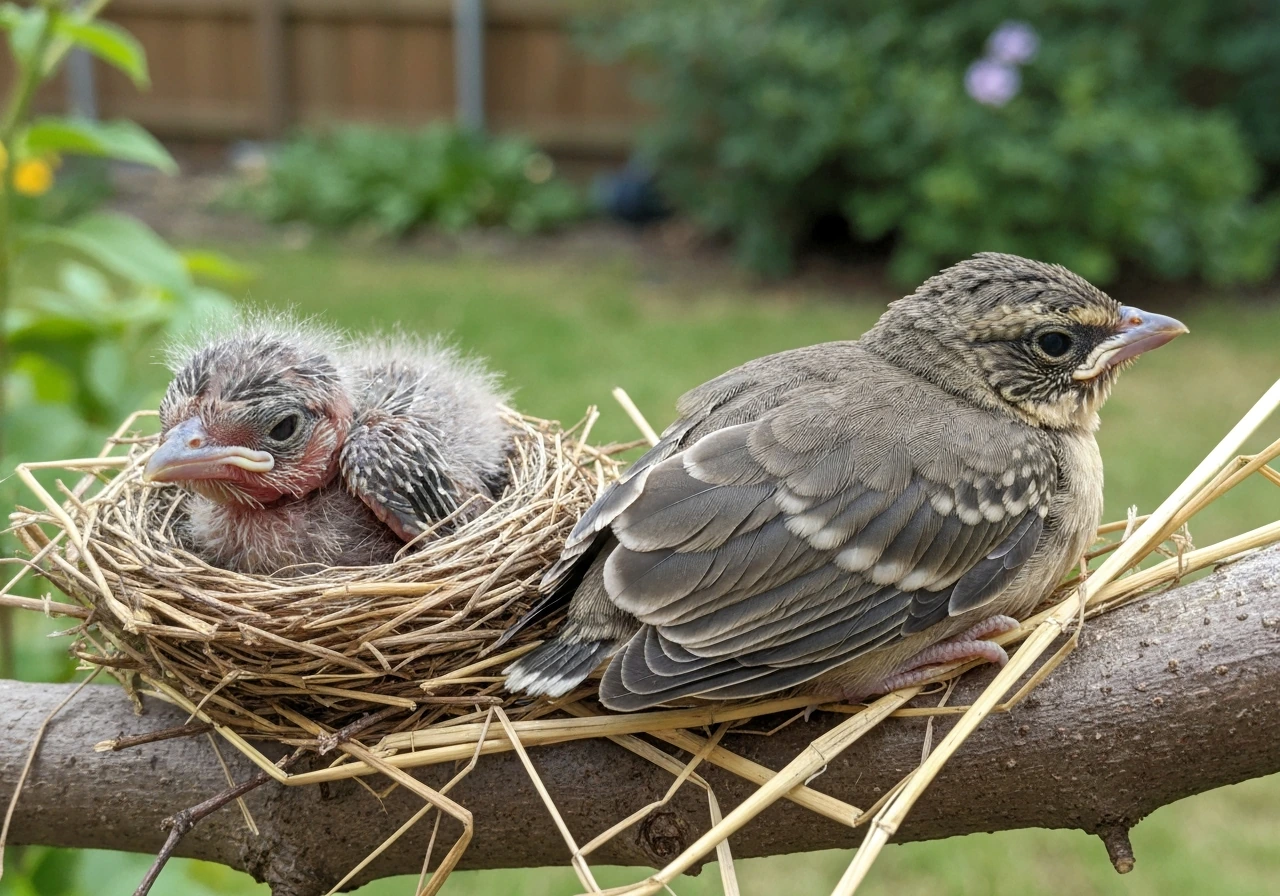
This is the most important step, and people skip it all the time. A 'baby bird' can mean a lot of different things developmentally, and the action you should take depends entirely on which stage you're looking at. The single biggest dividing line is feathers. A fledgling has them. A nestling mostly doesn't.
According to the U.S. Fish and Wildlife Service, if a baby bird has its eyes open and has visible feathers covering most of its body, its parents are almost certainly nearby and still caring for it. If the bird is featherless or has its eyes closed, that's a different story and it likely needs a return to the nest or professional help. So before you do anything else, take a calm look at the bird and answer one question: does it have feathers? If yes, keep reading. If no, skip to the 'what to do next' section at the bottom.
Quick identification checklist: what to look for physically
Once you've established there are feathers, here's what to check systematically. You don't need to pick the bird up. Observe from a foot or two away.
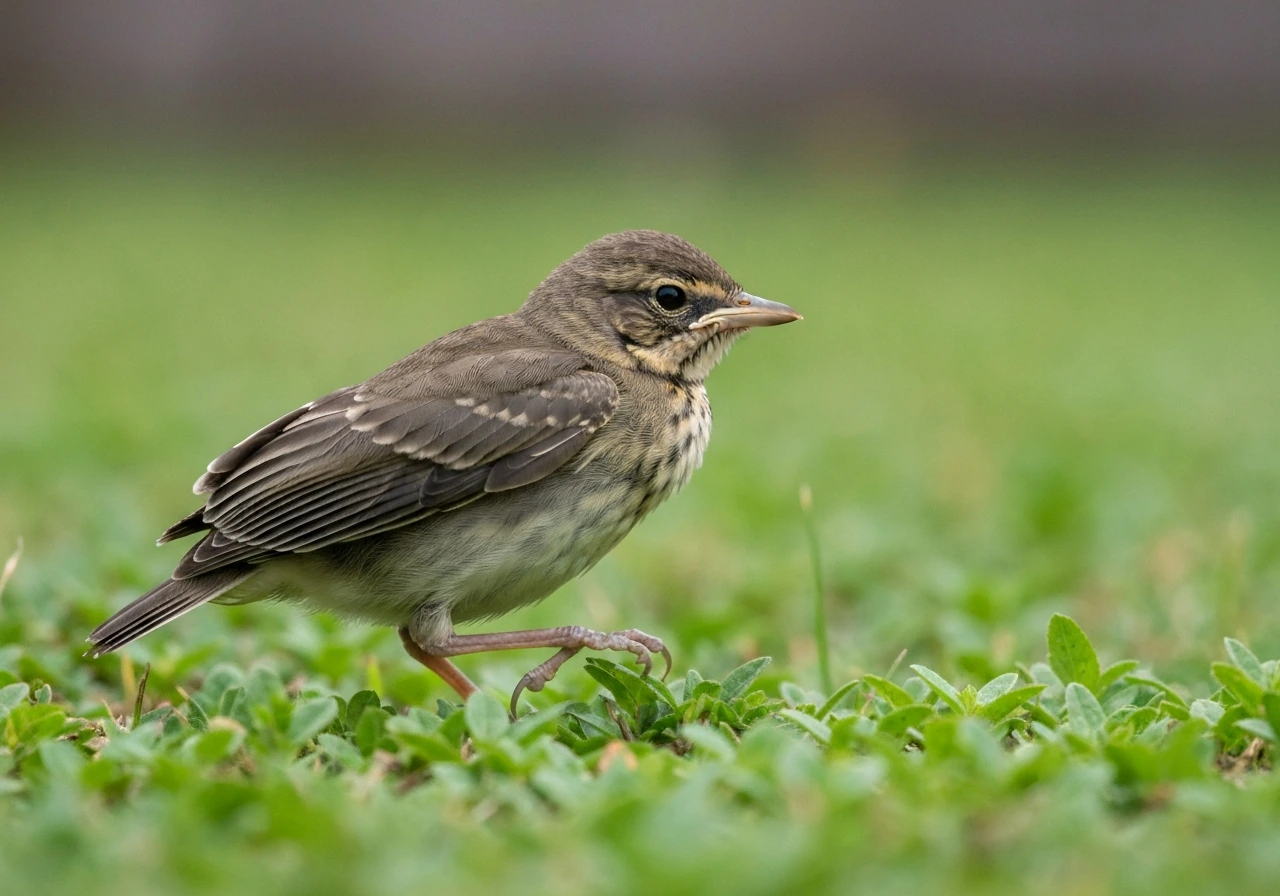
- Feather coverage: A fledgling's body is mostly feathered, though it may look scruffy, uneven, or patchy. Some bare skin patches can still be visible, especially around the face and wings. That's normal, not a sign of injury.
- Tail length: The tail feathers are often short, stubby, or just starting to push through. This is one of the most reliable visual clues. A fully grown tail means it's likely a juvenile or adult; a very short or barely-there tail points to fledgling stage.
- Wing development: The primary wing feathers (the long ones at the tip) may be partially grown in. You'll see them emerging from sheath-like casings. Wings won't look adult-sized yet.
- Body size: Fledglings are often surprisingly close to adult size in body, which throws people off. They look 'big enough' to fly but clearly haven't quite figured it out yet.
- Eyes: Open, alert, and tracking movement. If the eyes are closed or partially closed and the bird isn't clearly sleeping, that's a red flag.
- Skin color and texture: Fledglings have normal-looking skin where feathers haven't filled in. Bright pink, translucent skin with no feathers at all means nestling, not fledgling.
Cornell Lab of Ornithology's NestWatch guidance is helpful here: partially developed flight feathers emerging from sheaths while tail and body feathers are still incomplete is a classic intermediate stage marker. If you're seeing that combination, you've almost certainly got a fledgling on your hands. If you want to dig even deeper into the visual ID process, the guide on how to identify bird chicks covers the earliest developmental stages in more detail.
Behavior and habitat cues: where it is and what it's doing
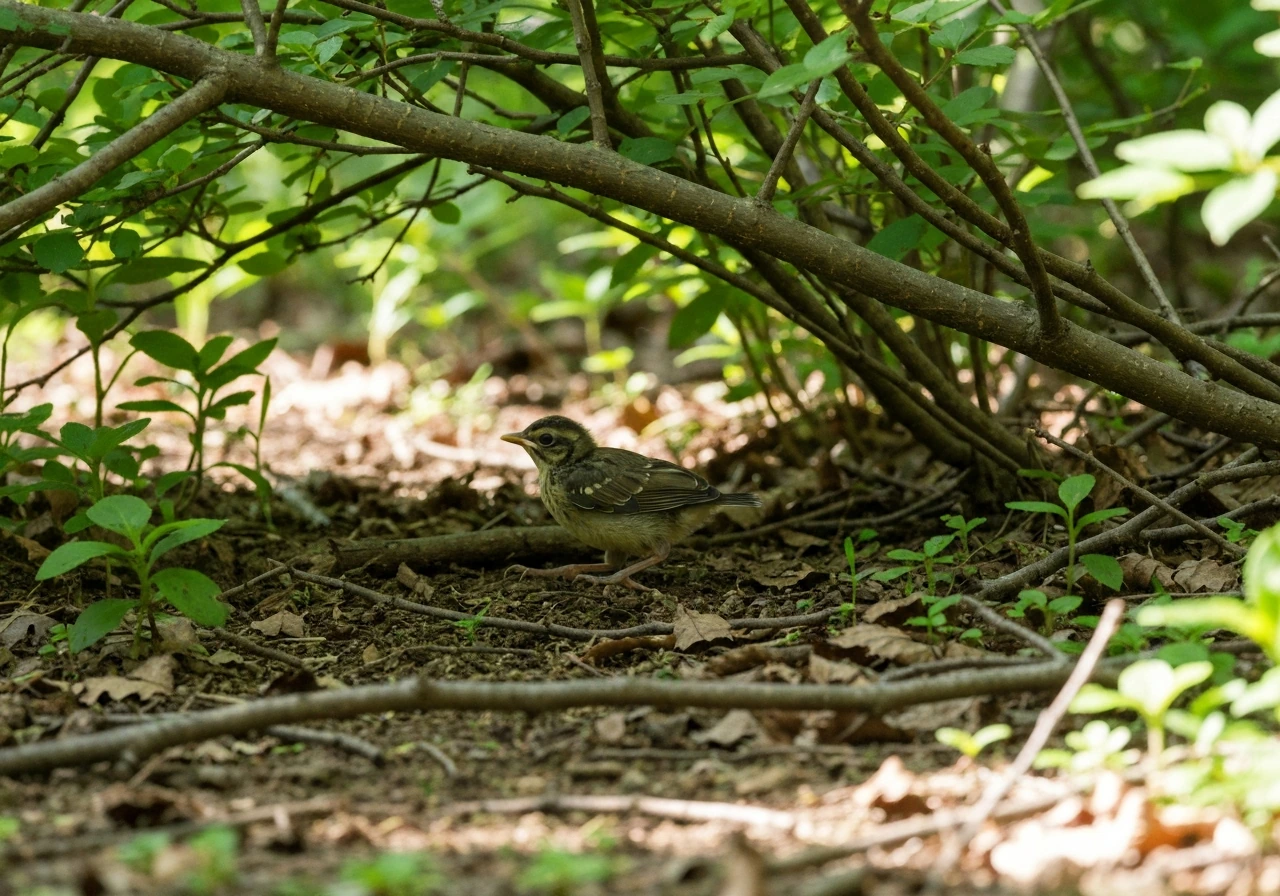
Appearance tells part of the story. Behavior and location tell the rest. Here's what's typical for a fledgling versus a bird that's actually in trouble.
- Location: On the ground, in low shrubs, under bushes, or hopping around in underbrush. This is normal fledgling territory. They've left the nest but haven't mastered flight yet, so they spend several days exploring at ground level.
- Movement: Hopping, fluttering short distances, or scrambling through vegetation. A fledgling moves with purpose even if it looks clumsy. It's not just lying still.
- Parental activity: Look and listen for adult birds nearby. Parent birds almost always continue feeding fledglings on the ground. If you see an adult bird landing near the young bird or making alarm calls overhead, that's your confirmation the family unit is intact.
- Time on the ground: According to Oregon Metro, fledglings may spend multiple days on the ground during this stage. Finding one there doesn't mean something went wrong.
- Not flying away: This is the part that fools people. The bird seems 'stuck.' It's not. It just can't fly well yet. That's the whole point of this stage.
The Washington Department of Fish and Wildlife puts it plainly: blank" rel="noopener noreferrer">if a fledgling is uninjured, the parent birds are nearby and continuing to care for it. The natural instinct to 'rescue' it is understandable but usually counterproductive. In fact, learning to distinguish what's normal wild bird behavior versus what actually warrants concern is a core skill covered in guides like how to identify a wild bird, which can help you build that broader context.
Sound cues: what those calls actually mean
Fledglings are loud. Honestly, obnoxiously loud sometimes. That persistent, repetitive peeping or chirping you're hearing is begging behavior, and it's completely healthy. Here's how to read those sounds:
- Repetitive begging calls: This is the signature fledgling sound. Short, rapid, insistent peeps or chirps repeated over and over. The bird is calling for its parents to bring food.
- Calls that speed up suddenly: According to eBird and the New York Breeding Bird Atlas, fledgling calls often accelerate when a parent approaches with food. If you hear the calling intensify and then watch a parent bird arrive, you've confirmed the family is active and healthy.
- Wing fluttering combined with calling: Wild Birds Unlimited describes fledglings as calling incessantly while fluttering their wings until fed. That combo of sound and movement is classic fledgling begging, not distress.
- Silence: A bird that's completely silent, unresponsive, and not reacting to your presence may be injured or in shock. That warrants closer attention.
- Alarm calls from nearby adults: If adult birds are making harsh, repeated alarm calls from nearby branches while you're standing there, they're telling you to back away from their fledgling.
Sound is one of the most underused identification tools. Wild Birds Unlimited also notes that parents continue feeding fledglings for one to three weeks after they leave the nest, stopping only when the young birds are independent. All that calling is part of a working system, not a cry for human help.
Nestlings vs fledglings vs juveniles: don't mix these up
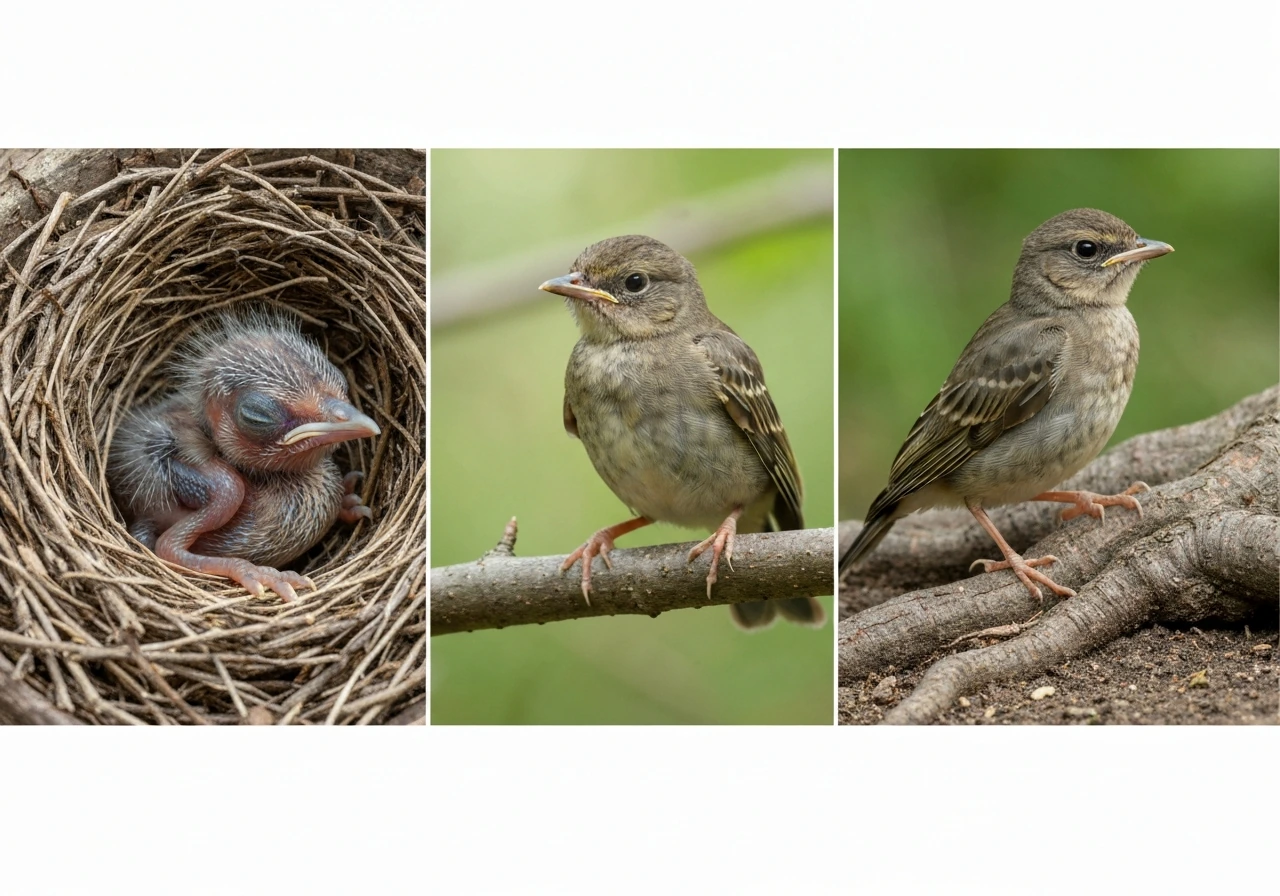
This is where most confusion happens, and getting it wrong leads to unnecessary intervention. These three stages look different and require very different responses from you.
| Stage | Feathers | Eyes | Mobility | Typical Location | What to do |
|---|---|---|---|---|---|
| Hatchling/Nestling | None or just pin feathers emerging | Closed or just opening | None, helpless | Should be in a nest | Return to nest if possible; contact rehab if injured or nest is gone |
| Fledgling | Mostly feathered, may be scruffy or patchy | Open and alert | Hops, flutters, short scrambles | Ground, low shrubs, underbrush | Leave alone; monitor for parental visits |
| Juvenile | Fully feathered, close to adult appearance | Open and alert | Can fly, though awkwardly | Anywhere | Leave alone; no intervention needed |
The North Carolina Wildlife Federation explains it well: nestlings have no feathers and cannot survive outside their nest for long. They are not fledglings. If you see bare pink skin, translucent body, no real feathers to speak of, that bird needs to go back to its nest or into the care of a rehabilitator. A fledgling, by contrast, is a feathered bird in an active transition phase. The San Diego Humane Society notes that patches of bare skin can make a fledgling look worse off than it is, so don't let a few featherless spots trick you into thinking you have a nestling.
If you're working from a photo of the bird rather than a live observation, the guide on how to identify a bird from a photo walks through a visual process that works really well for pinpointing developmental stage and species from an image. And if you're trying to figure out the species itself (which can help confirm what stage a bird should be at), how to learn bird identification is a great foundational read.
A quick note on confusing species
Some species complicate things. Ground-nesting birds like killdeer and certain sparrows have fledglings that look especially young but are built for ground-level life from nearly the start. Raptors and owls stay in their nest longer and look much larger when they finally fledge. Songbirds are typically the ones people find most often and are the clearest match for the checklist above. Knowing which species you're dealing with helps calibrate your expectations. For dimorphic species where males and females look noticeably different even as juveniles, the guide on how to identify male and female finches is a useful example of how species-specific features play into identification.
What to do next: safe, step-by-step action
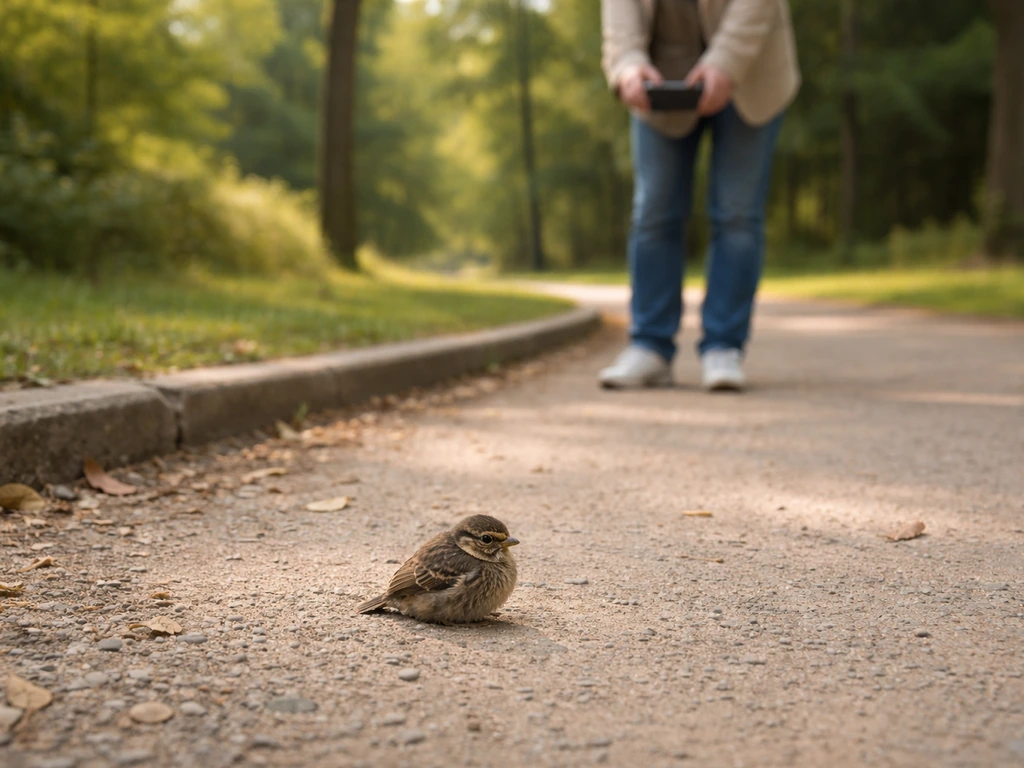
You've confirmed it's a fledgling. Here's exactly what to do, in order.
- Step back immediately. Give the bird at least 10 to 15 feet of space. Your presence is keeping the parents away. The closer you stand, the longer the fledgling goes without food.
- Secure your pets. Massachusetts state wildlife guidance is clear on this: keep cats and dogs away. They will chase or injure the bird, and this is one of the most common ways fledglings get hurt unnecessarily. Bring pets inside or leash them.
- Watch from a distance for 2 to 3 hours. Northwoods Wildlife Center recommends this as your monitoring window. You're looking for parent birds returning to feed the fledgling. They may only visit briefly, so be patient and stay back.
- If the bird is in immediate danger (on a road, directly exposed to a predator), you can move it. The key is to move it minimally, only a few feet to nearby cover like a hedge or shrub. Indiana DNR confirms this is acceptable. Don't relocate it far away; parents find their young by sound, not smell.
- Do not feed it or give it water. Both the RSPCA Queensland and WERC are explicit about this. You can cause serious harm by feeding a fledgling the wrong thing or by getting water into its lungs. Leave the feeding to the parents.
- Do not attempt to examine it, medicate it, or encourage it to fly. Peace River Wildlife Center warns against all of this. Well-meaning handling causes stress and can injure the bird.
- After 2 to 3 hours of monitoring, if parents have not returned and the bird appears weak, shivering, or is clearly injured (bleeding, broken limb, unable to hold its head up), contact a licensed wildlife rehabilitator. The Wildlife Center of Virginia suggests half a day as the outer threshold before reaching out for guidance.
- To find local help: search for a licensed wildlife rehabilitator in your area, contact your state fish and wildlife agency, or call a local humane society. California Wildlife Center, for example, runs a dedicated wildlife rescue line for exactly this situation. Don't wait days if you have genuine concerns.
Clear signs the fledgling actually needs help right now
Even with a fledgling, there are situations where you should act rather than wait. The USFWS is specific about this: visible bleeding, a broken or drooping limb, shivering, a dead parent bird nearby, or a bird that is completely unresponsive. If you see any of these, skip the monitoring phase and contact a wildlife rehabilitator directly. These are the override conditions where 'leave it alone' stops being the right advice.
A few things worth knowing before you go
It's worth remembering that in most cases you are not the bird's best option for survival. Its parents are. They know how to feed it the right food, they know how to teach it to fly, and they've been doing this the whole time you weren't watching. Your job is mostly to stay out of the way and make sure nothing you do prevents the parents from coming back.
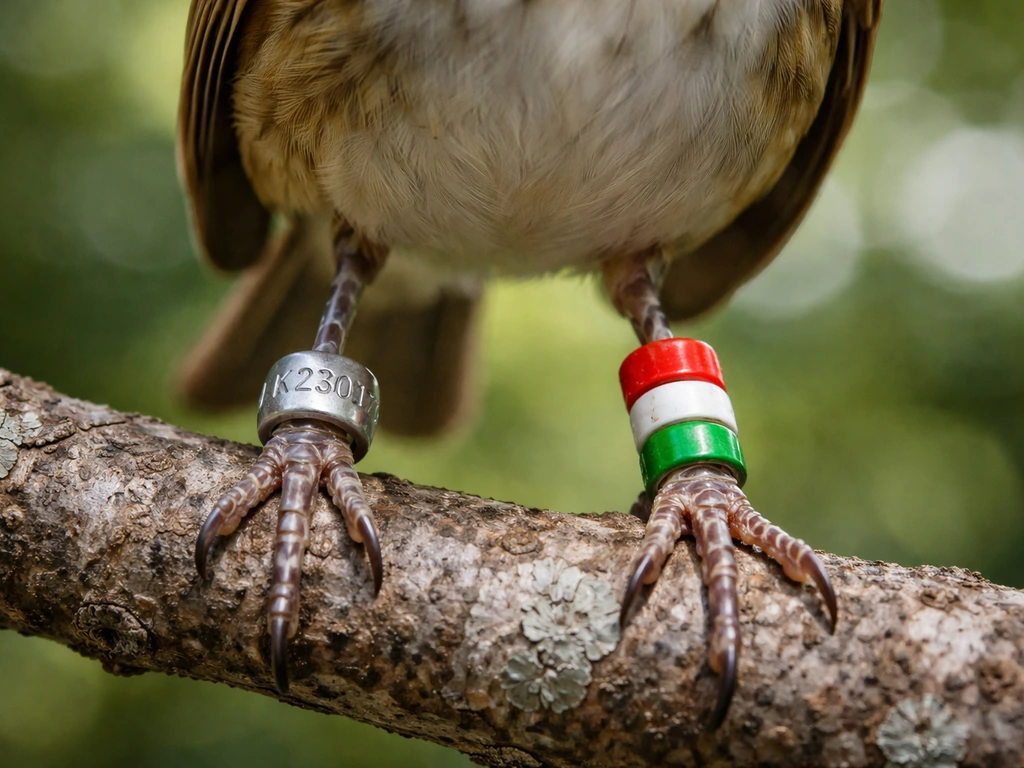
If you want to understand more about how wildlife researchers and biologists track fledgling birds in the field, the process of how to tag a bird gives interesting context on how scientists monitor young birds after banding, and how to read bird tags explains what those leg bands and tags actually mean when you see them on a bird in the field. Both are worth a look if you're getting more curious about bird biology in general.
The bottom line: a feathered, alert, hopping bird on the ground in spring or summer is almost certainly a fledgling doing exactly what fledglings do. Watch for a couple of hours, keep pets and people away, and let the parents do their job. That's the most helpful thing you can do for it today.
FAQ
If I’m pretty sure it’s a fledgling, can I move it to safer ground?
Yes, but only in an emergency. If the bird is unresponsive, bleeding, has a drooping wing or leg, or is in immediate danger (road, lawn mower, cat or dog attack), place it in a ventilated box and contact a wildlife rehabilitator. For normal fledglings, carrying it around to “help it get to the nest” often prevents parents from relocating it.
What signs mean a fledgling is not okay even if it has feathers?
Use distance and body language. If it is actively peeping and hopping, it is usually being fed. If it stays crouched and silent for a long time, repeatedly tries to hide from you without responding normally, or looks limp, that is a better reason to contact a wildlife rehabilitator than to assume it is “just quiet today.”
Should I feed or give water to a found fledgling?
Do not offer food or water. Wild fledglings have species-specific diets, and feeding can cause choking or malnutrition if you guess wrong. The most helpful action is to keep distance, block pets from approaching, and monitor from a few feet away for a couple of hours.
How long should I watch before deciding to get help?
It depends on the situation. If the bird is in the open but parents are likely nearby, monitoring is appropriate. If it is in a spot where it cannot avoid harm (busy sidewalk, wheel-level height for cars, trapped in a garage), you should intervene for safety and contact a rehabilitator rather than waiting indefinitely.
What should I do if I can’t stay nearby to monitor the fledgling?
If the fledgling seems to be in a safe area but you cannot monitor (for example, you must leave), reduce risk instead: bring pets inside, keep people away, and if you must do something physical, place a barrier between the bird and threats without touching it. Contact local wildlife services if you cannot supervise.
If the fledgling is on the ground, does that mean it fell out of the nest?
Not usually. Parents often still feed on the ground, especially for species that fledge early or linger near cover. A common mistake is assuming “on the ground means abandoned.” If it has feathers and appears alert, the better first step is to observe for feeding visits rather than searching for a nest right away.
Can taking photos or using a phone flash harm a fledgling?
For most people, the best camera practice is to photograph from a distance and avoid flash. Flashes and close approaches can increase stress and can cause the parents to temporarily stop feeding. If you need identification, zoom in from far away rather than stepping closer.
How can I tell begging behavior from injury or illness?
Wings held out, frantic flutters when approached, or repeated calling can be normal begging and defense. True distress indicators include visible blood, an inability to stand or use a leg, labored breathing, or a clear injury like a broken wing. If you are unsure, treat it as “needs professional assessment” rather than continuing to handle it.
Do all fledglings look the same across species?
Yes, some species make the checklist less obvious. Ground-nesting birds (like killdeer) can look very young when they fledge and may “run and freeze” rather than hop. In these cases, the key is whether it is active and feathered, and whether it can move normally, then contact a wildlife expert if it seems unable to escape.
What information should I give a wildlife rehabilitator if I need to call?
Once you contact a rehabilitator, be ready with details that help them triage: exact location, time found, whether it has feathers and open eyes, whether it is breathing normally, and any threats nearby (cats, dogs, road). If you temporarily contain it, use a small ventilated box with a soft towel and keep it in a quiet, dark place until help arrives.
Next Article
How to Read Bird Tags: Decode Leg Bands and Codes
Step by step guide to decode bird leg bands and tags, read codes and colors, log sightings, and know who to contact.