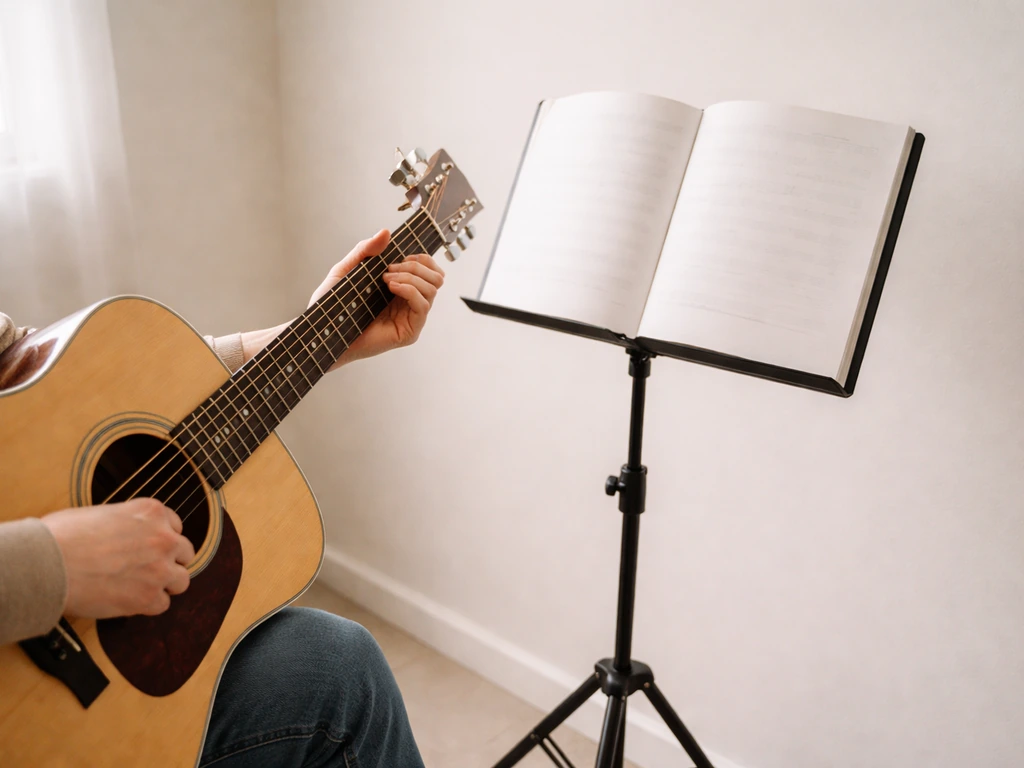
The easiest way to play 'Yellow Bird' on guitar as a beginner is to follow the Kingston Trio arrangement in the key of D major, using open chord shapes (D, A, G, and Em), no capo required. The intro sequence is D - G - A - D, and the whole song stays in that same four-chord family. Start your practice at around 28 BPM on a metronome, focus on clean chord changes before you worry about strumming, and you'll have a playable version within a few focused sessions.
How to Play Yellow Bird on Guitar: Beginner Guide

Marcus Hendricks
15 May 2026

First, figure out which 'Yellow Bird' you actually want to play
This matters more than you'd think. There are several well-known 'Yellow Bird' recordings floating around, and the chord charts you'll find online are not all pointing at the same song. The three versions beginners most commonly stumble across are:
- The Kingston Trio version (1958): The one with the lyric 'Yellow bird, up high in banana tree.' This is the most tab-friendly version for guitar beginners. Key of D major, open chords, manageable tempo around 57 BPM.
- The Mills Brothers arrangement: Some chord charts for this one recommend a capo on the 4th fret, which lets you use easy open shapes in a different key. Still very beginner-friendly.
- The Luboff and Bergman arrangement: This shows up in some classroom/practice PDFs with chords C, G7, and F, and is often labeled 'slow tempo for practice' at around 80 BPM. More of a choral/folk arrangement.
- Pretty Lights and fingerstyle versions: These are more advanced arrangements with hammer-ons, slides, and fingerstyle melody work. Skip these for now.
My recommendation: go with the Kingston Trio version. It's the most widely covered, the chord charts are consistent across sources, and the open-D chord shapes are things you probably already know. That's what the rest of this guide is built around. If you've heard the song and the lyric 'Yellow bird, up high in banana tree' matches what's in your head, you're in the right place.
Guitar setup: which key and whether to use a capo
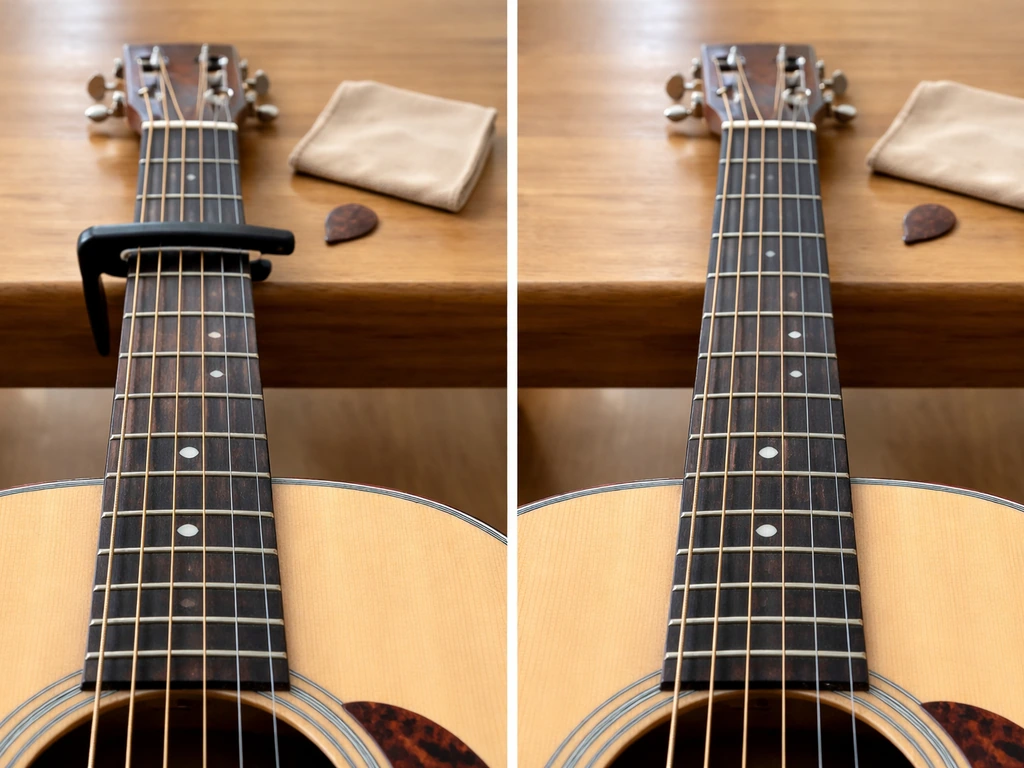
The Kingston Trio chart lives in D major with no capo needed. The open chord shapes you'll use (D, A, G, Em) sit right in first position, which means your fretting hand doesn't have to travel anywhere unusual. If your fingers are new to guitar, this is actually one of the friendlier chord families to learn in.
If you want a slightly higher vocal key or just prefer the sound with a capo, you can experiment. But the song sounds great as-is in open D position, and adding a capo without a reason just introduces extra variables when you're still getting chord changes clean. I'd leave the capo off for the Kingston Trio version unless you're specifically trying to match the Mills Brothers arrangement, in which case a capo at the 4th fret is the move.
Make sure your guitar is tuned before every practice session. Standard tuning (E A D G B E) is all you need here. A clip-on tuner or a free tuning app works fine. Even a slightly out-of-tune guitar will make your chord changes sound off and undermine your practice without you realizing why.
The core chords and strumming pattern
Your chord set
For the standard Kingston Trio beginner arrangement, you need four chords: D major, A major, G major, and Em (E minor). Some chord charts also include a Ddim (D diminished) as a passing chord between D and the next section, and occasionally an A7 instead of plain A. Some other beginner “Yellow Bird” lead sheets use a different section structure, including blank" rel="noopener noreferrer">C, G7, and F chords (for example, labels like “Intro Verse 1 & 2” with chords shown as C, G7, and F). Start with the basic four. Once those transitions feel smooth, you can add the Ddim as a nice color between phrase endings.
| Chord | Finger placement (basic) | When it appears |
|---|---|---|
| D major | Fingers on 2nd fret of G string, 3rd fret of B string, 2nd fret of high E string | Intro, verse, chorus (main chord) |
| A major | Fingers on 2nd fret of D, G, and B strings | Intro and verse transitions |
| G major | 2nd fret low E, 2nd fret A string, 3rd fret high E (or full barre version) | Intro, chorus |
| Em | 2nd fret A string, 2nd fret D string | Verse passages, some chord listings |
| Ddim (optional) | 1st fret B string, 2nd fret G string, 1st fret high E | Passing chord, used between D phrases |
The strumming pattern
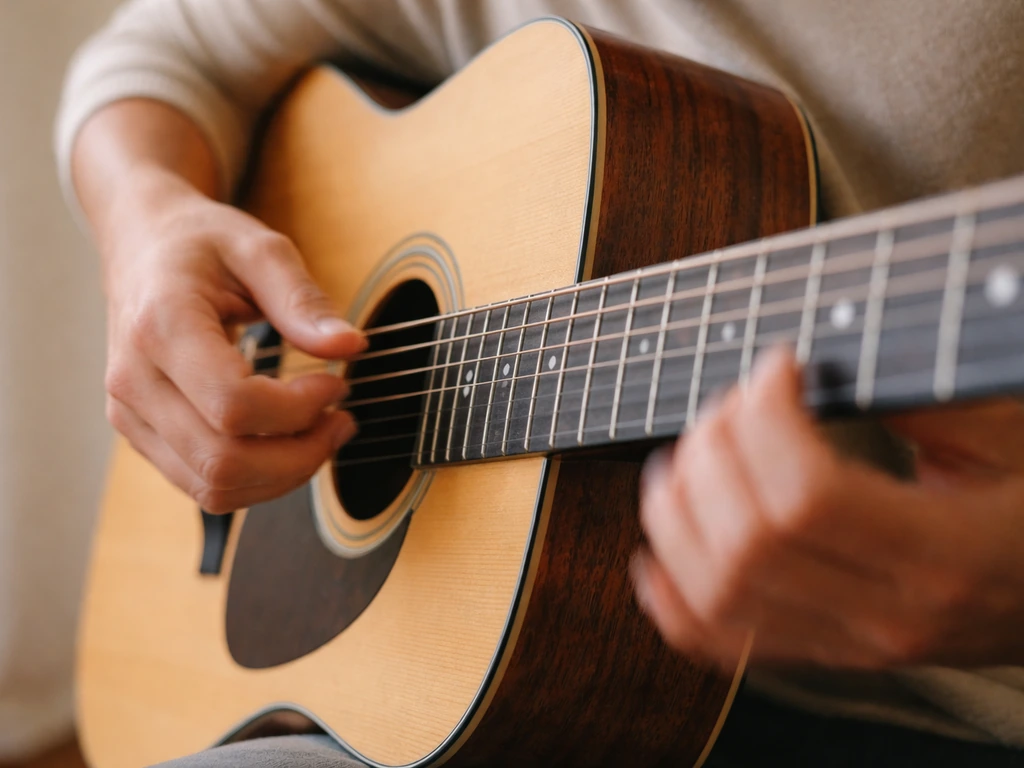
The song sits in 4/4 time, which means four beats per measure. A reliable beginner strum for this song is a simple down-down-up-down-up pattern counted as: 1 - 2 - and - 3 - and. It gives you that light, swinging folk feel that matches the Kingston Trio's recording without overcomplicating things. Keep your strumming arm relaxed. Stiff wrist = choppy sound.
If strumming feels too busy at first, try just doing four steady downstrokes (one per beat) while you lock in the chord changes. Once the chord transitions are automatic, layer the full strum pattern back in. That's honestly the smarter order to do it.
For a more intimate or fingerstyle feel, the intro especially can be played with fingerpicking: hold your D chord and pluck the bass note (D string) with your thumb, then alternate plucking the higher strings with your fingers. This is the 'fingerpick or hum over chords' approach that shows up in several beginner arrangements, and it really suits the gentle, breezy mood of the song.
The intro, verse, and chorus: lead lines and picking tips
The intro sequence
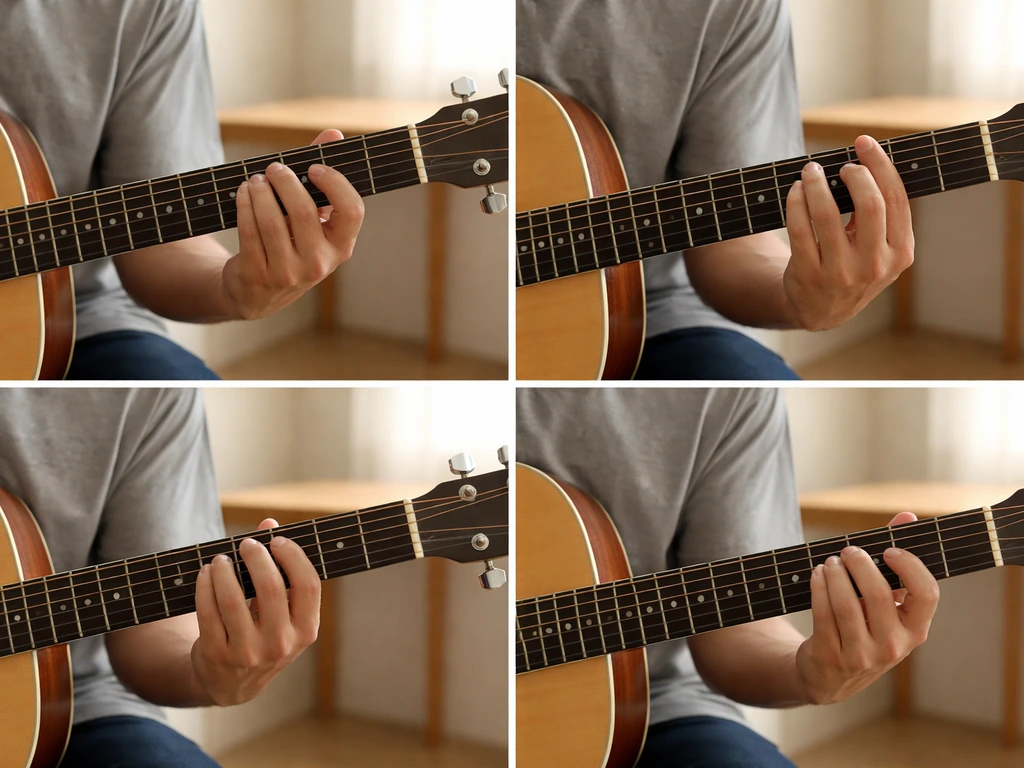
The intro is four chords in order: D - G - A - D. Spend one measure (four beats) on each chord. This sequence also doubles as the main resolution point throughout the song, so once you nail this, you're already playing the most important part. When you reach that final D chord in the intro, let it ring out a little before coming in with the verse.
Verse and chorus chord logic
In the verse, the progression mostly cycles through D, G, and A with Em appearing in some lyric lines. The chorus, where the main hook 'Yellow bird, up high in banana tree' lands, often follows a D - Ddim - D movement for that slightly wistful color. If you're skipping Ddim for now, just hold D across the whole phrase. It still sounds good, and you're not breaking anything by keeping it simple.
Playing the melody

If you want to pick out the actual melody (the 'Yellow bird' vocal line), the notes live mostly on the B and high E strings in the first few frets. For a true fingerstyle approach, you'd pluck the melody note on the beat while your thumb handles the bass strings below. This takes coordination, and it's a bit of a separate skill from chord strumming, so don't feel like you have to do both at once when you're starting out.
A practical beginner shortcut: play the chord and hum (or sing) the melody over it. This keeps the harmony going while your ear stays locked on the melody shape. Then, once your fingers know the chord changes cold, start picking out individual melody notes on top. The Pretty Lights fingerstyle tab of this song uses hammer-ons and slides to ornament the melody line, but that's a layer you can add later. Get the skeleton clean first.
Timing, rhythm, and the beginner mistakes I see most often
How to count and hold a steady tempo
This song has a slow, relaxed groove. The Kingston Trio recording sits around 57 BPM (beats per minute). That feels slow in isolation, but beginners almost always rush it because slow tempos require more patience than fast ones, counterintuitively. Use a metronome app and set it to 28 BPM when you're first drilling chord changes. That's half the performance tempo, and it gives you a full two seconds per beat to land your fingers cleanly. Once the change is automatic at 28, nudge up to 40, then 50, then the full 57.
Mistakes that trip up almost every beginner
- Starting too fast: The number one issue. Playing at 57 BPM before chord changes are solid creates sloppy muscle memory that's hard to undo. Start at 28 BPM. Seriously.
- Muted strings in the D chord: The D major shape is notorious for beginners accidentally muting the high E string with the side of a fingertip. Curl your fingers more, check each string individually before you strum.
- Rushing chord changes: There's a natural tendency to speed up right before a chord change because your brain is anxious. Count the beats out loud as you play. Saying '1, 2, 3, 4' externally locks your tempo better than just feeling it.
- Confusing the verse and chorus sections: Both use similar chords. Mark your chord chart clearly, or write the lyric cues ('Yellow bird, up high...' = chorus) next to the chord names so you always know where you are.
- Forgetting the Ddim is optional: Some charts show it, some don't. Don't derail your practice trying to figure out a diminished chord when D major works fine in that spot. Add the passing chord later.
Your practice plan: slow-to-fast with section loops
Here's a concrete routine you can run through in a 20-30 minute session. It follows the same principle used in good beginner chord materials: isolate, loop, then connect.
- Warm up your chord shapes (5 minutes): Without the metronome, slowly form each chord (D, A, G, Em) and check every string rings cleanly. Fix any muted notes before you add rhythm.
- Drill the intro loop at 28 BPM (5 minutes): Set your metronome to 28 BPM. Play D - G - A - D on repeat, one chord per measure. Don't move on until every transition is smooth.
- Add the verse sequence at 28 BPM (5 minutes): Extend into the verse chord sequence. Chord order from Kingston Trio charts: D, D, G, D, A, D, G, A. Loop it at least 4-5 times through without stopping.
- Connect intro into verse into chorus at 28 BPM (5 minutes): Play through the whole song structure from intro to verse to chorus without stopping. If you stumble at a transition, that's your weak point. Isolate it and loop just that transition.
- Bump the tempo to 40 BPM and repeat (5 minutes): Everything gets harder when the metronome speeds up. Repeat the section loops at 40 BPM. Then try 50 BPM if it feels solid.
- Play it all the way through at 50-57 BPM (3-5 minutes): Run the whole song at or near performance tempo. Record yourself on your phone if you want honest feedback.
The key to this routine working is the loop part. Don't just play through the song from top to bottom and call it done. Find the section where the chord change breaks down and loop that specific two-chord transition at a slow tempo until it becomes automatic. That's where progress actually lives.
Once you're comfortable with 'Yellow Bird,' you'll find a lot of the same open-chord skills transfer directly to other bird-themed fingerstyle and folk pieces. If you want to switch instruments, the basic idea is similar when you look up how to play free as a bird on piano. If you want to apply the same beginner approach, check out how to play Surfin' Bird on guitar next other bird-themed fingerstyle and folk pieces. Songs like 'Flightless Bird' and 'Little Bird' share that same quiet, picking-forward guitar approach, so the muscle memory you're building here doesn't go to waste. If you’re also working on how to play Flightless Bird on guitar, you can use the same relaxed fingerstyle mindset and chord-change practice you’re building here. Keep at it, and give yourself a few days between sessions for the chord shapes to settle into your fingers. That lag is real, and it's normal.
FAQ
What should I do if my D, A, G, and Em sound right individually but the transitions still sound messy?
If your guitar is tuned correctly but the chords still sound “off,” check your finger pressure and chord shape accuracy. Beginners often partially mute strings or press too close to the fret rather than right behind it. Do a quick test by fretting each chord one at a time and strumming only the strings that should ring, then adjust finger placement before you rejoin the full progression.
Can I put a capo on when learning how to play Yellow Bird on guitar, and will it change the chord shapes?
Yes, but do it deliberately. If a capo changes your hand shapes from open positions, you must also transpose the chord positions your chart assumes. For matching the Kingston Trio sound, the guide’s default is no capo in open D, and you only add a capo if you are specifically trying to match a different recording style.
Do I really need to learn Ddim to play the song well, or can I leave it out?
Skip Ddim at first. The easiest beginner method is to hold D for the whole phrase where charts sometimes insert D diminished. Once your D to D transition feels stable at the practice tempo, add Ddim only as a short passing color between phrases, not as part of your core strumming practice.
How do I keep from rushing when practicing at a slow tempo like 28 BPM?
Use a metronome “landing” approach. When practicing at 28 BPM, stop thinking of strums first and think of chord change timing. Count beats out loud, change chords on the beat, and only then strum, even if it means starting with one steady downstroke per beat until the change is automatic.
My strumming sounds stiff and too even, how can I get the light swing feel?
If you want the swinging folk feel, you can keep the down-down-up-down-up pattern exactly as counted. The biggest mistake is turning it into a faster, even eighth-note strum. Instead, keep your wrist relaxed and let the “up” strokes happen naturally between beat numbers, then speed up only after chord changes are clean.
I’m trying the fingerpicking intro, but my thumb and fingers aren’t coordinating. What’s the easiest way to fix it?
If you are fingerpicking the intro, anchor your thumb on the bass string and keep the other fingers doing small, consistent plucks. Also, make sure you are not forcing the thumb to chase the higher strings. A common beginner fix is to practice the bass note on D alone for a minute, then add one treble string at a time.
What’s the best way to play the melody line without losing the rhythm and chord changes?
Yes, but make it a separate skill track. For the melody, try humming or singing while you play chords, then pick just the melody note on B or high E when you hear it. Don’t attempt full note-for-note melody picking until your chord loop (especially D to G and back to A) is stable.
How do I choose what to loop during practice instead of just running through the whole song?
Pick one “loop target” for each session. For example, if the breakdown happens on D to G, loop that transition for two minutes at 28 BPM, then repeat at 40 BPM. When it stabilizes for several clean cycles, move to the next hardest transition like G to A or A back to D.
How can I tell whether the chord chart I found is for the same Yellow Bird version I want to play?
If chord diagrams you find online don’t match the Kingston Trio version, you might be looking at a different arrangement or even a different song title variant. Quick check: listen for the “Yellow bird, up high in banana tree” hook, and verify the arrangement is in open D with the core chord family D, A, G, Em before you commit.
What if my chord changes are timing out even when I slow down?
If you notice a long delay where you cannot change chords in time, slow down further than 28 BPM and reduce strumming to downstrokes only. When the rhythm stabilizes, gradually bring back the full pattern. Also check that you are not using extra finger travel, for open-position chords, keep fingers close to the strings between changes.
Next Article
How to Play Little Bird on Guitar: Beginner Guide
Learn how to play Little Bird on guitar with chords, strumming, rhythm tips, troubleshooting, and a beginner practice pl