If your bird just flew out the door or window, here is what you do: stop, take a breath, and start moving through these steps right now. Most escaped pet birds are found within a mile of home, and the first hour is your best window. The good news is that birds are vocal, predictable, and often not as far away as you fear. The bad news is that panicking and running around the yard yelling will work against you. This guide walks you through exactly what to do, in the right order, starting from the moment you realize your bird is gone.
How to Find a Missing Bird: Step-by-Step Search Plan

Marcus Hendricks
5 Apr 2026
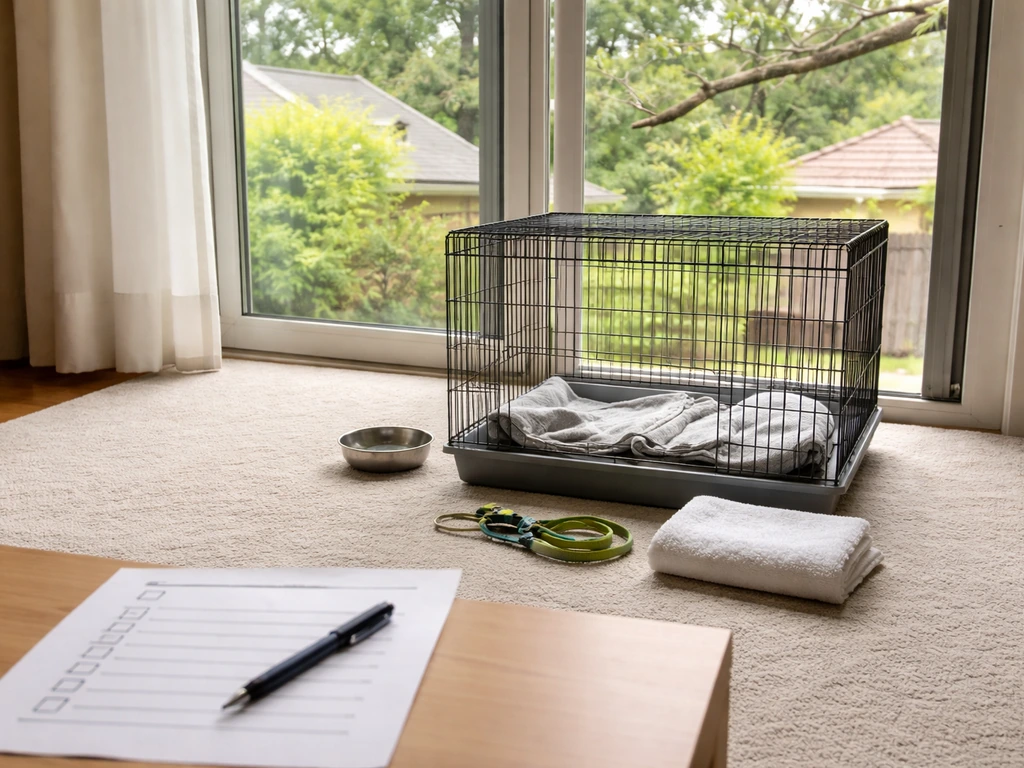
Start-up checklist and immediate next steps
Before you do anything else, run through this checklist. I know it feels like you should just be outside searching, but taking two minutes now will save you a lot of wasted effort. Birds move fast and unpredictably. A plan, even a rough one, beats pure instinct every time.
- Note the exact time and location the bird escaped. This matters more than you think when you're talking to neighbors or filing a report later.
- Grab your phone, a cage or carrier, your bird's favorite food, and a water dish before heading out.
- Tell someone inside the house (or a neighbor) what happened so they can help monitor and make calls while you search.
- Do a quick scan of the immediate area: roof edges, fence posts, nearby tree branches, gutters, and window ledges. Birds almost always land close first.
- Keep your voice calm. Do not shout, run, or make sudden movements near the bird if you spot it. Startling it will push it further away.
- If you have a second bird, do not leave it unattended inside. You may need it to help coax the escaped bird back (more on this below).
- Check which direction the wind is blowing. Birds instinctively fly into the wind when startled, so that direction is your starting search zone.
One thing I learned the hard way: do not close off your home entirely. Leave a door or window (safely screened so other pets can't escape) accessible in case the bird circles back on its own. And resist the urge to bring everyone you know into the yard immediately. Too many people create too much noise and movement, and that pushes birds further away.
Create a search plan for outdoors
According to Goodbird Inc. and Omlet's escaped bird guidance, most escapees stay within a one-mile radius of home, especially in the early hours. That's actually a manageable search area if you approach it systematically. Rather than wandering randomly, divide that zone into rings: start with your property, then expand to the immediate block, then the surrounding neighborhood.
Walk slowly. Do not jog, do not sprint. Move along fences, tree lines, rooftops, and power lines, because these are natural perching spots for a disoriented bird. Look up more than you look around. A scared bird will almost always fly up before it flies out, and it may be sitting on a branch ten feet above you right now, watching you pace back and forth below.
If you want to understand more about how birds use outdoor space in general, reading up on how to find a bird outside can give you a better feel for what habitats and perches to prioritize. That same situational awareness applies here, whether you're watching wild birds or searching for your own pet.
When the initial close search doesn't turn up your bird, expand outward in a grid pattern. Walk each street in the surrounding blocks, calling at regular intervals and then going quiet to listen. Note any sightings, even partial ones, on a simple map sketch on your phone or paper. This helps you identify clusters where the bird may be moving between.
Use bird behavior cues to track likely locations
This is where understanding a little bird biology pays off. Birds are creatures of routine. Even a bird that has just escaped is going to follow instincts around timing, shelter, and sound. If you can anticipate those patterns, you can get ahead of the search instead of chasing it.
Timing matters a lot. Audubon's research on parrot flock behavior shows a clear daily rhythm: birds are most vocal and active in the morning when they leave roosting spots to forage, and again in the late afternoon as they gather to settle for the evening. Those two windows are your best chances to hear vocalizations and get a response from your bird. Mid-day, especially on a warm day, birds tend to go quiet and find shade. If you haven't found your bird by noon, scale back active calling and focus on monitoring rather than searching.
Look for these specific features in your neighborhood, as they're likely resting spots for a lost bird:
- Large mature trees, especially ones with dense canopy cover
- Rooftops and gutters with good sightlines (birds like height)
- Fences or power lines near food sources like fruit trees or bird feeders
- Shaded spots near water: fountains, birdbaths, pools, or ponds
- Dense shrubs where a bird might hide if it feels threatened
One of the most useful things you can do is stop talking and just listen. Goodbird Inc. specifically advises keeping talking to a minimum during the search so you can actually hear the bird's calls. Your bird may be screaming its head off thirty feet away while you're talking to a neighbor. Go quiet for sixty seconds every few minutes and listen for any familiar sounds.
If you want to go deeper on reading bird behavior and vocalizations in the field, how to track a bird covers the same listening and observation skills that apply directly to this kind of search.
How to attract your bird back using sound, voice, and familiar items
This is often the most effective tool in your kit, and it's one people underuse. Your bird knows your voice. It knows the sounds of your home. It may not know how to navigate back, but it can follow familiar audio cues if you give it the chance.
The Phoenix Landing Foundation recommends calling your bird by name using familiar phrases it already responds to, then going silent and waiting for a response. Don't just call once and move on. Stand still, call, wait thirty seconds, then call again. You're essentially having a conversation with a bird that might be too scared to move but can hear you fine.
Technology helps here. Phoenix Landing also suggests playing your bird's own recorded calls from your phone or a portable speaker while you walk the search area. Mickaboo's companion bird guidance takes this further and recommends playing not just the bird's voice but the voice of its species, which can trigger a vocal response even from a bird that's hiding or confused. If you have recordings of your bird on your phone (and it's a good idea to keep some), this is exactly when they become invaluable.
If you have another bird at home, bring it to the search location in a secure carrier. STAR-St. Louis Avian Rescue specifically recommends this because a familiar companion bird calling out can draw the escaped bird back far more effectively than your voice alone. Just make sure you keep that companion bird safe and secure. You do not want to lose two birds in one afternoon.
When you're calling and the bird spots you but won't come down, try moving away slowly rather than approaching. Sometimes a bird that won't fly toward you will fly toward your retreating sound. It sounds counterintuitive, but it works. As Petlife's escaped bird guidance notes, repeating identifiable familiar phrases while staying calm and not crowding the bird gives it confidence to move toward you.
Set up a recovery station near home
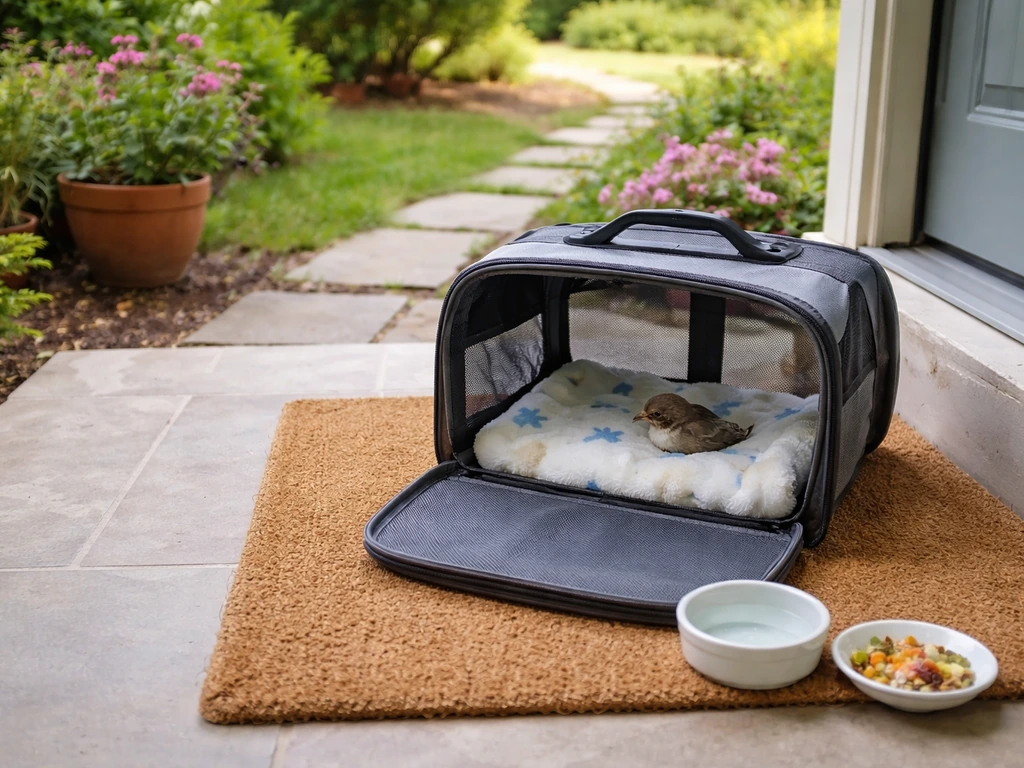
While you're out searching, set up a base camp at home that can work without you. The concept is simple: make your yard or front area the most attractive place your bird could possibly land. If it flies overhead looking for something familiar, you want it to land there and stay.
STAR-St. Louis Avian Rescue has a specific protocol for this: place the bird's enclosure outside in a highly visible spot with the door open. Add the bird's favorite food and a fresh water dish inside. Then, critically, have someone stay near the cage at all times to watch, so they can close the door the moment the bird returns. This detail matters. An open cage with no one watching it is just furniture. An open cage with a person nearby, ready to act, is a recovery tool.
SpectrumCare's guidance on escaped birds echoes this: bring familiar items outside, use calm voice cues the bird already knows, and reduce visual stress around the recovery zone by keeping people, pets, and loud activity away from it. The cage should look like home, not like a trap.
A few setup details that make a real difference:
- Position the cage at the bird's usual eye level or slightly elevated, not on the ground
- Use the bird's favorite treat, not just standard food. Make it worth coming home for.
- Place a familiar perch or toy near the cage opening as an invitation
- Keep the area around the cage quiet and low-traffic
- If you have a second bird, its cage nearby (with the bird in it and calling) can amplify the effect
- Never use a wire cage if you're setting up for a found bird. A carrier is fine, but wire cages are specifically advised against by Avian Wildlife Center for handling purposes.
Keep this station running until your bird is found. Refresh the food and water daily. Even if your bird doesn't return the first day, it may spot the setup from a nearby tree and work up the courage to land the following morning.
Expand the search: neighbors, signage, and local help
Once you've done your immediate search and set up your recovery station, it's time to widen the net. The more eyes and ears you have working for you, the better your chances. Most people who find a lost bird had help from someone they didn't know.
Start with your immediate neighbors. Knock on doors, show a photo of your bird on your phone, and ask them to check their yards, trees, and sheds. People are often surprisingly helpful when you explain what happened. Leave your number with everyone. The CAFA Bird Club's lost-bird guidance also recommends contacting local pet stores and veterinary offices to let them know your bird is missing. If someone brings in an unfamiliar bird for help, these are often the first places they call.
Make a physical flyer. Keep it simple: a clear photo of the bird, the species, any identifying features (color mutations, leg bands, distinctive markings), the date and location it escaped, your phone number, and a reward offer. Mickaboo's guidance on escaped companion birds specifically recommends offering a reward for safe return. It increases the motivation for strangers to actually act when they spot something.
Post flyers in visible locations: telephone poles, community boards, school entrances, pet stores, vet offices, and park entrances near your home. The ASPCA recommends school areas and community visibility spots specifically because these places get a lot of foot traffic from people who are also outside and observant.
Go digital in parallel. Post to neighborhood Facebook groups, Nextdoor, and any local community apps your area uses. PetMojo recommends this approach and specifically highlights neighborhood social media groups as high-value channels because they connect you to people who are in your exact area and paying attention to local news. Post a clear photo and a brief description, and ask people to tag or share.
Register the bird as lost on national databases too. Sites like Rescota maintain nationwide lost and found bird listings, and 911 Parrot Alert runs a search and retrieve protocol that connects owners with bird rescue networks in their region. These listings cost nothing and extend your reach significantly. If you're also interested in building your general bird knowledge to better describe your bird to others, how to find out bird species can help you articulate exactly what you're working with.
Contact local rescue organizations and avian vets in your area. Organizations like Parrot Bird Rescue 911 handle urgent sighting and recovery reports and can mobilize faster than you might expect. The more professional networks you loop in, the wider your coverage becomes without you having to do everything yourself.
Search timeline: what to do when and what to adjust
Having a timeline keeps you from burning out or giving up too early. Here's how to structure your effort across the first several days and beyond.
| Timeframe | Primary Focus | Key Actions |
|---|---|---|
| First 30 minutes | Immediate local search | Scan yard, roof, nearby trees and fences. Call by name, go quiet, listen. Grab supplies. |
| Hours 1-3 | Active close-range search + station setup | Walk 1-mile radius slowly, play recorded calls, set up open cage with food/water outside, assign a monitor. |
| Hours 3-8 | Neighbor outreach + flyers | Knock on doors, distribute flyers, post to social media and neighborhood apps, contact local pet stores and vets. |
| Day 2-3 | Expanded search + listings | Register on lost bird databases, contact rescue orgs, expand flyer radius, continue morning/evening active searches. |
| Day 4-7 | Sustained monitoring + follow-up | Keep recovery station active, re-post social media updates, check in with contacts who have flyers, expand search radius to 5-10 miles. |
| Week 2+ | Long-term strategy | Re-list on all databases, offer updated reward, contact avian rescues in a wider region, keep station running. |
If your bird hasn't turned up after several days, do not assume the worst. The Oasis Sanctuary notes that escaped exotic birds have been recovered within a ten-mile radius of home, sometimes weeks later. Birds are resilient and surprisingly capable of surviving outdoors, especially in warmer months. Keep the recovery station running. Keep re-posting. Keep calling the networks you've set up.
Adjust your search approach based on what you're hearing. If no one is reporting sightings in one direction, shift your focus. If you get a credible sighting from a neighbor three blocks east, concentrate your calls and your cage station in that area temporarily. Treat every sighting tip as a data point, not a guarantee, and let the pattern tell you where to focus energy.
One important note: if your bird is found and returned, take it to an avian vet even if it looks fine. STAR-St. Louis Avian Rescue is clear that a checkup is warranted even if the bird was only outside for a short time. Exposure, stress, and contact with wild birds all carry risks you can't assess at home.
If this whole experience has made you more curious about bird behavior and how birds navigate and find things in their environment, it's genuinely fascinating territory. How does a bird find a worm is a great starting point for understanding the sensory toolkit birds use every day, and it's the same toolkit your bird is using right now to try to find its way back to you.
And if you're new to bird ownership in general and want a broader foundation for understanding how birds think and behave, how to bird is worth reading once your bird is safely home. Building that knowledge base makes you better prepared to prevent a future escape and to handle one more confidently if it happens again.
You may also find it useful to build a reference library for your bird's species. A good field guide can help you understand behavioral patterns specific to your bird type, and how to find a bird book walks you through exactly how to choose the right one. Knowing your bird's natural habits, preferred environments, and social cues gives you a real edge in a recovery situation.
Finally, one more resource worth knowing about: if you've come across a bird that may or may not be yours, or if someone contacts you about a found bird that could be your escaped pet, the puzzle of identification matters. How to find the bird in unwanted experiment is a fun and different kind of bird-finding challenge, but the broader skill of identifying birds carefully applies here too. Confirm identity before making any claims or transfers, and always involve a licensed professional if you're unsure.
FAQ
If I don’t hear my bird after calling, what should I do next?
Yes. If your bird is due to hormones, pain, or a past scare, it may not call back right away. Start with quiet listening, then use a short call-response cycle (call, wait 30 seconds, repeat once). If there is no response, switch to expanding outward and focus on watching perches and rooftops rather than continuous calling.
Where should I look first if I’m not sure which direction the bird went?
Search routes should be based on likely perching and flight paths. Prioritize fences, tall trees, awnings, porch roofs, and any line of sight between houses. Avoid only ground-level scanning, because a disoriented bird often climbs and sits high before it moves again.
How do I tell if a reported bird is actually my pet bird?
Do not assume a bird’s color alone is enough. Note the exact species (or best guess), size, tail shape, beak color, any leg bands, and distinctive markings. Ask neighbors to describe what they saw (direction, altitude, whether it called). This prevents wasted time chasing similar-looking wild birds.
What’s the best way to search when I have a credible sighting?
If you reach a credible spot, you can pause active searching and do a 10 to 20 minute “silent window” (few people, minimal movement, no yelling). Many birds stay put when they feel watched, then re-position after the area calms down. If you spot movement, stop advancing and let the bird decide whether to come lower.
Can I use another bird to help bring my missing bird back, and what are the risks?
Bring the cage setup indoors-safe pets inside until the bird is recovered. If you must use a companion bird, use a secure carrier and keep the companion calm and quiet, since excessive calling or stress can scare your missing bird or draw attention from other pets.
Should I play my bird’s recordings continuously or only at certain times?
Yes, but recordings work best as a tool, not a constant loop. Play the recording for short bursts while you move slowly, then go silent and listen for a response. If the bird calls back, increase the wait time between bursts so you can catch where it is calling from.
My bird is visible but won’t come down, should I approach?
It’s usually better to avoid chasing if the bird is in view. When a bird won’t land or come down, you can slowly move away and lower your attention (stop staring, reduce motion). That change in “pressure” often makes the bird feel safer to approach from a different angle.
How long should I keep searching and how do I adjust after day one?
You should keep searching even after a day or two, but shift effort. If you have no new reports, re-check the same area at different times (morning and late afternoon) and refresh your flyer posts and digital groups. Also, ensure someone at home is watching the recovery station whenever possible, because the first landing can happen quickly.
What should change in my search strategy if it’s raining or very windy?
Plan for bad weather. During heavy rain or high wind, prioritize shelter zones (covered porches, dense trees, eaves) and reduce long outdoor exposure for your own safety. After weather clears, do a fresh call-response round and re-check the same perching areas, since birds often move when conditions improve.
I found my bird, but how can I prevent escapes next time?
Yes. If your bird has a history of bolt behavior, carries, or stress sensitivity, it may respond better to calm, familiar cues rather than loud group activity. For future prevention, consider a travel carrier your bird is trained to enter, plus a plan for how you’ll secure windows and doors immediately at home and during outdoor time.
When my bird returns, what should I do immediately if it seems fine?
If you suspect the bird has injuries, overheating, or possible contact with wild birds, transportation should be careful. Use a dim, quiet carrier, minimize handling, and bring it to an avian vet even if it seems alert. Early checks can catch issues that are not obvious at home.
How should I handle it if a stranger says they found a bird that looks like mine?
If someone reports a “found bird,” ask for photos and identifying details before you assume it’s yours. Arrange a safe handoff if you go to see it, and ideally have a vet or rescue confirm identity. This avoids accidental transfer of a bird that belongs to someone else.
Next Article
How to Bird: Beginner Steps to Start Birding Today
Begin birding today with a quick checklist, safe identification steps, sound practice, and beginner gear basics.