Pick up your wooden bird call, position it at your lips, and blow a steady, controlled stream of air, not a hard puff, but a gentle, sustained breath like you're fogging up a mirror. That's the foundation. Get that one thing right and you'll produce your first clean note within minutes. Everything else, timing, rhythm, troubleshooting, maintenance, builds on that single habit. If you want to go further after the basics, also review how to use a bird call for timing and rhythm in real situations timing, rhythm, troubleshooting, maintenance.
How to Use a Wooden Bird Call: Beginner Guide

Marcus Hendricks
5 May 2026
Know what you're holding before you blow
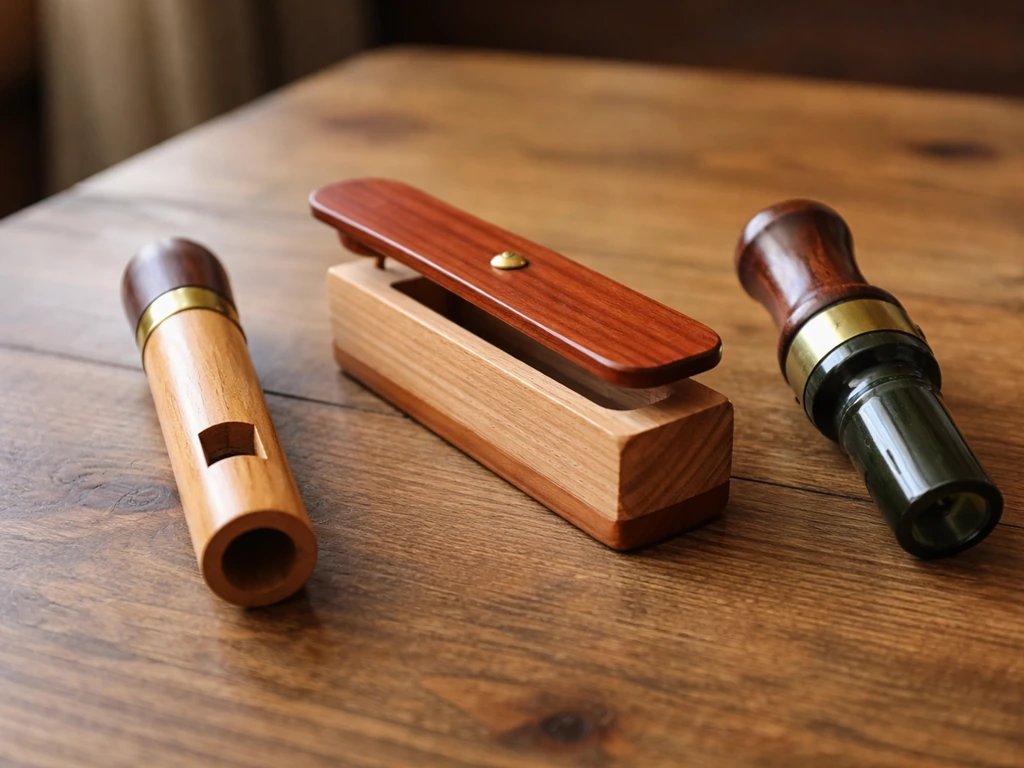
Wooden bird calls come in a few distinct designs, and the technique changes completely depending on which type you have. Using a friction-based box call like you'd blow a whistle-style call is a fast way to get frustrated. So before anything else, figure out what you've got.
| Type | How It Works | Birds It Imitates | Key Technique |
|---|---|---|---|
| Whistle / tube call | Air flows through a wooden chamber past a reed or tone board | Songbirds, wood ducks, doves | Blow with steady, controlled breath |
| Box call (friction) | A wooden paddle (lid) slides across the edge of a hollow wooden box | Turkey (yelps, clucks, purrs) | Stroke the paddle — no blowing at all |
| Short-reed duck call | Reed vibrates inside a wooden barrel as air passes through | Mallards, wood ducks, geese | Back-pressure and tongue mechanics |
| Mouth / diaphragm call | Latex reed sits against the roof of your mouth; air from lungs drives it | Turkey, elk, deer (some birding versions) | Tongue pressure and breath control |
If your call has a hollow box shape with a hinged or separate lid, that's a friction box call. No blowing required. If it looks like a short wooden tube or barrel you hold up to your mouth, it's almost certainly a blow-style call. If it came with a thin latex or rubber piece, it's a diaphragm. Knowing which one you have saves a lot of confusion, and the rest of this guide will help you work with any of these types.
Also consider what sound you're after. A wooden box call tuned for turkey yelps isn't going to produce delicate songbird notes. Audubon-style wooden calls, for example, are designed to mimic specific birds and come with instruction cards matched to that bird's call. Toysmith bird calls follow a similar design. Check any packaging or card that came with your call, most reputable makers tell you exactly which birds the call imitates.
How to hold it and get the airflow right
For whistle-style and tube wooden calls
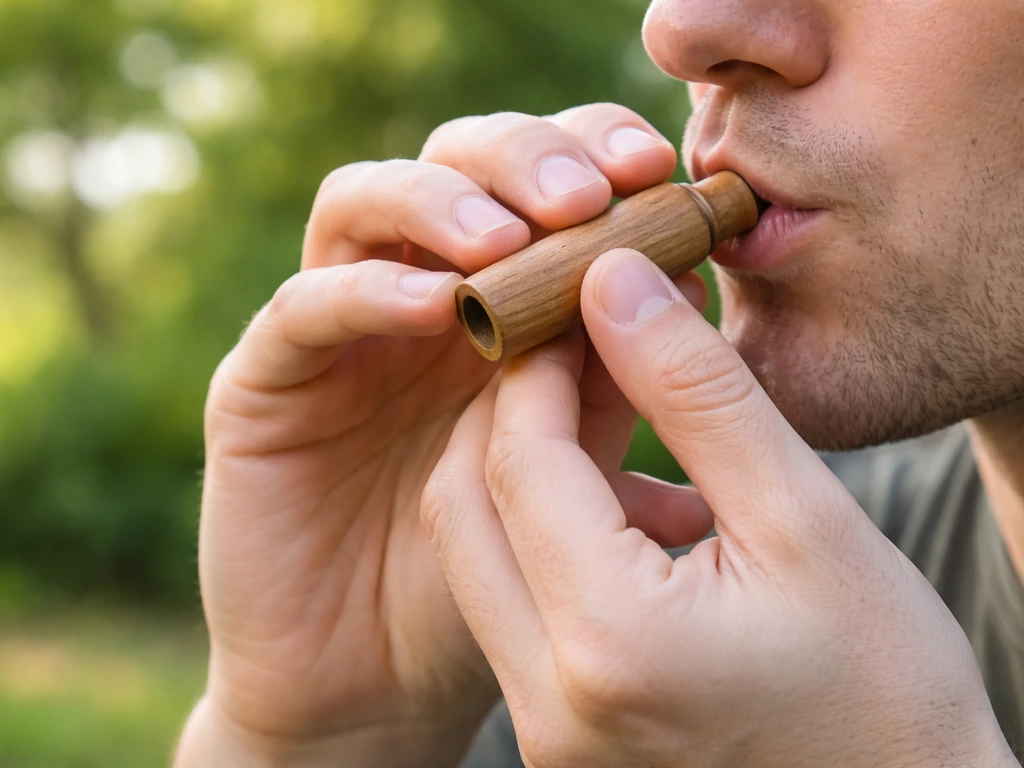
Hold the barrel lightly between your thumb and first two fingers, don't death-grip it. Tight fingers can muffle the resonance. Bring the mouthpiece end to your lips, create a light seal, and exhale a slow, even breath. Think less like blowing up a balloon and more like humming through a straw. The air column does the work; your job is to keep it steady and controlled.
The angle matters too. Most wooden tube calls want to sit roughly parallel to the ground or angled slightly downward. Tilting it too far up or down changes the airflow path and can kill the tone entirely. Experiment in small increments, just a few degrees at a time, until you feel the call 'open up' and resonate freely.
For short-reed wooden duck calls
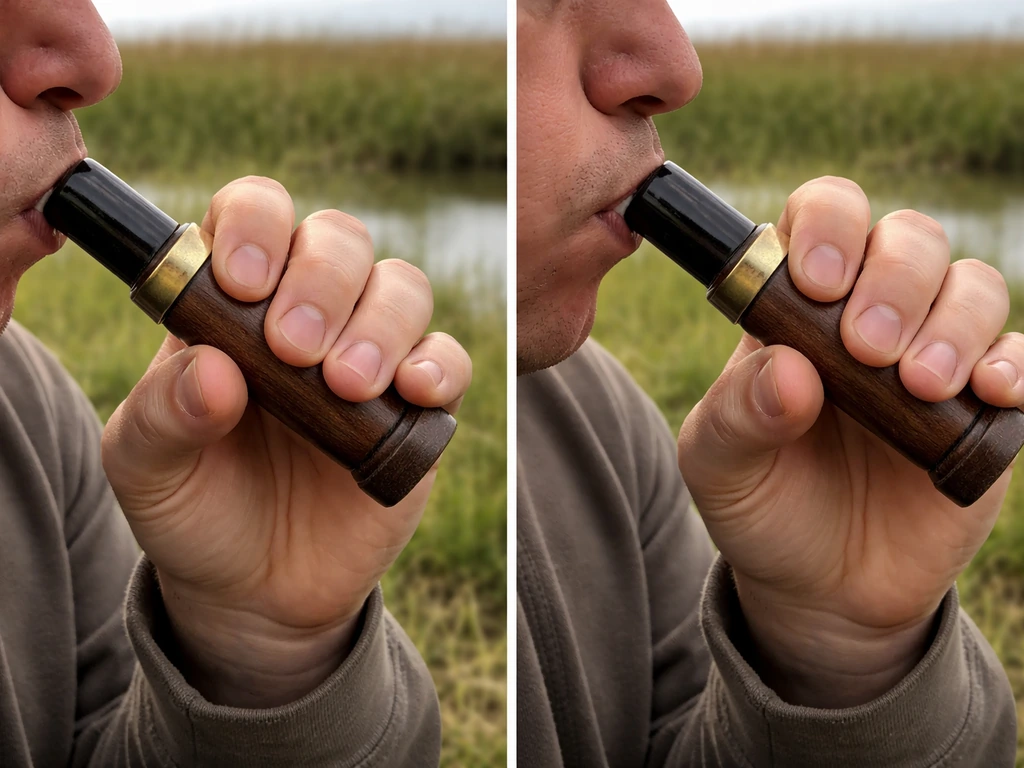
This is where most beginners go wrong: they puff their cheeks and blow like they're blowing out birthday candles. That technique produces a weak, airy mess. The correct method uses back-pressure from your diaphragm, a controlled push of air from your core, while keeping your cheeks flat and firm. Field & Stream explains that getting a duck call “to break” requires deep air pressure from the diaphragm, which helps shape the sound. One helpful cue from experienced callers: anchor the tip of your tongue lightly behind your bottom front teeth. This gives you a control point for shaping notes and transitioning between sounds cleanly.
For wooden box calls (friction style)
Hold the box in your non-dominant hand, keeping your fingers away from the sidewalls, touching the sides dampens the vibration and kills the volume. Grip the paddle (lid) in your dominant hand and drag it slowly across the top edge of the box with a light, consistent downward pressure. The sound comes entirely from this friction. Turkey yelps, for instance, are produced by a series of short strokes; a purr is a lighter, slower drag. No air involved at all.
Volume control across all types
Volume on a blow call comes from the amount of air you push through, more air means louder, less air means softer. But here's the thing most people don't hear at first: real birds don't call at constant volume. They start softer, peak in the middle, and trail off. Practice varying your breath pressure mid-note so you get that natural rise and fall. On a box call, pressure and stroke speed are your volume knobs.
Making your first clean notes
Before you try to imitate anything, just get a consistent tone out of your call. That's the only goal at first. Here's a simple progression that works well for beginners:
- Blow (or stroke) one single note and hold it for two to three seconds. Focus on keeping it steady — no wobble, no fade.
- Listen back. Does it sound clean and resonant, or airy and weak? Airy usually means not enough air pressure or a loose lip seal. Weak and thin usually means too much air.
- Repeat that single note ten times with a two-second pause between each. Consistency before complexity.
- Once you can hit the same note reliably, try shortening it — a quick, sharp single note like a 'peep.' This builds control for call sequences later.
- Record yourself on your phone. You'll hear things your ear misses in the moment.
For box calls, start with a slow, single yelp stroke. Get that one stroke sounding clean and deliberate before you try a series. A turkey yelp is typically five to seven strokes, but if your individual strokes aren't right, stringing them together just multiplies the problem.
Timing is everything once you move past single notes. Real bird calls have a rhythm, they're not evenly spaced like a metronome, and they're not random either. Listen to a recording of the bird you're imitating (YouTube has clean isolated calls for hundreds of species) and tap your finger along to the rhythm before you try to reproduce it. Your body will internalize the pattern faster that way.
When the sound isn't right, fix these first
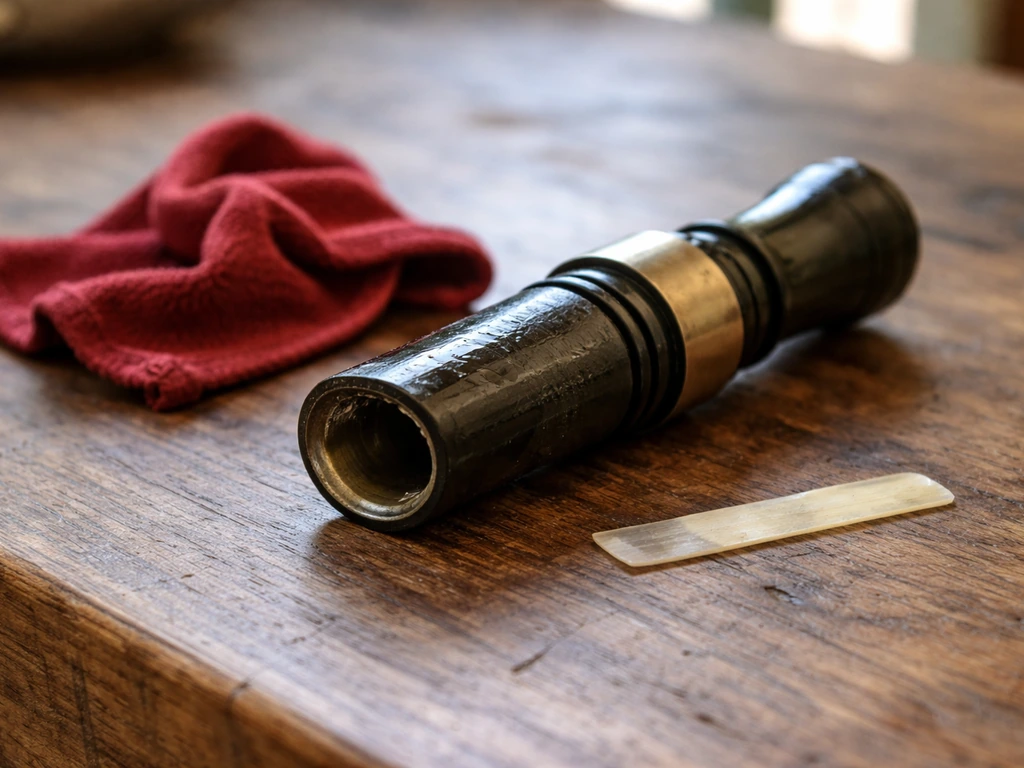
Every beginner runs into the same handful of problems. Here's what's actually causing them and how to fix it fast.
| Problem | Likely Cause | Fix |
|---|---|---|
| No sound at all | Call is wet, reed is stuck, or no air seal at lips | Let the call dry completely; check lip seal; confirm correct end is at mouth |
| Airy, breathy tone with no resonance | Not enough air pressure or lip seal too loose | Firm up your lip seal and push slightly more air through |
| Squealing or squeaking (blow calls) | Too much air — call is overblown | Ease off the breath; think 'gentle fog' not 'hard blow' |
| Muffled or dull tone | Fingers covering sound ports, or moisture inside | Reposition fingers; shake out moisture; let dry |
| Inconsistent notes (sometimes works, sometimes not) | Uneven air pressure or changing angle mid-blow | Fix one variable at a time — stabilize your grip angle first, then work on breath consistency |
| Box call sounds scratchy or rough | Chalk worn off the paddle edge, or wood needs conditioning | Apply a thin layer of chalk to the paddle; avoid touching the striking surfaces with fingers |
| Reed call feels stiff or unresponsive | Humidity swelling the wood, or reed needs adjustment | Allow to dry in open air; consult maker instructions for reed adjustment |
One thing I learned the hard way: when a call suddenly stops working mid-session, the culprit is almost always moisture. Breath condenses inside wood calls quickly, especially on cool mornings. A quick shake and a few seconds of open-air drying usually fixes it on the spot.
Building a real practice routine
Short, focused sessions beat long, wandering ones every time. Ten minutes of deliberate practice daily will improve your consistency faster than an hour of casual tooting on the weekend. Here's a progression that actually works:
- Week 1: Single notes only. Master one clean, repeatable tone before moving on.
- Week 2: Introduce note length variation — hold some notes long, cut others short. This builds breath control.
- Week 3: Work on volume variation within a single breath — start soft, swell louder, fade back.
- Week 4: String two to three notes together with natural pauses. Match the rhythm to a real bird recording.
- Week 5+: Build full call sequences — a contact call, a feeding call, an alarm call. Listen, imitate, compare.
The comparison step is critical. After each practice session, play a reference recording of the bird and listen to how close you are. Don't rely only on memory, your ear adjusts to your own mistakes over time and stops hearing them. The recording keeps you honest.
If you have an Audubon-style wooden call or a Toysmith bird call, these usually come with instruction cards that describe the specific rhythm and pattern for the call, short bursts, long trills, descending notes. If you have an Audubon-style wooden call or a Toysmith bird call, these usually come with instruction cards that describe the specific rhythm and pattern for the call, short bursts, long trills, descending notes. If you’re specifically learning how to use an Audubon bird call, start by matching the call type and following the included rhythm or pattern instructions Audubon-style wooden call. Following those patterns precisely at the start is much smarter than experimenting blindly.
Keeping your wooden call in good shape
Wood and moisture don't get along well over time. A little care after each session means your call will last years and keep producing clean tones.
After each use
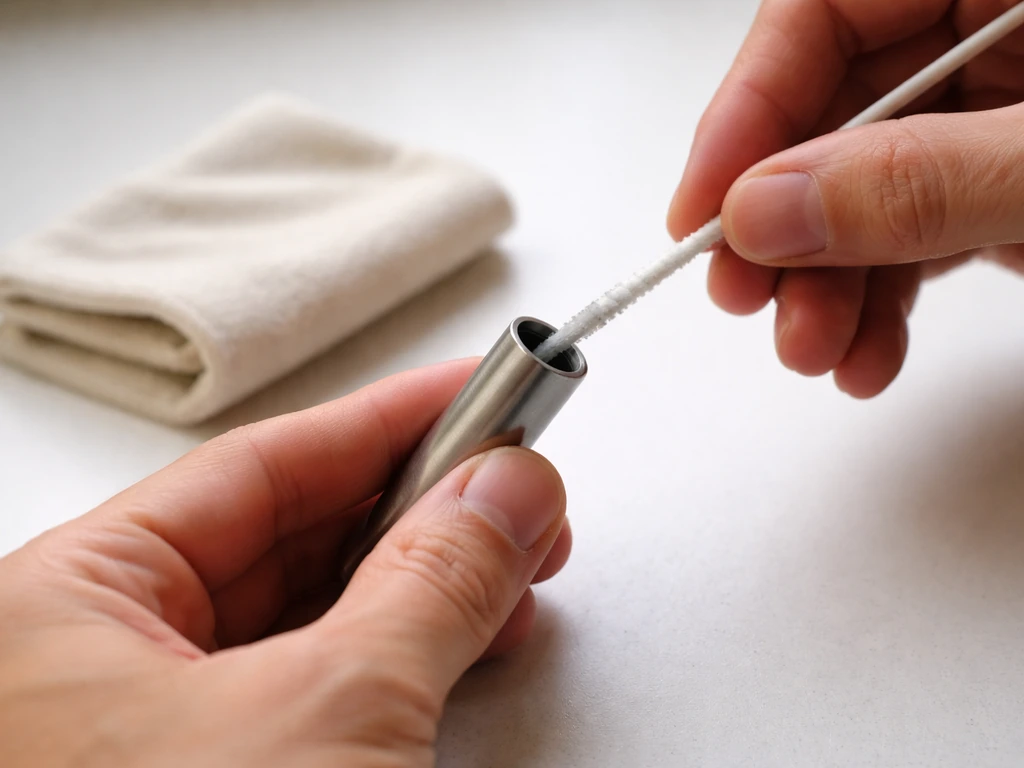
- Shake out any condensation from inside the barrel or tube — tip the open end down and give it a few firm shakes.
- Wipe the exterior with a dry cloth. Don't use a wet rag.
- For box calls, avoid touching the paddle's striking surface with oily fingers — the natural oils from skin degrade the chalk coating that creates the friction sound.
- Leave the call out in open air (not sealed in a bag) for at least 30 minutes before storing.
Cleaning when needed
For tube and barrel calls, a thin, dry pipe cleaner or a cotton swab run through the bore clears out any debris or dried condensation. Do not soak wooden calls in water or run them under a tap. If you need to clean a reed, do it with a barely damp cloth and let everything dry completely before reassembling. For box calls, the only regular maintenance is refreshing the chalk on the paddle. Huntwise notes that proper chalking helps a turkey box call vibrate well and can reduce squeaks refreshing the chalk on the paddle. Hold the paddle flat and run a piece of ordinary blackboard chalk along the striking edge in short strokes until it's lightly coated.
Storage
Store wooden calls at room temperature, away from direct sunlight and humidity. A breathable pouch or a small cloth bag is ideal. Avoid sealed plastic bags for long-term storage, trapped humidity accelerates wood swelling and can warp a call permanently. If you're storing for an extended period, keep box calls with the paddle slightly loosened or off the box so it doesn't warp to the wrong curvature.
Where and when to practice, and how to use it in the field
Practice indoors first, you'll hear your own sound better without wind and ambient noise competing. A bathroom or small room with hard walls gives you good acoustic feedback. Once you can hit your notes consistently at home, take it outside.
Outdoors, early morning is the best time to practice and listen. Most songbirds are most vocal in the hour after sunrise, what birders call the dawn chorus. Go to a local park, trail, or any spot with trees and natural cover. Sit still, play your call once or twice, then go completely quiet and listen for a response. That call-and-listen pattern trains your ear just as much as it exercises your technique.
Don't over-call. This is one of the most common mistakes, and it applies whether you're birding or just practicing. Real birds don't call constantly. They call, pause, and respond. A constant barrage of notes sounds unnatural and will either silence the birds nearby or drive them away. Vary your volume, soft calls work better up close, louder calls carry over distance, and leave long, patient pauses between sequences.
Pairing your call practice with bird ID work pays off fast. Bring a field guide or use a bird ID app like Merlin on your phone. When a bird responds to your call, look for it. Seeing the bird that matched your sound is one of the most rewarding moments in this hobby, and it locks in the association between the sound and the species in a way that pure audio practice doesn't.
As your skills grow, you'll naturally start wondering about specific call styles, the Audubon bird call system, specific techniques for particular species, or more advanced calling sequences. If you want to go deeper, use the Audubon bird call system to match timing and patterns to specific species. Those are great next steps once your foundational technique is solid and you can produce clean, consistent single notes on demand. Get that foundation right first, and everything else comes more easily.
FAQ
My wooden tube call won’t make a sound, what should I check first?
If your blow-style tube is silent, first check for a weak seal at your lips and make sure you are exhaling steadily instead of puffing. If you can get air movement but no tone, re-check the mouthpiece orientation and angle, then let the call warm up for a minute (cold wood can dampen vibration).
Can I use the same technique for every wooden bird call type?
Yes, but only if the call is designed for it. For friction box calls, you should not blow into the box. If you’re unsure, look for a hinged lid and paddle, then produce sound by dragging the paddle across the striking edge with consistent downward pressure.
What’s the best way to fix a call that suddenly stops working mid-session?
No. Moisture is a common cause of sudden failure, especially after cold practice. Instead of soaking, shake out any condensation, air-dry for a few minutes, and then test with a single slow stroke or a short exhale until tone returns.
Can I imitate a different bird using the same wooden call?
You can, but you should match the rhythm to the species and your exact call model. Start with the included instruction card for Audubon-style or Toysmith calls if you have one, then only change one variable at a time (stroke count, speed, or pause length) so you can identify what actually caused improvement.
My notes sound airy or raspy. How do I correct that?
If you hear a raspy or weak note, reduce cheek puffing and switch to a controlled back-pressure style (more “core push,” less “mouth blow”). Then try slightly adjusting the tube angle by just a few degrees, since small changes can make the air column resonate.
How should I clean my wooden bird call after every session?
After practice, run a dry pipe cleaner or cotton swab through tube and barrel bores to remove dried condensation. For box calls, refreshing chalk on the paddle is the main routine step, avoid washing the box or getting the paddle area wet.
How do I progress from making a single note to a realistic sequence?
Start with single notes and keep sessions short and deliberate, then move to multi-stroke sequences only when each individual stroke is consistent. Record one attempt and compare to your reference, the goal is clean repetition before you chase volume or perfect mimicry.
How do I make my calling sound more natural instead of evenly loud?
Use your practice to teach dynamics. Begin softly, peak in the middle, and trail off at the end by gradually increasing and then easing breath pressure (or on a box call, stroke speed and pressure). Also leave longer pauses than you think you need, birds respond to silence as much as sound.
How do I prevent long-term warping or swelling of my wooden call?
If you see swelling, warping, or changes in how the paddle sits on the box, it’s usually trapped humidity or long-term improper storage. Store at room temperature in a breathable pouch, and for extended storage keep the paddle slightly loosened or off the box.
What should I do if birds don’t respond when I call outdoors?
Don’t chase birds by calling constantly. Try a call-and-listen pattern, play once or twice, then go quiet for long enough to hear whether anything responds. If you get no response, adjust technique first (clarity and rhythm) before turning up volume.
Next Article
How to Use an Audubon Bird Call: Setup, Blowing, DIY
Step-by-step setup and blowing tips for an Audubon bird call, plus DIY options and troubleshooting for realistic sounds.