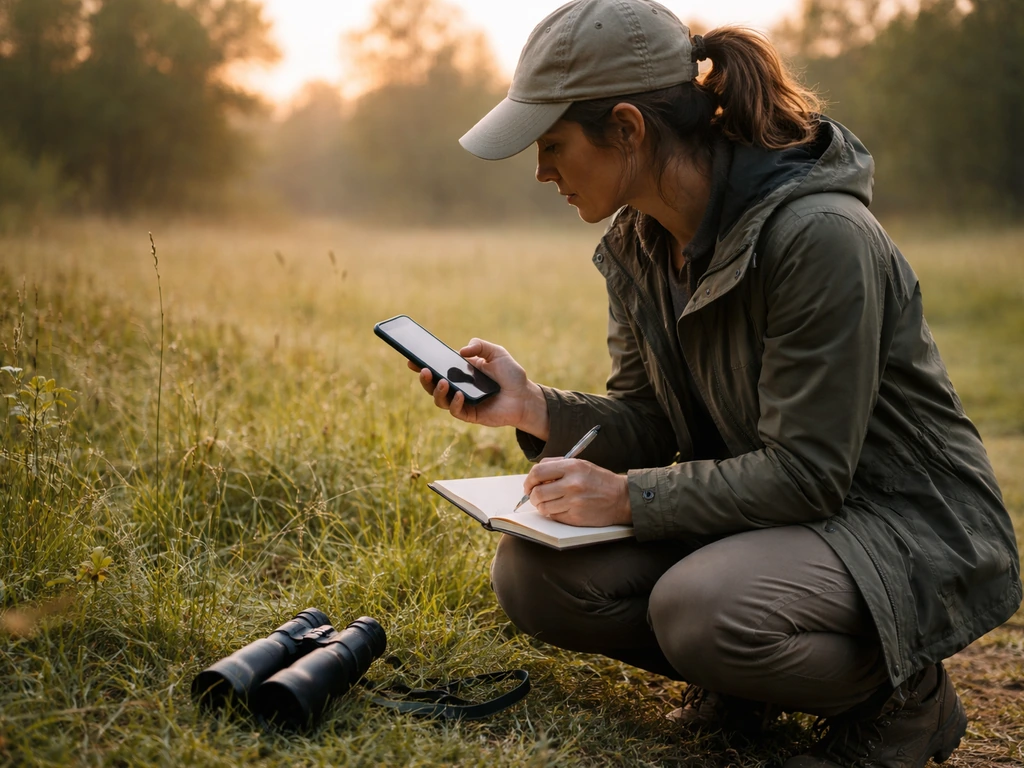
To identify a bird song, you need a repeatable four-step method: listen for the specific acoustic features (pitch, rhythm, repetition, tone), narrow down the species using what you already know about your location and habitat, record or note what you hear, and then verify against a curated sound database like the Macaulay Library or Merlin Sound ID. That's the whole loop. Everything below is how to do each step well, including what to do when it gets messy.
Be a Better Birder: How to Identify Bird Songs

Marcus Hendricks
11 May 2026
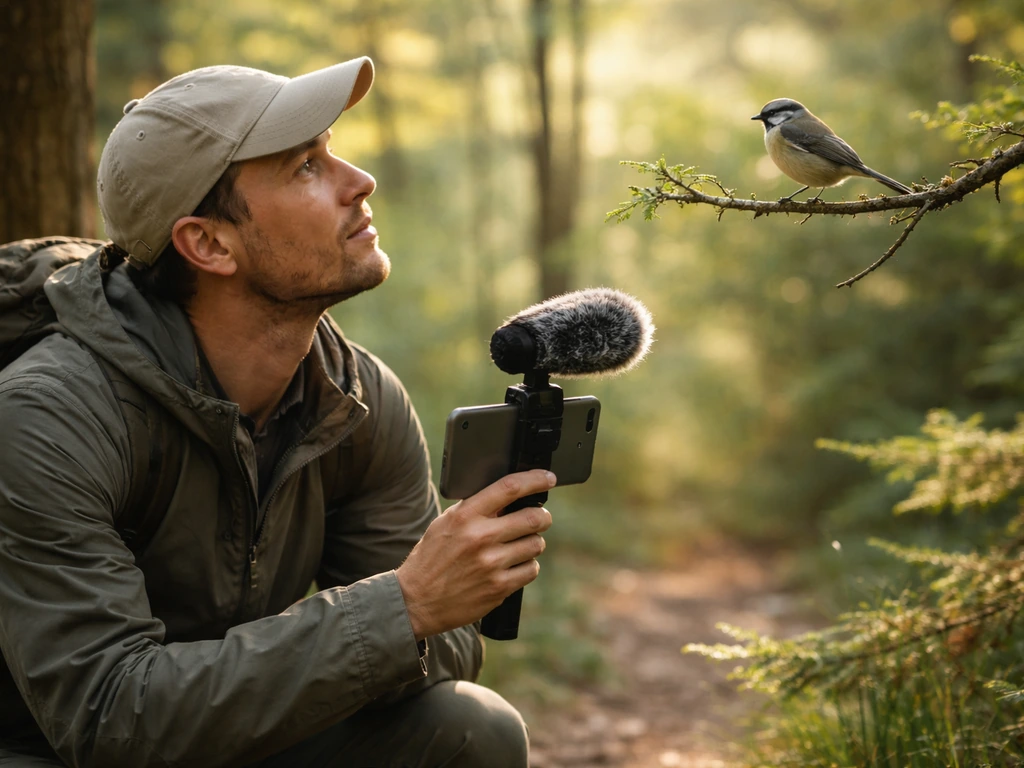
Start with the basics: song vs call and why it matters
Before you can identify what you're hearing, you need to know what type of sound you're dealing with. A bird song and a bird call are not the same thing, and confusing them is one of the most common beginner mistakes. If you try to match an alarm call against song recordings in a database, you'll spin your wheels.
The practical difference comes down to function. Songs are typically longer, more elaborate, and used in territorial defense or mate attraction. You'll hear them most in the morning during breeding season, usually from a male perched somewhere visible. Calls are shorter and serve everyday communication needs: alarm, contact between flock members, begging from a chick, keeping the group together in flight. A robin singing a rich, rolling phrase from a rooftop at 5 AM is doing something very different from a robin giving a sharp "tik" when your cat walks by.
Why does this matter for ID? Because the same species can sound completely different depending on which vocalization it's making. If you hear a short, sharp sound and try to match it to song recordings, you'll probably get nowhere. Once you learn to ask "is this a song or a call?" first, you immediately cut your search space in half. As a rough rule: if it's complex, repeated, and happening at dawn in spring, it's almost certainly a song. If it's brief and reactive, treat it as a call.
Train your ear: the specific sound features to listen for

Most beginners listen to a bird and think "I don't know what that is" and move on. The trick is to replace that vague impression with a checklist of specific features you actively notice. Cornell Lab breaks this down into four core components: pitch, rhythm, repetition, and tone. Here's how to use each one.
Pitch
Pitch is how high or low the sound is. Most bird sounds fall between 100 Hz and 10,000 Hz, which is well within the range of human hearing. Listen for whether the pitch goes up, goes down, stays flat, or jumps around within a phrase. A song that slides upward at the end sounds completely different from one that drops, even if the rhythm is similar. Some species, like the Wood Thrush, move through multiple pitches within a single phrase in a very distinctive way.
Rhythm
Rhythm is the timing pattern of notes. Are they evenly spaced, or does the song speed up and slow down? Is there a pause between each note, or do they run together? Tap your finger along and you'll often feel a pattern that sticks in your memory better than a vague "it sounded like this" impression.
Repetition
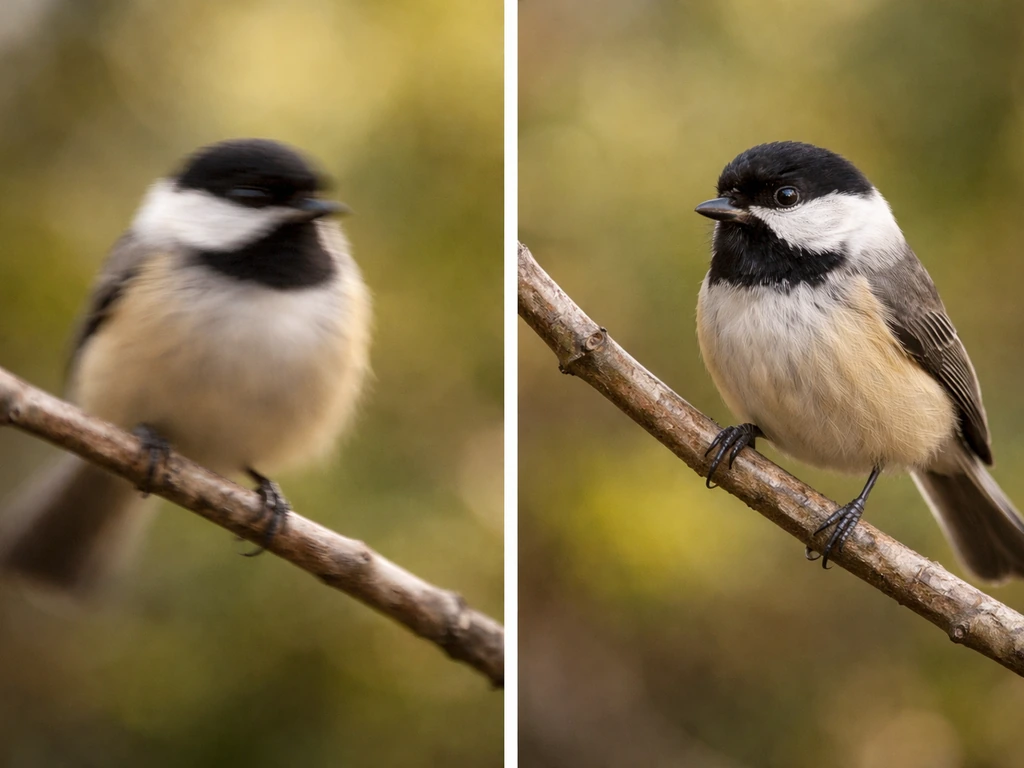
Many birds repeat phrases. A Northern Mockingbird will cycle through a long repertoire, repeating each phrase multiple times before switching. A Chipping Sparrow gives one long, flat trill and just... keeps going. The number of times a phrase repeats, and whether it's exactly the same or slightly varied each time, is one of your best ID clues. Focus on repeated sequences rather than a single note you caught once.
Tone (voice quality)
Tone is harder to describe but easy to feel. Is the sound buzzy or clear? Flute-like or raspy? Thin or rich? A Veery sounds like someone singing into a hollow tube. A Yellow Warbler sounds bright and sweet. If you can lock in the voice quality of a species, you'll recognize it even when individual notes vary between different birds or different performances.
Field workflow: how to narrow down the species in real time
When you're standing in the field and a bird starts singing, here's the sequence that actually works. Don't try to match it to a database in your head on the first note. Work through the information you already have first.
- Pause and listen for at least 15 to 30 seconds before doing anything else. Let the bird repeat its phrase two or three times. Most songbirds repeat their songs frequently, so be patient.
- Note your location: habitat (dense forest, open meadow, marsh, backyard), region, and time of year. A buzzy warbler in a New England forest in May is a completely different puzzle from the same sound in a Texas thicket in November.
- Answer the song-vs-call question. Is this elaborate and sustained, or short and reactive? That tells you which type of recording to compare against later.
- Run through the four acoustic features: What's the pitch doing? What's the rhythm pattern? How many times does it repeat before changing? What's the tone quality? Say these out loud or jot them in a notebook. "Rising pitch, fast even rhythm, repeats about 5 times, thin and buzzy."
- Now open Merlin Sound ID if you have it. Cornell's app listens in real time and shows you which birds are singing, along with a live spectrogram. Let it run for at least 30 seconds. It covers over 2,000 species and is free. The suggestions that keep reappearing on the list are more reliable than one-time appearances.
- Cross-reference what Merlin suggests against your habitat and region. If Merlin suggests a Painted Bunting and you're in Maine in January, set that aside. Range and season are filters that weed out mismatches fast.
- If you have multiple birds singing at once (common in spring mornings), use Merlin's spectrogram display to watch each bird's sound pattern appear separately. You can often distinguish two or three species visually even when your ear can't separate them.
The goal in the field is not a definitive ID. It's to gather enough specific data (acoustic features plus context) that you can verify confidently once you're near a database. Think of field time as data collection, verification as the final step.
Use tools to confirm: recordings, playback, and sound databases
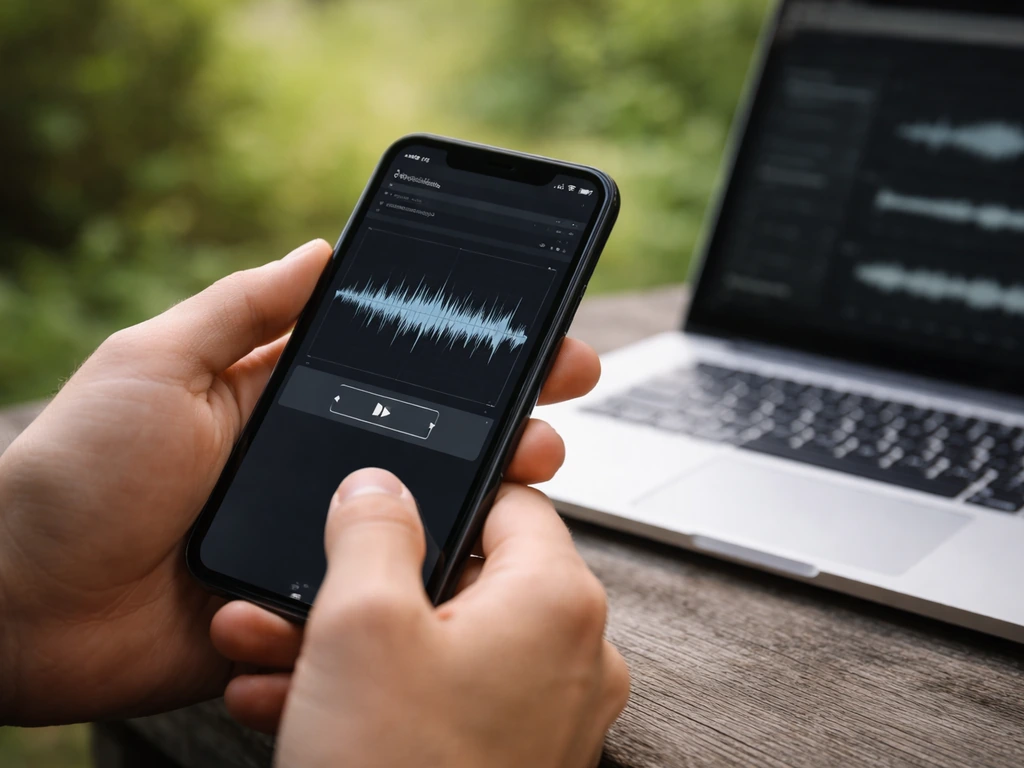
Once you have a candidate species or two, here's how to verify. Having a recording of what you heard is a huge help. Even a 10-second clip from your phone is enough to work with.
Recording tips
- Get as close as you safely can. Cutting the distance between you and the bird in half roughly doubles the perceived loudness of the sound, which means dramatically cleaner audio.
- Hold your phone steady and point it toward the bird. Even this basic step makes a big difference.
- After recording, say a brief note at the end of the clip: location, habitat, time, and what you saw. This context is invaluable when you review it later or want to submit it somewhere.
- If your phone gives you the option, record in WAV format instead of MP3 or M4A. WAV is uncompressed and preserves more detail for later comparison or spectrogram analysis.
- Trim silence from the beginning and end of the clip when you review it later. A clean clip is much easier to compare against reference recordings.
Databases and playback tools
The Macaulay Library (macaulaylibrary.org) is the gold standard for bird sound references. Macaulay Library positions itself as a scientific archive for wildlife audio, video, and photos, powered by the public and providing access to sound records for birds The Macaulay Library. The Cornell Guide to Bird Sounds, updated in February 2026, is a hand-selected set of characteristic recordings for species across the United States and Canada, with sounds clearly labeled as song, call, flight call, and other types. Use that labeling to make sure you're comparing like with like.
Xeno-canto is another excellent resource, especially for species outside North America. You can filter recordings by sound type (song vs call) and quality rating from A (best) to E (poor). Stick to A and B rated recordings when you're learning so you're not comparing against a degraded clip.
The All About Birds species pages (allaboutbirds.org) show a spectrogram alongside each recording. Read the spectrogram like sheet music: time moves left to right, and pitch goes up on the vertical axis. A rising note looks like a line slanting upward. A trill looks like a dense cluster. If you play back a reference recording while watching its spectrogram, then do the same with your own recording, you can compare phrase structure visually even if your ear isn't trained yet. The Macaulay Library now visualizes sound up to 12 kHz, which helps with faint high-frequency details you might otherwise miss.
BirdNET (from Cornell Lab) is a good second-opinion app alongside Merlin. Record a short clip and it returns instant ID suggestions. Use it as a cross-check, not as a single source of truth, especially in noisy conditions.
| Tool | Best for | Free? | Notes |
|---|---|---|---|
| Merlin Sound ID | Real-time field ID, live spectrogram | Yes | 2,066+ species; use the spectrogram view actively |
| BirdNET | Quick clip-based verification | Yes | Good second opinion; shorter recordings work fine |
| Macaulay Library | Curated reference recordings with labels | Yes | Hand-selected; filter by sound type for accuracy |
| All About Birds species pages | Spectrogram + audio comparison side by side | Yes | Best for visual comparison of similar species |
| Xeno-canto | Global species, rare or regional sounds | Yes | Filter by quality (A/B) and sound type |
Common problems and fixes: similar species, multiple singers, noise
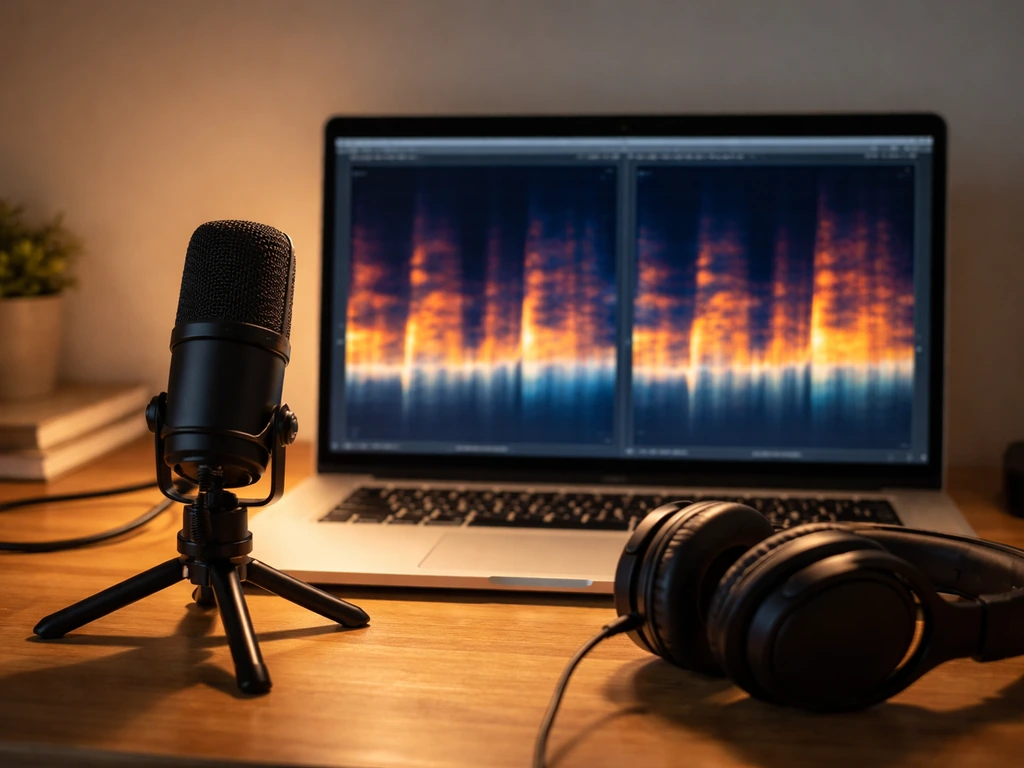
Here are the scenarios that trip up almost every beginner, and what to do about each one.
Two species sound almost identical
This is where spectrograms really earn their place. A classic example is the American Robin vs the Rose-breasted Grosbeak: both rich, melodic, and similar enough to fool your ear at first. Pull up spectrograms of both on All About Birds and compare the phrase structure side by side. Look at the exact shape of the notes, the spacing between phrases, and any repeated pattern. Details that your ear glosses over often jump out immediately in the visual. The temporal structure (how long each phrase is, where the pauses fall) is usually more distinctive between similar species than pitch alone.
Multiple birds singing at once
On a good spring morning, you might have five species going at the same time. Merlin's live spectrogram is your best friend here. Different songs appear as distinct patterns at different pitch levels on the display, even when your brain hears them as one wall of sound. Watch the spectrogram closely and try to isolate one line or cluster at a time. You can also physically turn in different directions to emphasize one singer over another, noting which Merlin suggestion gets stronger or disappears as you do. Cornell's guidance is to log all species appearing on the same Merlin session in a single eBird checklist, which also forces you to tally them deliberately rather than lumping everything together.
Wind, traffic, or other background noise
Background noise degrades both your listening and any recording you make. The most effective fix is simple: get closer to the bird. You can't always do that, but even a few steps help. If wind is the issue, try turning your back to the wind so your body acts as a partial windbreak for the microphone.
Dawn (before wind picks up) is the best time for clean recordings on most days. If your recording is too noisy for confident ID, don't force a match. Merlin's help docs are honest about this: if no strong match appears, the species may not be supported yet, or the audio is too degraded. Merlin help documentation explains that [Sound ID uses spectrogram viewing and notes to log pitch and pattern](https://www.
support. ebird. org/support/solutions/articles/48001185783-sound-id), while the app’s suggestions update based on those observations. Accept "inconclusive" as a real outcome and note what features you did observe.
You hear it once and it doesn't repeat
A single note with no context is genuinely hard to identify, and that's okay. Focus on what you do have: location, habitat, rough pitch, tone quality, and time of year. Feed those into Merlin or All About Birds as filters. If the sound was a call rather than a song, the species' range and habitat are even more important as filters because calls are shorter and less distinctive. If you're working with bird calls, you can narrow options by focusing on the call type and the bird's typical habitat and season. Don't write off the sighting just because you can't pin it. Log the features you noted and treat it as a learning moment.
The species isn't in the database
Merlin's Sound ID is not exhaustive. If a species isn't among the 2,066 currently supported, it simply won't appear as a suggestion. In that case, go directly to the Macaulay Library or Xeno-canto and search manually by suspected species or region. The Macaulay Library's Cornell Guide to Bird Sounds has characteristic recordings for a very wide range of North American species and is regularly maintained, with the most recent update in February 2026.
Practice plan: drills to improve bird-song identification fast
Knowing the method is one thing. Getting fast and accurate with it takes deliberate practice. If you want to learn bird song quickly, turn that deliberate practice into short daily listening drills using the same checklist each time. Here's a plan that works, even if you can't get outside every day.
- Pick five species that live in your area right now. Find them on All About Birds, open their Sounds tab, and listen to three to five recordings of each. Use only recordings labeled "song" first. Play each one, then describe it out loud using the four features: pitch movement, rhythm, repetition pattern, tone quality. This trains you to attach words to sounds.
- Add the spectrogram view. Play the recording while watching the spectrogram. Pause and resume it. Notice what each part of the song looks like visually. Do this for all five species until you can recognize the visual shape of each song before the sound finishes.
- Blind test yourself. Pick one of your five species, cover the species name, play a recording, and try to name it from the acoustic features alone. Then check. Do this for 10 minutes a day and your recall will improve faster than any amount of passive listening.
- Go outside for 20 minutes first thing in the morning. Bring Merlin but don't open it immediately. Listen first, try to apply your acoustic checklist, write down or voice-memo your observations, then open Merlin to compare. This forces active listening instead of passive app-checking.
- After each outing, review any recordings you made. Play them back at home, pull up the spectrogram in Merlin or on All About Birds, and verify your field guesses. The gap between what you thought you heard and what the spectrogram shows is exactly where your ear improves.
- Gradually expand your target species list by two or three birds per week, focusing on species you're likely to encounter. The Cornell Guide to Bird Sounds Master Set contains 4,938 curated tracks, so there's no shortage of practice material once you're ready to go deeper.
- Keep a running log of songs you've positively identified. Seeing that list grow is genuinely motivating, and reviewing it before each outing refreshes the sounds in your memory.
If you want to go deeper on memorizing what you've learned, the process of locking specific calls and songs into long-term memory is its own skill worth developing deliberately. Similarly, knowing how to search for bird calls efficiently in databases and how to figure out an unfamiliar call from first principles will each accelerate how fast you improve from here. The method above gives you the foundation; building on each of those pieces is what separates a casual listener from someone who can walk into a forest and name most of what they hear within a few weeks.
FAQ
If I only hear one short phrase, how can I still identify it without getting stuck?
Start by classifying the sound by structure, not by guesswork (complex, phrase-like, dawn-heavy usually means song; brief and reactive usually means call). Then record context you can later verify, time of day, direction, and distance, and only then compare acoustic features like pitch slides or trill texture.
What if the bird sounds like the same species, but the song changes every day?
Yes, some species have multiple song “types” or change their delivery across the season and from different perches. To avoid overfitting to one performance, compare repeated phrases (more than one chunk from the same singer) and look for consistent elements like phrase length, pause positions, and tone quality.
Should I use what I see (bird shape, location) when identifying bird songs by ear?
When you can see a bird, treat visuals as an additional filter, not as your ID endpoint. Note sex/age clues when obvious (many species differ by sex in song behavior), and confirm that the vocalization you are matching is coming from that individual rather than a neighbor.
How do I avoid misidentifying a call as a song when using spectrograms?
Don’t rely on spectrograms alone when learning. A spectrogram can show the “shape” of sound, but matching requires you to also check whether it is labeled as song versus call in the reference recording, since the same species may produce both very different patterns.
What recording habits make my clips actually useful for ID later?
For the best chance at ID, record 15 to 30 seconds if possible, keep the mic stable, and capture the repeated phrase at least three times. If your phone compresses audio in busy settings, take a couple of shorter clips from different angles instead of one long noisy take.
How can I identify a specific bird when multiple species are singing simultaneously?
If two birds sing at once, you can still sort it out by isolating one “track” on the spectrogram, using a consistent pitch band, then verifying whether that track repeats with the same rhythm and phrase structure. In the field, you can also rotate your body to see which suggestion in your app strengthens, which helps separate singers.
What should I do if BirdNET or Merlin gives an ID, but it feels wrong by ear?
Check whether the reference recording uses the same vocalization category and quality. Many ID tools only match what is supported, and some databases include regional variants, so if your best match is off by obvious structure, switch to manual comparison using spectrogram phrase structure rather than just app suggestions.
How do I handle it when the audio is too noisy for confident identification?
In general, you should expect lower performance during heavy wind, rain, or dense foliage. If your clip lacks clear repetition, treat the result as unconfirmed, log the features you could observe (rough pitch movement, tone, rhythm), and revisit with a cleaner clip later rather than forcing a definitive match.
If my result is inconclusive, what information should I save so I improve next time?
When you get an inconclusive result, capture what you know: time of day, habitat (wetland, woodland edge, suburban trees), and the acoustic checklist (pitch motion, rhythm pattern, whether phrases repeat, and tone). Then use that as a narrowing filter in databases instead of starting over each time.
What’s the quickest rule of thumb when I’m truly unsure song versus call?
If you can’t tell whether it is a song or a call, focus on function-like structure: songs tend to be longer and delivered in repeated territorial or mate-attraction sequences, while calls usually occur as brief signals that respond to events. When in doubt, compare both categories in the reference set and let the phrase repetition and timing decide.
Next Article
How to Memorize Bird Calls: A Step-by-Step Training Routine
Step-by-step routine to memorize bird calls using focused practice, mnemonics, recall tests, and progress tracking over