"Surfin' Bird" by The Trashmen is built on three basic chords, a driving eighth-note strum, and one gloriously weird melodic hook. If you know an A, D, and E chord, you can get through the whole song today. The harder part is nailing the frantic rockabilly-surf rhythm and that bird-call riff that makes the song instantly recognizable. This guide walks you through both the easy strum-along version and the more accurate full arrangement, step by step.
How to Play Surfin Bird on Guitar: Step by Step

Marcus Hendricks
22 May 2026
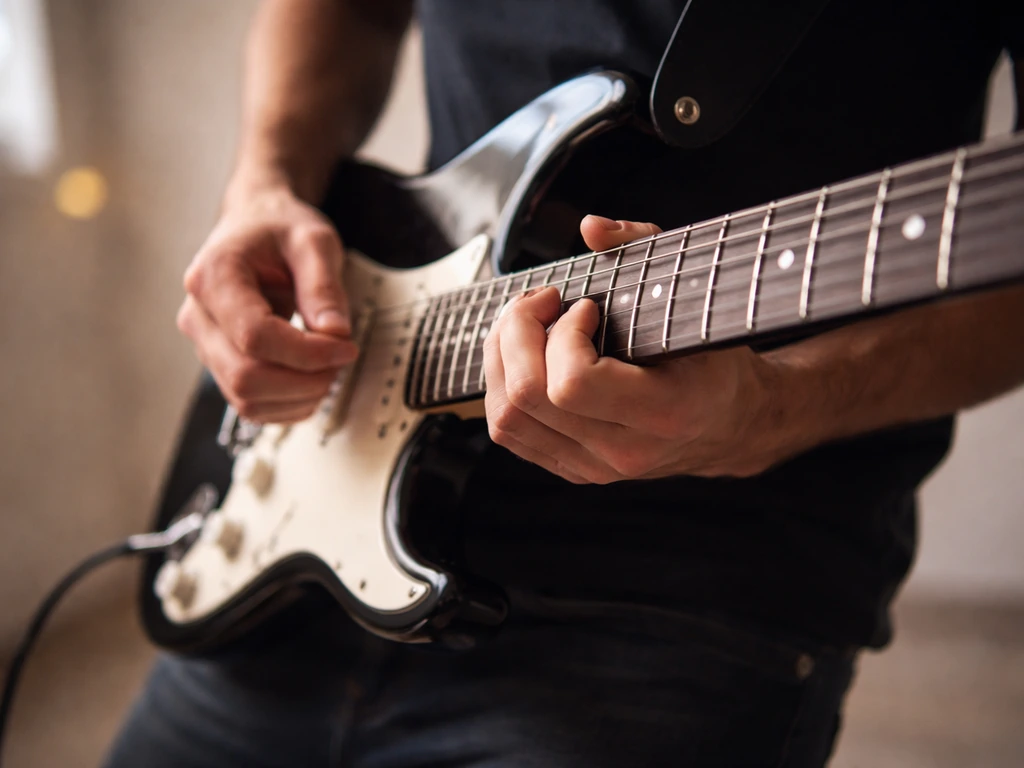
Know what you're playing before you start
When people search for how to play "Surfin' Bird" on guitar, they almost always mean the 1963 hit by The Trashmen, the Minneapolis surf-garage band that crashed the Billboard Hot 100 and blank" rel="noopener noreferrer">peaked at No. 4. It's a mash-up of two earlier songs by The Rivingtons, "Papa-Oom-Mow-Mow" and "The Bird's the Word," fused into one relentless, chaotic track. The studio tempo sits right around 99 to 101 BPM depending on which analysis you trust, which puts it in fast-but-playable territory for most beginners.
The song has three distinct parts you need to learn: the main chord groove (which drives almost the whole song), the signature bird-call riff (the melodic hook everyone knows), and the shouted vocal melody that you can either sing or double on guitar. Once you break it into those three components, the song stops feeling overwhelming and starts feeling like a fun puzzle.
Set up your guitar and pick a starting approach
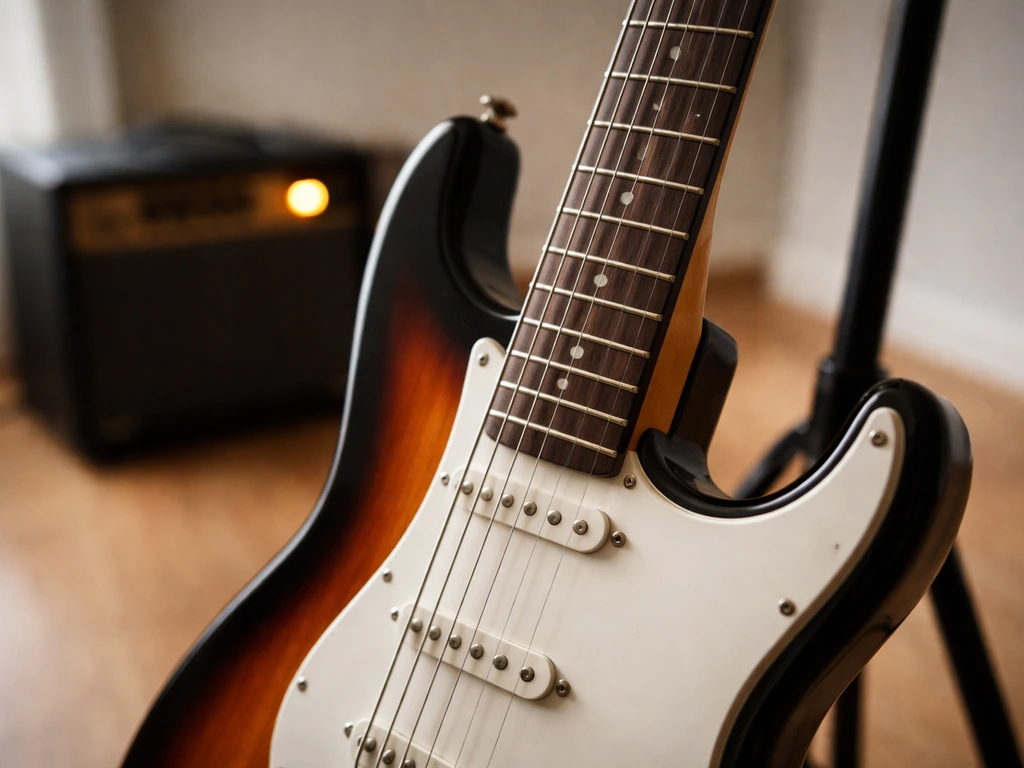
Use standard tuning (E A D G B e). No capo needed. A bright, slightly overdriven electric guitar tone matches the original recording best, but an acoustic absolutely works for learning the song. If you have a clean electric, adding just a touch of reverb gets you closer to that 1960s surf sound.
Choose your starting approach before you pick up the pick. There are two clear paths:
- Easy approach: Strum the three chords (A, D, E) with a steady downstroke pattern and focus on locking into the rhythm. This is enough to play along with the recording and have fun immediately.
- Full approach: Add the bird-call riff on top of the chord groove, match the articulation of the original, and work toward the exact tempo. This is what you aim for after the chords feel comfortable.
If you're brand new to guitar, start with the easy approach first. Seriously. I've seen beginners try to learn the riff before the chords are solid and it becomes frustrating fast. Get the rhythm locked in, then layer the riff on top.
The main chords and rhythm pattern
The song is in the key of A. The three chords are A major, D major, and E major. If you're using open chord shapes, here's what you need:
| Chord | Shape | Strings to Strum |
|---|---|---|
| A major | Open A: fingers on D, G, B strings at 2nd fret | Strings 5 through 1 (skip low E or mute it) |
| D major | Open D: fingers on G (2nd fret), B (3rd fret), high e (2nd fret) | Strings 4 through 1 only |
| E major | Open E: fingers on A (2nd fret), D (2nd fret), G (1st fret) | All 6 strings |
The chord progression in the main section is A (4 beats), D (2 beats), E (2 beats), back to A. In a 12-bar blues-style structure, the verse essentially hangs on A for a long stretch before moving to D and E. For a simplified run-through, just cycle A to D to E and back, which gives you the core feel.
The rhythm is the heart of this song. Use all downstrokes on eighth notes, meaning eight strums per measure, evenly spaced. Think of counting "1 and 2 and 3 and 4 and" and hitting every single syllable. Keep your wrist loose and your pick angle shallow so the strums don't sound stiff. At 100 BPM, those eighth notes are fast but not impossible. The attack should feel aggressive and punchy, not delicate.
The melody and lead lines: intro, verse, and the bird hook
The intro riff
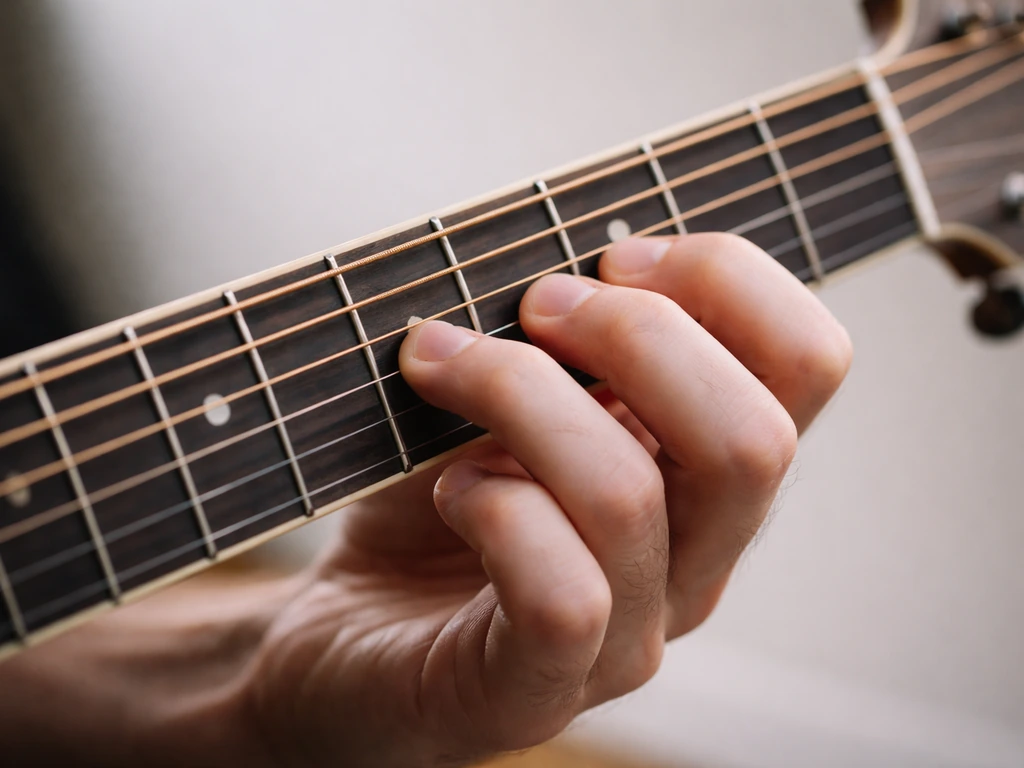
The intro kicks in with a short descending guitar lick built around the A pentatonic scale. It's a quick two-bar figure that lands on the root A note. On guitar, the core shape sits at the 5th fret of the high e string descending to the 5th fret of the B string and resolving down to open A. The exact fingering in tab form: e---5-3---, B---5-3---, then hit open A string. Repeat this twice before the full band crashes in. Keep it short, sharp, and slightly scratchy in tone.
The bird-call hook
This is the part everyone is really after. The hook mimics a bird call using a quick ascending-descending run on the high strings. The basic shape in tab: e---5-7-5---, B---5-7-5---, then slide or bend slightly at the top. The feel is rapid and staccato, almost like a chirp. Play it with light palm muting on the lower strings while the high strings ring out. This contrast is what makes the riff sound bird-like rather than just a generic lick.
In the verse, the riff pops up between vocal phrases, filling the space where the singer breathes. Treat it like call-and-response: chord groove, riff, chord groove, riff. Once you hear it that way, the timing clicks naturally.
The vocal melody on guitar
If you want to play the "bird is the word" vocal melody as a guitar line, it sits mostly on the G and B strings around the 2nd to 5th fret area in A pentatonic. This is optional for most players since the chord groove and bird riff are the main event, but it's a fun addition if you're playing solo without a singer.
Timing, strumming technique, and practice drills
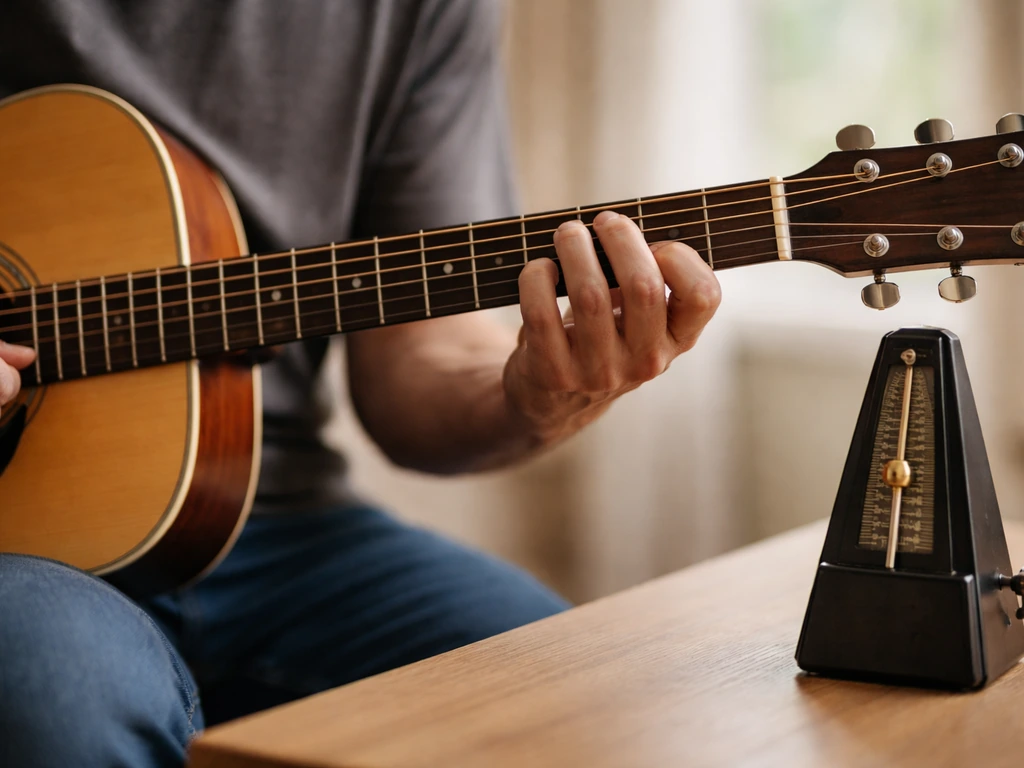
Getting the tempo right takes deliberate practice. The recording sits at roughly 99 to 101 BPM. That's the target, but you should start at 70 to 75 BPM until the chord changes feel automatic. Here's the drill sequence I'd recommend:
- Set a metronome to 70 BPM. Play the A-D-E chord progression with straight downstroke eighth notes for two full minutes without stopping. Focus only on clean chord shapes and consistent pick attack.
- Once that feels comfortable, bump the tempo to 80 BPM and add the bird riff between chord changes. Don't rush the riff. Let it land exactly on the beat.
- Move to 90 BPM and start playing along with the actual recording at a slowed-down playback speed (most music apps or YouTube let you slow tracks to 75 or 80 percent speed).
- At 95 BPM, start recording yourself on your phone. Listen back specifically for whether your strums are even and whether your chord changes are landing cleanly.
- Hit full speed (100 BPM) only after each slower tempo feels automatic, not just okay.
For the downstroke technique specifically: keep your elbow mostly still and drive the motion from your wrist. Your pick should graze across the strings, not dig in. If your wrist feels tense after 30 seconds, you're gripping the pick too hard. Loosen up and the speed will come naturally.
Loop drill: Record yourself playing just four bars of the A chord with the bird riff and loop it. Listen for whether the riff sits inside the groove or disrupts it. The goal is for the riff to feel like part of the rhythm, not an interruption.
What usually goes wrong (and how to fix it)
Here are the most common problems people run into, and the honest fixes: If you're also trying to nail the flightless-bird-style version, use the same chord groove and layer the bird-call riff with tight timing how to play flightless bird on guitar.
| Problem | Likely Cause | Fix |
|---|---|---|
| Chords sound buzzy or muted | Fingers not pressing close enough to the fret | Move your fingertips right up behind the fret wire, not in the middle of the fret space |
| Rhythm feels uneven or choppy | Mixing downstrokes and upstrokes accidentally | Lock into all downstrokes first; do not add upstrokes until the groove is solid |
| The bird riff sounds muddy | Playing it too slow or with too much sustain | Shorten each note slightly with light palm muting and increase pick attack |
| Can't keep up with the recording tempo | Jumped to full speed too soon | Drop back to 75 BPM and rebuild slowly; speed is earned, not forced |
| D chord change is slowing you down | Thumb position on the back of the neck is wrong | Keep your thumb centered low on the neck so fingers have room to stretch and move quickly |
| Song sounds flat compared to the recording | No tone shaping or playing too softly | Add a touch of overdrive or reverb, and dig into the strings with more confidence |
One thing I learned the hard way: if the bird riff isn't sounding right, the issue is almost never finger placement. It's almost always timing. Record yourself and listen back. You'll usually hear that you're rushing the riff or landing it half a beat late. That single fix makes a massive difference.
How to make it actually sound like the recording
Once the chords, riff, and tempo are in place, these are the details that close the gap between "playing the song" and "sounding like the song."
- Use a medium to heavy pick (0.73mm to 1.0mm). A thin pick flaps and loses attack at this tempo.
- Add just a touch of overdrive or a mild fuzz pedal if you're on electric. The Trashmen's guitar tone has edge, not cleanness.
- Dig into the low strings harder on beats 1 and 3 to emphasize the backbeat feel even while playing all downstrokes.
- When you play the bird riff, lift your palm slightly off the strings so the notes have a little more ring than the chunky chord stabs around them.
- Play the intro riff with a slight swagger by landing on the notes slightly behind the beat rather than right on top of it. This gives it that lazy, cool surf feel.
- If you're playing with a band or backing track, lock with the kick drum on beats 1 and 3 and let that be your anchor for tempo.
The song's energy also comes from dynamics. The verses feel coiled and repetitive on purpose, building tension until the hook explodes. So even if you're playing alone, try to play the verse sections a little more restrained and hit the bird riff sections with extra force. For more on the same style of approach, see how to play free as a bird on piano hit the bird riff sections with extra force. That contrast is what makes the whole thing feel alive.
Once "Surfin' Bird" feels comfortable, you'll find a lot of the skills transfer directly to other bird-themed guitar songs. If you want to learn the whole song step by step, use this guide as your starting point for how to play Little Bird on guitar. After you have the riff and groove down for Surfin' Bird, you can use the same chord-and-rhythm approach to learn other versions of how to play Yellow Bird on guitar other bird-themed guitar songs. The chord work and rhythmic approach here are similar to what you'd use tackling songs like "Little Bird" or working through the fingerpicking patterns in "Flightless Bird." The rhythm discipline you build here applies everywhere.
FAQ
Do I need a capo to play “Surfin’ Bird” on guitar?
No. It’s commonly taught in standard tuning with open A, D, and E shapes, so you can play it without a capo. If you use a capo for personal comfort, keep the chord shapes consistent and adjust which fret you count from.
What should I do if my chord changes sound sloppy at the song tempo?
Practice the transitions as rhythm, not as separate chord drills. For example, keep strumming eighth notes on A, then switch to D exactly on the beat where A ends, and go back to A the same way, before adding the bird riff back in.
How can I tell whether my bird-call riff problem is timing versus finger placement?
Record two short loops, one where you focus only on the riff notes with perfect fingering but slower tempo, and another where your tempo is correct but fingering is “good enough.” If the riff still sounds off at slow speed, finger placement is the issue, but if it snaps into place, your rhythm is the likely problem.
How do I palm-mute correctly so the riff sounds “chirpy” instead of muddy?
Lightly touch the lower strings with the side of your picking hand so they don’t ring, then let the high strings ring freely. If everything sounds dead, you are muting too much, move your hand slightly toward the bridge side and use less pressure.
Should I use a clean tone or distortion for the best “surf” feel?
A slight overdrive is usually closer to the classic energy, while too much gain can smear the fast riff. If the bird riff loses its crispness, back down your gain or add a touch of reverb only after you can play the riff cleanly.
Can I play the song on acoustic guitar without it sounding thin?
Yes, but you may need a more percussive strum. Emphasize the downstrokes on the eighth-note grid, and consider strumming closer to the bridge area to get more attack. A brighter pick and consistent wrist motion also help the riff cut through.
What pick size or technique works best for the fast eighth-note strumming?
Use a pick you can control at speed, typically a medium gauge (not overly thick). Keep a shallow pick angle and drive from the wrist with relaxed grip, because stiff gripping tends to create uneven timing and harsh strum accents.
How do I practice the tempo if I can’t reach 99 to 101 BPM yet?
Start at a tempo where your chord changes and riff land together, often around 70 to 75 BPM, then raise the metronome gradually in small steps. Re-check timing after each step by looping a single riff insertion in the middle, not by trying to play the entire song full speed immediately.
Where exactly should the bird riff go during the verse?
Treat it like a gap-filler between vocal lines. In practice terms, play the chord groove, insert the bird riff at the end of each vocal phrase gap, then return to the groove immediately, so the riff feels like it answers the singer rather than replaces the rhythm.
Is the “bird is the word” vocal melody worth learning if I’m playing solo?
It’s optional, but if you do it, keep it simple and in the same A pentatonic zone around the 2nd to 5th frets. Focus on matching the phrasing length to where the singer would land, so it supports the rhythm instead of stretching notes over the beat grid.
What’s the easiest way to practice “inside the groove” rather than rushing the riff?
Loop four bars of the chord groove at tempo, then add the bird riff for just one insertion per loop. If it feels like it lands early or late, adjust by a fraction of a beat, then keep your metronome running so your ear learns the placement.
I’m using the right notes, but the riff still sounds wrong, what else could it be?
Check your slide or bend at the top of the riff. If your slide/bend starts too early or too late, the chirp effect disappears even with correct fretting. Practice the top motion slowly first, then bring the tempo back up once it consistently “snaps” into place.
Next Article
How to Play Yellow Bird on Guitar: Beginner Guide
Step-by-step beginner guide to play Yellow Bird on guitar with chords, groove strumming, melody timing, and practice pla