Getting your bird to sing comes down to one simple idea: a relaxed, stimulated, socially connected bird sings. A stressed, bored, or lonely bird goes quiet. Everything in this guide feeds into that principle. Whether you have a budgie, a parakeet, a cockatiel, or a parrot, the playful interaction and training routines below are your fastest path to hearing those happy chirps and songs you're after.
How to Play and Get Your Bird to Sing: Step-by-Step

Marcus Hendricks
13 Apr 2026
What 'play to get singing' really means (and what singing signals)
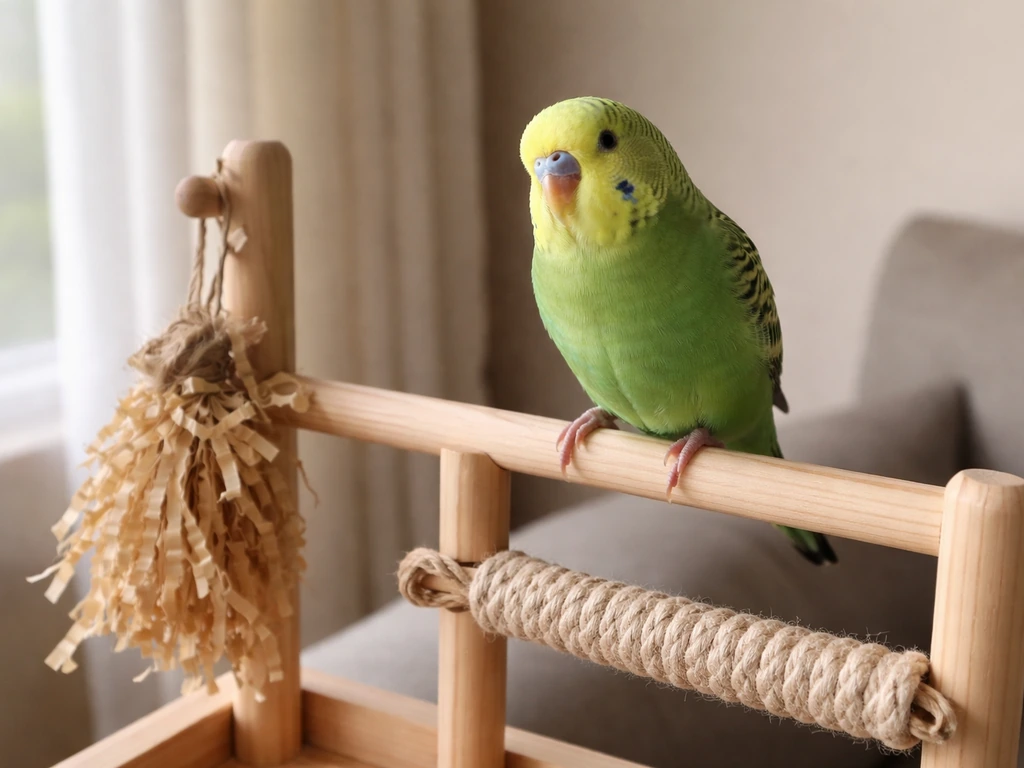
When we talk about 'playing so your bird can sing,' we're not talking about performing a trick. We're talking about creating the conditions, the relationship, and the daily rhythms that make your bird want to vocalize. Singing in pet birds is a contentment signal. It tells you the bird feels safe, socially connected, and engaged. It's different from a contact call, which is what budgies and parakeets use when they're trying to locate you or another bird in the house. Contact calls are persistent and slightly anxious in quality; singing is relaxed, exploratory, and often unprompted.
Lafeber, one of the most respected names in avian care, distinguishes budgie 'singing' from 'contact calling' specifically because they have different emotional roots. Contact calling happens when the bird misses you or hears another bird nearby. Singing happens when they're comfortable, entertained, and feel part of their flock. Your goal is to build enough trust and enrichment into your bird's day that the singing just happens naturally, and then you layer in some gentle training to encourage it even more.
One thing worth knowing early: if your bird has been quiet for more than about 24 hours with no obvious cause, that's a health flag, not a training problem. Avian vets consistently flag sudden silence as a potential sign of illness. Vocal changes that come with fluffed feathers, reduced appetite, or labored breathing need a vet visit, not a new toy. Rule that out first, then come back here.
Set up the environment: safety, stress reduction, and timing
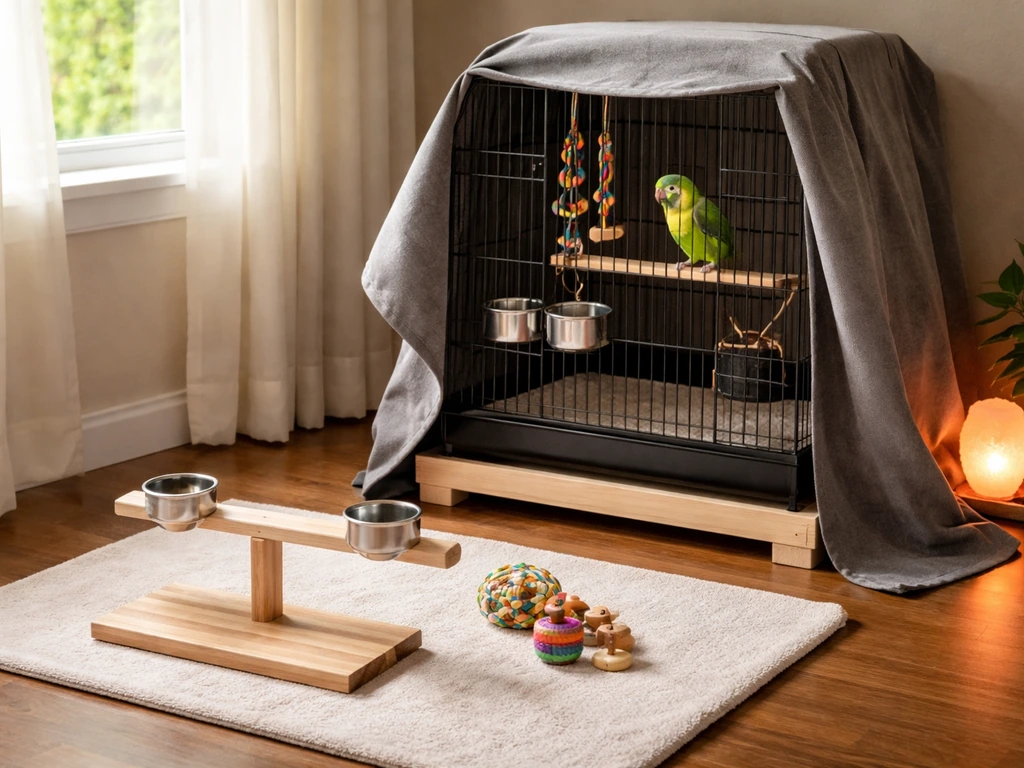
Before any play or training happens, the environment does the heavy lifting. A bird living in a noisy, unpredictable, poorly lit space is not going to sing no matter what you do. Here's what to get right first.
Light and sleep cycles
Birds are highly sensitive to light. Most pet parrots and parakeets need 10 to 12 hours of uninterrupted sleep in a dark, quiet space, and then a steady 10 to 12 hours of daytime light. This isn't just about rest: photoperiod (the length of the light period) directly affects hormones, and hormones directly affect how much and how enthusiastically your bird sings. Testosterone and related hormones actually drive growth in the parts of the brain that control song, so a bird with a stable, appropriate light cycle is biologically primed to vocalize more. Use a cage cover or move the cage to a darker room at night, and try to keep the schedule consistent every single day.
Cage placement and noise
Place the cage somewhere the bird can see activity in the room but isn't in the middle of chaos. Birds feel safer with one solid wall behind them. Avoid kitchens (fumes from non-stick cookware are toxic to birds), drafty windows, and spots with sudden loud sounds. Loud or unpredictable noise makes birds tense, and a tense bird clams up. If your household is busy, give the bird a quieter corner with a view, not isolation.
The right timing for play
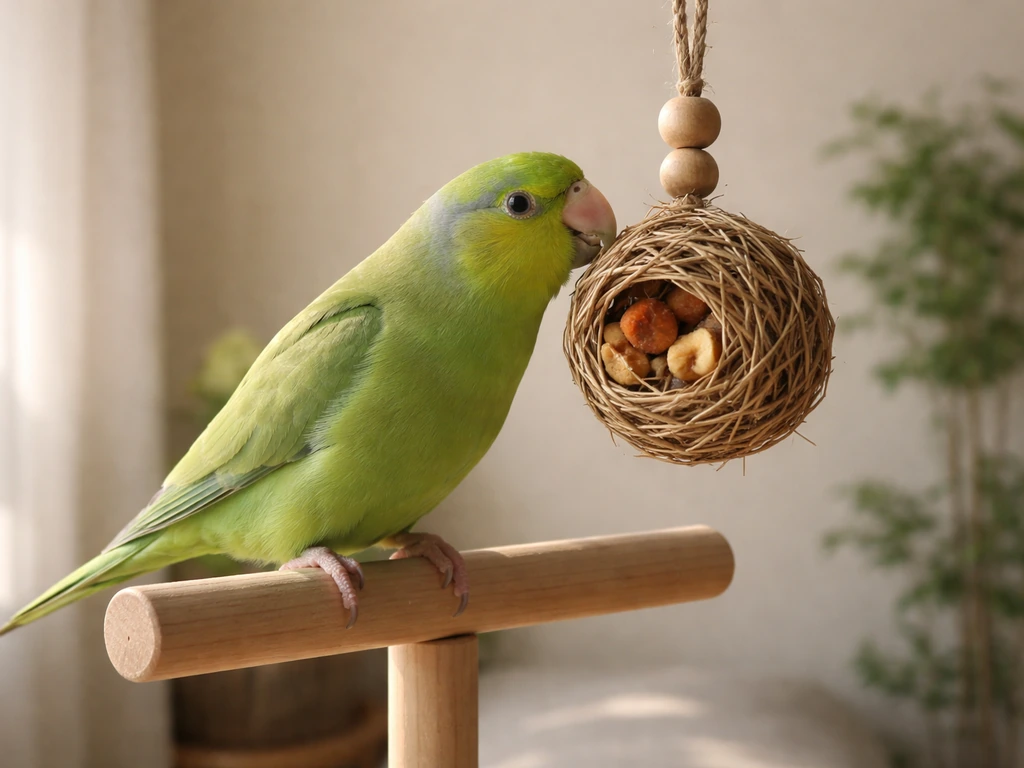
Birds are most vocal in the morning and again in the late afternoon. These are the windows when singing comes most naturally. Schedule your play and training sessions around these peaks rather than fighting them. Mid-afternoon, many birds are quieter and less engaged, so don't judge your results by a sleepy midday session.
Best beginner play activities that encourage vocalizations
Play is the engine here. Birds that interact with you, with toys, and with their environment regularly are far more vocal than those sitting quietly in a cage all day. The key is variety and engagement, not just leaving a toy in the cage and hoping for the best.
- Mirror play: Many budgies and parakeets respond strongly to mirrors, often singing or chattering to their reflection. Keep sessions short (5 to 10 minutes) so it doesn't become obsessive.
- Foraging enrichment: Hide treats in foraging toys so the bird has to work for its food. This mimics natural behavior and keeps the bird mentally active. An engaged bird is a vocal bird. HARI (Hagen Avicultural Research Institute) specifically positions foraging toys as tools for nourishment, play, exercise, and social interaction combined.
- Talking and whistling at your bird: Birds are social mimics. Talk to your bird throughout the day, even just narrating what you're doing. Whistle simple tunes. Many birds will attempt to copy you, which is exactly the kind of vocalization you're after.
- Hand play outside the cage: Supervised out-of-cage time where the bird can climb on you, explore, and interact is one of the best singing triggers. A bird that trusts you physically is much more likely to vocalize freely.
- Song games: Play a simple two-note whistle, pause, and wait. Many birds will respond. This back-and-forth mimics flock communication and gets them vocalizing in a low-pressure way.
If you're not sure where to start with hands-on interaction beyond the basics, reading up on how to play little bird games can give you some additional ideas for gentle, structured activities that build trust while encouraging sound.
Training routines: rewards, cues, and encouraging sounds
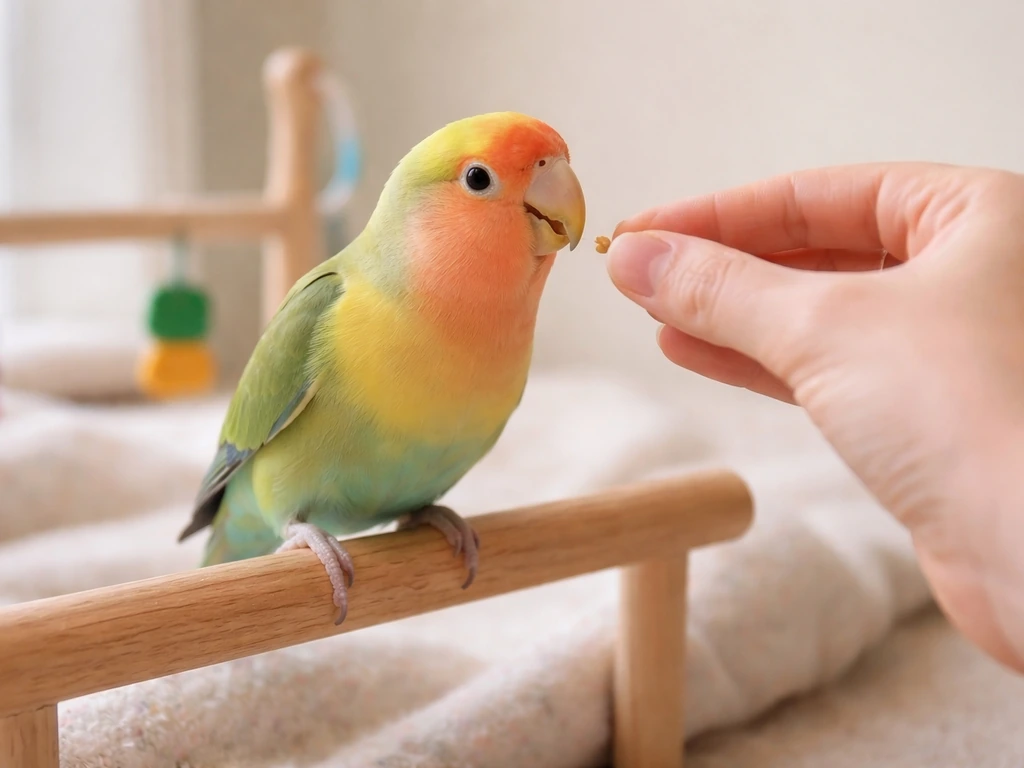
Training sounds complicated, but with birds it boils down to one rule: reward what you want to hear more of. You're not forcing anything; you're just making singing more rewarding than silence.
Start with marker training
Marker training means pairing a distinct sound (a click from a clicker, or the word 'Yes' said in the same tone every time) with a food reward. The bird quickly learns that the marker means a treat is coming. From there, you can use the marker to capture vocalizations: the moment your bird chirps or sings, say 'Yes' and offer a small treat. You're teaching the bird that making that sound leads to something good. Keep sessions to 3 to 4 very short rounds per day (2 to 3 minutes each) to avoid overloading the bird.
Parrots.org's target-training protocol is a great companion to this. World Parrot Trusts target-training resource explains target training as a foundational behavior you can use to shape routines org's target-training protocol is a great companion to this.. Their approach uses a target (a small stick the bird touches with its beak), shapes the behavior incrementally, and rewards with a clear 'Yes' marker plus a treat each time. Once your bird understands the marker system, you can apply it to any vocalization you want to encourage.
Responding to contact calls the right way
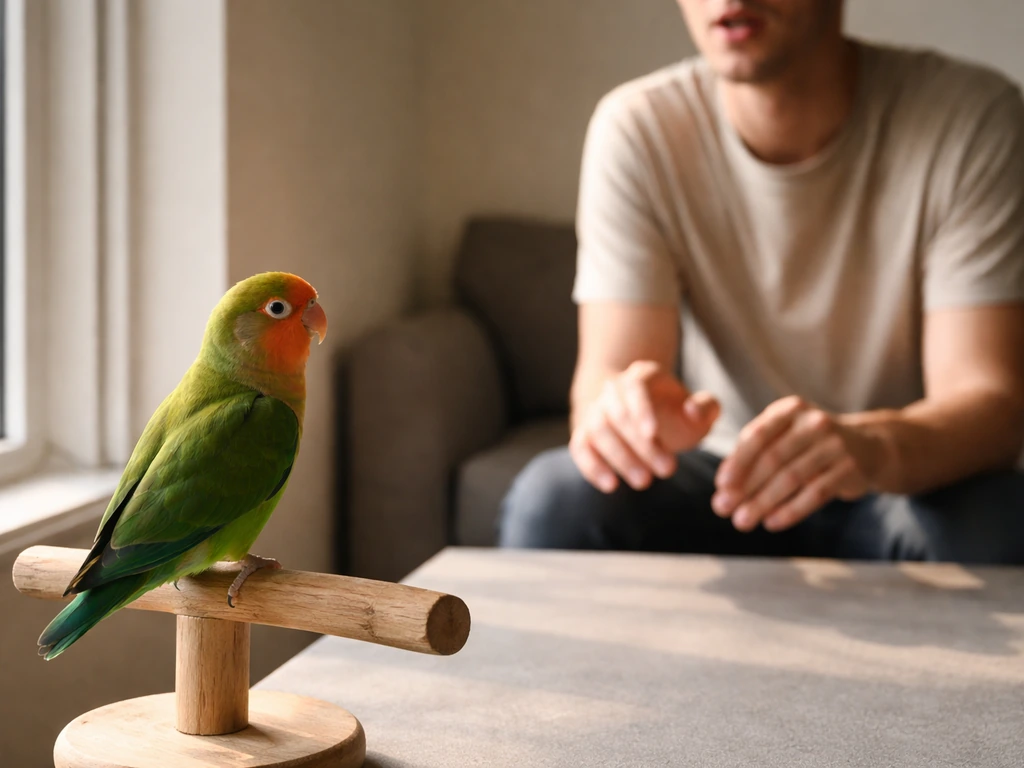
When your bird calls out looking for you, answer back. Call back from the other room, whistle, or say their name. This isn't spoiling them; it's reassuring them that the flock (you) is present and the world is safe. A reassured bird relaxes, and a relaxed bird sings. Ignoring contact calls consistently can increase anxiety, which works against everything you're trying to do.
What not to do
Don't yell at a screaming bird. Don't rush over to a bird that's screaming just to make it stop. Both responses reinforce the screaming because the bird gets exactly what it wanted: your attention and reaction. Lafeber specifically warns against confronting a screaming bird or screaming back, noting it makes fear and behavior problems worse. Instead, wait for even a one-second pause in the noise, then go to the bird and reward that quiet moment. This takes patience, but it works.
Using bird sounds and music responsibly
Playing recordings of bird songs or calls to encourage your bird to vocalize is a legitimate technique, but it has real limits. Done right, it can stimulate your bird and prompt a response. Done wrong, it stresses them out or triggers territorial behavior.
The Environmental Literacy Council advises minimizing the frequency of recorded bird sounds, observing your bird's reaction carefully, and stopping immediately if any distress appears. Birds can be sensitive to loud or unfamiliar sounds, and a recording that triggers excitement one day might trigger anxiety the next depending on your bird's mood and hormonal state.
Context matters a lot with recordings. The National Finch and Softbill Society emphasizes that vocal behavior can change dramatically depending on context: a call recorded from a bird separated from its mate means something very different than a relaxed flock chatter. Ideally, the sounds you play should match the emotional context you're trying to create. Calm flock chatter or soft singing recordings are better starting points than loud alarm calls or aggressive territory sounds.
A few practical rules for using recordings safely. Keep the volume moderate, not loud. Play them for short windows (5 to 10 minutes) and then let the bird settle. Watch for signs of stress: rapid breathing, puffing up, aggressive posturing, or frantic movement. If you see any of those, turn it off. And never play recordings continuously as background noise throughout the day. That's overstimulation, not enrichment. If you want to explore sound-based interaction further, how to play bird song covers this in more depth, including specific sound types that tend to work well for common pet species.
Happy singing vs. stress: knowing the difference
Not every noise your bird makes is a good sign. Learning to read what you're hearing saves a lot of confusion.
| Vocalization type | What it usually means | What to do |
|---|---|---|
| Relaxed, melodic chirping/singing | Content, comfortable, engaged | Enjoy it and optionally reward with a marker |
| Contact calling (repeated, searching calls) | Looking for you or another bird; mild anxiety | Call back or return to the room; reassure the bird |
| Loud, persistent screaming | Overstimulated, stressed, or learned attention-getting behavior | Do not rush over or yell; wait for a pause, then reward quiet |
| Complete silence (unusual for your bird) | Possible illness or extreme stress | Monitor closely; vet visit if it lasts more than 24 hours |
| Soft chattering or mumbling | Often pre-sleep relaxation or low-key contentment | Normal; no action needed |
Troubleshooting: why your bird isn't singing (and what to try next)
You've set up the environment, you're doing the play sessions, you're answering contact calls, and still: silence. Here are the most common culprits.
- The bird is new to your home. Give it 2 to 4 weeks minimum to settle in. New birds are often very quiet as they assess whether the environment is safe. Don't interpret this as a permanent personality trait.
- The sleep schedule is off. If your bird isn't getting 10 to 12 hours of dark, quiet sleep, it will be chronically stressed and unlikely to sing. Fix this first before anything else.
- There's an underlying health issue. Sudden quiet in a previously vocal bird is a medical flag. If your bird has also shown changes in droppings, appetite, energy, or feather condition, see an avian vet right away.
- You're accidentally reinforcing silence by ignoring the bird all day. Birds that feel disconnected from their flock stop vocalizing. Increase interaction, even just talking to the bird while you work nearby.
- The training sessions are too long or too intense. Frustrated or tired birds shut down. Keep sessions under 5 minutes and end on a success, not a failure.
- The environment has a hidden stressor you haven't identified. Think about new pets, rearranged furniture, a new person in the home, changes in your schedule, or seasonal light changes. Any of these can suppress vocalization temporarily.
- The bird's species/individual personality is naturally quieter. Some birds are just less vocal. That's okay. The goal is more vocalization relative to their baseline, not turning every bird into a songbird.
One technique that often helps with stubborn cases: try playing a group game like bird bingo, which encourages you to focus on identifying and celebrating small bird behaviors and sounds. It retrains your own attention toward noticing what your bird IS doing, which often reveals that they're vocalizing more than you thought, just not in the way you expected.
Your simple 7-day starter plan (plus toy and equipment add-ons)
This plan assumes you have a healthy bird in a safe cage and you're starting from scratch. Follow it consistently and most birds will show increased vocalization within a week.
Days 1 to 2: environment audit
- Check and set the light/dark cycle to 12 hours of light and 12 hours of dark (or 10/14 minimum). Use a cage cover if needed.
- Move the cage to the best position in the room: good view, one solid wall behind it, away from the kitchen and drafts.
- Spend 10 to 15 minutes near the cage each morning and afternoon just talking quietly to the bird. No pressure, no handling. Just presence.
Days 3 to 4: introduce the marker
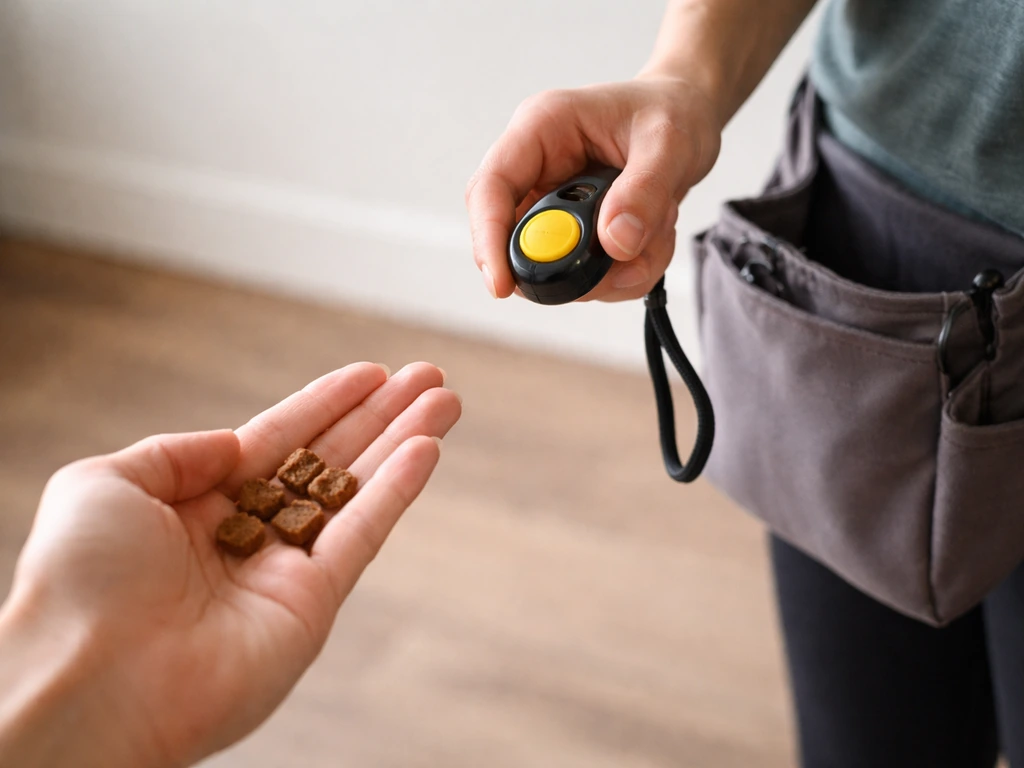
- Choose your marker: a clicker or the word 'Yes' in a consistent tone.
- Do 3 to 4 short sessions per day (2 minutes each). Click/say 'Yes' and immediately offer a small treat. Repeat 5 to 8 times per session. You're just pairing the marker with the reward right now.
- Any time the bird chirps or makes a pleasant sound during these sessions, mark and reward immediately.
Days 5 to 6: add play and sound interaction
- Introduce a foraging toy with a small treat hidden inside. Let the bird figure it out on its own first, then cheer them on when they get it.
- Start a simple whistle-and-wait game: whistle two notes, pause 10 seconds, and see if the bird responds. Mark and reward any response.
- Try one 5-to-10-minute session of soft recorded bird chatter. Watch the body language closely and stop if the bird seems stressed.
Day 7: supervised out-of-cage time
- Open the cage in a bird-safe room and let the bird come out on its own terms. Don't force it.
- Sit nearby and let the bird explore you if it wants. Talk softly. This is the highest-trust interaction you can offer.
- Mark and reward any vocalization that happens during this session. This cements the idea that being out and interactive leads to good things.
Recommended add-ons to support the plan
Once the basics are running, these additions make a real difference. Foraging enrichment toys (like those from Lafeber's foraging line) give the bird a purpose-driven activity that naturally increases engagement and vocalization around mealtime. A variety of perch textures (natural wood, rope, and rope swings) gives the bird physical stimulation that reduces boredom. A second mirror or a bird-safe hanging toy at different heights encourages exploration and usually prompts more chattering.
If you want to expand from here, there are some genuinely fun activity-based options worth exploring. Learning how to play fly like a bird with your pet is a great next step for building physical confidence, which naturally carries over into bolder vocalizations. For people interested in the musical side of bird interaction, reading about how to sing green finch and linnet bird can help you appreciate the range and depth of bird vocalizations, giving you better ears for what your own bird is doing.
If you're a chess player who also happens to love birds, you might get a kick out of how to play the bird opening, a classic chess strategy named after the game's avian theme. And for a relaxed group activity that combines bird appreciation with something tactile and fun, how to play bird sort color is worth a look if you have kids involved in the hobby.
The bigger picture here is that getting your bird to sing is less about any single technique and more about consistently showing up as a good, attentive flock member. Birds that feel safe, heard, and engaged sing. It really is that simple, and this 7-day plan is your proof of concept. Stick with it, stay patient in the first week, and you'll be rewarded. And if you want to expand the play toolkit even further, exploring how to play bird on a wire offers another angle on structured bird-themed play that fits naturally into a daily enrichment routine.
FAQ
How can I tell whether my bird is singing contentedly or making contact calls?
Watch the pattern and body language. Singing is usually relaxed, exploratory, and may happen without you prompting, often with a forward-leaning, calm posture. Contact calling tends to be more persistent and linked to searching, often accompanied by scanning behaviors and a slightly tense quality. If you hear the same call only when you leave the room, it is more likely contact calling.
My bird only sings in one mood or at certain times. Should I try to make it sing on demand?
Better results come from timing, not forcing. Birds commonly vocalize more in the morning and late afternoon, so schedule play, marker training, or quiet interaction around those windows. If your bird is not singing mid-session, end the session on a good note rather than escalating stimulation.
Is it okay to reward any vocalization, even if it is not the song I want?
Yes at the beginning, but with a plan. Use your marker to reward a range of chirps or brief vocalizations so your bird learns that sound leads to a positive outcome. After it understands the game, start rewarding closer approximations to the specific sound you want, while still keeping sessions short to prevent frustration.
How do I avoid accidentally teaching my bird to scream for attention?
Do not move toward the bird during continuous screaming. Instead, wait for a brief pause (even a second), then approach and reward the quiet. Over multiple days, also redirect with structured interaction after the screaming stops, so attention becomes predictable after calmer behavior rather than during the peak noise.
What if my bird is quiet even during the morning or after I fix the schedule and environment?
First rule out health causes if silence is sudden or longer than about a day. If the bird remains quiet but otherwise looks normal, check for overstimulation or under-stimulation: some birds become quiet with too many toys being rotated too fast, or with constant background noise. Try one small enrichment change at a time and monitor whether vocal behavior increases within several days.
Can I use recorded bird sounds, and how do I know if my bird is stressed by them?
Keep volume moderate and limit sessions to short windows, then observe. Stop immediately if you see rapid breathing, frantic movement, aggressive posturing, or sustained puffing up. Also, recordings can trigger different reactions depending on hormones and context, so if your bird reacts strongly on one day, scale back or stop rather than repeating the same setup.
Should I play recordings continuously while I am away to keep my bird company?
No, continuous background playback usually creates overstimulation rather than enrichment. The safer approach is intermittent use for brief sessions, followed by settling time with the bird’s normal daily environment. If you want company while you are gone, prioritize social contact through routine and presence (and later, structured training), not constant sound playback.
My bird answers back when I call, but it still does not sing. What next?
Try combining call-and-response with a “sound reward” moment. When your bird makes any vocalization after you respond, mark it immediately (same word or click style every time) and give a small treat. This helps bridge the gap between reassurance responses and voluntary, relaxed singing.
How long does it usually take to see singing increase, and what counts as progress?
Most birds show more vocalization within about a week when health is ruled out and the routine is consistent. Progress does not always mean full songs right away. Early signs include more frequent chirps, more vocal bursts during play, and singing that starts occurring without you initiating contact.
How should I structure marker training so my bird does not get overwhelmed?
Use 3 to 4 very short rounds per day, keep each round brief (about a couple of minutes), and end while the bird is still engaged. Consistency matters, keep the marker sound and tone the same, and ensure rewards are small so your bird does not overeat and become sluggish.
What if my bird is not interested in foraging toys or stops eating during play sessions?
Reduce competition and pacing. Offer foraging enrichment at predictable times, keep play sessions short, and start with easier puzzles or smaller items so the bird experiences success. If appetite drops or behavior changes look concerning, pause enrichment and treat it as a potential health issue rather than assuming it is a training adjustment problem.
Can I add a mirror or hanging toy if my bird already seems vocal but territorial?
Be cautious. Mirrors can increase vocalizations in some birds, but they can also intensify territorial behavior depending on the individual and hormone state. If the bird becomes more aggressive, loud in a tense way, or puffs up around the mirror, remove it and switch to non-confrontational enrichment like foraging toys or safe hanging items without a “rival” presence.
Next Article
How to Bird Mouth a Rafter: Step-by-Step DIY Guide
Step-by-step guide to cut the bird-mouth notch in a roof rafter, measure pitch accurately, and fit for a tight seat.