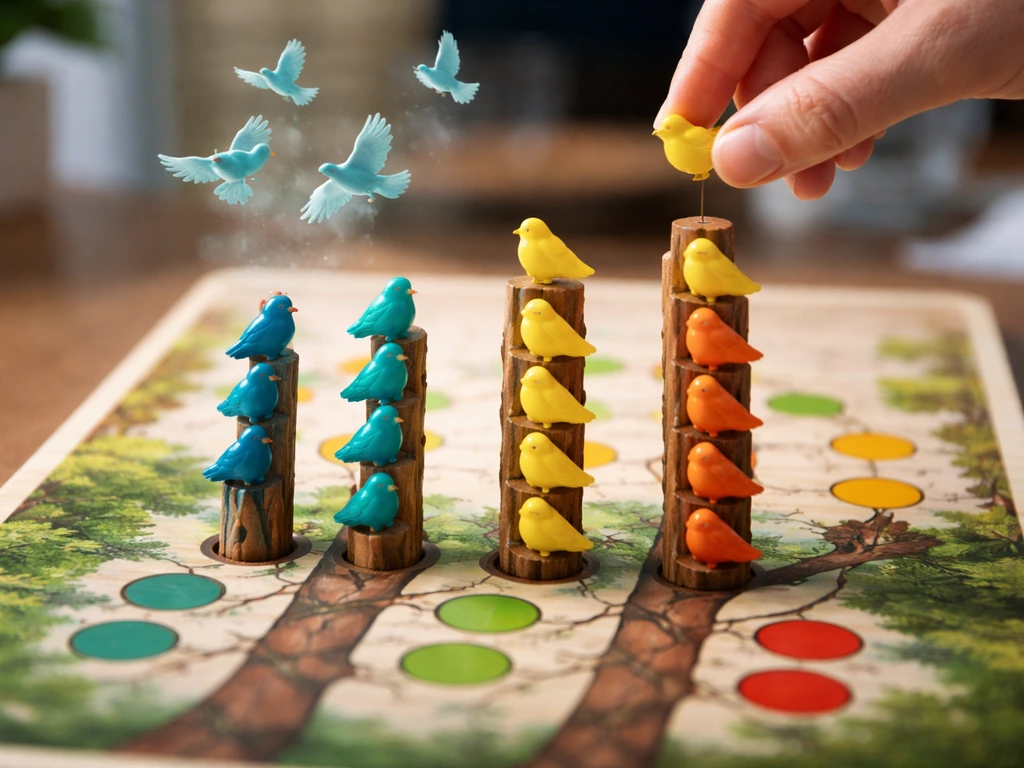
Bird Sort Color is a puzzle game where you move colored birds between branches (or tubes/slots) until every branch holds only one color. The level is complete when each branch is a single-color flock and the birds fly away. The core rule you need to know from the start: you can only move a bird onto a branch that either is empty or already has a matching color on top, and the destination branch must have room for at least one more bird.
How to Play Bird Sort Color: Rules, Moves, and Fixes

Marcus Hendricks
14 May 2026

What the game is actually about
Bird Sort Color (sometimes called Bird Sort Puzzle or Color Bird Sort) is a color-sorting puzzle built around bird characters. You start with several branches, each loaded with a random stack of differently colored birds. Your job is to rearrange them, one bird at a time, until every branch is a pure single-color group. When a branch reaches that perfect one-color state, the birds animate and fly off, confirming it's done. Most versions also give you one or two extra empty branches to use as buffer space, which is a bigger deal than it sounds when you're deep in a tricky level.
There is usually no timer. That's a relief because the game rewards careful thinking, not speed. Some versions track your total move count and encourage solving with as few moves as possible, but finishing the level is always the primary goal. If you've ever played the classic Water Sort or Ball Sort puzzle, this is the same idea dressed up with birds instead of liquid or balls.
Setup and parts to know before you play
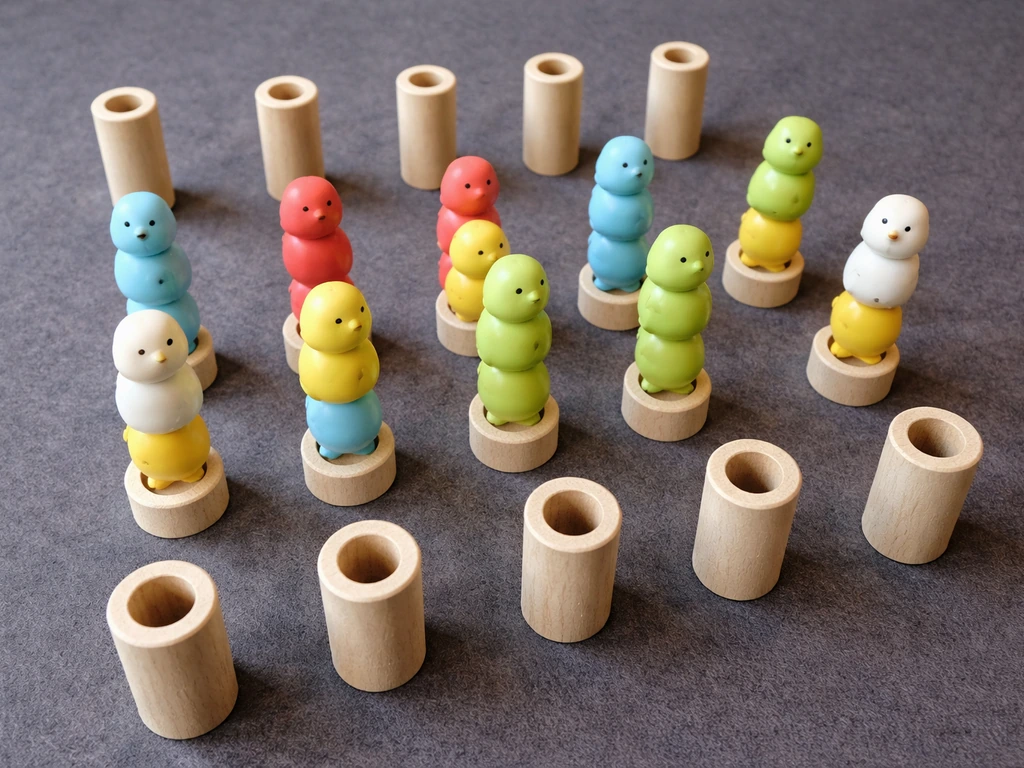
When a level loads, here's what you're looking at:
- Branches (also shown as tubes or perches depending on the version): these are the containers that hold the birds. A branch can typically hold 4 birds stacked on top of each other.
- Birds: each bird has a distinct color (red, blue, yellow, green, purple, orange, etc.). At the start, each branch has a mixed stack of colors.
- Empty branches: most levels include 1 to 2 completely empty branches. These are your temporary parking spots and are critical for untangling tricky stacks.
- Move counter or undo button: most versions show how many moves you've made and let you undo at least the last move, sometimes more.
- Restart button: if you get completely stuck, you can reset the level. Don't be afraid to use it.
Before making your first move, scan all the branches and mentally count how many colors are in play. If you see 6 colors, you need at least 6 branches to sort them into, plus ideally 1 or 2 empties for maneuvering. If the math seems tight, it's because it is. Early levels are generous with empty space. Later levels fill every branch almost to the top and give you fewer empties, which is where real strategy matters.
How to actually move a bird
In app versions, the control is usually a tap-tap system: tap a branch to select the top bird (it lifts or highlights), then tap the destination branch to place it there. Some versions use drag-and-drop instead, where you press and hold a bird and drag it to the target branch. Either way, the logic is identical. In physical tabletop toy versions, you're literally picking up a bird piece and placing it on another branch.
The move is only legal if two conditions are both true at the same time:
- The destination branch has at least one open slot (it isn't already full to the top).
- The destination branch is either completely empty, or the bird currently on top of it matches the color of the bird you're moving.
If a move isn't allowed, the app usually gives a small shake animation or does nothing. In a physical set, you'd just notice it doesn't fit the color rule and put the piece back. One thing I learned early on: you can move a bird to an empty branch even if it feels "wasteful." That temporary placement is often the only way to unlock a move that would otherwise be impossible.
Step-by-step strategy for solving levels faster

Jumping in and moving birds randomly will get you stuck almost every time past the first few beginner levels. Here's the approach that actually works: If you want a cleaner walkthrough, you can also follow a dedicated guide on how to play the bird opening and apply the same early-game ideas to your level.
- Survey before you touch anything. Look at every branch and find which color has the most birds already grouped near the top of a single branch. That color is usually your best starting point because it needs the least work.
- Pick a 'target color' and commit to it. Choose one color and focus every move on consolidating that color onto one branch before you start mixing objectives. Jumping between colors is how you end up with every branch partially sorted and no legal moves left.
- Use your empty branch as a temporary holding spot, not a destination. When a bird is blocking the color you need, park it in the empty branch so you can access what's underneath. Then move it again once the right branch opens up.
- Work from the top down. The bird on top of a stack is the only one you can move. So if your target color is buried, you need to clear the birds above it first by moving them to matching branches or to your empty buffer.
- Never fill your empty branches with random birds. The moment both empty branches are full of birds that don't belong anywhere useful, you're stuck. Keep at least one empty slot free at all times if you can.
- Look two moves ahead. Before you move a bird, ask: 'After I place this bird here, what does that open up?' If the answer is nothing useful, look for a different move first.
- Complete one branch at a time. When a branch reaches 4 birds of the same color, it's done and frees up a slot. Chasing that completion gives you breathing room for the remaining colors.
Common places people get stuck (and how to fix them)
Getting stuck is normal, especially on mid-to-late levels. Here are the most common problems and exactly what to do about each one:
| Problem | What's happening | Fix it by doing this |
|---|---|---|
| No legal moves left | Every branch top is a different color and all branches are full | Use the undo button to back up several moves. If that doesn't work, restart the level and try a different first move. |
| Empty branches are both full | You used your buffer space and now have nowhere to temporarily park birds | Undo moves until at least one empty branch is free again. Going forward, treat empty branches as emergency-only spaces. |
| One color is scattered across 4+ branches | You didn't consolidate early, so that color is now buried everywhere | Focus only on that one color for the next several moves. Use the empty branch to surface individual birds of that color from each stack. |
| The same two colors keep swapping branches | You're moving birds back and forth without making real progress | Stop and pick a third branch as a neutral holding spot. Break the loop by committing one color to a permanent home before touching the other. |
| A completed branch suddenly needs to be disrupted | A needed color is stuck behind the already-sorted group | In most versions this shouldn't happen if you planned ahead. But if it does, undo back to before that branch was completed and reroute. |
The undo button is genuinely your best tool. Don't think of using it as failing. I use it constantly on harder levels, backing up 5 or 10 moves to try a different approach once I see a dead end forming. The game is designed for experimentation.
When to restart vs. when to keep undoing
If you're more than 15 moves in and every branch feels wrong, it's usually faster to restart than to undo your way back. Restarting costs nothing. If you're only 5 or 6 moves in and you can see where things went sideways, undo is the right call. One more thing: if a level feels impossible, try watching the first two moves and see what they open up. Sometimes the hardest-looking levels have a surprising first move that unlocks everything.
Quick rules recap to win reliably
Keep this list in mind every time you start a new level and you'll avoid most of the traps that make the game frustrating:
- Win condition: every branch must contain only one color of bird. When a branch is complete, the birds fly away.
- Legal move: you can only move the top bird on a branch. The destination must have space and must either be empty or topped by the same color.
- Empty branches are your lifeline. Protect them. Never fill both with birds you don't have a plan for.
- Focus on one color at a time. Consolidate before you diversify.
- Use undo freely. There's no penalty. Backing up beats staying stuck.
- Restart without guilt. A fresh board with new eyes is faster than fighting a dead-end position.
- No timer in most versions means patience wins. Slow down, look ahead two moves, then act.
- Complete one branch fully before starting another if possible. Each completion gives you space to work.
Once you've got the sorting logic down, you might find yourself curious about other bird-themed puzzle and game formats. If you're looking for something similar, check out how to play fly like a bird for the basic steps and tips. If you're also wondering how to play Bird Song, you can use the same mindset for learning steps and building a routine Once you've got the sorting logic down. There are guides on how to play bird bingo and how to play bird song that follow a similar pattern of learning simple rules first and then building toward smarter play. If you’re also looking for another simple option, learning how to play Little Bird uses the same idea of starting with the basic moves and then building from there. If you mean specifically how to sing a green finch and linnet, focus on the natural cadence and pitch patterns of each species, then practice short call-and-response phrases how to play bird song. Once you understand the sorting basics, you can apply the same careful thinking to learn how to play and your bird can sing how to play bird song. The core skill here, reading the board before you move, transfers well to a lot of bird-themed activities. If you want the basics of bird-on-a-wire style movement, focus on reading paths and placing each move carefully how to play bird on a wire.
FAQ
Is it ever worth moving a bird to an empty branch if it feels wasteful?
Yes, you can place a bird onto an empty branch as a temporary “buffer” even if your end goal is different. The key is to only do it when the destination branch is likely to accept that bird’s color later, meaning either it stays empty now or it already has that same color on top so you can build that single-color stack efficiently.
Why does my move fail even when it looks like the colors match?
A move that violates the “matching color on top” rule is illegal, so the game should not let you complete it (or it will immediately cancel via an animation). If you are using a touchscreen version, make sure you tap the bird holder so only the top bird is selected, not a lower bird hidden under others.
Can I move a bird onto a branch with the right color but still get blocked?
When a destination branch has a full stack (no room for another bird), the move is not allowed even if the top color matches. Before placing, quickly check the height, not just the colors, because late levels often fill branches almost to the top.
If I use undo a lot, will it ruin my move-count score?
Often, yes. If your game counts moves, using undo to search can reduce wasted placements but may inflate your move history depending on the version. A practical approach is to undo in small chunks (for example, back 5 moves) until you change the pattern, then proceed without undoing every step.
What’s a better strategy than just moving birds whenever possible?
You do not strictly need to “sort as soon as you can,” but you should prioritize creating stable single-color stacks. A good heuristic is to keep growing a color pile only when it will not bury a different color under the top you need later, otherwise you may trap a color that has no valid landing spot.
Should I ever touch a mixed-color branch once it’s getting close to sorted?
If a branch already has mixed colors, it can still be usable as a temporary buffer early, but it becomes dangerous later. Once a color pile is nearly complete, avoid adding a different color on top, since that usually reduces the number of legal placements and can create an unavoidable dead end.
How do I spot the kind of move that breaks a dead end?
In many versions, the level is solvable but can require non-obvious early moves. When stuck, look for a move that changes the top colors of multiple branches over the next few steps, usually by freeing a top bird that can be placed onto its matching color pile or by filling a stack to remove it from circulation.
When should I restart instead of undoing more steps?
Yes. If you restart, you lose progress but you also get a fresh set of move options because your first few placements may differ depending on the puzzle layout and what you notice initially. A good decision rule is: if you are early and can identify where you deviated (like one forced-looking move), undo makes sense; if you are deep and the first several moves no longer feel promising, restarting is usually faster.
What should I check before making the first move?
Commonly, the top color matters more than the bird color you “want” to move next. If you are scanning the board, count not only how many colors exist, but also how many empty branches are available and whether each color has enough source birds to form a complete stack, otherwise you might keep making moves that cannot lead to a pure one-color branch.
Does having only one empty branch change how I should play?
Yes, but watch for edge cases: if the app version offers fewer or no empty branches and your branches are nearly full, the puzzle becomes very sensitive to early placements. In those cases, plan your buffer usage, for example reserve at least one empty slot for clearing a mismatched top bird rather than consuming all empties too soon.
Next Article
How to Play the Bird Opening (1.f4): Beginner Guide
Learn Bird Opening 1.f4 with step-by-step moves, plans, and responses to common replies, plus practice tips.