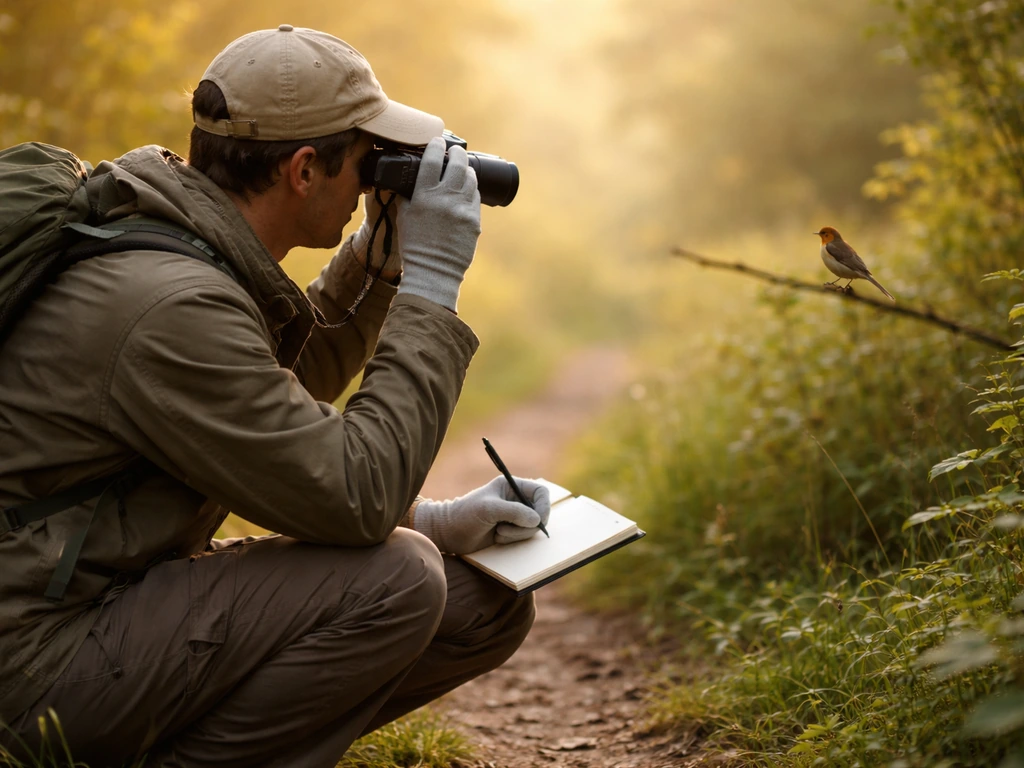
You can identify most wild birds by working through four things in order: size and shape, color and markings, habitat and behavior, then sound. You rarely need all four to land on a confident answer, but using more than one clue is what separates a solid ID from a guess. This guide walks you through that exact process, step by step, so you can do it yourself in the field starting today. If you want a simple starting plan, follow this guide on how to learn bird identification step by step.
How to Identify a Wild Bird: A Field Guide for Beginners

Marcus Hendricks
24 Apr 2026
What wild bird identification actually means
A lot of beginners think identification means knowing the exact species name the moment you see a bird. That's not how it works, even for experienced birders. What you're really doing is narrowing possibilities. You start with a lot of unknowns, and you systematically rule out options until you're left with the most likely species or, at worst, a short list of two or three candidates.
Cornell Lab's Four Keys framework captures this perfectly: size and shape, color pattern, behavior, and habitat are the most powerful tools you have. Notice that none of them require you to see every single feather perfectly. The goal is to combine clues, not chase perfection. Sometimes you'll ID a bird confidently in 30 seconds. Other times you'll end up with 'medium-sized brown sparrow, probably one of three species' and that's a completely valid outcome. Accepting a range of certainty is part of doing this well.
It's also worth knowing that wild bird ID is a skill you genuinely get better at over time. The first few birds feel slow and frustrating. Then one day you spot a silhouette on a wire and just know it's a kestrel. That moment comes faster than you'd think.
Quick safety and ethics before you get started
Before you pull out the binoculars, there are a few rules that matter both for the bird's welfare and your own. These aren't bureaucratic fine print. They're practical habits that keep you from accidentally harming the bird or breaking federal law.
- Don't handle wild birds. Ever. Most wild birds in the U.S. are protected under the Migratory Bird Treaty Act, which covers not just live birds but also eggs, nests, and feathers. Picking one up, even with good intentions, can cause harm and is often illegal.
- Keep a reasonable distance. A simple rule: if the bird changes its behavior because of you (stops feeding, looks alert, moves away), you're too close. Back up. Use binoculars instead of your feet.
- Be especially careful around nests. The ABA Code of Birding Ethics and Cornell's NestWatch both stress extra caution near active nests, colonies, roosts, and display sites. Flushing an incubating bird can cause eggs or chicks to be abandoned.
- Don't play bird call recordings in the field. It stresses the bird, can disrupt mating or territorial behavior, and annoys other birders nearby. It's not worth it just to lure a bird closer.
- If a bird appears sick or injured, don't approach it. Contact a local wildlife rehabilitator or your state fish and wildlife agency. Leave intervention to the experts.
These guidelines don't make birding harder. They actually make your observations better, because a bird that isn't stressed by your presence behaves naturally and gives you more to work with.
Field marks: the fastest visual checklist
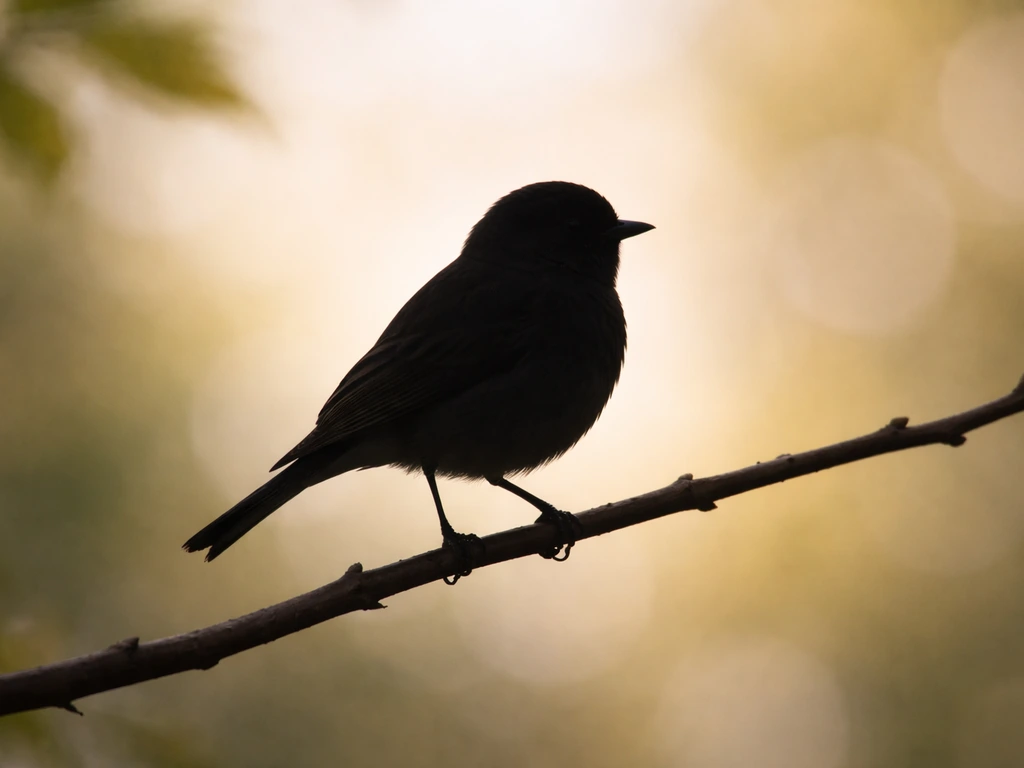
Field marks are the specific visual traits birders use to identify species. Audubon recommends starting with overall size and proportions before zooming in on details. Here's a checklist you can run through every time, roughly in order of speed and usefulness.
Size and overall shape
Don't try to estimate inches. Instead, compare the bird to something familiar. Is it sparrow-sized, robin-sized, or crow-sized? Is the body slender or chunky? Is the neck long or short? Does it sit upright like a thrush, or hunched forward like a hawk? Proportions alone can get you to the right family group in seconds.
Bill shape and size
The bill is one of the single most useful field marks. A thick, seed-cracking bill means finch or sparrow. A thin, curved bill means a nectar feeder like a hummingbird. A hooked tip means a raptor or shrike. A long, probing bill means a shorebird or woodcock. If you can describe the bill shape, you've usually narrowed the family group significantly.
Color and pattern
Note the dominant body color first, then look for patterns: Does it have an eye stripe, eye ring, or cap? Wing bars (horizontal stripes across folded wings)? A streaked chest? A colored rump that flashes when it flies? Solid tail or banded tail? You don't need to memorize every marking, but jotting down three or four of the most obvious ones is enough to work with.
Tail shape and leg color
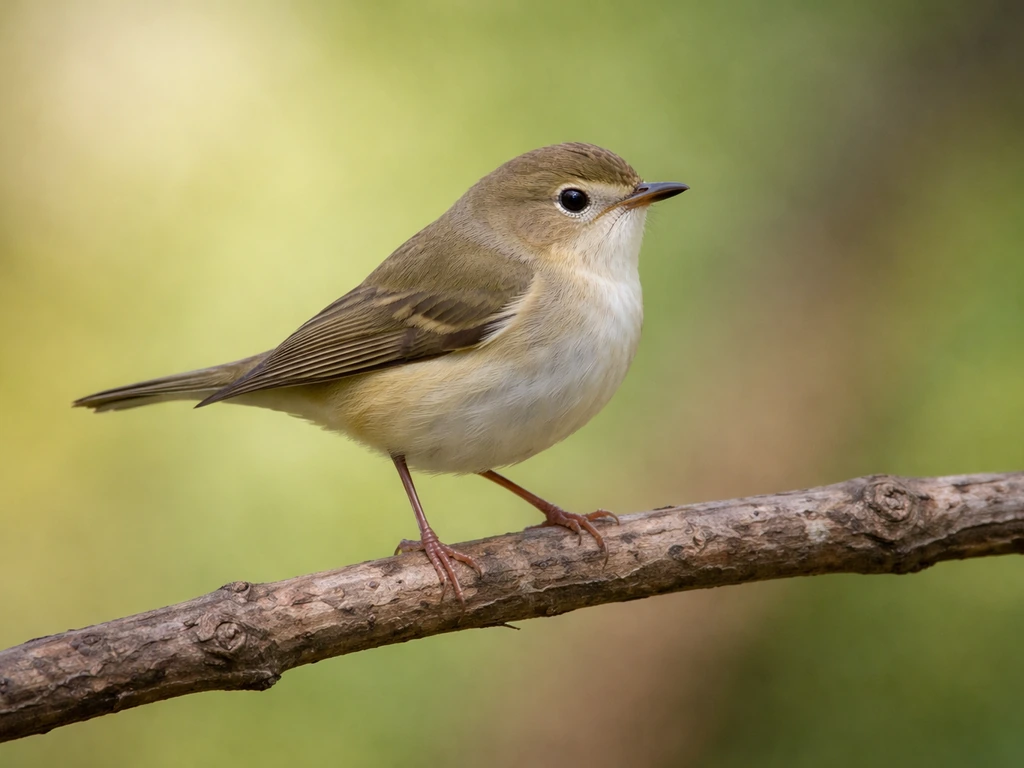
Tail shape matters more than most beginners expect. A forked tail means swallow. A notched tail, a fan-shaped tail, or a long graduated tail can all be diagnostic. Leg color is quick to check and often overlooked: yellow legs, pink legs, and dark legs each help narrow a species, especially for shorebirds and wading birds.
Run through this checklist in your head or out loud every time you encounter an unfamiliar bird. Even if you only get through the first three items before the bird flies off, that's usually enough to start a search.
Using location, habitat, season, and behavior to narrow the species
Visual marks tell you what the bird looks like. Context tells you which of the matching species is actually plausible where you're standing today. This is the step most beginners skip, and it's where a lot of misidentifications happen.
Location and habitat
A bird that looks like a certain warbler but is sitting in a parking lot marsh in Arizona is a different candidate than the same-looking bird in a dense New England forest in May. Habitat type (open grassland, dense forest, wetland, suburban yard, coastal beach) dramatically narrows your options. Most species are strongly tied to specific habitat types.
Season and time of day
Many birds are only present in your region during certain months. A warbler in Michigan in April is almost certainly a migrant. That same species in December there would be extremely unusual and worth documenting carefully. Apps like Merlin and eBird Mobile factor in your exact date and location to filter their suggestions to birds that are actually expected, which makes your list of candidates much shorter and more realistic.
Behavior
Behavior is an underrated identification tool. Cornell Lab's All About Birds points out that behavior can clinch an ID even in bad light or at a long distance. Watch what the bird is doing: Is it pumping its tail up and down? That's a phoebe or a wagtail. Is it creeping headfirst down a tree trunk? That's a nuthatch. Is it hovering over a flower? Hummingbird. Feeding by snatching insects mid-air versus gleaning them from leaves versus probing the mud are all very different, and each points to a different group. Even a bird's posture while resting can be a clue.
One thing I've learned: when the bird starts to move after sitting still, pay close attention. It often reveals a different set of clues, like a flash of wing color or a distinctive flight pattern, that you couldn't see a moment before.
How to identify a bird by its sound
Bird song and calls are incredibly useful, especially when a bird is hidden in foliage. But sound ID has real limits, and knowing those limits upfront saves a lot of frustration.
Some calls are completely distinctive. The call of a loon, an Eastern Whip-poor-will, or a Sandhill Crane is almost impossible to confuse with anything else. Others, especially among sparrows and warblers, are maddeningly similar. Audubon is direct about this: some vocalizations are nearly indistinguishable between species, and sound is most reliable when it matches a distinctive pattern you can confidently describe.
How to listen in the field
- Stop moving and stand still for at least a minute. Your footsteps mask a lot. Once you're quiet, the bird sounds separate out.
- Try to locate the direction of the call and note which habitat zone it's coming from: canopy, mid-story, or ground level.
- Listen to the pattern, not just the pitch. Is it a repeated single note? A complex melody? A buzzy trill? A harsh chip? Pattern is often more diagnostic than exact pitch.
- Notice whether the call is a contact call (short, simple, repeated), an alarm call (harsh and sharp), or a full song (longer, more complex). Each serves a different purpose and each is useful context.
- If it's noisy, cup your hands behind your ears. It sounds silly but it genuinely amplifies and helps you focus directionally.
Using apps for sound identification
Merlin's Sound ID feature, built on machine learning from the Macaulay Library's recordings, is the most accessible tool for beginner sound ID. Open the app, tap Sound ID, and it will generate a live list of likely species based on what it hears. It works remarkably well. That said, treat its suggestions as a starting point, not a final answer.
Merlin needs at least 150 recordings per species to reliably identify it, so some less-common species won't appear even if they're present. And for species with very similar calls, the app can be genuinely confused. Macaulay Library notes that Sound ID can also produce false predictions when overlapping species are vocalizing during the same recording [species with very similar calls](https://www. macaulaylibrary.
org/2021/06/22/behind-the-scenes-of-sound-id-in-merlin/). When Merlin gives you a suggestion, cross-check it against the habitat, season, and visual clues you've already noted.
When recording audio to check later, trim out background noise and silence from the beginning and end of the clip. A cleaner recording gives you and any app a better shot at a match.
Narrowing your ID with apps, field guides, and online tools
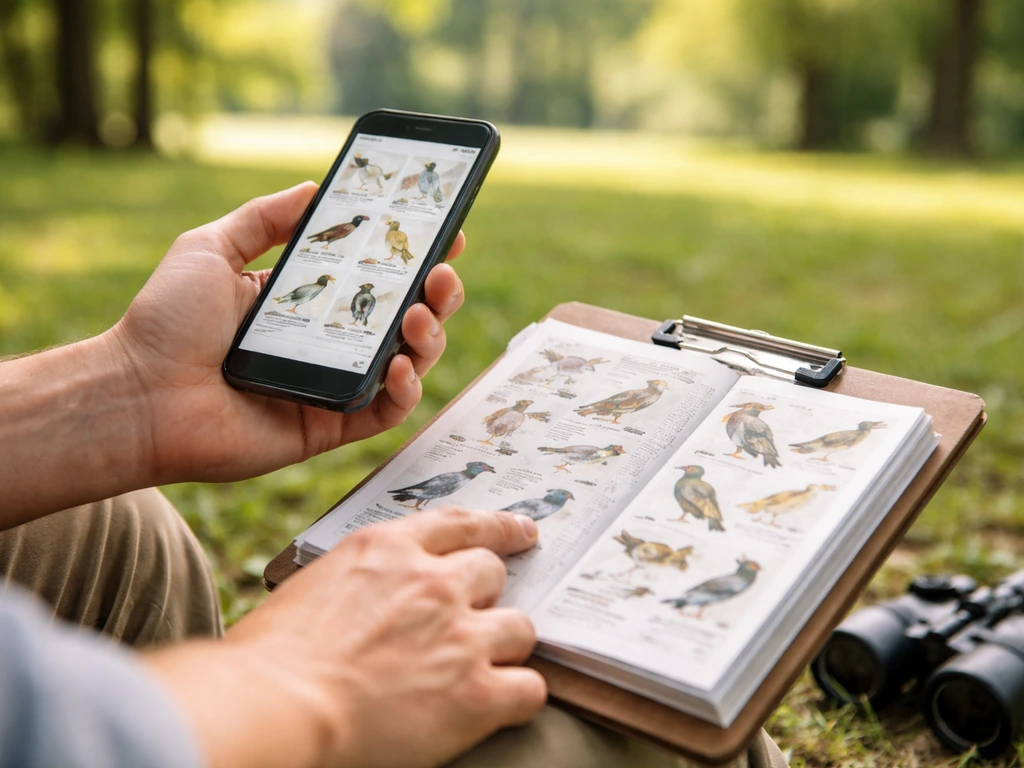
Once you have field marks, context, and possibly a sound impression, it's time to verify. The best tools for this are field guides, birding apps, and trusted websites. Using more than one source is always smarter than trusting one.
Birding apps
Merlin Bird ID (Cornell Lab) is the best free starting point for most beginners. You can enter the bird's size, color, and behavior, and it filters suggestions by your current location and date automatically. The Audubon Bird Guide app works similarly: you enter characteristics like dominant color, tail shape, and activity, and it generates a live-updating list of matches filtered by location and season. Both apps let you browse photos and hear recordings to confirm your candidate.
Field guides
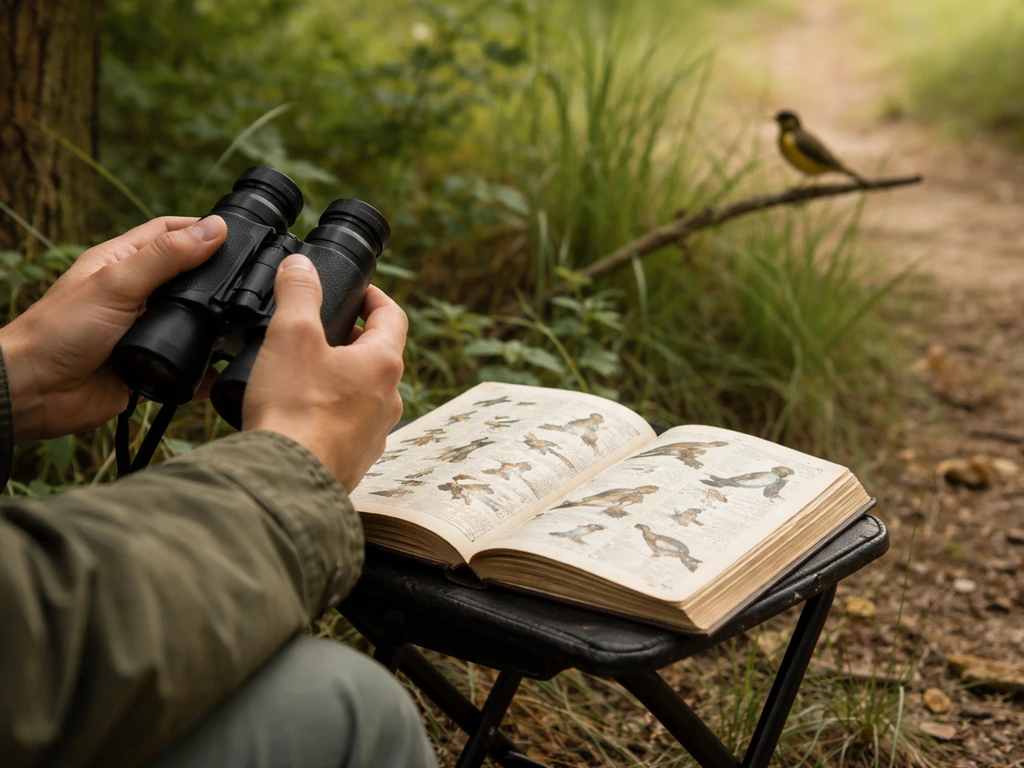
A printed field guide is still worth having, especially for learning. The Sibley Guide, Peterson Field Guides, and National Geographic Field Guide to Birds of North America are all solid choices. Each species account in a good field guide includes range maps (so you can check if the bird should be in your region), look-alike comparisons, and vocalization descriptions. Cornell Lab advises using each of these sections, not just the picture, because no guide can capture every plumage variation.
Online resources
All About Birds (allaboutbirds.org) is Cornell Lab's free online bird guide and is excellent for cross-referencing. Each species page includes photos of different plumages (male, female, juvenile, seasonal variation), sound recordings, range maps, and behavior notes. blank" rel="noopener noreferrer">eBird's species pages also show frequency data, so you can see exactly how often a given species is reported in your area in the current week of the year.
The verification rule
Here's the rule that has saved me from a lot of wrong IDs: never call a bird by a single clue. Confirm with at least two or three independent traits. If the color matches but the habitat is completely wrong and the bill shape doesn't fit, keep looking. Audubon is explicit that individuals and subspecies can vary from the book illustration, lighting distorts colors, and angles hide markings. Multiple clues are your safety net. If you genuinely can't reach a confident species ID, that's okay. You can report a 'hawk sp.' or a 'Empidonax flycatcher' rather than guessing. Acknowledging uncertainty is more honest and more useful than forcing a wrong answer.
Common look-alikes and how to tell them apart
Certain bird pairs trip up beginners constantly. Here are some of the most common, with the specific clue that separates them.
| Species Pair | The Key Difference | Bonus Clue |
|---|---|---|
| Downy Woodpecker vs. Hairy Woodpecker | Bill length relative to head: Downy's bill is short (roughly half the head width); Hairy's bill is long and spike-like (nearly as long as the head) | Hairy Woodpecker is noticeably larger overall |
| House Sparrow vs. House Finch (male) | House Finch has red on the head, breast, and rump; House Sparrow has a gray crown with a chestnut nape and black bib | House Finch has a streaked brown belly; House Sparrow has a plain gray belly |
| Sharp-shinned Hawk vs. Cooper's Hawk | Cooper's Hawk is larger (closer to crow-sized) with a rounded tail tip; Sharp-shinned Hawk is smaller (jay-sized) with a squared-off or notched tail tip | Cooper's Hawk has a more prominent, rounded head projection when soaring |
| Song Sparrow vs. Lincoln's Sparrow | Lincoln's Sparrow has a buffy wash across the breast with fine, crisp streaking; Song Sparrow's streaks are heavier and converge to a central breast spot | Lincoln's Sparrow has a narrower, neater face pattern |
| Eastern Wood-Pewee vs. Empidonax flycatchers | Empidonax species have distinct eye rings and wing bars; Eastern Wood-Pewee has fainter, less bold markings and no obvious eye ring | Vocalizations are the most reliable separator for Empidonax species |
If you're struggling with look-alikes from a photo you already have, identifying birds from photos follows a slightly different process with its own tips and tricks. If your goal is how to identify a bird from a photo, focus first on visible field marks and then use context to narrow the possibilities. Similarly, if you've found a young bird and aren't sure what you're looking at, chicks and fledglings have their own identification challenges worth exploring separately. For specific guidance on how to identify bird chicks, focus on their age traits, feeding cues, and common look-alikes chicks and fledglings.
When to get help and how to report your sighting
Even experienced birders get stuck. Knowing when to ask for help is a skill in itself, not an admission of failure. If you still struggle to interpret what you're seeing, learn how to read bird tags so you can confirm species details with confidence get stuck.
When you should seek outside input
- You've worked through the checklist and still have two or three plausible species with no clear separator.
- The bird seems unusual or out of range for your area and date, and you want someone with more local knowledge to review it.
- You saw something that might be rare or unexpected and you don't want to dismiss it without a second opinion.
- You're encountering a group (like Empidonax flycatchers or fall warblers) that is notoriously difficult even for experienced birders.
What to do before you ask
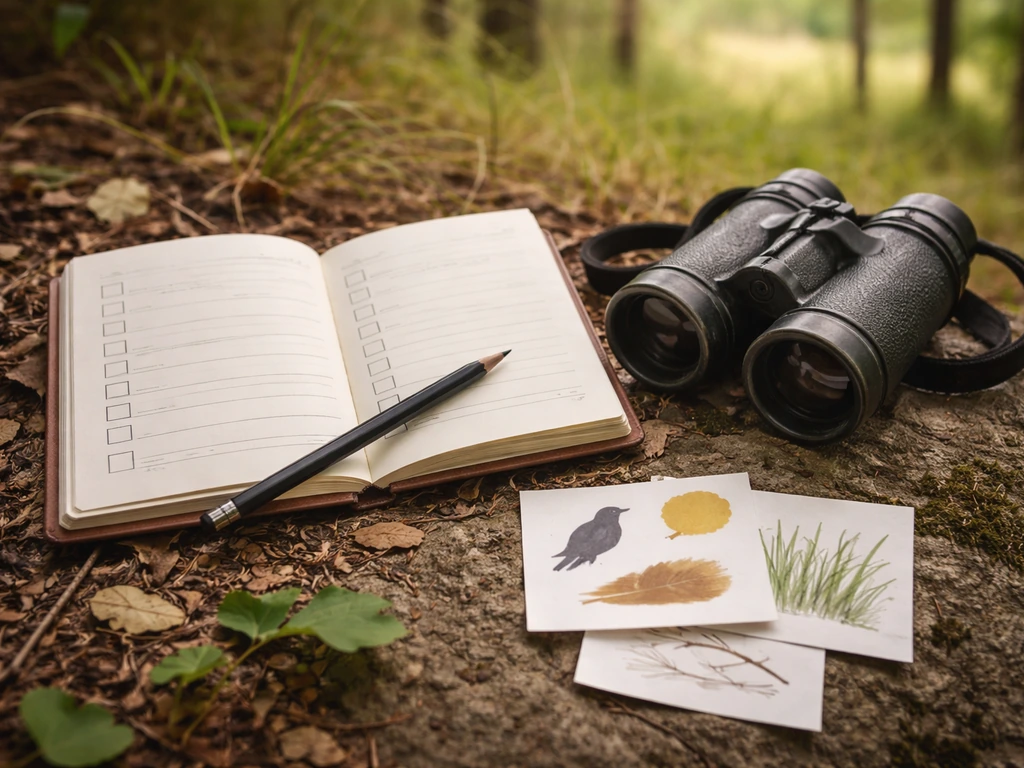
Take notes while the details are fresh. Write down or voice-memo everything you observed: size, shape, bill, color, markings, behavior, habitat, and time. If you can, take a photo or record audio even if the quality is poor. A blurry photo with good notes is far more useful to an expert reviewer than a memory of a bird you saw an hour ago. Then try a second identification method before reaching out. Once you have your notes, use the right tagging approach so your species details are clear when you share or verify your sighting how to tag a bird.
Where to report and get help
eBird is the best place to log your sighting and potentially get feedback. If you're not confident enough to commit to a species, eBird supports 'spuh' entries (like 'hawk sp.' for an unidentified hawk) and slash entries (like 'Greater/Lesser Scaup' when you can't separate two candidates). These formats let you contribute real data without over-claiming. One important note from eBird's own best practices: if you used Merlin Sound ID and aren't independently confident the ID is correct, don't report it to eBird as a confirmed sighting. Use it as a lead, then verify before submitting.
Local birding groups are often the fastest path to a helpful human answer. Most states and regions have active Facebook groups, email listservs, or local Audubon chapter forums where you can post a photo or description and get a response from experienced birders who know what's expected in your exact area. People in these communities genuinely enjoy helping beginners, so don't be shy about asking.
If you want to build these skills systematically rather than one bird at a time, exploring structured bird identification learning resources is a natural next step. The more species you work through deliberately, the faster your instincts get in the field, and the more satisfying every outing becomes.
FAQ
What should I do first if I only get a quick glimpse of a wild bird?
Start by locking in proportions (sparrow-sized, robin-sized, crow-sized) and posture (upright, hunched, hovering, tail pumping). Then note one “anchor” field mark, most often bill shape or tail shape, because those stay recognizable even when the bird moves fast. If you can’t add more, treat it as a family-level ID and save the species ID for later when it calls or perches again.
How can I avoid misidentifying birds when the lighting is poor or the bird is backlit?
Focus on patterns that don’t rely on exact color brightness, such as wing bars, streaking arrangement, tail shape (forked, notched, fan), and bill profile (thick, hooked, long, thin). When colors look unreliable, don’t use them as your deciding clue, use them only as a supporting detail after you verify habitat and behavior match.
What if the bird is too far away for detailed markings?
Use “big features” first: overall silhouette, body-to-neck ratio, wing shape in flight, and tail outline. Habitat and behavior become more important at distance, so prioritize whether it is gleaning, probing mud, hovering, or hunting in the air. If you can’t see markings, don’t force a marking-based ID, switch to a short-list approach and confirm later with better viewing conditions.
How reliable is identifying a bird by sound alone?
Sound can be very reliable for a subset of species with distinctive calls, but many groups (especially sparrows and warblers) share similar vocalizations. If you use sound as your main clue, write down the call type you heard (duration, rhythm, repeating pattern) and verify with at least one independent visual trait like bill shape, tail pattern, or habitat.
When should I trust an app like Merlin for a species ID?
Trust it as a lead when the predicted species fits your habitat, season, and one or two visible field marks. If the app’s top suggestions don’t match where the bird was (for example, habitat mismatch) or how it behaved (feeding style mismatch), treat it as wrong even if it seems plausible. Then cross-check with a second tool or a field guide before submitting a confirmed ID.
What’s the safest way to record an uncertain sighting?
If you can’t reach a confident species ID, log it as an “uncertain” entry rather than guessing. For example, use “sp.” for an order-of-magnitude correct group (like “hawk sp.”) or use a two-species option when you genuinely can’t separate them. The goal is accuracy, not completeness, so your uncertainty should reflect the evidence you collected.
If I photographed a bird, how do I identify it from the image without getting stuck?
Use the same sequence as in the field, but translate it to what the photo actually shows. Start with silhouette and proportions, then confirm bill and tail shape (often clearer in photos than fine plumage), then use habitat and date to narrow. If the photo angle hides the key marking, don’t invent it, choose candidates that still fit the visible traits.
What are common mistakes beginners make when using the Four Keys?
The biggest mistake is trying to identify from color alone, especially when colors are affected by angle and light. Another common error is skipping context, like ignoring whether the bird was in open grassland, dense forest, wetland, or a backyard. Also avoid treating one clue as decisive, you want two or three independent matches across size, bill or tail, and behavior/habitat.
How should I handle cases where the bird seems to be a juvenile or an unusual plumage?
Juveniles and seasonal variants can look drastically different, so don’t compare the bird only to the “typical adult” picture. When you suspect age or molt effects, rely more on structural traits that don’t change much, such as bill shape, tail form, and general proportions. Then check the guide’s juvenile and seasonal pages to see whether the patterning shifts match what you’re observing.
Should I approach a wild bird to get a better look for identification?
No, keep your distance and let the bird behave normally. A major part of identification is observing without causing stress, because stressed birds change posture, feeding, and flight behavior, which can remove key clues. If you need a better view, adjust your position slowly, stop moving if the bird reacts, and use binoculars or zoom instead of closing the gap.
What should I write down so someone else can help verify my ID?
Capture “when, where, and what the bird was doing,” not just its appearance. Include time of day, habitat type, approximate size comparison, bill and tail shape, dominant body color, and 1 to 3 behavior details (feeding method, movement style, posture). If possible, add notes on flight pattern and any call you heard, because those often determine the final split when visuals overlap.
How do I know whether I should ask for help instead of struggling alone?
Ask when you have a short list of plausible species that share similar bill and color traits, or when your visual evidence conflicts with your context (same bird, different season or habitat). Another good trigger is when you keep returning to the same uncertainty after doing a second verification pass with two sources. In that case, post your notes and photo, include your confidence level, and specify what key trait you could not confirm (tail shape, bill curve, wing bars).
Next Article
How to Tag a Bird: Notes for Birding vs Tracking
Learn how to tag a bird for birding notes or legal tracking, with safe steps and welfare and permit guidance.