When you find an unknown baby bird, start by figuring out its age stage before you do anything else. Look at the feather coverage: no feathers at all means a hatchling (0 to 4 days old), spiky pin feathers poking through the skin means a nestling, and mostly or fully feathered with a short tail means a fledgling. That one observation alone tells you whether the bird is in danger, whether it belongs on the ground, and what your next move should be.
How to Identify Bird Chicks by Age, Beak, Legs, and Behavior

Marcus Hendricks
22 May 2026
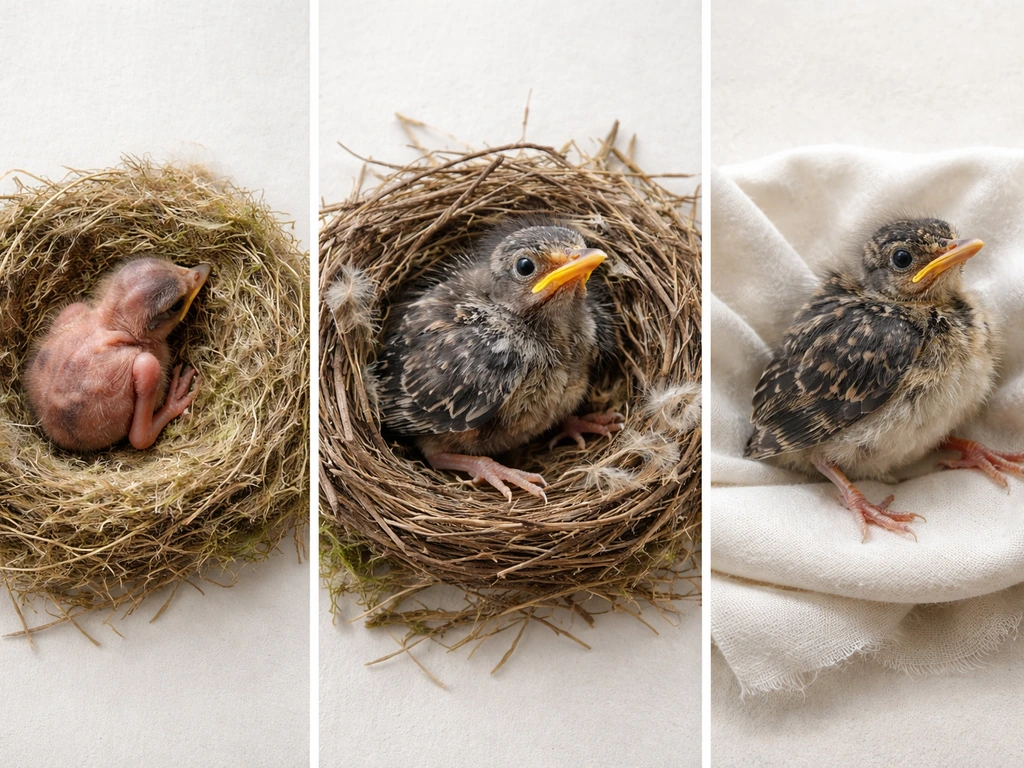
What to look for first: age, nest context, and size
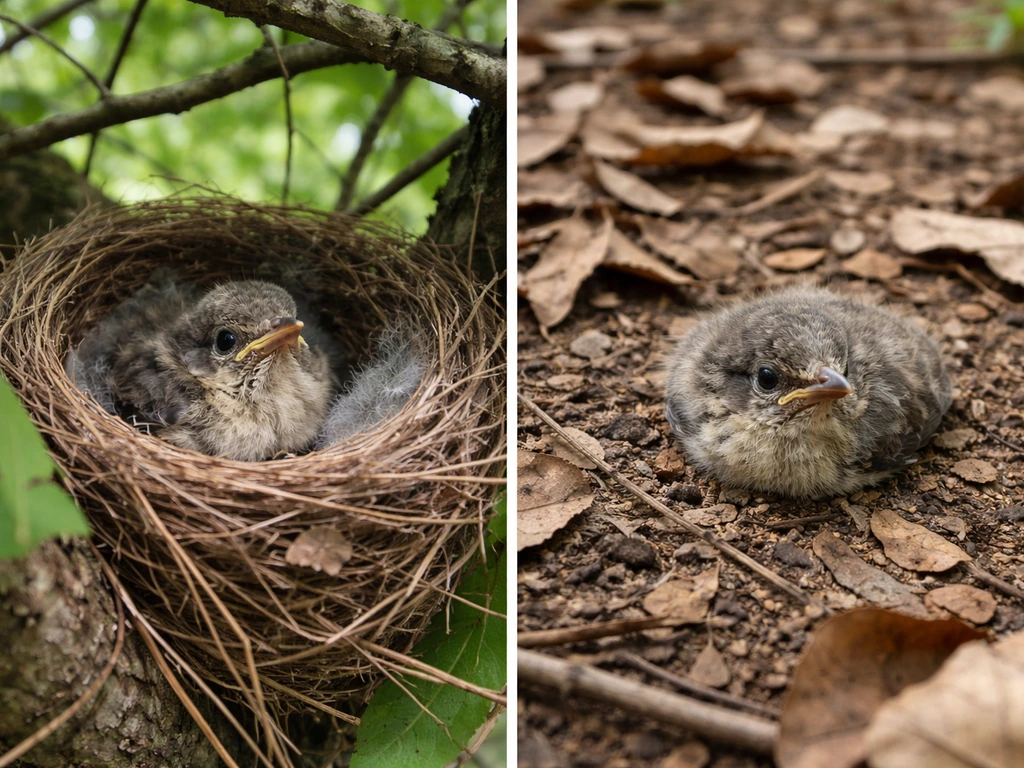
Before you try to figure out the species, you need to figure out the situation. Is the bird in a nest, on the ground, or somewhere in between? Is the nest visible from where you are standing? How big is the bird compared to your hand? These three things together give you more information than any single feature.
If the bird is on the ground and featherless, it almost certainly fell or was knocked out of a nest, and that is an urgent situation. If it is feathered and hopping around clumsily, it is probably a fledgling doing exactly what fledglings are supposed to do. A lot of people panic when they see an awkward-looking fluffy bird on the ground, but that is completely normal fledgling behavior. The parents are almost always nearby, feeding it a few times per hour, even if you can't see them.
Size is a surprisingly useful first filter. A bird that fits easily in the palm of your hand and weighs almost nothing is almost certainly a passerine (songbird) chick. Something the size of a tennis ball could be a robin, a jay, or a young dove. Larger than that and you might be looking at a raptor, crow, or waterfowl chick. You don't need to know the species yet. Just use size to start narrowing your mental list.
Feather and body features by age stage
This is the single most reliable way to identify a chick's age, and it takes about five seconds once you know what to look for. There are three stages, and they look very different from each other.
Hatchling: bare and helpless
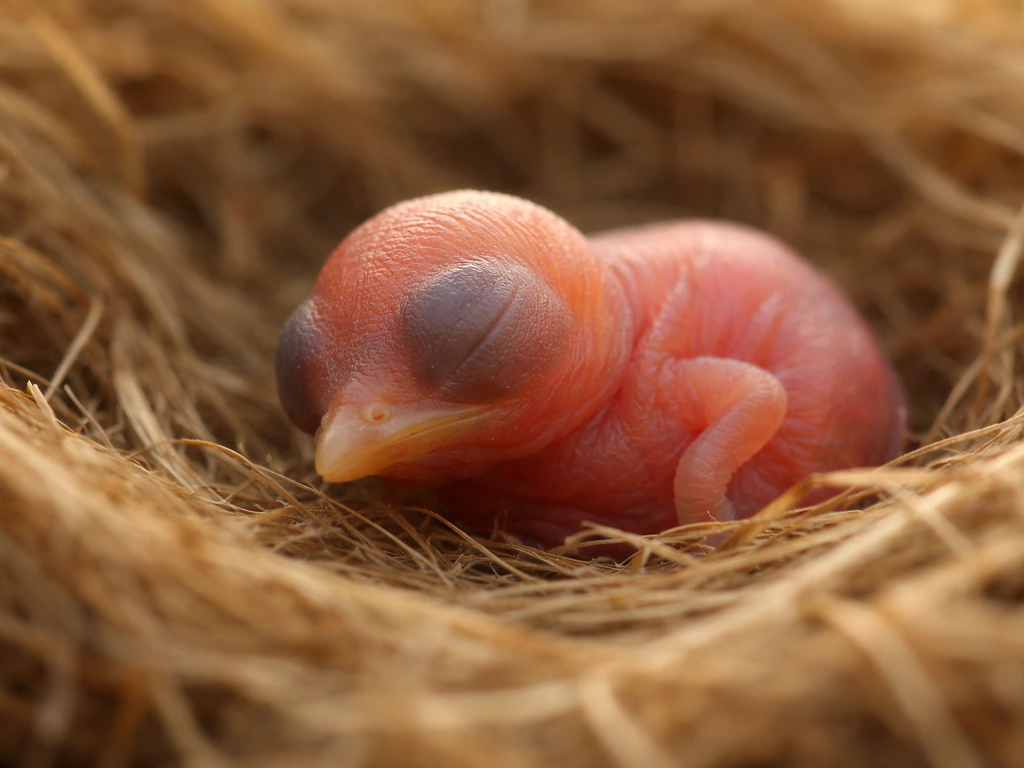
Hatchlings are 0 to 4 days old. They are mostly or completely naked, with skin that looks pink, reddish, or sometimes dark depending on the species. Eyes are completely closed. They can barely lift their heads.
If you see any feathers at all, it is just a few sparse tufts of soft down on the top of the head. These birds cannot regulate their own body temperature and will die quickly if they are cold. A cold, unmoving hatchling on the ground is a genuine emergency. Boston.
gov also advises not to give a found baby bird water, milk, or anything else, and notes that if it is cold, not moving, or bloody, it needs help A cold, unmoving hatchling on the ground is a genuine emergency. .
Nestling: pin feathers and early growth
Nestlings are past the hatchling stage but not yet ready to leave the nest. The defining feature here is pin feathers, also called blood feathers or quills. These are feathers still encased in a waxy, tube-like sheath, and they look like tiny blue-gray or dark spikes pushing through the skin. You might see them on the wings first, then along the body. The eyes may be partially or fully open at this stage. The bird looks a bit like a porcupine or a small cactus, which sounds funny but is actually a helpful image to keep in mind.
Fledgling: mostly feathered and mobile
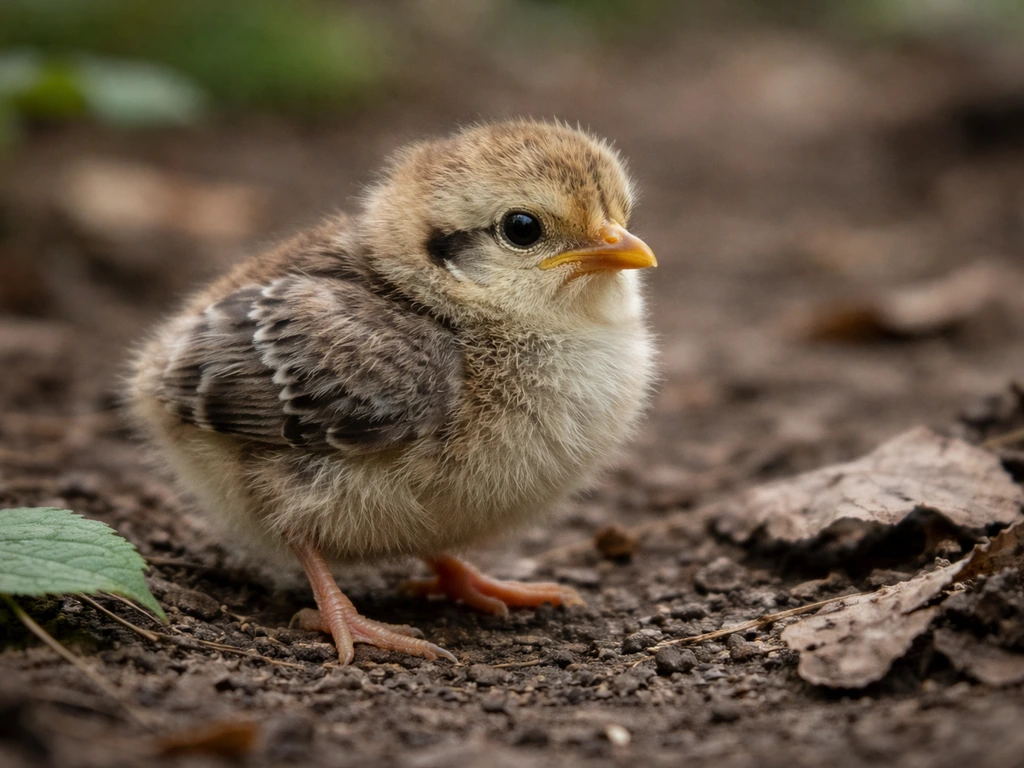
Fledglings are the ones most people mistake for abandoned or injured birds. They are mostly or fully feathered, but the tail feathers are noticeably short, which gives them a stubby look. You won't see bare skin or pin feathers. Eyes are open and alert. They can hop, flutter, and sometimes make short clumsy flights. Finding one of these on the ground is almost never an emergency. They are in a normal developmental phase where they spend time out of the nest while still being fed by parents.
Beak, feet, and talon clues for ID
Once you have the age stage down, the beak and feet are your best tools for narrowing species. Even in young chicks, these features develop early and stay consistent with the adult form.
Beak shape
- Short, thick, triangular beak: seed-eaters like sparrows, finches, or juncos. Even very young nestlings show this broader beak base.
- Thin, pointed beak: insect-eaters like warblers, wrens, or robins. Often paired with a noticeably wide gape (mouth opening) in chicks.
- Hooked beak tip: raptors like hawks, owls, or falcons. The hook is visible even in young nestlings.
- Long, straight beak: woodpeckers, kingfishers, or herons, depending on size.
- Wide, flat beak: swallows or swifts. These also have very short legs relative to their body.
- Slightly curved, medium beak with a noticeable yellow or orange gape flange: this is common in thrushes and robins, and the bright fleshy edges of the mouth are a strong visual clue in nestlings.
Feet and legs
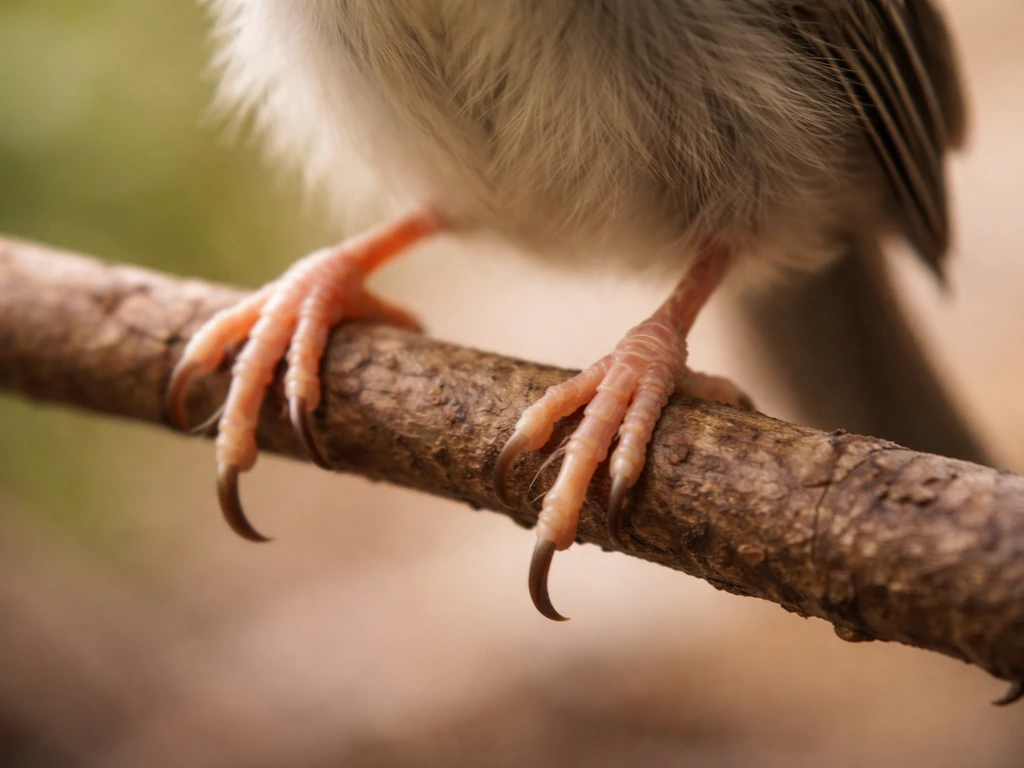
Passerine (songbird) chicks have three toes pointing forward and one pointing back, which is the classic perching foot. Raptors have large, strong toes with curved talons that are visible and sharp even in young birds. Waterfowl chicks have webbing between the toes, which is obvious even on a day-old duckling. Woodpecker chicks have two toes pointing forward and two pointing back, called a zygodactyl foot. Leg length is also a clue: shorebird chicks have long skinny legs relative to their body very early in development.
Head, eye, skin patterning, and behavior signals
Some features are subtle but very useful once you notice them. The gape, which is the fleshy colored border around the inside edge of the beak, is bright yellow, orange, or white in most songbird chicks and acts almost like a signal flare to trigger feeding from parents. A wide-open gape angled upward is classic begging behavior. If you see a chick doing this when you approach, it is a sign it is alert and relatively healthy.
Skin color and patterning can also help. Dark or bluish-gray skin is common in many passerine nestlings. Pinkish skin suggests a very young hatchling of a species like a robin or sparrow. Precocial chicks (ducks, quail, killdeer) are covered in patterned down from the moment they hatch, often with stripes or spots that serve as camouflage. If you find a fluffy, patterned chick that is already walking around hours after hatching, you are almost certainly looking at a precocial species, not an altricial songbird.
Eye development tracks closely with age. Fully closed eyes mean hatchling stage. Partially open, slightly glassy eyes mean early-to-mid nestling. Bright, fully open eyes that track movement mean the bird is a late nestling or fledgling. A bird that is fully feathered but has dull, half-closed, or sunken-looking eyes is more likely injured or sick than simply young.
What species is it likely to be? Common backyard chick scenarios
Most of the mystery chicks people find in backyards, parks, and suburban areas belong to a short list of very common species. Knowing those species helps you narrow things down fast.
| Species / Group | Key chick features | Where you'll typically find them |
|---|---|---|
| American Robin | Orange-yellow gape flange, spotted breast beginning to show in late nestling stage, medium size, thin beak | On the ground near lawns and gardens; fledglings common in May and June |
| House Sparrow / Song Sparrow | Tiny size, short thick beak even as a nestling, pinkish skin with sparse gray down | Near building eaves, dense shrubs, feeders |
| European Starling | Yellow gape, slightly longer pointed beak, loud persistent begging calls | Holes in trees or buildings; fledglings often seen in groups |
| American Crow / Blue Jay | Large relative to other backyard birds, dark pin feathers or dark adult plumage coming in, strong beak even when young | Near large trees; fledglings often hopping clumsily on the ground |
| Mourning Dove / Pigeon | Narrow, soft beak; creamy or pale down; distinctive crop bulge when fed; quiet compared to songbird chicks | Ground nests or flat ledges; fledglings look very adult-like but with scaled feather edges |
| Barn Swallow / Tree Swallow | Very wide flat beak, extremely short legs, long wing feathers developing early | Near barns, bridges, or open areas near water |
| House Wren / Carolina Wren | Tiny, thin pointed beak, very small overall size, highly vocal begging | Dense shrubs, brush piles, low nest boxes |
| Raptor (hawk or owl) | Hooked beak tip, strong taloned feet even as a nestling, fluffy white down, large eyes | Near tall trees, barn lofts, cliff edges; fledglings sometimes on the ground |
| Duck or Goose chick (precocial) | Fully downy and patterned from day one, already mobile and walking, webbed feet, flat bill | Near water; these birds do NOT need to be returned to a nest |
If you are trying to identify a fledgling specifically, there is more detail to work with because the adult features are almost fully formed. The same logic applies to identifying a wild bird by general type, but chicks give you fewer markings to work with, so leaning on beak shape, feet, and context is even more important at this stage.
What to do (and not do): safety, handling, and when to call for help
I'll be honest: the instinct to help is natural, but most interventions people attempt actually make things worse. Here is what actually helps. SPWRC also advises not to feed the bird or try to give it water, and instead to bring it to care if it is cold or wet, has bleeding, or has a lame leg or injured wing do not feed it or give it water.
Safe actions you can take
- Watch from a distance first. Step back at least 10 to 15 feet and observe for a few minutes. If the bird is a fledgling, the parents are likely nearby and will return to feed it. They typically feed grounded fledglings several times per hour.
- If a featherless or pin-feathered nestling is on the ground and you can see the nest above, gently pick it up (you can use light gloves if you prefer, though the parent smell myth is false) and place it back in the nest.
- If the nest is destroyed or unreachable, you can create a small substitute nest using a berry basket or small container with some dry grass and hang it as close to the original location as possible.
- If a fledgling is in immediate danger from a cat, dog, or traffic, you can move it a short distance (just a few meters) to somewhere safer, like a nearby shrub at roughly the same height.
- If the bird appears cold, keep it loosely contained in a small box with air holes and a piece of cloth. Do not apply heat sources directly. Keep it somewhere quiet and low-stress while you contact a rehabilitator.
What not to do, ever
- Do not give the bird food or water. This is the most common mistake. Baby birds get hydration from food, and trying to give water can cause aspiration, which can kill them quickly. Even well-meaning foods like bread, worms from the garden, or milk cause serious harm.
- Do not keep the bird as a pet or attempt to raise it yourself without professional guidance.
- Do not handle it more than necessary. Stress alone can be fatal to small chicks.
- Do not assume a fledgling hopping on the ground is orphaned or injured just because it looks awkward.
- Do not try to give any medicine, supplements, or home remedies.
When to contact a wildlife rehabilitator
Call a licensed wildlife rehabilitator (or your local wildlife agency) if any of the following are true: the bird is featherless and cold and you cannot return it to a nest; there is visible blood, an obvious wound, a drooping wing, lameness, or an inability to stand; flies are hovering around it (a sign of injury or illness); it is breathing with difficulty; or the parents have not returned for more than two hours and the bird is a hatchling or young nestling. If you genuinely cannot identify the bird's species or stage and it seems distressed, that is also a valid reason to call rather than guess. A rehabilitator can walk you through it over the phone in minutes.
To find a licensed rehabilitator near you, search your state or country's wildlife agency website, or use the Wildlife Rehabilitator directory from the National Wildlife Rehabilitators Association. Most areas have a local clinic or hotline. When you call, describe the feather coverage, eye state, behavior, and where you found the bird. Those are the same cues you just read about, and that information helps them advise you immediately.
Putting it all together
The whole process takes less than two minutes once you have the framework in your head. If you prefer using a photo, the same cues can be checked in the image to help you identify a bird how to identify a bird from a photo. Check feather coverage to get the age stage. Look at the beak shape and feet to start narrowing species.
Note the eyes, skin, and behavior. Consider where you found it and whether a nest is nearby. Then decide: does this bird need help, or does it just need you to back away and give it space? Then decide: does this bird need help, or does it just need you to back away and give it space how to identify male and female finches bird.
If you want to go beyond age stage and narrow down what species you are looking at, use the same visual clues to guide your identification how to identify a wild bird. Most of the time, it is the second one. And when it is not, you now know exactly what signs to look for and who to call.
If you later need to identify and track it for a specific purpose, see how to tag a bird as a related option before doing anything else. If you want to go deeper, practice with field guides and local birding groups to learn bird identification step by step. If you still need confirmation, learn how to read bird tags so you can match the bird to the right record or organization.
FAQ
How can I tell if a nestling is actually abandoned, instead of just temporarily on the ground?
Use a quick distance-and-time check. Look for a nearby nest or parent activity, then step back and watch from a distance (about 10 to 20 minutes if weather is mild). If the bird is warm, alert, and fed, it is likely normal behavior. If it is featherless/cold, clearly injured, or parents do not return within about two hours (especially for hatchlings and very young nestlings), contact a rehabilitator.
What’s the safest thing to do immediately if I find a hatchling on the ground?
Do not handle longer than necessary. Warmth is critical, so protect it from wind and cold surfaces (for example, place the bird in a ventilated container lined with soft, dry material near a warm spot, not directly on heat). If you cannot confidently return it to the nest, or it is cold and featherless, call a licensed rehabilitator right away.
Can I put a chick back in the nest if I can find it, and will parents reject it because of my scent?
In most common situations, returning a chick to its nest is appropriate if the nest is visible and accessible and the chick is not injured. Parents typically resume care even after brief human contact, but avoid repeated handling, overheating, or leaving it out too long while you search.
What if the chick’s eyes are not clearly open, they look “half-glassy,” how do I avoid misclassifying it?
Treat eye appearance as a range, not a single label. Fully closed eyes usually indicate hatchling stage, partially open slightly glassy eyes align with early to mid nestling, and bright fully open eyes that track movement suggest late nestling or fledgling. If feather coverage and eye state conflict, default to calling it a nestling and prioritize safety context.
Are pin feathers always visible, or could I miss the nestling stage because the bird is bundled or fluffy?
You can miss them if the bird is hunched or the quills are still mostly under skin. Look specifically for small tube-like sheaths with darker spikes along the wings or upper back, even if the overall body looks fuzzy. Checking from slightly different angles in good light usually reveals them.
How do I distinguish a fledgling from a young ground-dwelling bird without knowing the species?
Start with the age-stage cues, then use behavior and context. A fledgling is mostly feathered with a short, stubby-looking tail and often does clumsy hopping or fluttering while being fed. If the bird is walking and patterned like a camouflaged “fluffy speckled” chick right after hatching, it may be precocial (many ground-nesting birds).
What beak or foot clues should I focus on first if I can only take one look?
Prioritize feet first, then beak shape. Foot structure often stays clearer in chicks: three-forward and one-back suggests perching songbird feet, visible sharp talons suggest raptors, webbing suggests waterfowl, and two-and-two (zygodactyl) suggests woodpeckers. After that, glance at beak angle and size for general type, without trying to force an exact species from one feature.
If I see “begging,” does that always mean the chick is healthy and can be left alone?
Not always, but begging is usually a good sign. A wide-open gape angled upward when you approach typically indicates alertness and willingness to be fed. Still, if the bird is cold, making gasping or labored breathing sounds, has bleeding or a visible wound, or appears unable to stand, treat it as a medical issue and contact a rehabilitator.
What are common mistakes people make when trying to help a chick that is not actually injured?
The most common mistakes are picking it up to “save” it, putting it in an unsuitable container without ventilation, and waiting too long before calling when the bird is featherless and cold. Another frequent error is assuming all ground birds are abandoned, even though many fledglings spend time on the ground while parents feed them nearby.
How long should I wait before assuming I need to call a rehabilitator?
Use stage and condition. For featherless chicks that are cold, or any chick that is bleeding, limping, unable to stand, breathing with difficulty, or attracting hovering flies, call immediately. If parents are not returning for more than about two hours for hatchlings or very young nestlings, call rather than keeping it under observation longer.
Can bad weather change how I should interpret the same age cues?
Yes. Cold, rain, and wind can quickly push hatchlings into life-threatening hypothermia, even if they otherwise look like they match the right stage. If a bird is featherless and cold to the touch or appears lethargic in bad weather, treat it as urgent and contact a wildlife professional instead of trying to “confirm” identification.
Next Article
How to Learn Bird Identification Fast With a Step Plan
Step plan to learn bird identification fast using field marks, habitat, sound ID, notes, practice routines, and fixes fo